You are sitting at home with the baby. Again. Your friends are at work. Your partner is at work. It is just you and the baby and a silence that sometimes feels very big.
Loneliness as a new parent is surprisingly common. You are surrounded by love, yet you can still feel alone. And the simplest solution, making new friends, suddenly feels like an impossible task.
But it does not have to be.
Why Friendships Change After Kids
Your friendships did not disappear. But they changed. And that is normal.
Different Life Stages
Friends without kids live in a different time zone. They are planning evenings out while you are planning bedtimes. It does not mean they do not care, it means their everyday lives look completely different from yours.
Less Energy
You simply have less to give. Socializing takes energy you might not have after a night with four wake-ups. And it is okay to prioritize sleep over social obligations for a while.
New Conversation Topics
The baby dominates your thoughts. Some friends love hearing about it. Others glaze over after five minutes. It can feel lonely to be consumed by something no one else in your circle understands.
Research shows that loneliness among new parents is widespread, especially during the first year. Parents on parental leave are particularly vulnerable because they lose the daily social contact that the workplace provides.
Where to Find Other Parents
1. New Parent Groups
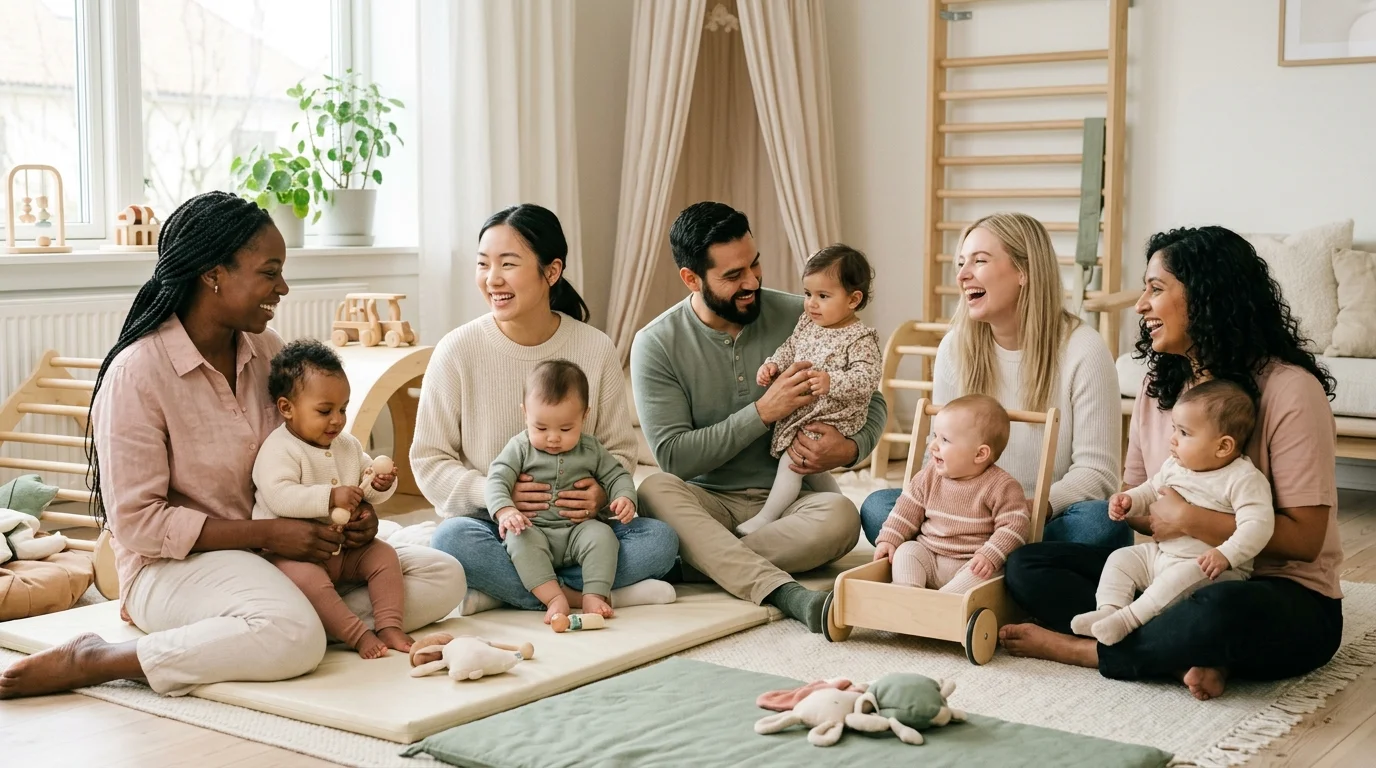
Many communities organize parent groups for families with children of similar ages, through pediatricians' offices, hospitals, or local family centers. This is often the most important network you build as a new parent.
How it works:
- You can sign up through your pediatrician, local community center, or hospital
- The group typically meets weekly during the first few months
- You share experiences, questions, and frustrations in a supportive setting
Not every parent group clicks. But many parents say they became lifelong friends with people they met there. Give it a few meetings before you decide.
Dare to be honest in your parent group. When you say "I am struggling with breastfeeding" or "I have not slept in three days," it often opens the door for others to do the same. The best friendships start with honesty.
2. Drop-In Playgroups and Family Centers
Many communities have drop-in playgroup programs, a walk-in option where you and your child can come without enrolling. Here you meet other parents in an informal setting.
Your local family center may have cafes, activities, and groups. Check your community's website or ask your pediatrician.
3. Baby Music Classes and Activities
Baby music classes are not just for the baby. They are a social arena for you. Community centers, churches, and nonprofit organizations offer baby music classes in most areas.
Other options:
- Baby swimming: Many pools offer parent-baby swim sessions
- Stroller fitness: Outdoor workouts with other parents
- Baby-friendly movie screenings: Some theaters have special showings for parents with babies
- The library: Many have baby storytime with songs and reading
4. Apps and Online Communities
Digital meeting places can be a great supplement, especially during periods when it is hard to get out of the house.
- Facebook groups for parents in your area
- Parenting forums online
- Local groups on social media
But remember: online communities do not replace physical contact. Use them as a bridge to meeting people in real life.
5. Neighbors and Playgrounds
The daily trip to the playground is an underrated social arena. A "Hey, how old is yours?" can be the start of a great friendship.
The playground has a lower barrier than organized groups. You do not need to sign up for anything. You just need to show up.
How to Make It Work
Be the One Who Takes Initiative
Do not wait for others to invite you. Send a message after your parent group: "Want to go for a walk tomorrow?" The worst that can happen is they say no.
Lower the Bar
You do not need to find a soul mate. You need someone to grab a coffee with. Someone who understands that you smell like spit-up and that is fine. Closeness comes with time.
Keep It Simple
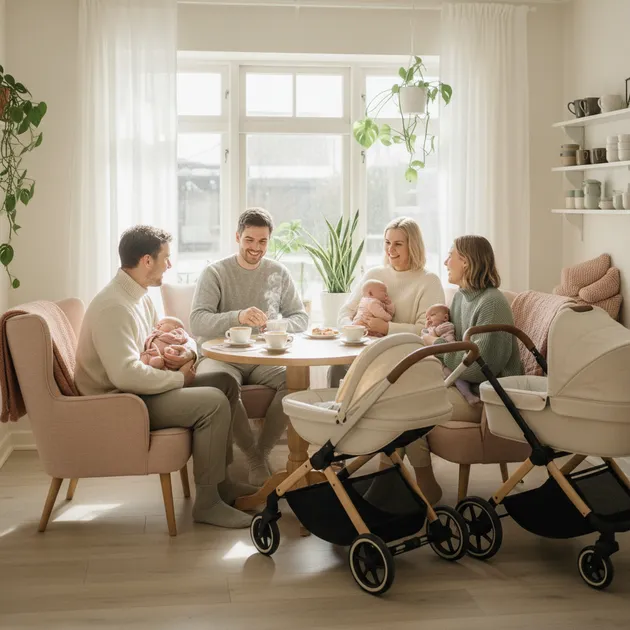
The best parent meetups are the simplest ones. A walk in the park. Coffee at home. Do not wait until you have the energy for a proper dinner party. That day may never come.
Be Patient
Friendships take time. You might meet ten parents before you click with one. That is normal. Do not give up after the first try.
When Old Friendships Feel Strained
It hurts to feel yourself drifting apart from people you care about. But it does not have to mean the end.
For Friends Without Kids
- Be honest: "I cannot do late evenings, but I would love to see you. Lunch?"
- Accept that they will not always understand your daily life
- Stay in touch, even if it is just a text
For Friends With Older Kids
They remember what it was like. They can be amazing supporters. But they might also forget how exhausting it is, because they are past that phase. Gently remind them.
For All Friends
Lower expectations on both sides. Life with small children is a phase. Good friendships survive it.
Invite a friend without kids to join you for a baby activity. Many are curious and happy to be included. It gives them a glimpse into your daily life, and you get some company.
Dads and Social Networks
Dads are statistically more prone to social isolation after having children. Parent groups have traditionally been spaces for mothers, and many dads say they do not know where they fit in.
More and more communities are offering dad groups through family centers and pediatrician offices. Ask about them proactively. And dads who take extended parental leave often build strong networks with other stay-at-home parents.
Frequently Asked Questions
I am introverted. Do I have to join a parent group?
No, you do not have to. But try giving it a chance. You can always step back afterward. Many introverted parents find that parent groups work surprisingly well because you have a shared framework for conversation.
I moved to a new area right before the baby came. How do I get started?
Your pediatrician's office is your best starting point. They know about local offerings and can connect you with other parents in the area. Drop-in playgroups and baby music classes are also great entry points.
My partner and I have different social needs. What do we do?
Respect each other's needs. The one who needs more social interaction can seek out groups and activities, while the other can help by watching the baby so their partner can go out. You do not have to do everything together.
You deserve to have people around you who understand. People who laugh at the same things, sigh over the same challenges, and cheer you on without judgment.
Sources
- CDC. Social Connectedness and Health
- AAP. Building Your Support Network
- WHO. Mental Health and Parenting
🔧 Helpful Tools
- All Baby Tools. Browse all free tools for pregnancy and baby care
📖 Related Articles
- Building a New Friend Network: How to Find Other Parents. Missing friendships after your baby arrived? Here are practical tips for finding other parents, building a support network, and combating loneliness as a new parent.
- Friendship After Kids: When Everything Changes. Friendships change after becoming a parent. Some fade, new ones appear. Here's how to navigate your social life with kids, from parent groups to keeping old friends.
- Building a New Social Network After Having a Baby. Feeling lonely after your baby arrived? Here are concrete tips for finding other parents, building community, and overcoming isolation during the postpartum period.