
Your due date is approaching and you want to be prepared. A well-packed hospital bag gives you confidence and peace of mind in a situation where you have plenty of other things on your mind. But what do you actually need?
Here is a thoroughly tested packing list based on recommendations from midwives, experienced parents, and maternity units. Pack your bag in good time, ideally around week 36, so you're ready whenever labor starts.
Tip: Use our hospital bag checklist to tick off items as you pack. It's interactive and saves your progress.
When should you pack?
Most midwives recommend having your bag ready from week 36. Some babies come early, and it's far better to be overprepared than to be scrambling while contractions are underway.
Keep your bag by the front door or in the car. Put the most important items at the top, you won't want to dig through your bag when contractions are three minutes apart.
Packing list for the birthing parent
Documents and essentials
- Prenatal record/maternity notes (bring the folder you've been given at appointments)
- ID and payment card
- Birth plan, if you've written one. Read our guide to birth plans
- Phone and charger (a long cable is invaluable)
- Any prescribed medication
- Snacks and drinks for early labor (the hospital provides meals, but it can take time)
During labor
- Comfortable clothes you don't mind ruining, a large t-shirt, loose nightgown, or nothing at all
- Warm socks, feet can get cold even when the rest of you is warm
- Hair tie or clip, you won't want hair in your face while pushing
- Lip balm, lips can become very dry
- Heat pack or hot water bottle, many people find heat on the lower back very effective for pain relief
- Music and headphones, a calming playlist can help you stay focused
Did you know? Many labor wards have a bath or shower available. Warm water is effective pain relief in early labor. Pack a bikini top if you'd like to use the water.
After the birth (postnatal ward)
- 2–3 comfortable nightgowns or large t-shirts that are easy to feed in (front-opening is practical)
- Nursing bra (2), choose soft, unpadded with drop-down cups
- Breast pads, milk can start leaking as early as days 2–3
- Underwear, large, comfortable briefs (not your nicest). Disposable underwear from the pharmacy is a good option
- Maternity pads, the ward provides some, but it's good to have extra. Use proper maternity pads, not regular pads
- Toiletries, toothbrush, toothpaste, shampoo, conditioner, deodorant, face cream
- Slippers or sandals, you'll want something to wear in the corridors
- Clothes for going home, clothes from around weeks 20–24 of pregnancy often fit best in the first days after birth. Don't expect to fit into your regular clothes right away
If you're having a cesarean section
Everything above, plus:
- High-waisted underwear that doesn't press on the incision (above the navel)
- Loose trousers or leggings with a high waistband
- Extra nightgowns, you may stay a couple of extra days
Read more about planned cesarean section and preparation.
Packing list for your partner
Your partner plays a vital role during labor and your hospital stay. Here's what they need:
- Snacks and drinks, labors can take many hours. Bring energy bars, fruit, sandwiches, and coffee or tea
- Change of clothes, at least an extra t-shirt and underwear
- Phone and charger (for notifying family and taking the first photos)
- Powerbank, the battery can die after hours of filming and messages
- Cash or card for hospital vending machines or cafeteria
- Pillow and light blanket, many labor wards have limited sleeping options for partners
- Toiletries
- Something to read or do, the wait can be long, especially during induction
- Comfortable clothes
Partner tip: Be prepared for the possibility that you won't sleep at the hospital. Bring a pillow and a light blanket. Some hospitals have a reclining chair for partners; others only have a straight-backed chair. Check with your hospital in advance.
Your partner's role during labor
- Make eye contact and offer encouragement
- Help with any breathing techniques you've practised together
- Massage the back or shoulders between contractions
- Offer drinks and light snacks
- Be prepared for the laboring person to feel frustrated, overwhelmed, or say things they don't mean, this is completely normal
Want to prepare more? Read about childbirth preparation classes and natural pain relief during labor.
Packing list for your baby
Your baby needs surprisingly little in the first days, but here's what to bring:
Clothing
- 3–4 bodysuits in newborn size (50–56 cm / newborn). Choose wrap-style or envelope-neck designs that don't need to go over the head
- 3–4 sleepsuits or onesies in newborn size
- 2–3 pairs of socks, babies lose heat through their feet
- 1–2 hats, babies lose a lot of heat through their heads
- 1 warm outfit or sleeping bag for the journey home (appropriate for the season)
- Optional: wool underlayer if it's winter
Sizing: Most full-term babies fit in newborn / 50–56 cm. If you're expecting a larger baby (over 4 kg / 9 lbs), it's worth having some 56–62 cm items as well.
Practical items
- Newborn diapers/nappies (size 0 or 1), the hospital provides some, but bring a pack
- Baby wipes or cotton pads and water
- Infant car seat, required by law in most countries for the journey home. Have it installed in the car beforehand
- Pacifier/dummy (optional), some parents wait to introduce one until feeding is established
- Swaddle blanket or muslin for wrapping your baby
If you're formula feeding
- Bottle and teat in newborn size
- Formula, ready-to-feed individual portions are easiest at hospital
- Bottle brush for cleaning
What you do NOT need to pack
Some things simply aren't necessary:
- Large quantities of baby clothes, the baby needs only a couple of changes per day
- Books about breastfeeding or birth, you'll have plenty to do. Your midwife is your best resource in hospital
- Expensive toiletries, the basics are all you need
- Makeup, most people have other things on their minds, but pack it if it matters to you
- Bedding and towels, the hospital provides these
- Lots of food, the hospital serves meals to the birthing parent (your partner should bring their own)
Smart tips from experienced parents
Pack two bags:
- A small bag with everything you need during labor itself
- A larger bag with postnatal ward items that can stay in the car until you're on the ward
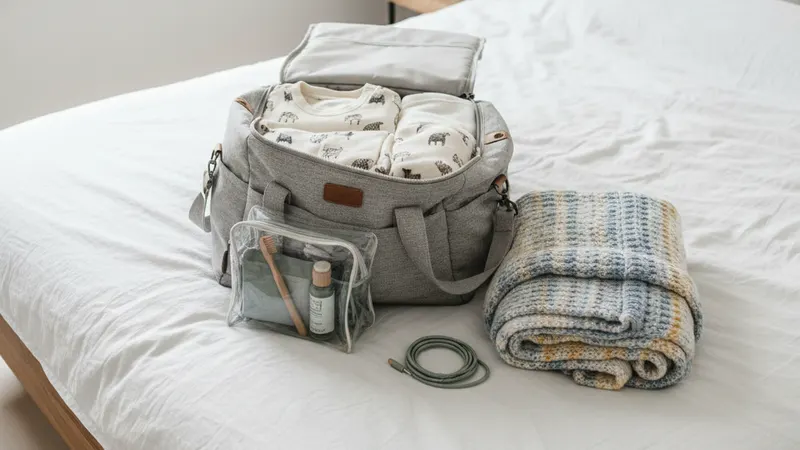
Use zip-lock bags: Sort baby clothes, your own clothes, and toiletries into clear bags. It makes things easy to find, and your partner won't have to search through everything.
Create a "grab first" pouch at the top: Put your maternity notes, ID, phone, charger, and lip balm in a small pouch that's immediately accessible.
Install the car seat now: Many parents forget this and end up fitting it with a newborn in their arms. Install it at week 36 and leave it in.
Wash baby clothes first: Wash all baby clothes in fragrance-free detergent before packing. Newborn skin is sensitive.
Check with your hospital: Call the maternity unit and ask what they provide. Some hospitals supply diapers, maternity pads, and breast pads. Others expect you to bring your own. Policies vary.
The journey home: don't forget
Before you leave the hospital, check that you have:
- Car seat correctly installed (rear-facing)
- Baby dressed appropriately for the weather, but not overdressed under the harness straps
- Your maternity notes and any paperwork from the hospital
- Your first follow-up appointment booked (midwife home visit or pediatrician)
- All personal belongings from the room
The first days at home can feel overwhelming. Read our guide to your first week home with a newborn to prepare.

Frequently asked questions
How early should I pack my hospital bag?
Most midwives recommend week 36, but you can start gathering items from weeks 32–34. If you have risk factors for preterm labor, pack even earlier.
Can my partner stay overnight at the hospital?
It varies. Many hospitals offer family rooms where partners can stay, but a place is not guaranteed. Check with your hospital in advance and have a backup plan for accommodation nearby if you live far away.
Do I need a hospital gown?
No. A large t-shirt, a nightgown you don't mind ruining, or the hospital's own gown all work perfectly. Some people choose their own hospital gown for comfort or photos, but it's entirely optional.
What about valuables?
Leave valuables at home. Bring only what you need (phone, charger, ID, payment card) and leave the rest. Hospitals have limited security for personal belongings.
Should I bring a breast pump?
No, don't bring a breast pump to the hospital for your first birth. The hospital has pumps available if needed. You most likely won't need to pump in the first days, focus on establishing feeding with support from your midwife or lactation consultant.
How many days will I be in hospital?
Normal vaginal birth: 1–3 days. Cesarean section: 2–4 days. Some hospitals offer early discharge (6–24 hours) with midwife follow-up at home. Discuss this with your care team in advance.
Useful tools on Babysential
Related articles
- Early contractions: How to recognize them
- The 5-1-1 rule: When to go to the hospital
- Natural pain relief during labor
- Your first week home with a newborn
- Childbirth preparation classes
- Planned cesarean section: Preparation
Sources
- NHS. Having a baby: what to pack
- AAP (American Academy of Pediatrics). Newborn care
- Safe Kids Worldwide. Car seat installation guidelines
🔧 Helpful Tools
- Due Date Calculator. Calculate your estimated due date
- Contraction Timer. Track your contractions during labor
- All Baby Tools. Browse all free tools for pregnancy and baby care