What This Guide Covers
Finding the right swim diaper should not take longer than your actual pool visit. This guide covers the best disposable and reusable options, what swim diapers can and cannot do, and how to choose the right size for your baby.
Disclosure: This article may contain affiliate links. If you buy through them, we may earn a small commission at no extra cost to you.
Best Swim Diapers for Babies and Toddlers
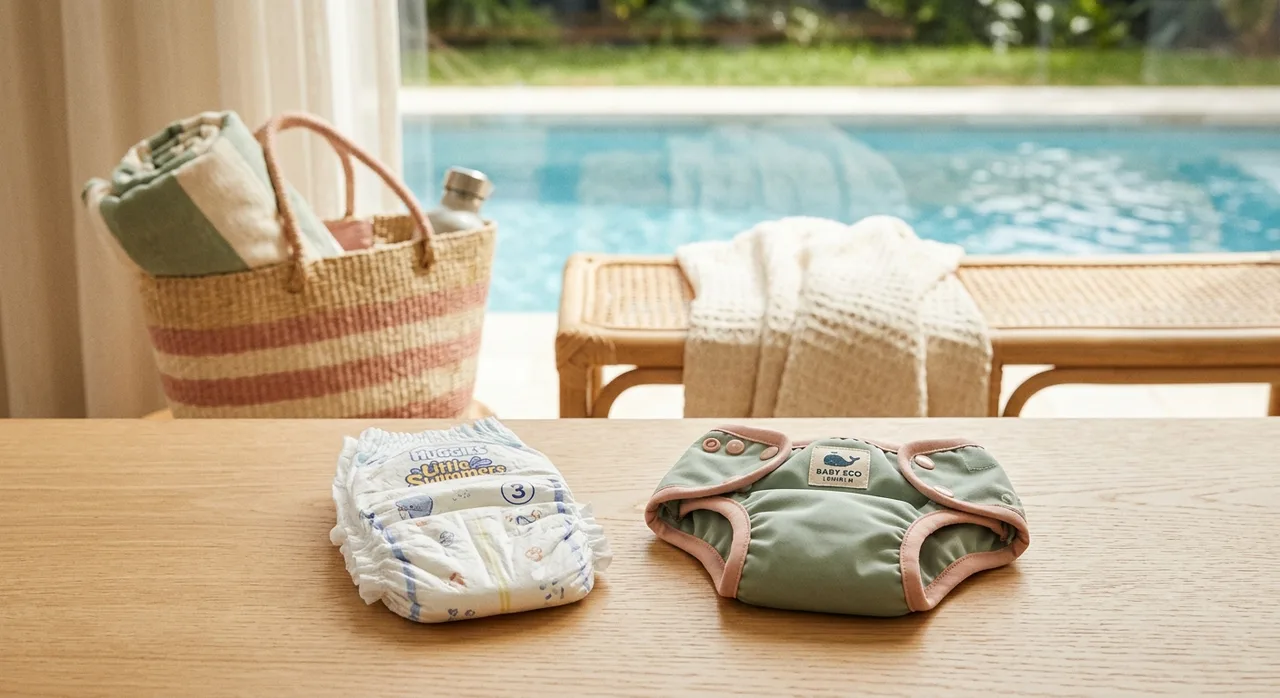
The best swim diaper is the one that fits snugly around your baby's waist and thighs without leaving angry red marks. For most occasional pool days, start with a disposable option like Huggies Little Swimmers or Pampers Splashers because they are easy to find, easy to pack, and simple to throw away after a messy change. If your baby is in weekly swim lessons, a reusable swim diaper can make more sense because you can wash it, reuse it, and often get a more secure fit once you know your child's size.
Swim diapers are different from regular diapers in one important way: they are not meant to soak up liquid. A normal diaper in a pool becomes heavy and swollen. A swim diaper is built to stay slimmer in water and help contain solid poop. That also means it will not reliably hold pee. Put it on right before your child gets in the water, and switch back to a regular diaper as soon as swim time is over.
Our Top Picks for the Best Swim Diapers
Best Overall Disposable: Huggies Little Swimmers
Huggies Little Swimmers are the safest recommendation for most families. They are widely available, familiar, and designed with tear-away sides that make cleanup easier when the diaper is wet. They also tend to be a good first try for parents who do not yet know whether their child does better with a pull-on waistband or an adjustable reusable style.
Best for: Occasional pool days, travel, first-time buyers Watch-outs: Size ranges vary by retailer; check weight charts before buying
Best Value Disposable: Pampers Splashers
Pampers Splashers are the other easy default. They have a stretchy 360-degree waistband, are usually simple to find in big-box stores and online, and work well for summer stock-ups, travel, splash pads, and beach days. If your child is between sizes, check the leg openings carefully. A swim diaper that looks comfortable on dry land can gap once your child starts kicking, squatting, and climbing in and out of water.
Best for: Budget-conscious families, bulk buying, splash pads Watch-outs: No very-small newborn fit in most packs
Best Premium Disposable: Coterie The Swimsuit
For a premium disposable, Coterie The Swimsuit is worth considering if softness and design matter to you and the price is not the deciding factor. It is positioned as a softer, no-swell swim diaper with clear size and material information. It is not the budget pick, but it may appeal to parents who already like Coterie's regular diaper feel.
Best for: Parents prioritizing softness and materials Watch-outs: Higher price per diaper; fewer size options
Best Reusable Overall: Charlie Banana Reusable Swim Diaper
Charlie Banana is the strongest all-around reusable pick. It is better suited to families who swim often and do not mind bringing a wet bag home. Reusable swim diapers cost more upfront, but one good diaper can cover many swim lessons if the fit holds up. The adjustable snaps let you fine-tune the fit as your baby grows.
Best for: Weekly swim lessons, eco-conscious families Watch-outs: Must wash and air dry; need a wet bag for transport
Best Budget Reusable: Alvababy Reusable Swim Diaper
Alvababy is the budget-friendly reusable option to consider if you want a lower-cost backup or a second diaper for class. It is not the most premium choice, but it can be useful when you need a spare in the pool bag. Buy two or three so you always have a dry one ready.
Best for: Backup diaper, budget families, multi-pack needs Watch-outs: Quality and fit may be less consistent than premium options
Best for Swim Schools: Splash About Happy Nappy
Splash About's Happy Nappy is worth checking if your swim school has stricter double-diaper rules. The snug neoprene band provides an extra layer of containment that many swim schools require. Confirm sizing and US availability before buying, as the fit runs specific.
Best for: Swim schools with double-diaper policies Watch-outs: Sized fit (not adjustable); verify US stock
Disposable vs. Reusable Swim Diapers: Which Should You Choose?
Disposable swim diapers are best for convenience. They make sense for vacations, daycare water days, hotel pools, beach trips, and parents who do not want to carry a soiled reusable diaper home. They are also the simplest option when grandparents or another caregiver will be handling pool changes.
Reusable swim diapers are best for frequent swimming. If your baby has weekly lessons, a reusable diaper can be cheaper over a season and may give a more secure fit once you find the right size. They are also less wasteful than using a disposable diaper every class. The trade-off is cleanup: you need to rinse or wash the diaper according to the brand's instructions, and you need somewhere to put it after swimming.
Double-layer rules: Some pools and swim schools have their own requirements. They may ask for a disposable swim diaper under a reusable one, or a snug swim bottom over the diaper. Check before the first lesson, because the best diaper is useless if your pool does not accept it.
Swim Diaper Safety: What They Can and Cannot Do
The safety piece matters more than the product ranking. According to the CDC's healthy swimming guidance, swim diapers may help hold solid poop, but they do not keep diarrhea germs like Cryptosporidium from contaminating the water. If your child has diarrhea, skip the pool entirely. A swim diaper is not a health shield, and chlorine does not instantly solve contamination.
Here is what the CDC recommends:
- Check the diaper about every 60 minutes
- Change diapers away from the poolside in a designated changing area
- Wash hands thoroughly after every change
- Keep children with diarrhea out of the water entirely
Swim diapers also do not prevent drowning. The American Academy of Pediatrics emphasizes that babies and toddlers need constant, touch-distance supervision around water. A diaper, floatie, swimsuit, or swim class does not replace an adult who is watching the child every second. For pool parties or busy family days, use a clear water-watcher system so one adult is responsible at a time.
How to Choose the Right Swim Diaper Size
Fit matters more than the brand name on the package. A good swim diaper should be:
- Snug at the waist and thighs with no obvious gaps
- Staying in place when your child sits, crawls, squats, and kicks
- Not digging into the skin or leaving deep red marks
Use the weight range on the package as a starting point, not the final answer. Babies with chunky thighs may need a different size than babies with slimmer legs, even at the same weight. If you are choosing a reusable diaper, check the closure style. Snaps can help with adjustability, but they still need to sit flat and secure in the water.
If you are reusing a diaper from last summer or an older sibling, inspect the leg elastic before putting it on. Stretched-out elastic is not a small cosmetic issue; it can defeat the whole point of the diaper.
How Many Swim Diapers to Pack
Pack more than you think you need:
| Outing | Disposables | Reusables |
|---|---|---|
| Splash pad (30-60 min) | 2-3 | 1 + wet bag |
| Pool afternoon (2-3 hrs) | 3-5 | 2 + wet bag |
| Beach or vacation day | 5+ | 2 + wet bag + backup disposables |
Put the swim diaper on right before water time. If you dress your baby in a swim diaper at home and then drive to the pool, remember that it will not behave like a regular diaper in the car seat. Change into a normal diaper for dry time, errands, meals, and the ride home.
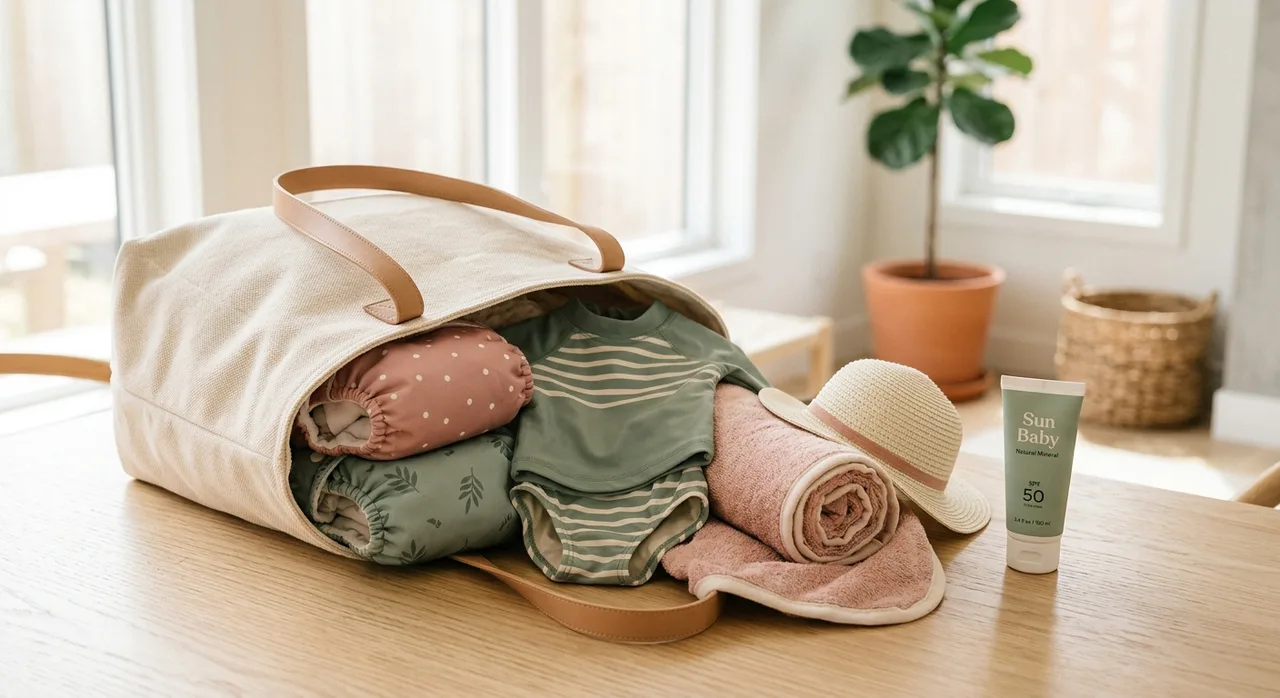
A simple pool-bag setup: swim diapers, regular diapers, wipes, wet bag or plastic bag, towel, dry clothes, sun hat, sunscreen for age-appropriate babies and children, snacks, and water. You can use our tote packing tool to build a reusable summer swim list so you are not rebuilding the same bag every weekend.
FAQ
Do swim diapers hold pee?
No. Swim diapers are designed not to swell in water, so urine can pass through. That is normal. Use a regular diaper before and after swimming.
Can babies wear regular diapers in the pool?
No. Regular diapers absorb pool water, become heavy, sag, and are usually not allowed by pools. Use a swim diaper for water and change back afterward.
Are reusable swim diapers better than disposable?
Reusable is better for frequent swimming and tends to save money over a season. A good cloth swim diaper costs about $15 to $25 and lasts through an entire summer or longer, while disposables run $1 to $2 per diaper and are single-use. Disposable is easier for travel, occasional pool days, and messy changes away from home. The best choice depends on how often your child swims and how much cleanup you want. Many parents keep one reusable and a pack of disposables on hand for different situations.
Do swim diapers prevent pool contamination?
They may help contain solid stool briefly, but they do not make diarrhea safe. Follow CDC guidance and keep a child with diarrhea out of the water. The CDC also recommends showering before swimming, taking kids on bathroom breaks every hour, and checking diapers every 30 to 60 minutes during pool time.