A hat is one of the most important pieces of clothing your child wears, all year round. In winter it prevents heat loss from the head, and in summer it protects against the sun. But which hat works best for your baby or toddler?
This guide covers all types of hats for children, from wool hats and balaclavas to sun hats and UV hats. You'll get tips on materials, sizes, and what childcare settings typically require.
Why Hats Are So Important for Children
Children Lose Heat Quickly
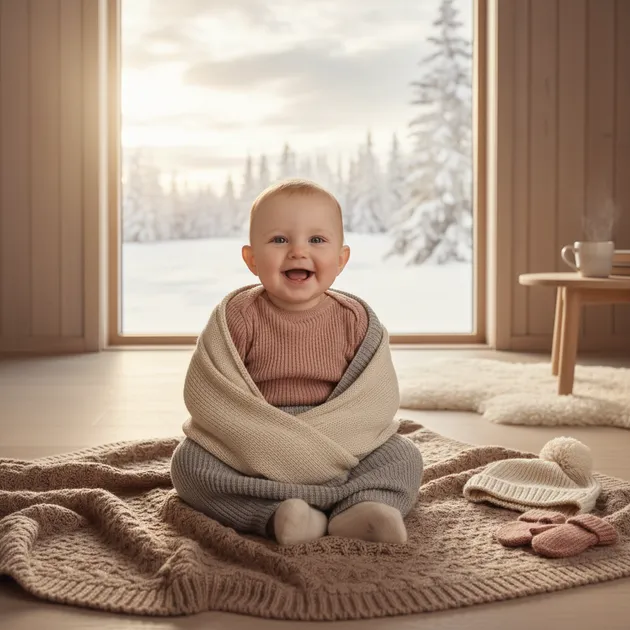
Children have a large head relative to their body. This means they lose a lot of heat through the head. Newborns and babies are especially vulnerable because they have little subcutaneous fat and limited ability to regulate body temperature themselves.
Pediatric guidelines recommend that babies and young children always wear a hat outdoors in cold weather. For newborns, a hat is important right from the delivery room.
Sun Protection
A child's scalp is vulnerable to UV rays, especially in children with thin or light hair. In summer, a sun hat or UV hat protects against sunburn on the scalp, ears, and neck.
Children under 1 year should be kept out of direct sunlight, and a hat with a wide brim is a simple, effective protection.
Winter Hats for Children
Wool Hat
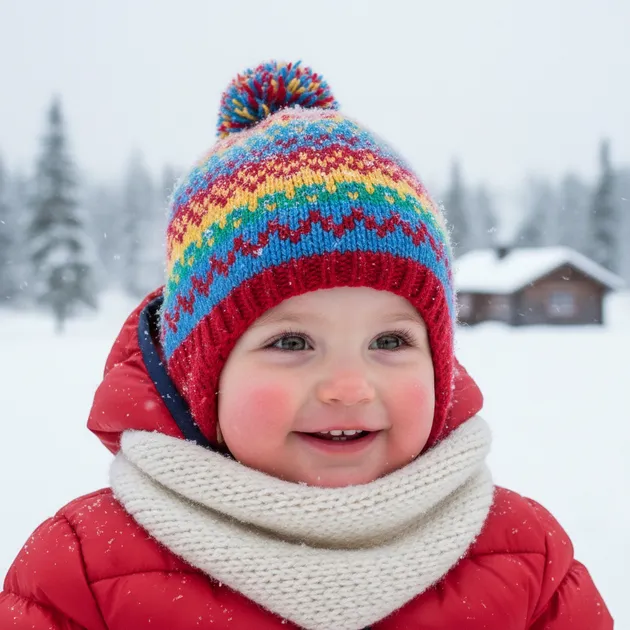
The wool hat is the cold-climate favorite, and for good reason. Wool regulates temperature, wicks moisture, and retains warmth even when wet. For children, merino wool is best because it is soft and non-itchy.
Benefits of a wool hat:
- Temperature-regulating, warms when cold, cools when warm
- Retains warmth even when wet
- Naturally antibacterial, needs less frequent washing
- Breathable and comfortable
Choose a wool hat with:
- 100% merino wool or at least 80% wool blend
- Good fit that covers the ears
- Double layer over the ears for extra warmth
Many children complain that wool hats are itchy. Choose merino wool with a thickness of 17–19 microns for the softest feel. A thin cotton band along the edge can also help.
Balaclava
The balaclava is brilliant for young children. It covers the head, ears, neck, and part of the face in one piece. No loose scarves that can tighten, no hat that slides off, and no cold neck.
When a balaclava is best:
- Babies and children under 3 years (hats fall off easily)
- Very cold weather (below -10°C / 14°F)
- Active children who play a lot outdoors
- Childcare, one piece replaces hat + neck warmer
Most childcare settings prefer balaclavas for the youngest children. It's easier for staff to put on, and the child stays warmer.
Fleece Hood and Fleece Balaclava
Fleece is lightweight, dries quickly, and is easy to wash. A fleece balaclava is a good option on milder winter days or as a mid-layer under a thicker hat in severe cold.
Fleece alone is not as good as wool on cold days because it doesn't regulate temperature as well. But as an added layer or on milder days (0 to -5°C / 23–32°F) it works well.
Wind-Resistant Hat
For particularly cold and windy days, there are hats with a windproof membrane. These are good for outdoor activities in exposed conditions or on very windy days. They can get warm on milder days, so use them only when truly needed.
Summer Hats for Children
Sun Hat with Wide Brim
The sun hat is summer's most important headwear. A good sun hat protects the face, ears, and neck against UV rays. Choose one with a brim of at least 5–7 cm that goes all the way around.
Good features for a children's sun hat:
- Wide brim that shades the face, ears, and neck
- Chin strap that keeps the hat in place
- Lightweight and breathable material
- UPF 50+ for best UV protection
- Light color that reflects heat
Cap/Baseball Cap
Caps are popular for slightly older children, but offer less protection than a sun hat. A cap shades the face, but the ears and neck are completely exposed.
Use a cap as a supplement only, not as the sole sun protection. For children under 3 years, a sun hat with a wide brim is a much better choice.
UV Hat
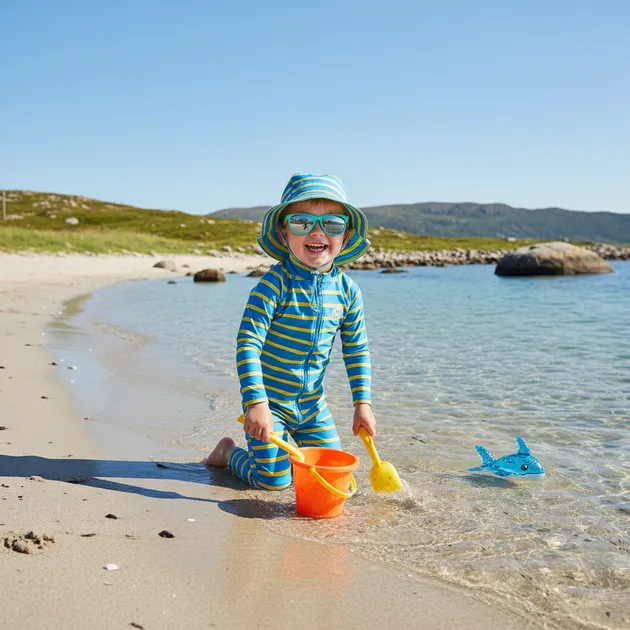
UV hats are made of fabric with built-in UPF protection. They are perfect for beach trips and water play. Many models have neck protection and dry quickly.
A hat alone isn't enough sun protection. Always combine a sun hat with shade, UV-protective clothing, and sunscreen on exposed skin. Children under 1 year should be kept out of direct sunlight between 10am and 4pm.
Spring and Fall Hats
Transitional Hats
Between winter and summer, your child needs thinner hats. A thin single-layer wool hat or a cotton hat is perfect for spring days with temperatures of 5–15°C (40–60°F).
Good options for transitional seasons:
- Thin merino wool hat (single layer)
- Cotton hat for mild days
- Light fleece headband for active children
- Thin balaclava in wool/silk blend
Headband
For slightly older children (from 2–3 years), a headband can be a good alternative on milder days. It keeps the ears warm without overheating the head. Choose a headband in wool or fleece.
Materials. What Works Best?
Wool
Wool is the superior material for baby and children's hats, especially in winter. Merino wool is softest and works best for sensitive young skin.
| Property | Wool | Cotton | Fleece | Synthetic |
|---|---|---|---|---|
| Warms when wet | Yes | No | No | No |
| Temperature regulation | Excellent | Medium | Weak | Weak |
| Drying time | Medium | Long | Short | Short |
| Softness | Very good (merino) | Good | Good | Varies |
| Odor after use | Low | Medium | High | High |
Cotton
Cotton is soft and comfortable, but doesn't retain warmth when wet. Cotton hats work best for summer use and mild days. They are easy to wash and tolerate higher temperatures.
Wool/Silk Blend
Wool/silk is perfect for babies and children with sensitive skin. The silk makes the fabric extra soft while the wool provides warmth and moisture regulation. This blend is popular for base layers and works equally well for hats.
Size Guide for Hats
Measure Head Circumference
The most reliable way to find the right size is to measure head circumference. Use a soft measuring tape and measure around the head, just above the ears and across the forehead. Measure at the widest point.
Size by Age
| Age | Head circumference (approx.) | Hat size |
|---|---|---|
| Newborn | 34–37 cm (13–14.5 in) | 0–3 months / 36 |
| 3–6 months | 38–42 cm (15–16.5 in) | 3–6 months / 40 |
| 6–12 months | 42–46 cm (16.5–18 in) | 6–12 months / 44 |
| 1–2 years | 46–48 cm (18–19 in) | 1–2 years / 48 |
| 2–4 years | 48–51 cm (19–20 in) | 2–4 years / 50 |
| 4–6 years | 51–53 cm (20–21 in) | 4–6 years / 52 |
Children grow quickly, but don't buy a hat that's too large. An oversized hat slides down over the eyes or falls off. Better to buy the right size and swap as needed.
Different Fit by Type
- Wool hat, should sit snugly over the ears without being tight
- Balaclava, the neck section should tuck inside the jacket
- Sun hat, the chin strap should keep the hat in place without chafing
- Fleece hood, should completely cover the ears with a good opening for the face
Hats for Childcare
What Do Childcare Settings Require?
Most childcare settings have clear expectations about hats. Check with your specific center, but this is typical:
Winter:
- Wool hat or balaclava (balaclava preferred for youngest)
- Must cover the ears completely
- Should be machine washable
Summer:
- Sun hat or UV hat with wide brim
- Preferably with chin strap
- Child's name labeled in the hat
Label everything with your child's name. Childcare has many identical hats, and without labeling they disappear quickly. Use name labels that can handle washing.
Extra Hats at Childcare
Always keep a spare hat at childcare. Children lose hats, hats get wet, and sometimes they need a thinner or thicker hat than the one they arrived with. A spare hat saves a lot of frustration.
Care and Maintenance
Washing Wool Hats
Wool doesn't need washing often. Air the hat between uses and wash only when visibly dirty or smelly.
Washing tips for wool hats:
- Use the wool cycle on your washing machine (30°C / 86°F)
- Use specialist wool detergent
- Don't use a dryer, wool shrinks
- Dry flat to maintain shape
- Don't wring or squeeze tightly
Washing Other Hats
- Cotton, 40–60°C (104–140°F), can handle dryer on low heat
- Fleece, 30–40°C (86–104°F), dry hanging or on low heat
- UV hats, 30°C (86°F), dry in shade to preserve UV protection
Summary
The right hat makes a big difference for your child's comfort and safety. In winter, a wool hat or balaclava protects against cold, and in summer a sun hat with a wide brim keeps the sun away.
The most important advice:
- Wool hat or balaclava in winter, merino wool is best
- Sun hat with UPF 50+ and wide brim in summer
- Measure head circumference for the right size
- Always keep a spare hat at childcare
- Label everything with the child's name
With the right hat for the season, your child is ready to play outside in all weather.
Frequently Asked Questions
When does a baby need a hat?
Newborns need a hat from the very beginning to retain warmth. Outdoors, the baby should have a hat in all weather, a wool hat when it's cold, and a sun hat when the sun is shining. Babies lose a large proportion of their body heat through the head and are poor at regulating temperature themselves.
What's better, a wool hat or a balaclava?
For children under 2–3 years, a balaclava is the best choice. It covers head, ears, and neck in one piece and can't fall off. For older children who can manage a regular hat, a wool hat is often more practical. Most childcare settings prefer balaclavas for the youngest.
What size hat does my child need?
Measure head circumference with a soft tape measure just above the ears. A newborn is about 34–37 cm, a one-year-old about 46 cm, and a three-year-old about 50 cm. Choose a hat that fits now, an oversized hat falls off and provides poorer protection.
How often should children's hats be washed?
Wool hats rarely need washing, air them between uses and wash only when visibly dirty or smelly. Use a wool cycle at 30°C. Cotton hats and fleece hoods can be washed more frequently at 40°C. UV hats should be washed at 30°C and dried in the shade to preserve UV protection.
Sources: American Academy of Pediatrics. Sun Safety, WHO. UV Radiation, Skin Cancer Foundation. Children and Sun Safety
Sources
- AAP. Infant and toddler nutrition guidelines
- WHO. Global infant feeding recommendations
- CDC. Infant and toddler nutrition resources
- Mayo Clinic. Infant and toddler health guidance
🔧 Helpful Tools
- All Baby Tools. Browse all free tools for pregnancy and baby care
📖 Related Articles
- How to Dress Your Baby by Season and Temperature. How many layers does your baby need? Complete guide to dressing your baby right, from cold winter to warm summer.
- Dressing Your Baby for Winter: The Complete Layering Guide. How to dress your baby for cold weather. A complete guide to the layering system, the right materials, and how to check if your baby is the right temperature.
- Kids Swimwear Guide: Swimsuits, UV Suits, and Sun Protection. Everything about kids swimwear, UV suits, and sun protection clothing. UPF ratings, sizing, and tips for safe swimming. Find the right swimwear for baby and toddler.