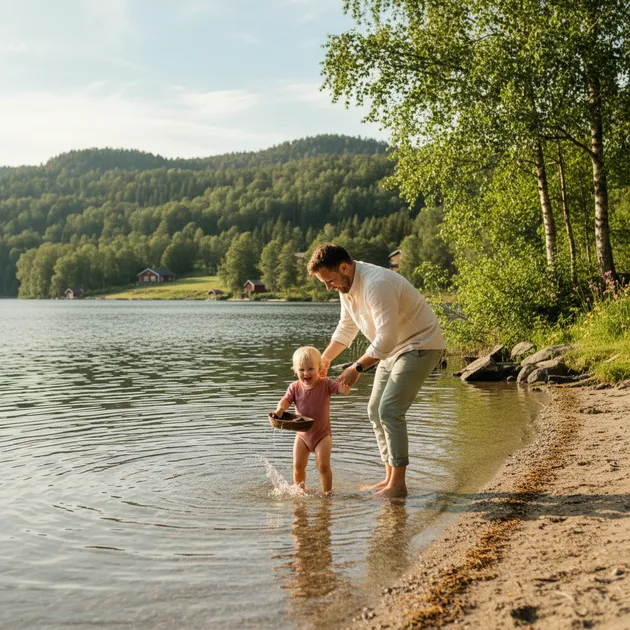
Summer with a baby or toddler is extra memorable. Swimming at the lake, picking berries in the woods, and long bright evenings create magical moments.
But summer with the littlest ones requires a bit of extra planning around sun, heat, and water safety. Here is the complete guide.
Sun protection for babies and toddlers
Children's skin is thinner and more vulnerable than adult skin. According to the AAP, sunburn in childhood can increase the risk of skin cancer later in life.
Babies under 6 months
- Keep your baby in the shade, direct sun should be avoided entirely
- Avoid sunscreen if possible, the skin is too thin to break down chemicals effectively
- Use clothing and an umbrella as protection
- Avoid being outside between 10 a.m. and 4 p.m. when the sun is strongest
Babies 6–12 months
- Use sunscreen with SPF 30–50 on exposed skin
- Choose mineral sunscreen (zinc oxide/titanium dioxide), which is gentler on baby skin
- Wide-brimmed sun hat covering face, ears, and neck
- UV clothing with UPF 50+ protection
- Sunglasses with UV protection
Toddlers 1–3 years
- Sunscreen on all exposed skin, apply 20 minutes before going in the sun
- Reapply after swimming, sweating, or every 2 hours
- Continue with sun hat and UV clothing
- Teach your child early that a sun hat is part of summer dressing
Summer sun can be stronger than many people expect, especially near water which reflects the radiation. Children should never get sunburned. One episode of severe sunburn in childhood doubles the risk of melanoma. (Source: AAP/Skin Cancer Foundation)
Swimming with babies and toddlers
Water safety
Drowning is one of the leading causes of accidental death in young children. These rules apply:
- Never leave your child unsupervised near water, not even for a second
- Arm's reach distance for children under 4 years
- Pools and buckets, always empty splash pools after use. Young children can drown in just a few centimeters of water
- Life jacket always near open water, docks, and boats
First time in the water
For babies who have never bathed outdoors:
- Start with a small splash pool with lukewarm water at home
- Let the baby get used to having water on their body
- Hold the baby securely and close
- Short sessions (10–15 minutes) are enough, babies get cold quickly
Water temperature
- Babies under 6 months: Water temperature around 90–93°F / 32–34°C (home splash pool)
- 6–12 months: Tolerates slightly cooler water, but check that the baby isn't getting cold
- Toddlers: Lake or pool water in summer (60–70°F / 16–21°C) is fine for short swims followed by warming up
Pack a large, dry towel and warm clothing that's easily accessible. After swimming, children need to warm up quickly, especially babies who don't regulate body temperature as well as adults.
Summer activities by age
0–6 months
- Shade time, lay your baby on a blanket under a tree
- Sensory outing, let the baby feel grass, listen to birds, watch clouds
- Stroller walk along paths and trails
- Splash pool with lukewarm water in the shade
6–12 months
- Sandbox play, sand is wonderful for the senses (watch that they don't eat too much!)
- Berry picking, let the baby taste blueberries and strawberries (from 6 months)
- Water play with cups and buckets
- Hiking in a carrier through woods and fields
1–2 years
- Beach trip with bucket and spade
- Bug hunt, look at ants, butterflies, and beetles
- Splash pool with toys
- Berry picking in the woods, blueberries are pure gold
- Walk with stops to explore everything along the way
2–3 years
- Riding a tricycle or balance bike
- Fishing trip, exciting even without catching anything
- Camping in the backyard (a safe first camping experience)
- Farm visit, many farms offer summer activities
- Playground safari, visit new playgrounds in the neighborhood
Summer and food
Warm summer days call for extra focus on hydration and food safety.
Drinks
- Breastfed babies generally don't need extra water, but can nurse more often
- Formula-fed babies can be offered a little extra water between feedings in the heat
- Toddlers need reminders to drink, offer water regularly
- Avoid juice and sugary drinks
Food in the heat
- Pack food cold, use ice packs in the lunch box
- Avoid dairy products that have been sitting in the heat
- Fruit and berries are perfect summer snacks
- Freeze fruit like halved grapes, banana, or mango pieces as snacks
Babies who have just started solid foods can explore summer berries. Blueberries, strawberries, and raspberries are popular from 6 months. Crush or cut them for your baby to prevent choking.
Insects and stings
Summer means mosquitoes, gnats, and ticks.
Mosquitoes and gnats
- Mosquito net over stroller and travel crib
- Insect repellent, use products rated for children (check age recommendation; choose low-DEET or picaridin options)
- Clothing with long sleeves and legs on evenings and in wooded areas
- After a sting: Cool with a cold cloth. Contact a doctor if there is significant swelling or an allergic reaction
Ticks
Ticks are active from spring through fall.
- Check the body after outings in tall grass or woods
- Remove the tick with tweezers, pull straight out, don't twist
- Note the date and location of the bite
- Contact your pediatrician if redness develops around the bite site (a bull's-eye rash can indicate Lyme disease)
Be especially thorough with tick checks on toddlers, they crawl in tall grass and can't speak up for themselves. Check behind the ears, in the groin, under the arms, and in the scalp.
Heat and overheating
Babies regulate body temperature less efficiently than adults. On hot days:
- Never leave children in a car, the temperature rises dramatically fast, even with a window cracked
- Dress your child lightly, an onesie or just a diaper is enough indoors on hot days
- Ensure air circulation, a fan or open windows
- Offer extra drinks and nursing
- Cool baths or damp cloths can help
Signs of overheating: red, hot skin, restlessness, lethargy, fever without illness.
Frequently asked questions
Can my baby sleep outside in summer?
Yes, outdoor naps are common and recommended by many pediatricians. Use a mosquito net, place the stroller in the shade, and check the temperature regularly. Your baby needs lighter clothing than indoors. Never cover the stroller with a blanket or cloth.
What's the best sunscreen for babies?
Choose mineral sunscreen (zinc oxide/titanium dioxide) with SPF 30–50. Avoid products with fragrance and alcohol. Look for products labeled for sensitive skin or babies. Always test on a small patch of skin first.
Is it okay to take a baby to the beach?
Absolutely, but adapt the visit. Choose a time outside of peak sun hours (before 10 a.m. or after 4 p.m.), bring shade (umbrella or beach tent), and keep sessions short for babies. Regular drink breaks and shade breaks are important. Follow activity tips appropriate for your child's age.
This article is based on recommendations from the AAP, WHO, and the American Red Cross.
Sources
🔧 Helpful Tools
- All Baby Tools. Browse all free tools for pregnancy and baby care
📖 Related Articles
- Spring and Easter with Your Baby: Activities and Tips. Easter with your baby or toddler. Activities, outing ideas, seasonal fun, and tips for a wonderful holiday.
- Winter Activities with Baby and Toddler. The best winter activities for babies and toddlers. Tips on layering, outdoor naps, sledding, and cold-weather safety.
- Kids Swimwear Guide: Swimsuits, UV Suits, and Sun Protection. Everything about kids swimwear, UV suits, and sun protection clothing. UPF ratings, sizing, and tips for safe swimming. Find the right swimwear for baby and toddler.