Whether you're planning combination feeding, pumping breast milk, or using formula, choosing the right bottle for your newborn makes a real difference. The right bottle can reduce colic, gas, and frustration for both you and your baby.
Here you'll find a complete guide to types, materials, flow rates, and how to safely combine breast and bottle feeding.
Key Takeaways
- Wait 3–4 weeks before introducing a bottle if you are breastfeeding, this gives time for breastfeeding to establish before mixing feeding methods.
- Wide-neck bottles with slow-flow nipples most closely mimic breastfeeding and make switching between breast and bottle easier for your baby.
- Anti-colic bottles with a venting system can reduce gas and fussiness in babies who swallow a lot of air during feeding.
- Both glass and BPA-free plastic bottles are safe, glass lasts longer and doesn't discolor, while plastic is lighter and less fragile for everyday use.
- Replace bottle nipples every 4–6 weeks or as soon as they show thinning, discoloration, or stickiness, worn nipples can alter flow rate and harbor bacteria.
When Can You Introduce a Bottle?
Midwives and lactation consultants recommend waiting until breastfeeding is well established before introducing a bottle. That typically means 3–4 weeks after birth.
The reason is straightforward: the sucking technique differs between breast and bottle. At the breast, your baby uses a wider mouth opening and more active tongue movement. With a bottle, the baby needs less effort to get milk.
If your baby needs supplementation early for medical reasons, a midwife or pediatric nurse can show you safe bottle-feeding technique from the start.
Tip: Struggling with breastfeeding? Read our guide to breastfeeding challenges or contact a lactation consultant in your area.
Types of Baby Bottles
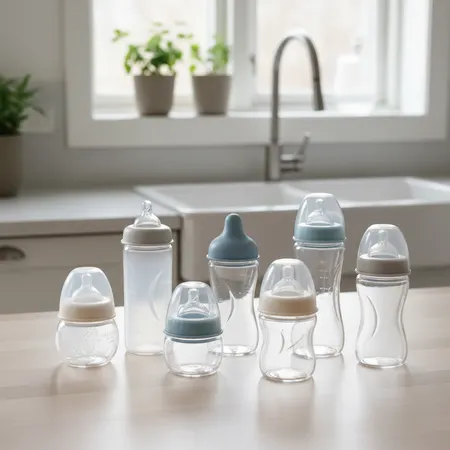
Standard Baby Bottle
The most common type. Narrow form with straight walls and a simple narrow- or wide-mouth opening. Affordable and easy to clean.
Works well for babies already accustomed to bottles, and for families using formula as their primary source.
Anti-Colic Bottle
Anti-colic bottles have a venting system that reduces air intake during feeding. Brands like Dr. Brown's use an internal tube system, while Philips Avent and MAM have vents in the base or bottle neck.
If your baby has a lot of gas, spits up frequently, or is unsettled after meals, an anti-colic bottle can help. Read more about colic in babies.
Wide-Neck Bottle (Breast-Like)
Wide-neck bottles have a flat, broader nipple that resembles the shape of the breast. They require your baby to open wide, just like when breastfeeding. This makes switching between breast and bottle easier.
Philips Avent Natural, NUK Nature Sense, and MAM are popular brands in this category.
Glass or Plastic?
| Feature | Glass | Plastic |
|---|---|---|
| Durability | Very long-lasting | Wears over time |
| Weight | Heavier | Lightweight |
| Cleaning | Easy, dishwasher-safe | Can discolor |
| Chemicals | No off-gassing | BPA-free (EU/US requirement) |
| Price | More expensive | More affordable |
| Risk | Can break | Scratch-resistant options available |
All plastic baby bottles sold in the EU and US are BPA-free. This has been a legal requirement since 2011. You don't need to worry about BPA if you buy bottles from reputable brands at major retailers.
Glass bottles are a great choice for home use. Plastic bottles are more practical on the go. Many families use both.
Nipple Shape and Flow Rate
The nipple is the part your baby puts in their mouth, and it affects the feeding experience the most.
Shapes
- Round nipple: Traditional shape. Works for most babies.
- Flat/orthodontic nipple: Shaped to mimic the palate. NUK and MAM use this shape.
- Breast-like nipple: Wide and soft, resembling the shape of the breast. Best for combination feeding.
Flow Rate
The flow rate determines how quickly milk comes out. The wrong flow makes feeding stressful for your baby.
- Size 0/Preemie: For premature babies and the very first weeks
- Size 1/Slow: 0–3 months, standard for newborns
- Size 2/Medium: 3–6 months
- Size 3/Fast: 6+ months
Always start with slow flow for newborns. A bottle with too fast a flow gives your baby too much milk too quickly, which can cause coughing, spitting up, and discomfort. Signs the flow is too fast: milk runs out of the corners of the mouth, the baby coughs or pushes the bottle away.
Signs the flow is too slow: the baby sucks intensely, becomes frustrated, or falls asleep from effort before the meal is finished.
Temperature for Milk in a Bottle
Breast milk and formula should be at body temperature, around 98.6°F (37°C). Always test the temperature on the inside of your wrist before giving the bottle to your baby. The milk should feel lukewarm, not warm.
For warming:
- Use a bottle warmer or let the bottle stand in a cup of warm (not boiling) water
- Gently swirl the bottle to distribute the heat evenly
- Never heat in a microwave, it creates uneven hot spots and can scald your baby
Read more about formula in our guide to baby formula.
Cleaning and Sterilizing
Newborns have an immature immune system. Sterilizing bottles and nipples is recommended for the first 3–4 months.
Sterilization Methods
- Boiling: Place bottles and nipples in boiling water for 5 minutes. Easiest and cheapest.
- Steam sterilizer: Electric or microwave sterilizer. Sterilizes in 5–10 minutes.
- Cold-water sterilizing: Tablets or liquid in cold water. Takes 30 minutes. Convenient when traveling.
After the first few months, thorough washing in hot soapy water with good rinsing is sufficient. Use a bottle brush to reach all corners.
Remember: Silicone nipples wear out over time. Check the nipple regularly for cracks or signs of wear, and replace as needed, typically every 4–8 weeks.
Nipple Confusion. Myth or Reality?
Many new parents worry about "nipple confusion", that their baby will refuse the breast after having a bottle. Lactation professionals prefer the term "flow preference" or "nipple preference."
The challenge is about technique, not confusion. Milk flows more easily from a bottle, and some babies prefer the faster flow. That doesn't mean the baby is "confused", they've learned that the bottle delivers a faster reward.
How to prevent flow preference:
- Wait to introduce bottles until breastfeeding is established (3–4 weeks)
- Use a breast-like nipple with slow flow
- Try "paced bottle feeding", hold the bottle more horizontally and let your baby control the pace
- Have someone else offer the bottle, so your baby associates you with the breast
Many families combine breast and bottle without problems. If your baby starts refusing the breast, contact a lactation consultant or your pediatrician for guidance.
Read more about pumping in our guide to pumping breast milk.
Popular Brands
Here are the most widely used baby bottle brands for newborns:
- Philips Avent Natural: Wide-neck, breast-like nipple. Popular choice for combination feeding.
- Dr. Brown's: Internal tube system to reduce colic. Best-documented anti-colic effect.
- MAM: Flat nipple, self-sterilizing base (3 minutes in the microwave). Easy to clean.
- NUK: Orthodontic nipple that mimics the shape of the palate. Available in glass and plastic.
No single bottle works for all babies. Consider buying one bottle from two different brands to see what your baby prefers before investing in a full set.
Practical Tips
- Starter pack: 4–6 bottles (5–8 oz / 150–240 ml) and a bottle brush will get you through the early weeks
- Don't mix brands for nipple and bottle, always use the nipple from the same manufacturer as the bottle
- Label bottles with the date if storing pumped breast milk, breast milk keeps up to 4 hours at room temperature, up to 4 days in the refrigerator, and 6 months in the freezer
- Add bottles to your baby checklist to keep track of all your baby gear
Plan all your baby gear: Add bottles, sterilizer, and accessories to your baby checklist, so you don't forget anything before your baby arrives.
Frequently Asked Questions
Which baby bottle is best for newborns?
There's no single bottle that works for everyone. For combination feeding, a wide-neck bottle with slow flow is a good starting point (for example Philips Avent Natural or NUK Nature Sense). For babies with colic, Dr. Brown's anti-colic bottle can help. Try two different brands to see what your baby prefers.
When can you give a newborn a bottle?
If you're breastfeeding, it's recommended to wait 3–4 weeks until breastfeeding is well established. If your baby needs supplementation earlier for medical reasons, a midwife or pediatric nurse can guide you on safe bottle-feeding from the start.
Are plastic bottles safe for babies?
Yes. All plastic bottles sold in the EU and US are BPA-free, which has been legally required since 2011. Choose bottles from reputable brands and replace any that are scratched or discolored.
What is an anti-colic bottle?
An anti-colic bottle has a venting system that reduces the amount of air your baby swallows during feeding. Dr. Brown's uses an internal tube system, while other brands have vents in the base or neck. It can help babies with a lot of gas, frequent spitting up, or unsettled behavior after meals.
How often should you sterilize baby bottles?
For the first 3–4 months, sterilize after every wash. After that, thorough washing in hot soapy water is sufficient. Use a bottle brush to clean thoroughly on the inside.
What does flow rate on a nipple mean?
The flow rate determines how quickly milk comes out. Newborns need size 1 (slow flow). Too fast a flow causes coughing and spitting up; too slow a flow makes your baby frustrated. Move up to the next size when your baby shows signs that the flow is too slow.
Read More
- Baby Formula. How to Choose the Right One
- Pumping Breast Milk. Complete Guide
- Baby Refuses the Bottle. What to Do
- Colic in Babies. Causes and Relief
- Pacifier Guide for Babies
- Baby Gear Checklist
Sources
- WHO. "Breastfeeding." who.int
- AAP. "Bottle Feeding." healthychildren.org
- AAP. "Infant Nutrition and Feeding." healthychildren.org
- EU Regulation 321/2011. Bisphenol A (BPA) banned in baby bottles from 2011.
- CDC. "Infant Formula." cdc.gov
🔧 Helpful Tools
- All Baby Tools. Browse all free tools for pregnancy and baby care