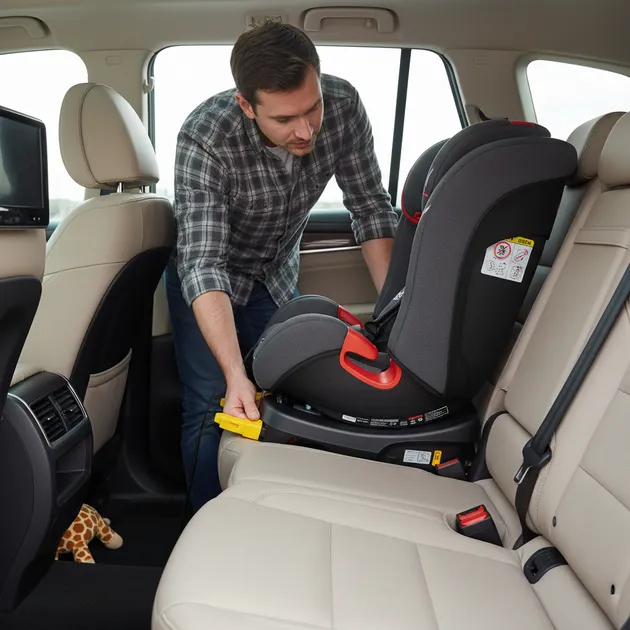
The right car seat depends on your child's age, weight, and height, and on using it correctly every single ride. According to the NHTSA, car seats reduce the risk of fatal injury by 71% for infants and 54% for toddlers ages 1-4 in passenger vehicles. The AAP recommends rear-facing seats for as long as possible, followed by forward-facing with a harness, then a booster seat, and finally a seat belt alone, each stage based on outgrowing the previous one.
Key Takeaways
- All children should ride rear-facing as long as possible, the AAP no longer specifies an age minimum for switching
- Every car seat sold in the US must pass the same federal safety standards (FMVSS 213), price does not equal safety
- A car seat is only as safe as its installation. NHTSA offers free inspection stations nationwide
- Car seats expire (typically 6-10 years) and should never be used after a crash
- The four stages are: rear-facing infant/convertible, forward-facing with harness, booster seat, and seat belt
The Four Stages of Car Seats
Children move through four stages of vehicle restraint as they grow. The AAP and NHTSA recommend keeping children in each stage as long as they fit, rather than rushing to the next one.
Stage 1: Rear-Facing (Birth Through Toddlerhood)
Who it's for: All infants from birth until they outgrow the rear-facing weight or height limit of their seat.
Rear-facing is the safest position for young children. In a frontal crash, the most common type, a rear-facing seat distributes crash forces across the entire back, head, and neck, rather than concentrating force on the neck and spine. The AAP's updated policy statement removed the previous age-2 minimum and now simply recommends rear-facing for as long as possible.
Two options at this stage:
Infant-only seats are designed for newborns and small babies (typically up to 30-35 lbs and 30-32 inches). They come with a detachable base and a carrier handle, making it easy to move a sleeping baby between the car and a stroller. The downside: your baby will outgrow it within 9-15 months, and you'll need a new seat.
Convertible seats can be used rear-facing from birth (with a newborn insert if needed) and later converted to forward-facing. They typically allow rear-facing up to 40-50 lbs, meaning many children can stay rear-facing until age 3-4. They are larger and stay in the car permanently, no carrier handle.
Which to choose: If budget allows, many families start with an infant-only seat for the first year (for the convenience of the carrier) and then transition to a convertible seat. If you prefer to buy once, a convertible seat used rear-facing from birth is equally safe and more cost-effective.
Stage 2: Forward-Facing with Harness
Who it's for: Children who have outgrown the rear-facing limits of their convertible seat. This typically happens between ages 2-4, depending on the child's size and the seat's limits.
A forward-facing seat uses a five-point harness that distributes crash forces across the strongest parts of the body: shoulders, hips, and the bony structure of the chest. The harness keeps the child securely in the seat and prevents ejection.
Most convertible seats have a forward-facing harness limit of 40-65 lbs. Keep your child in the five-point harness as long as they fit, do not rush to a booster seat.
The top tether is critical. When used forward-facing, the seat must be secured with a top tether strap in addition to the seat belt or LATCH system. The NHTSA reports that top tether use reduces head excursion by 4-6 inches in a crash. Many parents skip this step, don't.
Stage 3: Booster Seat
Who it's for: Children who have outgrown the harness limits of their forward-facing seat but are not yet big enough for a seat belt alone. This typically applies to children ages 4-8 and 40-100 lbs.
A booster seat positions the vehicle's seat belt correctly across the child's body. Without a booster, the lap belt rides up on the abdomen (risking internal injury) and the shoulder belt crosses the neck or face. The booster lifts the child so the seat belt sits across the collarbone and across the hips.
Two types:
- High-back boosters provide head and neck support and are better for vehicles without headrests
- Backless boosters are more portable but require the vehicle to have an adjustable headrest
Per NHTSA guidelines, children should use a booster until the seat belt fits properly without one, typically when they are at least 4 feet 9 inches tall (approximately 57 inches).
Stage 4: Seat Belt Alone
Who it's for: Children who pass the five-step seat belt fit test:
- The child's back is flat against the vehicle seat
- Knees bend naturally at the seat edge
- The lap belt lies across the upper thighs (not the stomach)
- The shoulder belt crosses the collarbone and chest (not the neck or face)
- The child can sit this way for the entire ride without slouching
Most children are ready between ages 8-12. The AAP recommends that all children under 13 ride in the back seat.
How to Install a Car Seat Correctly
An incorrectly installed car seat dramatically reduces its effectiveness. NHTSA research shows that nearly half of all car seats are misused in some way.
LATCH vs. Seat Belt Installation
LATCH (Lower Anchors and Tethers for Children): Built into vehicles manufactured after 2002. Lower anchors have weight limits (typically the combined weight of the child plus the seat should not exceed 65 lbs). Check both your vehicle manual and the car seat manual for limits.
Seat belt installation: Works in any seating position and has no weight limit. Use the seat belt's locking mechanism (most seat belts lock when fully extended and retracted slowly). Many experts consider seat belt installation equally as safe as LATCH when done correctly.
Do not use both LATCH and seat belt simultaneously unless the car seat manual explicitly permits it.
The 1-Inch Rule
After installation, grab the car seat at the belt path and try to move it side to side and front to back. It should not move more than 1 inch in any direction. If it does, the installation is not tight enough.
The Pinch Test
After buckling your child in, try to pinch the harness webbing at the shoulder. If you can pinch a fold of webbing, the harness is too loose. Tighten until the harness is snug against the child's body.
Free Inspection Stations
NHTSA maintains a network of certified Child Passenger Safety Technicians who will inspect your installation for free. Find a station at NHTSA.gov/CPS. This is the single most underused resource in child car safety.
Safety Ratings and Standards
Federal Safety Standard (FMVSS 213)
Every car seat sold in the United States must meet Federal Motor Vehicle Safety Standard 213. This includes crash testing at specific force levels, flammability standards, and labeling requirements. NHTSA does not rank car seats against each other, all certified seats meet the same minimum safety standard.
NHTSA Ease-of-Use Ratings
NHTSA rates car seats on ease of use (1-5 stars) across categories like installation, harness adjustment, and labeling. These ratings do not measure crash protection, they measure how likely a parent is to use the seat correctly. A seat that is easier to use correctly is, in practice, a safer seat.
International Standards
If you live outside the US, relevant standards include:
- EU/UK: ECE R129 (i-Size), requires rear-facing until 15 months minimum and uses ISOFIX
- Canada: CMVSS 213, similar to US standards with bilingual labeling requirements
- Australia: AS/NZS 1754, among the most stringent globally
Common Car Seat Mistakes
- Switching forward-facing too early. Many parents switch at age 1 or 2 out of habit. Keep rear-facing until the seat's limit.
- Loose harness straps. The harness should be snug, you should not be able to pinch excess webbing at the shoulder.
- Skipping the top tether. Always use the top tether in forward-facing mode.
- Puffy coats under the harness. Bulky clothing creates dangerous slack. Remove the coat, buckle the child, then drape the coat over them.
- Using an expired or crashed seat. Always check the expiration date and replace any seat involved in a moderate-to-severe crash.
- Incorrect recline angle. Rear-facing seats need the correct recline to keep the airway open. Most seats have built-in level indicators.
What to Look For When Buying
- Fits your vehicle. Not every seat fits every car. Try before you buy or check the manufacturer's fit guide.
- Fits your child. Check the weight and height ranges for both rear-facing and forward-facing modes.
- Easy to install. NHTSA ease-of-use ratings help predict real-world safety.
- Side-impact protection. Look for energy-absorbing foam and head wings, especially for older rear-facing and forward-facing seats.
- Grows with your child. A seat with higher weight and height limits means fewer transitions.
- Budget. A $50 car seat that meets FMVSS 213 is as safe as a $500 seat. Higher prices buy convenience features (no-rethread harness, washable covers, premium materials), not more crash protection.
Frequently Asked Questions
What type of car seat does a newborn need?
Newborns need a rear-facing car seat. You can choose an infant-only seat (typically fits birth to 30-35 lbs) or a convertible seat used in rear-facing mode. The AAP recommends all infants ride rear-facing for as long as possible, ideally until they reach the maximum rear-facing height or weight limit. Infant-only seats offer carrier convenience; convertible seats offer longer use.
When should I switch from rear-facing to forward-facing?
The AAP recommends keeping children rear-facing for as long as possible, until they outgrow the rear-facing height or weight limit of their convertible seat. Most convertible seats allow rear-facing up to 40-50 lbs. Many children can remain rear-facing until age 3-4. There is no safety benefit to switching forward-facing earlier, rear-facing is always safer for a child who still fits.
How do I know if my car seat is installed correctly?
The car seat should not move more than 1 inch side to side or front to back at the belt path. The harness should be snug enough that you cannot pinch excess webbing at the shoulder. The chest clip should be at armpit level. NHTSA recommends having your installation checked at a certified inspection station, the service is free.
What is the safest car seat?
The safest car seat is one that fits your child, fits your vehicle, and is used correctly every time. All car seats sold in the US must pass the same federal crash test standards (FMVSS 213). NHTSA does not rank seats by crash protection. Higher-priced seats typically offer convenience features, not additional crash protection. The real safety difference is correct installation and consistent use.
Do car seats expire?
Yes. Most car seats expire 6-10 years after the date of manufacture. The expiration date is printed on a label on the seat or its base. Plastic degrades over time from temperature fluctuations and UV exposure, which can compromise structural integrity during a crash. NHTSA advises never using an expired car seat.
Can I use a second-hand car seat?
Only if you can verify its full history: it has never been in a moderate-to-severe crash, has not been recalled, is not expired, and has all original parts, labels, and the instruction manual. If you cannot confirm all of these conditions, purchase a new seat. Many retailers run trade-in events where you can exchange an old seat for a discount on a new one.
Should I buy an infant seat or go straight to a convertible?
Both are safe choices. An infant-only seat offers the convenience of a removable carrier, useful for not waking a sleeping baby. A convertible seat skips the transition and can be used from birth through toddlerhood in rear-facing mode. Many families use an infant seat for the first 9-12 months and then transition to a convertible seat. Budget-conscious families can safely start with a convertible seat from day one.
Sources
- NHTSA. Car Seats and Booster Seats
- AAP. Car Seats: Information for Families
- AAP. Safe Transportation of Children (Policy Statement)
- WHO. Road Traffic Injuries: Child Safety
- NHTSA. Child Passenger Safety Technician Finder
🔧 Helpful Tools
- All Baby Tools. Browse all free tools for pregnancy and baby care
📖 Related Articles
- How to Choose a Car Seat for Your Baby. Choosing the right car seat depends on your child's age, weight, and height. Learn the stages of car seats, key safety features, and installation tips.
- Car Seat Safety: Complete Guide for Parents. Car seats are the most important baby safety product. Here's what type to use by age, how to install correctly, and the most common mistakes parents make.
- Crib Guide: How to Choose a Baby Crib, Safety Tips, and When to Transition. Everything you need to know about baby cribs, how to choose the right one, safety requirements, the right mattress and bedding, and when your child is ready for a regular bed.