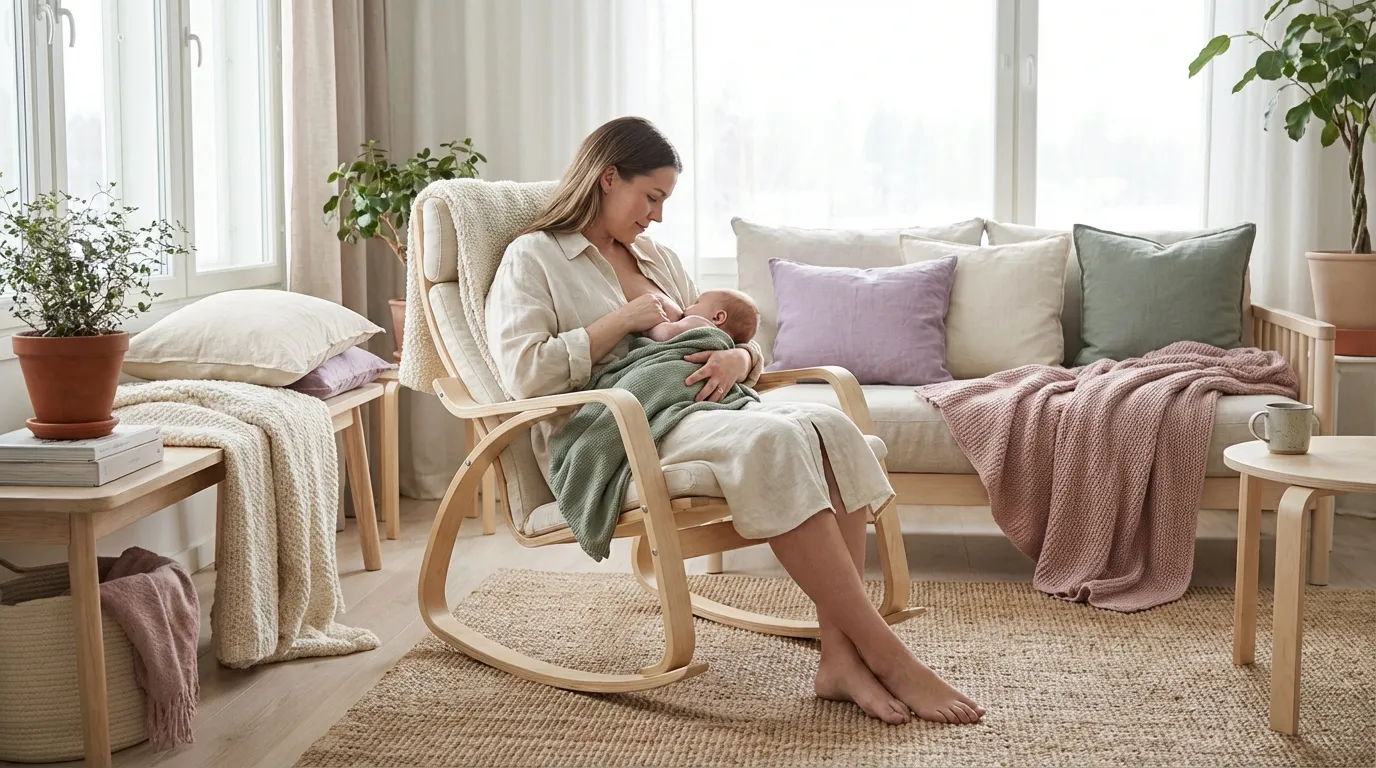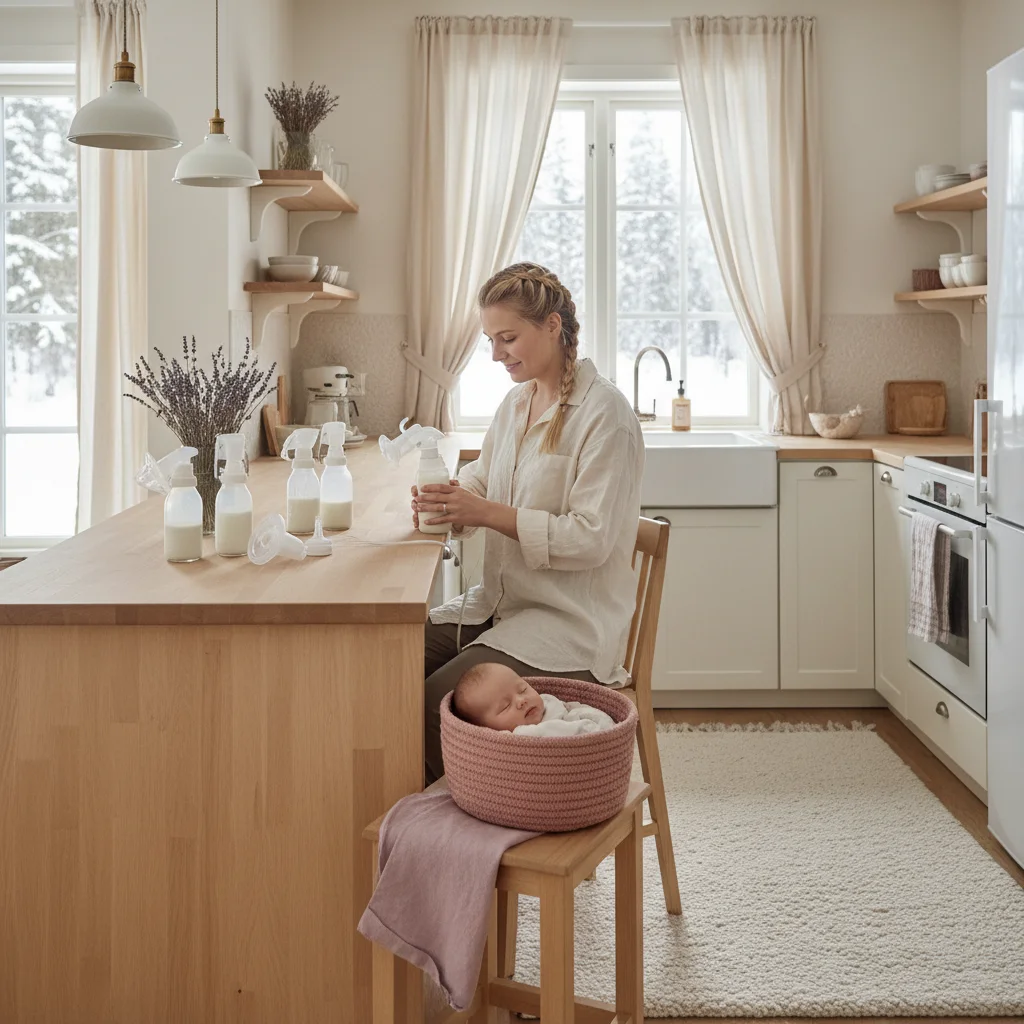
Pumping gives you freedom. It means someone else can feed the baby, you can build a stash before going back to work, and your baby still gets breast milk even when you are not there.
But pumping requires a little know-how. Here is everything you need to know about breast pumps, pumping technique, and safe storage.
When Should You Start Pumping?
It depends on your situation.
If breastfeeding is going well: Wait 4–6 weeks before starting to pump. By then, milk production has stabilized and the baby has learned to nurse. Introducing a pump too early can interfere with the natural supply-and-demand balance.
If the baby is premature or hospitalized: Start pumping as soon as possible after birth, ideally within the first 6 hours. Frequent pumping (8–10 times per day) replaces the baby's suckling and keeps production going.
If you are going back to work: Start pumping 2–3 weeks before your start date. This gives you time to build a small stash without stress.
Many people find they pump the most in the morning, when milk production is at its peak. Try pumping after the morning nursing session, that is often the easiest time.
Types of Breast Pumps
Manual Breast Pump
A manual pump is operated by hand. It is inexpensive, silent, and easy to take with you. The downside is that it takes more time and effort.
Best for: Relieving engorgement, occasional pumping, travel.
Single Electric Pump
Pumps one breast at a time with a motor. Faster than manual, but you still spend time because you have to switch sides.
Best for: Regular pumping a few times per week.
Double Electric Pump
Pumps both breasts simultaneously. Halves the time and can provide better stimulation of milk production. Most people who pump daily for work prefer this type.
Best for: Daily pumping, work situations, building a stash.
Wearable Pump
Fits inside your bra and is nearly invisible. You can move freely while pumping. Suction is often somewhat weaker than stationary pumps.
Best for: Multitasking, discreet pumping at work, active parents.
Make sure the breast shield (flange) is the right size. A flange that is too large or too small gives poor output and can cause pain. Measure your nipple and check the manufacturer's sizing guide.
How to Pump Effectively
Before Pumping
Wash your hands thoroughly. Make sure all pump parts are clean. Find a relaxed position, stress inhibits the let-down reflex.
Stimulate the Let-Down Reflex
The let-down reflex sends milk from the milk glands down to the nipple. Without it, you will get little out no matter how strong the pump suction is.
How to stimulate it:
- Look at a photo of your baby or smell something they have worn
- Apply warm compresses to your breasts for a couple of minutes
- Gently massage your breasts in circular motions
- Start with low suction and gradually increase
During Pumping
Most people need 15–20 minutes per session. Start with a rapid pumping cycle (stimulation phase) for 2 minutes, then slower and deeper suction.
Switch between breasts if using a single pump. Stop when the milk flow has ceased and your breasts feel soft.
After Pumping
Label the milk with the date and amount. Store it properly (see the table below). Clean all pump parts that came into contact with milk.
Storing Breast Milk
Proper storage preserves the milk's nutrients and protects against bacterial growth.
Storage Times
| Storage Location | Temperature | Storage Time |
|---|---|---|
| Room temperature | Up to 77°F (25°C) | Up to 4 hours |
| Cooler bag (ice pack) | Approx. 39°F (4°C) | 24 hours |
| Refrigerator | 40°F (4°C) or colder | Up to 4 days |
| Freezer (fridge-freezer combo) | 0°F (-18°C) or colder | 6 months |
| Deep freezer | -4°F (-20°C) | Up to 12 months |
Store breast milk at the back of the refrigerator, not in the door. The temperature is most stable there. Frozen breast milk should be thawed in the refrigerator or under running lukewarm water, never in the microwave.
Storage Tips
Use clean containers of glass or BPA-free plastic. Breast milk storage bags are convenient for freezing.
Do not fill to the top. Breast milk expands when it freezes. Fill to about 3/4.
Label everything. Date, amount, and your baby's name if the milk is going to childcare. Always use the oldest milk first.
Never refreeze. Thawed breast milk should be used within 24 hours and must not be refrozen.
Mixing milk. You can mix milk from different pumping sessions, but chill the fresh milk first. Never mix warm milk with cold.
Thawing and Warming
Move frozen milk to the refrigerator the night before, it will be ready by morning. If you need it faster, hold the container under running lukewarm water.
Never heat breast milk in the microwave. It can create hot spots that burn the baby's mouth, and it destroys valuable antibodies.
Thawed milk may look different from fresh, the fat separates and the color can vary. Gently swirl the container to mix. Do not shake vigorously.
Combining Nursing and Pumping
Most people combine nursing and pumping. Here are some strategies:
Pump after nursing. The baby takes most of the milk, and you empty the rest with the pump. Over time, this increases production.
Pump between nursing sessions. Mid-way between two feeds gives the most milk, but may mean the baby gets less at the next feeding.
Replacement pumping. When someone else gives a bottle, pump at the same time to maintain production.
The amount you pump does not necessarily indicate your total milk production. Your baby is always more efficient than a pump. Pumping 2–3 oz (60–90 ml) per session is completely normal.
Building a Breast Milk Stash
You do not need a huge stash. For most people, 10–15 portions (approx. 3–5 oz / 100–150 ml each) is a good buffer.
Freeze in small portions. 2–4 oz (60–120 ml) per bag gives flexibility and reduces waste.
Start early, build slowly. One extra pumping session per day over 2–3 weeks builds a solid foundation.
Rotate the stash. Always use the oldest milk first. Put new milk at the back of the freezer.
Frequently Asked Questions
How Long Does Breast Milk Last in the Refrigerator?
Freshly pumped breast milk keeps for up to 4 days in the refrigerator at 40°F (4°C) or colder, according to CDC guidelines. Store it at the back of the refrigerator where the temperature is most stable.
Can I Mix Breast Milk From Different Pumping Sessions?
Yes, but chill the fresh milk first. Never mix warm, freshly pumped milk directly with cold milk from the refrigerator. When both are at the same temperature, you can combine them. The storage time is counted from the oldest milk.
How Much Should I Be Able to Pump?
It varies enormously from person to person. 2–3 oz (60–90 ml) per pumping session is completely normal, especially in addition to nursing. The amount says little about your total milk production, your baby is much more efficient than any pump.
Pumping is a tool that gives you choices. Whether you pump for practical reasons or because breastfeeding needs support, you are doing a wonderful thing for your baby.
Sources
- CDC - Proper Storage and Preparation of Breast Milk
- AAP - How to Safely Prepare Formula with Water
- La Leche League International - Storing Human Milk
🔧 Helpful Tools
- Breastfeeding Tracker. Log feeds, track supply, and monitor nursing sessions
- Baby Food Guide. Safe foods and introduction schedule for your baby
- All Baby Tools. Browse all free tools for pregnancy and baby care
📖 Related Articles
- Breast Pump: Complete Buying Guide for New Mothers. Everything you need to know about breast pumps. Manual vs. electric, top brands, and tips for choosing the right pump for your situation.
- Alcohol and Breastfeeding: What Does the Research Say?. Can you drink alcohol while breastfeeding? Learn what the guidelines say, what current research shows, and how long you should wait before nursing.