Pacifier, dummy, soother, whatever you call it, for some parents it is a lifesaver when the baby is unsettled. Others are unsure whether it does more harm than good.
The truth is there is no single answer that fits every family. Here are the facts about benefits, drawbacks, and when it is time to wean.
Benefits of a Pacifier
Comfort and Soothing
All babies are born with a sucking reflex. This reflex is about more than feeding, sucking provides security and calm. A pacifier satisfies this need without the baby needing to eat.
For babies with a strong sucking need, the pacifier can be an effective source of comfort and makes it easier for someone other than the breastfeeding parent to soothe the baby.
Reduced Risk of SIDS
Research shows that pacifier use during sleep is associated with a lower risk of sudden infant death syndrome (SIDS). The exact mechanism is not fully understood, but one theory is that the pacifier helps keep the airway more open.
The AAP includes pacifier use as one of several protective factors against SIDS, alongside back sleeping, correct room temperature, and a smoke-free environment.
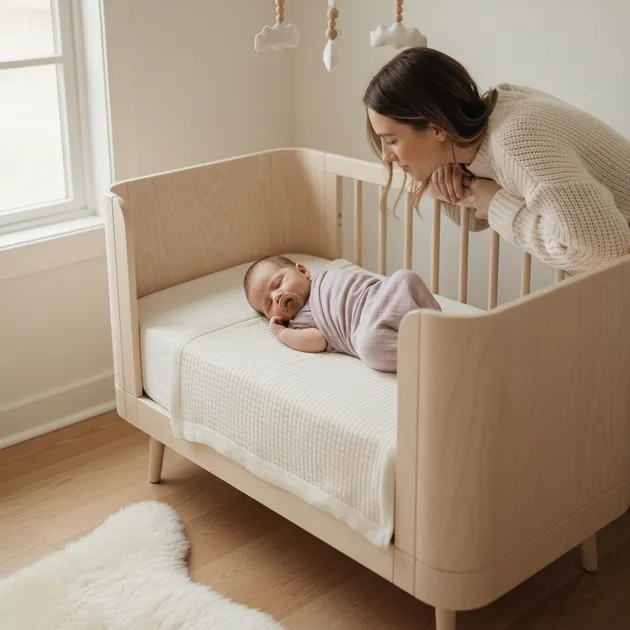
You do not need to put the pacifier back in once the baby has fallen asleep. It is enough to offer it at bedtime. If your baby does not want a pacifier, do not force it.
Pain Relief
A pacifier can redirect attention during uncomfortable experiences such as vaccinations and blood draws. Many healthcare providers recommend pacifiers as a simple form of pain relief for infants.
Easier to Wean Than Thumb Sucking
Children who do not use pacifiers may develop a habit of thumb sucking. Thumb sucking often causes greater dental misalignment than pacifier use, and the habit is harder to break because the thumb is always available.
Drawbacks of a Pacifier
Can Affect Breastfeeding
A pacifier requires a different sucking technique than the breast. Early introduction, before breastfeeding is well established, can cause nipple confusion in the baby.
Lactation organizations and pediatric guidelines recommend waiting until breastfeeding is going well before introducing a pacifier. This is usually when the baby is 4–6 weeks old, has a good latch, and is gaining weight properly.
Premature babies and babies separated from their mothers after birth may have an extra need for sucking. Healthcare providers may recommend a pacifier early in these situations. Follow the advice of your care team.
Dental Misalignment
Long-term pacifier use can affect the teeth and jaw development. The most common problems are:
- Open bite, the upper and lower front teeth do not meet when the child bites down
- Crossbite, the upper jaw becomes too narrow relative to the lower jaw
- Overbite, the upper front teeth protrude too far forward
The good news: dental problems caused by pacifier use typically self-correct if the child stops in good time before the permanent teeth come in.
Night Waking
Babies who are used to falling asleep with a pacifier may wake and cry when it falls out. This can mean more wake-ups for the whole family, especially before the baby is old enough to find the pacifier on their own.
Tip: Place several pacifiers in the crib so the baby can find one independently. Glow-in-the-dark pacifiers are available and make it easier to locate one in the dark.
Increased Risk of Ear Infections
Some research suggests that prolonged pacifier use may increase the risk of recurrent middle ear infections, possibly because the sucking motion affects pressure in the middle ear.
When Should You Introduce a Pacifier?
If you are breastfeeding, wait until breastfeeding is well established, usually around 4–6 weeks. Your baby should have a good latch and be gaining weight well.
If you are bottle-feeding from the start, you can introduce a pacifier right away.
Some babies simply do not want a pacifier. This is completely normal and nothing to worry about. You never need to force a pacifier on a child who does not want one.
Choosing the Right Pacifier
There are many types of pacifiers:
- Anatomical/orthodontic, flatter nipple shaped to fit the palate. Recommended by dentists
- Cherry-shaped, round nipple that more closely resembles the breast
- Extra thin, designed to minimize impact on dental alignment
Choose the right size for your baby's age (0–6 months, 6+ months). Check the pacifier regularly for wear and replace it if the material becomes thin, sticky, or cracked.
Hygiene:
- Sterilize new pacifiers before first use
- Wash with warm water and dish soap daily
- Do not lick the pacifier clean, your oral bacteria can transfer to the baby
- Use a pacifier clip to prevent it from falling on the floor, but never attach a clip inside the crib
When Should Your Child Stop Using a Pacifier?
Pediatric dental guidelines recommend weaning well before the permanent teeth come in:
- Limit use from age 2, ideally only at bedtime
- Stop by age 3 at the latest, by then children have all their baby teeth
- Ideally: As early as possible after age 1, if the child is ready
The longer the child uses a pacifier, and the more it is used during the day, the greater the risk of dental problems.
Weaning Tips
Weaning should be gradual and done with patience. Here are some tried-and-tested methods:
Gradual Reduction
- First, limit to bedtime only
- Then, nighttime only
- Finally, remove completely
The Pacifier "Farewell"
Make it into an occasion. Your child can give the pacifier to a younger baby who needs it, plant it in the garden, or mail it away. Many children accept stopping more easily when there is a story around it.
Practical Tips
- Do not start weaning during periods of big changes (new sibling, starting daycare, moving)
- Expect some difficult evenings, it usually passes within a week
- Offer extra cuddles, closeness, and security as a replacement
- Be consistent, do not give the pacifier back once you have decided
Many parents find that weaning goes more smoothly than expected. Children are adaptable. Prepare for 3–5 tough evenings, but most have forgotten the pacifier after a week.
Frequently Asked Questions
Is a pacifier harmful to breastfeeding?
Not necessarily, as long as you wait until breastfeeding is well established (4–6 weeks). Introducing a pacifier too early can cause nipple confusion. Follow your baby's signals and seek support from a lactation consultant if needed.
Can a pacifier cause crooked teeth?
Yes, with prolonged and frequent use. Dental problems caused by a pacifier typically self-correct if the child stops in good time, ideally before age 3. Limiting use to bedtime after 12 months is a good approach.
Is a pacifier better than thumb sucking?
A pacifier is generally preferable to thumb sucking. The thumb often causes greater bite problems, and the habit is much harder to break because the thumb is always there.
Does a baby need a pacifier to be protected against SIDS?
No. A pacifier is one of several protective factors. Back sleeping, a smoke-free environment, correct room temperature, and a safe sleep environment are far more important. If your baby does not want a pacifier, there is no reason to force it.
Read More
- Baby dental health from birth to age 3
- Safe sleep and SIDS prevention
- Breastfeeding positions, a complete guide
- Colic in babies
Sources
- American Academy of Pediatrics (AAP). "Pacifiers and Breastfeeding." 2024.
- American Academy of Pediatric Dentistry (AAPD). "Policy on Oral Habits." 2023.
- Centers for Disease Control and Prevention (CDC). "Sudden Unexpected Infant Death." 2024.
🔧 Helpful Tools
- Baby Milestones Tracker. Track your baby's developmental milestones
- All Baby Tools. Browse all free tools for pregnancy and baby care
📖 Related Articles
- Baby's First Tooth: Everything You Need to Know. When does baby's first tooth come in? Everything about teething, pain relief, and how to start brushing.
- Co-Sleeping With Your Baby. Safe or Dangerous?. What do health authorities say about co-sleeping? The difference between bed-sharing and room-sharing, risk factors, and safe alternatives.