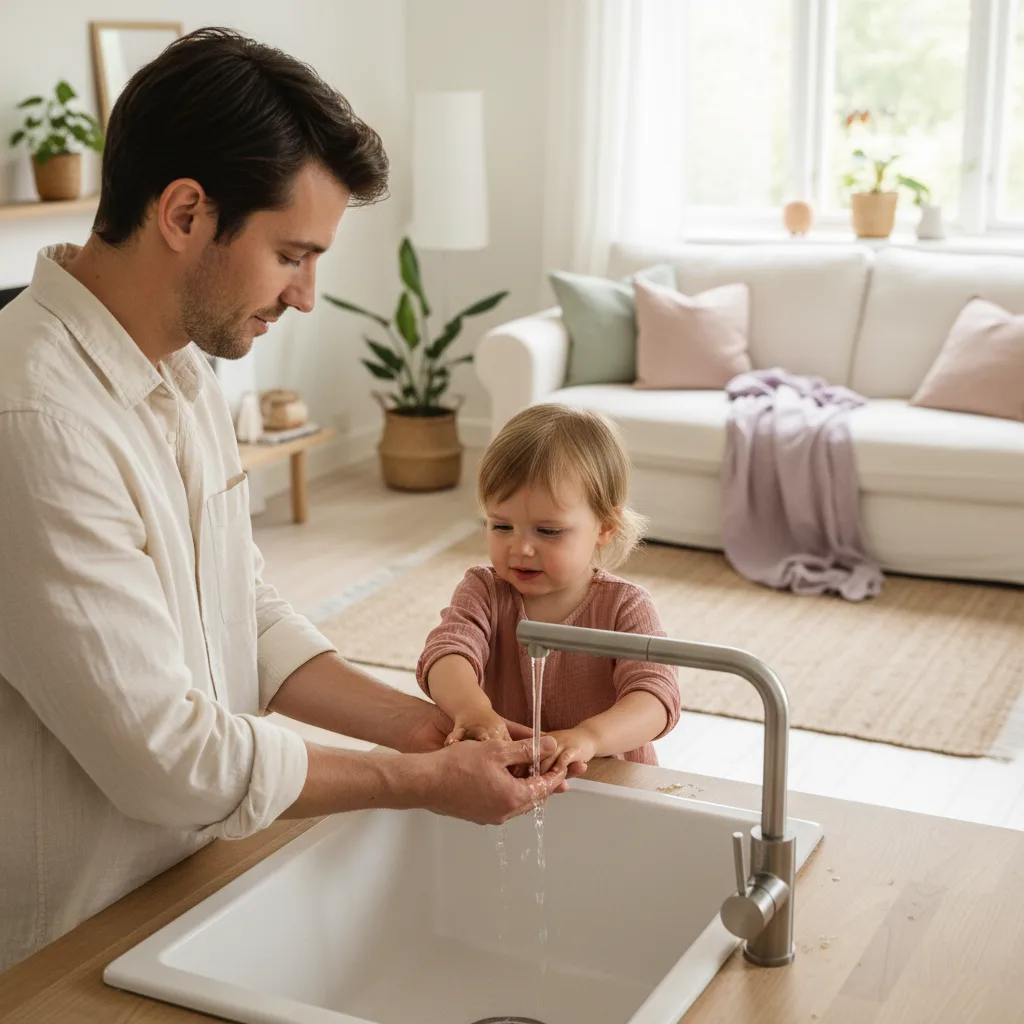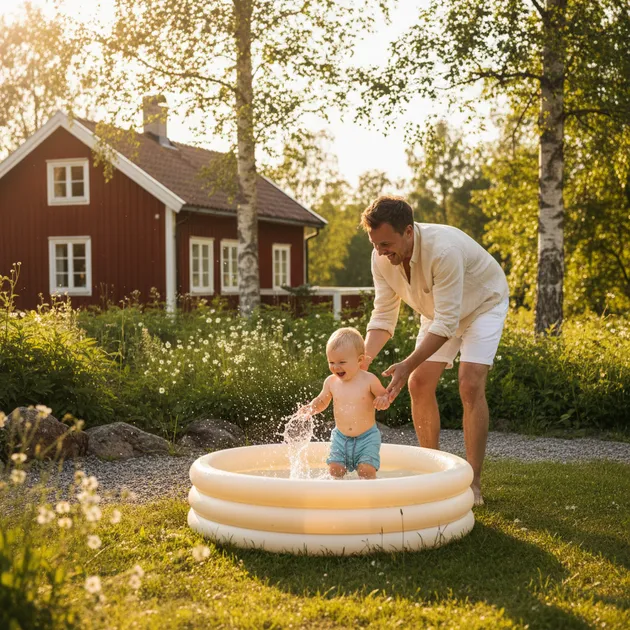
Your child beams with joy in the splash pool. Water sprays, laughter fills the air. Water is play, exploration, and sensory experience at its best. But water is also the situation where seconds of inattention can have fatal consequences.
Drowning is the leading cause of unintentional death for children ages 1–4 in the United States, according to the CDC. For children ages 5–14, it's the second leading cause. Most drowning incidents involving young children happen in home swimming pools and bathtubs.
Water safety isn't about taking away the joy of water. It's about letting children enjoy it safely.
Drowning: The Silent Danger
Drowning doesn't look like it does in the movies. There's no calling for help, no waving arms. Small children who fall into water sink silently and quickly. The entire process can take under 20 seconds.
Drowning is silent. A child who is drowning cannot call for help. The child sinks quickly and without drama. Visual supervision is the only protection, not your ears.
Key Drowning Facts (CDC)
- Drowning is the #1 cause of unintentional death for children ages 1–4
- About 3,500 people drown each year in the U.S. (non-boating related)
- Most drownings of children under 5 occur in home swimming pools
- Children can drown in as little as 2 inches of water
- For every child who dies from drowning, another 7 receive emergency care for nonfatal submersion
Bathtub: The Biggest Danger at Home
Most drowning incidents with small children happen where parents least expect it, in the bathtub at home.
Rules for Bath Time
- Never leave your child in the bathtub, not even for a second. Not to grab a towel, answer the phone, or open the door.
- A small child can drown in just 2 inches (5 cm) of water
- Bath rings and bath seats are NOT safety devices, they can tip over
- Have everything you need within reach BEFORE you put your child in the water
- If the phone rings or someone knocks: take the child with you or ignore it
Bath seats give a false sense of security. A bath seat can tip over, and a child can slip underwater in seconds. Feel free to use a bath seat for comfort, but NEVER as a substitute for supervision. You should always be within arm's reach.
Checklist for Safe Bathing
- All supplies (towel, shampoo, toys) are ready beforehand
- Water temperature is 98.6°F / 37°C (check with elbow or thermometer)
- Water level is low (no higher than the navel of a seated child)
- You have a clear line of sight and both hands available
- Phone is on silent or in another room
Splash Pools and Inflatable Pools
A splash pool in the yard is a classic summer activity, and a hidden drowning hazard. An inflatable pool with 12 inches of water is enough to drown a small child.
Rules for Splash Pools
- ALWAYS empty the pool after use
- Never leave the pool filled unattended, not even "just a few minutes"
- Use fencing around larger pools (permanent installations)
- Children should never be out of your sight near a filled pool
- Older siblings are NOT supervision, they are children themselves
Beach, Ocean, and Lake
Natural swimming areas present extra challenges: currents, depth changes, cold water, and uneven bottoms.
Rules for Beach and Ocean
- Arm's reach for children under 5, at all times
- Choose beaches with lifeguards when possible
- Check weather and current conditions before swimming
- Teach your child to wade in gradually (never jump into unknown water)
- Enter the water together with your child
- Stay in shallow water, no deeper than your child's waist
Rules for Lakes and Rivers
- Lakes can have sudden depth changes
- Rivers have underwater currents that can sweep a child away
- Never swim in unknown rivers or near waterfalls
- Check the bottom conditions carefully first
- Cold water causes faster cooling in children than in adults
Life Jackets
Life jackets are essential safety equipment for children around open water.
When Your Child Should Wear a Life Jacket
- Always on a boat
- At docks or piers
- When fishing from shore
- During play near water where you don't have full control
- During baby swimming (specially fitted flotation vests for the smallest)
Choosing the Right Jacket
- Under 33 lbs (15 kg): Use an approved infant life jacket with a collar that turns the child onto their back
- 33–66 lbs (15–30 kg): Child life jacket with collar
- Try the jacket in water BEFORE you need it, make sure it keeps the child floating with their face above water
- Check that the jacket fits snugly (you should only be able to fit two fingers between the jacket and body)
Inflatable water wings are toys, not safety equipment. They can pop, slip off, or give children a false sense of security. Use an approved life jacket or flotation vest.
Baby Swimming and Swim Lessons
Baby swimming is a great activity for getting children comfortable with water, but it does not make your child drowning-proof.
Baby Swimming (from about 4 months)
- Gives your child positive experiences with water
- Strengthens bonding (lots of skin contact)
- Stimulates motor development
- Your child does NOT learn to swim at this age
- Classes are for acclimation and joy, not survival
Swim Lessons (from about 4–5 years)
- Most children are ready to learn swimming technique from age 4–5
- Look for classes through your local rec center, YMCA, or swim club
- School swimming instruction varies by district
- Goal: children should be able to swim independently by age 6–8
Water Safety ABC
A simple rule to remember for safe swimming:
- A. Always swim with a buddy
- B. Be sure to wear a life jacket
- C. Come back to shore if you're unsure
For parents of young children: adapt the rule to "Always keep your child within reach near water. Be sure to use a life jacket on boats. Come back to safe ground if weather changes."
First Aid for Drowning
If your child or another child falls into water, quick action is critical.
Step by Step
- Get the child out of the water, use your hand, a pole, rope, or anything nearby
- Call 911 immediately (or ask someone else to call)
- Check consciousness, gently shake, call the child's name
- Check breathing, place your ear near the child's mouth for 10 seconds
If the child is not breathing: 5. Give 5 rescue breaths (cover mouth and nose for infants) 6. Start CPR, 30 compressions, 2 breaths 7. Continue until help arrives or the child begins breathing
Learn CPR. All parents should know infant and child CPR. Courses are offered by the Red Cross, local hospitals, and community centers. A 4-hour course can save a life.
Secondary Drowning
A child who has been submerged should always be checked by a doctor, even if they seem fine afterward. In rare cases, water in the lungs can cause problems hours after the incident.
Seek emergency care if your child shows these signs after a water incident:
- Persistent coughing
- Heavy or rapid breathing
- Unusual tiredness or lethargy
- Bluish color around the lips
Water Safety Checklist for Your Home
Go through this list and secure your home:
- Toilet lids are down and possibly locked (for the youngest)
- Buckets and wash basins are emptied and turned over
- Splash pools are emptied after each use
- Garden ponds are fenced or covered with netting
- Rain barrels have tight-fitting lids
- Docks/piers have fencing or barriers
- Life jackets are available and in the right sizes
Frequently Asked Questions
From what age can my child start baby swimming?
Most baby swimming classes accept children from 4–6 months of age. Check with your local pool. Your child should have received their first vaccinations and be healthy. Baby swimming is about getting comfortable with water and having fun, not about learning to swim.
Are water wings safe?
No, water wings are toys and don't provide adequate protection. They can pop, slip off, or give your child a false sense of security. For safety on boats and at docks: use an approved life jacket. For pool activities: arm's-reach supervision is what matters.
How old should my child be before swimming without supervision?
There's no set age. The decision depends on your child's swimming ability, maturity, and the conditions around the water. As a rule of thumb: children under 10 should always have adult supervision around water. Even older children should never swim alone.
What if my child is afraid of water?
Take it gradually. Start with water play in the bathtub, let your child play with water in a bucket, and slowly progress to a splash pool. Never force your child into the water. Positive experiences at your child's pace build confidence. Baby swimming classes with experienced instructors can also help.

Summary
Water gives children enormous opportunities for joy, play, and development. But safety requires constant attention. Remember the three basic rules: never leave your child alone near water, use a life jacket on boats, and teach your child to swim as early as possible.
Read More
- Baby Swimming. Everything You Need to Know
- First Aid for Infants and Children
- Childproofing Your Home
- Summer Activities with Baby
- Baby's First Bath
Sources
- CDC. Drowning Facts
- AAP. Water Safety for Children
- American Red Cross. Water Safety
- Safe Kids Worldwide. Drowning Prevention
🔧 Helpful Tools
- Baby Milestones Tracker. Track your baby's developmental milestones
- All Baby Tools. Browse all free tools for pregnancy and baby care