It only takes a second. A cup of coffee tips over, your child reaches toward the stove, or the bathwater is too hot. Burns are one of the most common accidents among young children, and proper first aid in the first few minutes can make a significant difference to healing.
Scalding (burn injuries from hot liquids) is the most common type of burn in children under 4. Children's skin is thinner than adult skin and burns faster and deeper. That is why prevention and rapid first aid are especially important.
First aid, the first minutes are critical
Regardless of the type of burn, the approach is the same. Here is the step-by-step guide you should know by heart.
Step 1: Remove the heat source
- Move the child away from the heat source immediately
- Quickly remove clothing and jewelry near the burn
- Do not tear off clothing that is stuck to the skin, cut around it if necessary
Step 2: Cool with lukewarm running water
This is the most important action:
- Cool the burned area with lukewarm running water (about 20°C / 68°F)
- Cool for a minimum of 20 minutes, set a timer
- Start cooling as quickly as possible, ideally within the first few minutes
Do NOT use ice-cold water, ice cubes, or frozen packs. Cold water can cause hypothermia and worsen tissue damage. Lukewarm running water (body temperature or slightly below) is the most effective treatment.
Step 3: Cover the wound
- After cooling, cover the wound with a clean, moist compress or a clean cloth
- Plastic wrap (cling film) works excellently as a temporary bandage
- Do not use cotton wool or fluffy materials that can stick to the wound
- Do not apply cream, butter, toothpaste, or other folk remedies, these make things worse
Step 4: Keep the child warm
- The burn is cooled, but the rest of the body must be kept warm
- Wrap the child in blankets or warm clothing around the burned area
- Hypothermia is a real risk, especially in young children and with larger burns
Degrees of burns
Burns are classified by depth. It can be difficult to assess the degree yourself, but here is an overview:
First-degree burns (superficial)
- Skin is red, warm, and painful
- No blisters
- Resembles sunburn
- Heals on its own within 3–7 days without scarring
Second-degree burns (partial thickness)
- Skin is red, moist, and very painful
- Blisters form filled with clear fluid
- May take 2–3 weeks to heal
- May cause scarring depending on depth
Third-degree burns (full thickness)
- Skin is white, grayish, or brown
- May appear waxy or leathery
- Paradoxically less painful because nerves are damaged
- Always requires medical treatment and often surgery
It can take up to 48 hours for the full extent of a burn to become apparent. A burn that looks mild at first may turn out to be deeper the next day.
When to call emergency services or seek medical care
Burns in children should always be taken seriously. Seek medical help if:
Call emergency services (911 or your local emergency number) for:
- Burns on the face, neck, or airways
- Large burns (larger than the child's palm)
- Third-degree burns (white/gray skin)
- Burns that wrap around an arm or leg
- The child is unconscious, confused, or having difficulty breathing
- Electrical burns or chemical burns
Contact your doctor or urgent care for:
- All burns in children under 1 year
- Second-degree burns with blisters
- Burns on hands, feet, face, genitals, or joints
- Burns that do not improve after 2 days
- Signs of infection (increasing redness, swelling, pus, fever)
Children under 1 year should always be evaluated by a doctor for any burn, regardless of size. Children's skin is very thin and injuries may be deeper than they appear.
What you should NEVER do
Wrong treatment can make a burn worse:
- Never use ice or ice-cold water, causes frostbite on top of the burn
- Never pop blisters, they protect against infection
- Never apply butter, toothpaste, honey, or other home remedies
- Never tear off clothing that is stuck to the burn
- Never use cotton wool or adhesive bandages directly on the wound
- Never hold the child under cold water for a long time, risk of hypothermia
The most common causes of burns in children
The most common causes vary by age:
Children under 1 year:
- Hot drink spilled over the baby (most common cause)
- Bathwater that is too hot
- Contact with hot stove or oven
Children 1–3 years:
- Grabbing coffee mugs or pots on the stove
- Pulling cords of kettles or coffee makers
- Turning on the hot water tap in the bathroom
- Touching hot surfaces (radiators, fireplaces, irons)
Children 3–5 years:
- Playing with matches or lighters
- Hot food or oil splashing during cooking
- Hot pavement in summer (bare feet)
Prevention, how to avoid burn injuries
Most burns in children can be prevented. Here are the most important measures:
In the kitchen
- Install stove guards, the single most important precaution
- Turn pot handles inward, use back burners
- Keep cords on kettles, coffee makers, and toasters short or out of reach
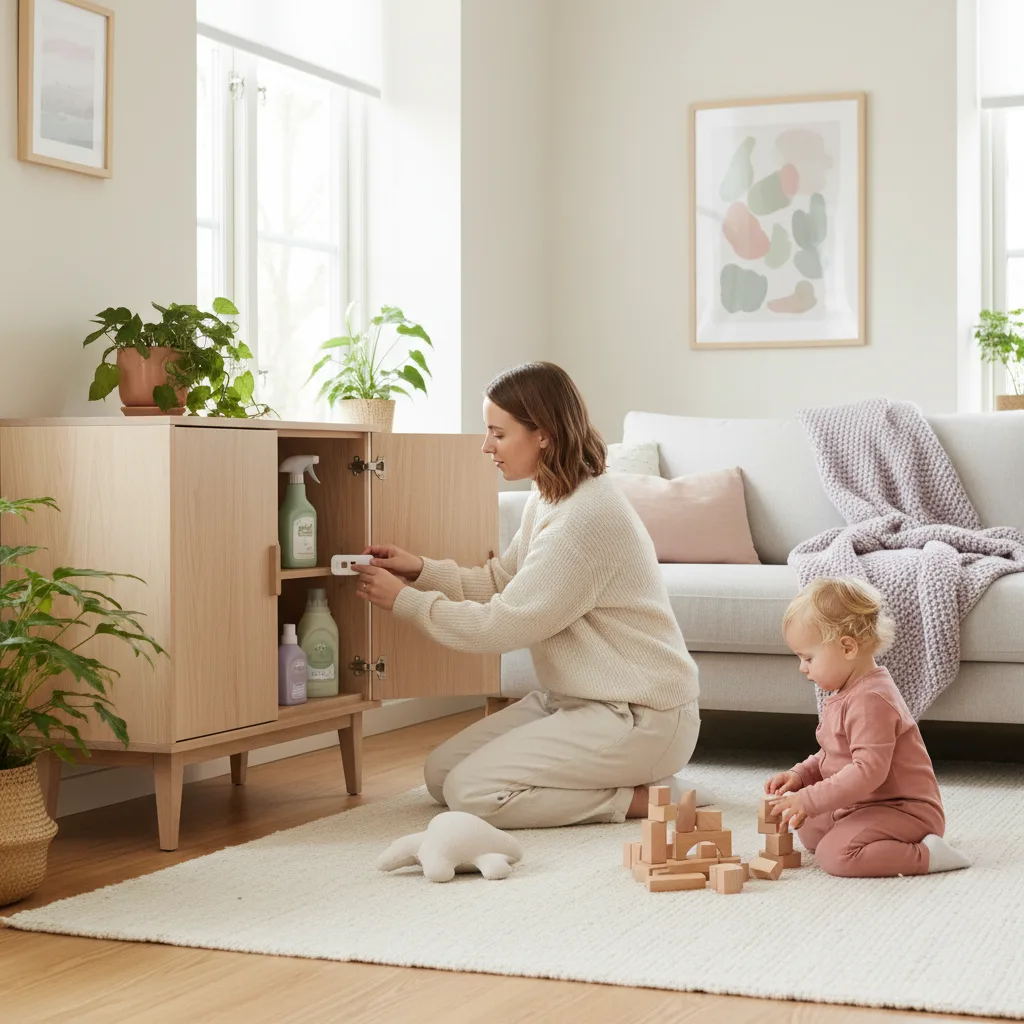
- Store hot drinks out of the child's reach
- Never hold the child on your arm while cooking
In the bathroom
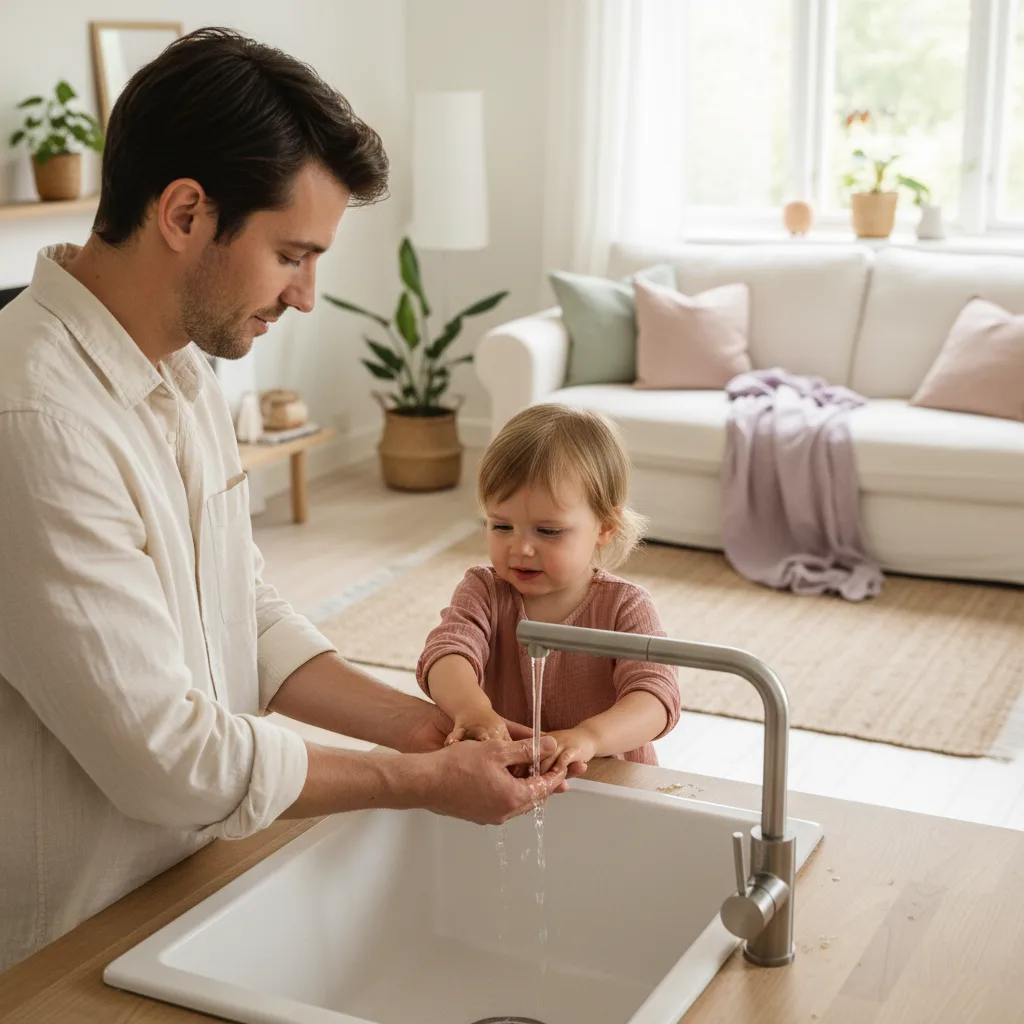
- Test bathwater with your elbow before putting the child in, it should feel lukewarm
- Set your water heater to a maximum of 120°F (49°C)
- Never leave the child alone at or playing with the taps
- Turn off the water before putting the child in the tub
In the living room and rest of the home
- Use a fireplace guard in front of open fires
- Keep the child away from candles
- Store matches and lighters out of reach
- Be careful with irons, even when they are cooling down
Walk through your home room by room with a child safety checklist. It covers all the common risk points and can be tailored to your child's age.
Home first aid kit, what you should have ready
Make sure you always have these items available:
- Sterile gauze pads (not cotton wool)
- Plastic wrap (cling film) to cover wounds
- Appropriate pain reliever for your child's weight (acetaminophen / paracetamol)
- Emergency services number and your doctor's number
Follow-up care after a burn
After treating a burn:
- Keep the wound clean and dry
- Change dressings daily or as instructed by your doctor
- Give pain relief as needed
- Protect the healed area from sun for at least 6–12 months
- Follow up with a doctor if healing is slow or there are signs of scarring
Frequently asked questions
How hot does water need to be to cause a burn in a child?
Children's skin is much thinner than adult skin. Water at 140°F (60°C) can cause a third-degree burn in just 5 seconds. At 158°F (70°C), it takes less than 1 second. This is why regulating hot water temperature at home is so important.
Should I pop blisters after a burn?
No, never. The blister is the body's natural bandage protecting the skin beneath from infection. If the blister bursts on its own, keep the area clean and cover it with a sterile gauze pad.
Can I use aloe vera on burns?
Aloe vera can soothe mild first-degree burns (like sunburn), but it is not recommended as first aid. Cooling with lukewarm water for 20 minutes is always the first priority. Aloe vera may be considered later, but ask your doctor first.
How long should a scar be protected from the sun?
Newly healed burn areas are very sensitive to sun. Protect the area with clothing or high-SPF sunscreen (SPF 50+) for at least 12 months after the injury. Sun exposure can darken the scar and make it more visible.
Summary
Burns in children happen quickly, but proper first aid makes a big difference. Remember the three most important steps: remove the heat source, cool with lukewarm running water for 20 minutes, and cover with a clean cloth.
Prevention is always better than treatment. Make sure everyone in your household, including grandparents and babysitters, knows what to do in case of a burn.
Further reading
- Child-proofing your home, room by room
- First aid for infants and children
- When should you take your child to the doctor?
Sources: American Burn Association, American Academy of Pediatrics (AAP), Children's Hospital of Philadelphia. Burn Center
Last updated: March 2026
Sources
- AAP. Child safety and injury prevention
- CDC. Child injury prevention resources
- WHO. Reducing child mortality globally
🔧 Helpful Tools
- Baby Milestones Tracker. Track your baby's developmental milestones
- All Baby Tools. Browse all free tools for pregnancy and baby care
📖 Related Articles
- Family Medicine Cabinet: What Should You Have at Home?. A well-stocked medicine cabinet gives you peace of mind. Here is everything a family with young children should have at home, with dosing guidance and usage instructions.