
Most parents think about infant first aid in two parts: what to keep in the kit when something happens, and what to do with your hands if it's serious. This guide covers both, a printable infant first aid kit checklist first, then the CPR and choking steps every caregiver should be able to recall under stress.
Important: This article does not replace a hands-on first aid course. We strongly recommend that all parents take a practical infant and child CPR course. Contact your local Red Cross, hospital, or pediatrician's office for available courses near you.
Infant First Aid Kit Checklist (What to Pack)
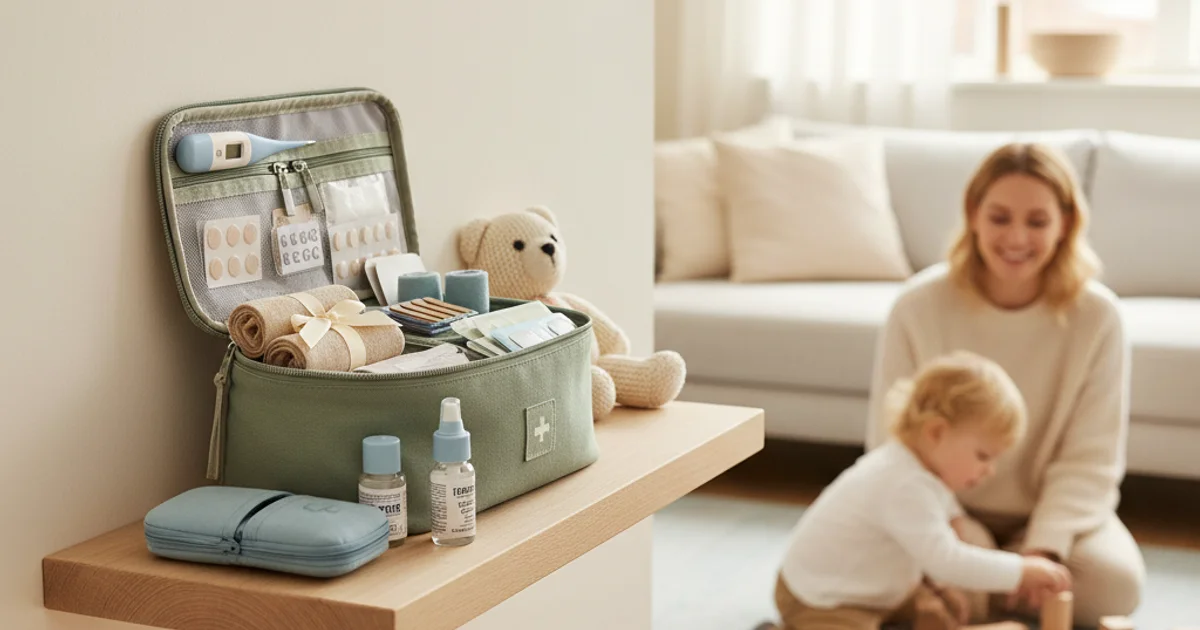
Build the kit once, keep it stocked, and store it somewhere any caregiver can find, not the back of a closet. A complete home kit for a baby under one should include the following, grouped by what it's used for. The list aligns with American Red Cross "anatomy of a first aid kit" guidance plus a few infant-specific add-ons.
Bandages & wound care
- 10–20 adhesive bandages in mixed sizes
- 4–6 sterile gauze pads (2x2 in and 4x4 in)
- 1 roll of self-adhering elastic bandage
- 1 roll of medical tape
- Antiseptic wipes or alcohol prep pads
- Antibiotic ointment (pediatrician-approved brand)
Tools
- Digital thermometer (rectal is most accurate for infants under 3 months)
- Blunt-tip scissors
- Tweezers
- A small flashlight or phone torch
Medications & topicals (clear all dosing with your pediatrician)
- Infant acetaminophen (and proper dosing syringe)
- Saline nasal drops + a nasal bulb or aspirator
- Oral rehydration solution (Pedialyte or generic)
- Diaper-rash cream
Emergency-info card (laminate or tape inside the lid)
- 911 (US emergency)
- Poison Help: 1-800-222-1222
- Pediatrician's after-hours number
- Address of your home (for caregivers who may need to repeat it on a 911 call)
- Baby's date of birth, weight, allergies, and any current medications
What NOT to put in an infant kit
- Aspirin (linked to Reye's syndrome in children)
- Adult-strength pain or cold medications
- Cotton swabs for ear canals
- Expired anything, rotate the kit every 12 months
Need a printable version of this list along with hospital-bag and nursery essentials? Our newborn and hospital-bag checklists include a first-aid section you can tick off as you go.
Emergency Numbers to Know
Before the techniques, memorize these numbers:
| Number | Service | When to call |
|---|---|---|
| 911 | Emergency services | Life-threatening situations: unconsciousness, breathing stopped, serious injury |
| Poison Control: 1-800-222-1222 | Poison Control Center | Suspected poisoning or ingestion of harmful substances |
Save emergency numbers as contacts on your phone. In a stressful situation, it's faster to tap a contact than to recall a number.
CPR for Infants Under 1 Year
If your baby is unconscious and not breathing normally, begin CPR immediately.
Step 1: Check for Response and Breathing
- Stimulate gently, tap the bottom of your baby's foot, speak loudly. Never shake an infant.
- Call for help, ask someone to call 911. If you're alone, use speakerphone.
- Check breathing, lay your baby on their back. Keep the head in a neutral position (do not tilt back as far as you would with an adult). Gently lift the chin. Look, listen, and feel for breathing for no more than 10 seconds.
Step 2: Give 5 Rescue Breaths
If your baby is not breathing normally:
- Keep the head in neutral position with the chin lifted
- Cover both your baby's mouth AND nose with your mouth
- Blow gently, a small, calm puff of air over about 1 second
- Watch for the chest to rise
- Release and repeat, a total of 5 rescue breaths
Do not blow too hard! An infant has tiny lungs. A gentle puff is all that's needed. The chest should barely rise.
Step 3: Chest Compressions
If your baby is still not breathing after the rescue breaths:
- Place two thumbs in the center of the chest, just below the nipple line
- Wrap both hands around the baby's chest for support
- Press down about 1/3 of the chest depth, firm but controlled
- Speed: 100–120 compressions per minute (think of the rhythm of "Stayin' Alive")
- Allow the chest to fully recoil between each compression
Step 4: Continue 30:2
Alternate between 30 chest compressions and 2 rescue breaths (30:2). Continue without stopping until:
- Your baby begins to breathe on their own
- Emergency responders take over
- You are too exhausted to continue (switch with another person if possible)
The 911 dispatcher will guide you through the entire process over the phone. Keep the phone on speaker while performing CPR. They will count with you and give instructions.
CPR for Children Ages 1–8
For older children, the technique is slightly different:
Differences from Infant CPR
- Head position: Tilt the head back slightly (not neutral as with infants)
- Rescue breaths: Cover only the mouth, pinch the nose closed. Blow gently.
- Chest compressions: Use one hand placed in the center of the chest. Press down 1/3 of the chest depth.
- Same overall pattern: 5 rescue breaths first, then 30:2
For children from puberty onward, adult CPR technique with two hands is used.

Choking: When Something Is Stuck in Your Baby's Throat
Choking is one of the most common emergencies involving infants and young children. Pieces of food, small toys, or other objects can lodge in the airway.
Signs of Choking
- Sudden coughing or gasping
- No sound, the child tries to cry or cough but cannot
- Bluish color in the face
- Child grabs at their throat (older children)
Choking in Infants Under 1 Year
Never use abdominal thrusts (Heimlich maneuver) on infants! Use only back blows and chest thrusts as described below.
If your baby is coughing effectively: Let them cough. Don't interfere. Effective coughing is the body's best mechanism for clearing an obstruction.
If your baby cannot cough:
- Lay your baby face down on your forearm, head lower than body, support the chin
- Give 5 firm back blows between the shoulder blades with the heel of your hand
- Turn your baby face up on your other forearm
- Give 5 chest thrusts, same position and technique as CPR compressions
- Check the mouth, look to see if the object has been dislodged (only remove if clearly visible; never do a blind finger sweep)
- Repeat: 5 back blows + 5 chest thrusts
Call 911 if the object does not come free.
Choking in Children Over 1 Year
- Lean the child forward and give 5 back blows between the shoulder blades
- If that doesn't work: stand behind the child, place a fist between the navel and the breastbone
- Give 5 quick abdominal thrusts inward and upward (Heimlich maneuver)
- Alternate: 5 back blows + 5 abdominal thrusts
- Call 911 if the object doesn't come free
If the child becomes unconscious: Begin CPR with 5 rescue breaths. Look into the mouth for the object before each breath.
Prevention: How to Avoid Emergencies
The best first aid is the kind you never need. Here are the most common risks and how to prevent them:
Choking Hazards
- Cut food into appropriate pieces, grapes, hot dogs, and cherry tomatoes should be halved or quartered lengthwise
- Avoid whole nuts, popcorn, raw carrots, and hard candy for children under 3–4 years
- Remove small objects from your baby's reach (buttons, coins, batteries, small toy parts)
- Stay present during meals, never leave a young child to eat alone
Falls
- Never step away from your baby on a changing table
- Use safety gates at the top and bottom of stairs
- Anchor heavy furniture to the wall
Burns
- Never hold hot drinks while holding your baby
- Test bath water with your elbow (should be around 98–100°F/37–38°C)
- Keep your baby away from the stove and oven
Drowning
- A child can drown in just a few centimeters of water
- Always stay within arm's reach near water
- Empty buckets, inflatable pools, and bathtubs after use
Take a first aid course! The American Red Cross, hospitals, and local pediatric offices offer infant and child CPR courses. Visit redcross.org to find a class near you.
Travel & Diaper-Bag First Aid Mini Kit
The full home kit is for the cabinet. For the diaper bag, car, or stroller, a slimmer version is enough. Keep these together in a zip pouch:
- 4–6 adhesive bandages
- 2 sterile gauze pads + tape
- Antiseptic wipes
- Digital thermometer
- Infant acetaminophen single-dose vial + syringe
- Saline drops
- A folded copy of the emergency-info card from the home kit
Refill the diaper-bag kit when you refill the wipes, easier than remembering it as its own task.
Frequently Asked Questions
What should I put in an infant first aid kit?
A complete infant first aid kit includes assorted bandages and sterile gauze, antiseptic wipes, a digital thermometer, blunt-tip scissors and tweezers, a pediatrician-approved antibiotic ointment, infant acetaminophen with a dosing syringe, saline nasal drops with a bulb aspirator, oral rehydration solution, and a laminated card with 911, Poison Help (1-800-222-1222), and your pediatrician's number. Avoid aspirin, which is linked to Reye's syndrome in children.
Is a first aid kit for a newborn different from one for an older child?
Newborn kits need a rectal-accurate digital thermometer, a nasal bulb aspirator, and saline drops, items older children no longer require. Skip cold or cough medications (not recommended under age 6) and adult-strength painkillers. Always check dosing with your pediatrician before giving any medication to a baby under 3 months.
How many chest compressions per minute for child CPR?
100–120 compressions per minute, regardless of age. The ratio is 30 compressions followed by 2 rescue breaths (30:2).
Can I hurt my baby with CPR?
In a cardiac arrest, without treatment, the baby will die. The risk of injury from CPR is very low compared to the consequences of doing nothing. Always attempt CPR if your baby is unconscious and not breathing.
When should I call 911?
Call 911 for unconsciousness, stopped breathing, serious choking that doesn't resolve, severe bleeding, seizures, or a severe allergic reaction. If in doubt, call. It is always better to call once too many times than once too few.
Should both parents take a first aid course?
Yes. Everyone who cares for children should know basic first aid, parents, grandparents, babysitters, and childcare workers.
Summary
Knowing first aid can save your child's life. The key points:
- Call 911 in life-threatening situations, the dispatcher will guide you
- Infant CPR: 5 rescue breaths, then 30 chest compressions + 2 rescue breaths (30:2)
- Infant choking: 5 back blows + 5 chest thrusts, never abdominal thrusts
- Prevention is most important, cut food properly, remove small objects, supervise meals
Read More
- First Week Home with a Newborn
- Fever in Children. When to Call the Doctor
- Baby's Immune System Guide
Sources
- American Heart Association. CPR Guidelines
- American Red Cross. Infant and Child First Aid
- AAP. Choking Prevention and First Aid
🔧 Helpful Tools
- Newborn & Hospital Bag Checklists. Includes a printable first aid kit section for newborn-prep and hospital-bag planning.
- Smart Start: First 72 Hours Home. Confirms you have the right thermometer, saline, and emergency numbers before bringing baby home.
- Milestone Tracker. Log fevers, falls, and ER visits alongside developmental milestones so your pediatrician sees the full picture.
- Allergen Tracker. When you start solids, track new foods so a reaction can be matched to a specific allergen.
📖 Related Articles
- Febrile Seizures in Children: Everything You Need to Know. Complete guide to febrile seizures in children. Symptoms, first aid, causes, and what happens afterwards. Based on AAP and WHO health guidelines.
- Heatstroke and Sunstroke in Children: Symptoms and First Aid. Everything about heatstroke and sunstroke in children and babies. Symptoms, first aid, prevention, and when to call 911. Evidence-based guidelines.
- Poisoning in Children. Prevention and First Aid. Child poisoning: how to prevent it and act quickly. Poison control, first aid, and childproofing your home. Evidence-based guidance.
- Burns in Children: First Aid Steps. How to grade burns by depth, when cool running water helps vs. hurts, and when to head straight to the ER.