It is 2:30 in the morning and your child wakes up with a fever. You fumble in the dark for the thermometer but cannot find it. Acetaminophen liquid? Empty bottle.
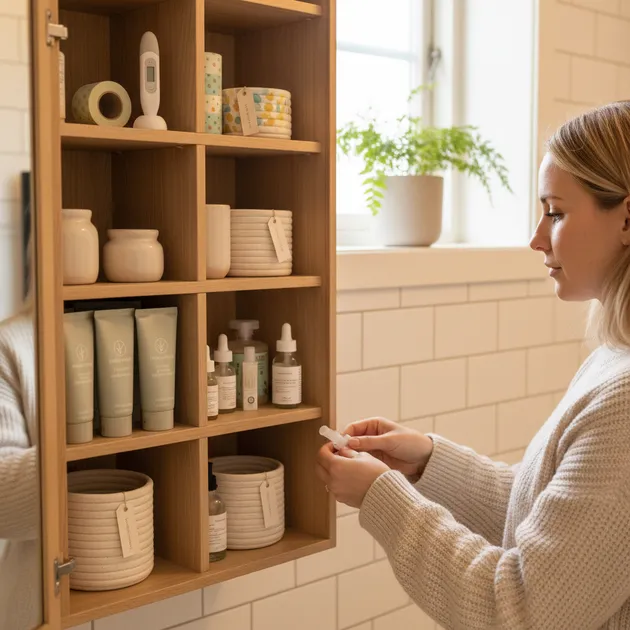
These situations can be avoided with a well-organized medicine cabinet. A properly stocked cabinet provides peace of mind and saves you from panic in the middle of the night.
Here is a complete guide to what families with young children should have at home, with dosing guidance and important contact numbers.
Essential Equipment
These items should always be on hand:
Measurement tools:
- Digital rectal thermometer (most accurate for children under 2)
- Ear thermometer (can be used from age 1)
- Oral syringe for accurate dosing of liquid medication
Wound care:
- Bandages in various sizes (fun designs make it easier for kids!)
- Sterile gauze pads
- Elastic bandage
- Medical/surgical tape
- Tweezers (for splinters and ticks)
Miscellaneous:
- Saline solution/nose drops (0.9% NaCl)
- Saline nasal spray for babies
- Antiseptic solution (e.g. chlorhexidine)
- Barrier cream/zinc paste for diaper rash
- Sunscreen for children (minimum SPF 30)
Fever and Pain Relief
Acetaminophen (Tylenol, Paracetamol)
Acetaminophen is the first-line choice for children with fever and pain. According to AAP guidelines:
Dosing: Approximately 15 mg per kg of body weight, up to 4 times per day. Allow at least 4–6 hours between doses. Maximum daily dose is 75 mg/kg.
Liquid suspension (160 mg/5 ml), guideline doses:
| Weight | Approx. age | Dose |
|---|---|---|
| 4–5 kg (9–11 lb) | 1–3 months | Ask your doctor |
| 5–6 kg (11–13 lb) | 3–5 months | Ask your doctor |
| 7–10 kg (15–22 lb) | 5 months–1 year | Per weight-based dosing |
| 11–14 kg (24–31 lb) | 1–3 years | Per weight-based dosing |
| 15–20 kg (33–44 lb) | 3–5 years | Per weight-based dosing |
Children under 3 months with a fever should always be evaluated by a doctor. Fever in this age group is unusual and can be a sign of serious illness. Never give acetaminophen to a child under 3 months without consulting a doctor.
Always follow the dosing instructions on the package or your doctor's guidance. Doses are based on your child's current weight, not age.
Ibuprofen (Advil, Motrin)
Ibuprofen can be used if acetaminophen does not provide enough relief.
Limitations per AAP guidelines:
- Should not be given to children under 6 months
- The child should weigh at least 5 kg (11 lb)
- Should not be given for chickenpox
- Should not be given on an empty stomach
Do not give acetaminophen and ibuprofen at the same time without talking to your doctor first. You can alternate between them if one medication is not providing enough relief, but discuss this with your pediatrician.
Nasal Products
A stuffy nose is a recurring issue in young children. Infants breathe mainly through their nose, so a blocked nose can make feeding and sleep difficult.
Saline solution (0.9% NaCl): Can be used from birth. Drop 2–3 drops into each nostril to loosen mucus. Safe and can be used as often as needed.
Saline nasal spray: Same principle as drops, but easier to use. Available in versions designed for infants.
Nasal aspirator/bulb syringe: Can be used to remove mucus after saline has loosened it.
Decongestant nasal sprays (like oxymetazoline) should only be used for 3–5 days and are not recommended for children under 2 without a doctor's guidance. Long-term use can cause dependency and rebound congestion.
Skin and Wound Care
Zinc paste/barrier cream: Prevents and treats diaper rash. Apply a thick layer to the diaper area at first signs of redness.
Antiseptic: Chlorhexidine cleans small cuts and scrapes. Rinse the wound with clean water first, then apply the antiseptic.
Hydrocortisone cream (1%): Available over the counter and used for mild eczema flare-ups and insect bites. Apply a thin layer for a maximum of 1–2 weeks. Do not use on the face without medical advice.
Insect bite relief: A cooling gel or cream relieves itching after bites. Insect repellents for young children should be used according to the manufacturer's age guidelines, check packaging carefully.
Storage and Safety
The medicine cabinet should be:
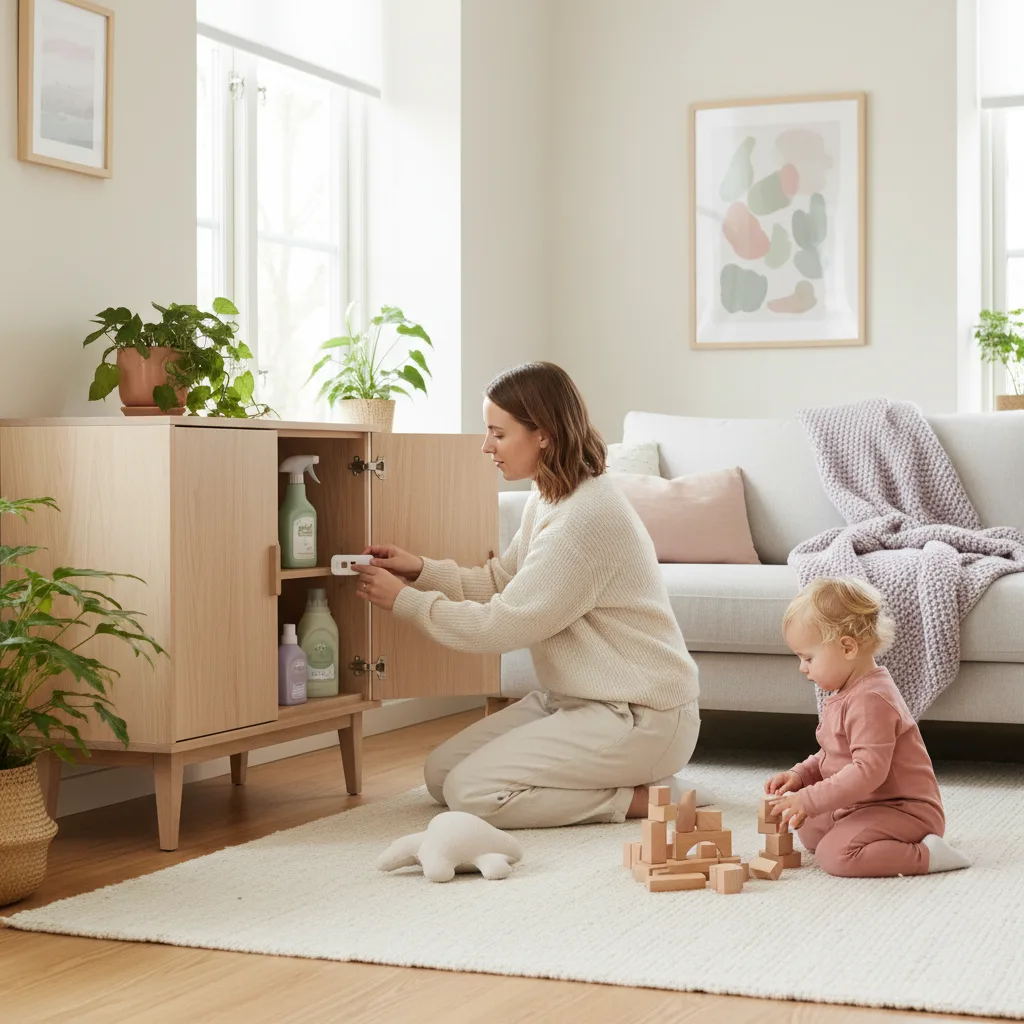
- High up and out of reach of children (a lockable cabinet is best)
- Cool and dry (bathroom cabinets are often too humid)
- Dark (light breaks down active ingredients)
Check expiration dates at least twice a year. Dispose of expired medications at a pharmacy. Use a winter and summer reminder to stay on top of it.
When to Call Emergency Services or the Doctor
Call your doctor or go to urgent care if:
- Your child is under 3 months and has a fever above 38°C (100.4°F)
- Fever above 40°C (104°F) at any age
- Your child is very sluggish or difficult to wake
- Your child refuses to drink for an extended period
- A rash does not fade when pressed (press a glass against the rash)
- Your child has a febrile seizure for the first time
- Fever lasts more than 3 days without improvement
Call emergency services (911 or your local number) if:
- Your child is having difficulty breathing
- Your child is unconscious or unresponsive
- Seizures lasting more than 5 minutes
- Suspected poisoning (also call Poison Control: 1-800-222-1222 in the US)
- Severe allergic reaction (anaphylaxis)
Write down or save emergency numbers where they are visible, on the fridge or next to the medicine cabinet. In a stressful situation it is easy to forget even the simplest numbers.
Medicine Cabinet Checklist
Here is a complete checklist you can print out:
- Digital rectal thermometer
- Oral dosing syringe
- Acetaminophen liquid suspension
- Acetaminophen suppositories (appropriate sizes)
- Ibuprofen liquid (for children over 6 months)
- Saline solution 0.9%
- Saline nasal spray for babies
- Bandages in various sizes
- Sterile gauze pads
- Elastic bandage
- Tweezers
- Antiseptic solution (chlorhexidine)
- Zinc paste/barrier cream
- Hydrocortisone cream 1%
- Insect bite relief cream
- Sunscreen SPF 30+
- Vitamin D drops
Frequently Asked Questions
Can I give my child acetaminophen preventively after vaccination?
No. The AAP recommends against using acetaminophen preventively after vaccination. Only give it if your child is actually showing signs of fever or discomfort afterward.
How long can I give my child acetaminophen?
Contact your doctor if fever or pain does not improve after 3 days. Use beyond 3 days in children should only occur on medical advice.
What do I do if I suspect poisoning?
Call Poison Control immediately (1-800-222-1222 in the US, or your regional number). Have the packaging ready so you can provide the exact substance, amount, and time of exposure.
Do I need a first aid course as a parent?
Yes, it is strongly recommended. Many organizations offer first aid courses tailored to parents of young children, covering infant CPR, choking response, and other common emergencies.
Sources
🔧 Helpful Tools
- Baby Milestones Tracker. Track your baby's developmental milestones
- All Baby Tools. Browse all free tools for pregnancy and baby care
📖 Related Articles
- Burns and Scalds in Children: First Aid That Saves. First aid for burns and scalds in children. Learn the correct cooling technique, when to call emergency services, and how to prevent burn injuries.
- Febrile Seizures in Children: Everything You Need to Know. Complete guide to febrile seizures in children. Symptoms, first aid, causes, and what happens afterwards. Based on AAP and WHO health guidelines.