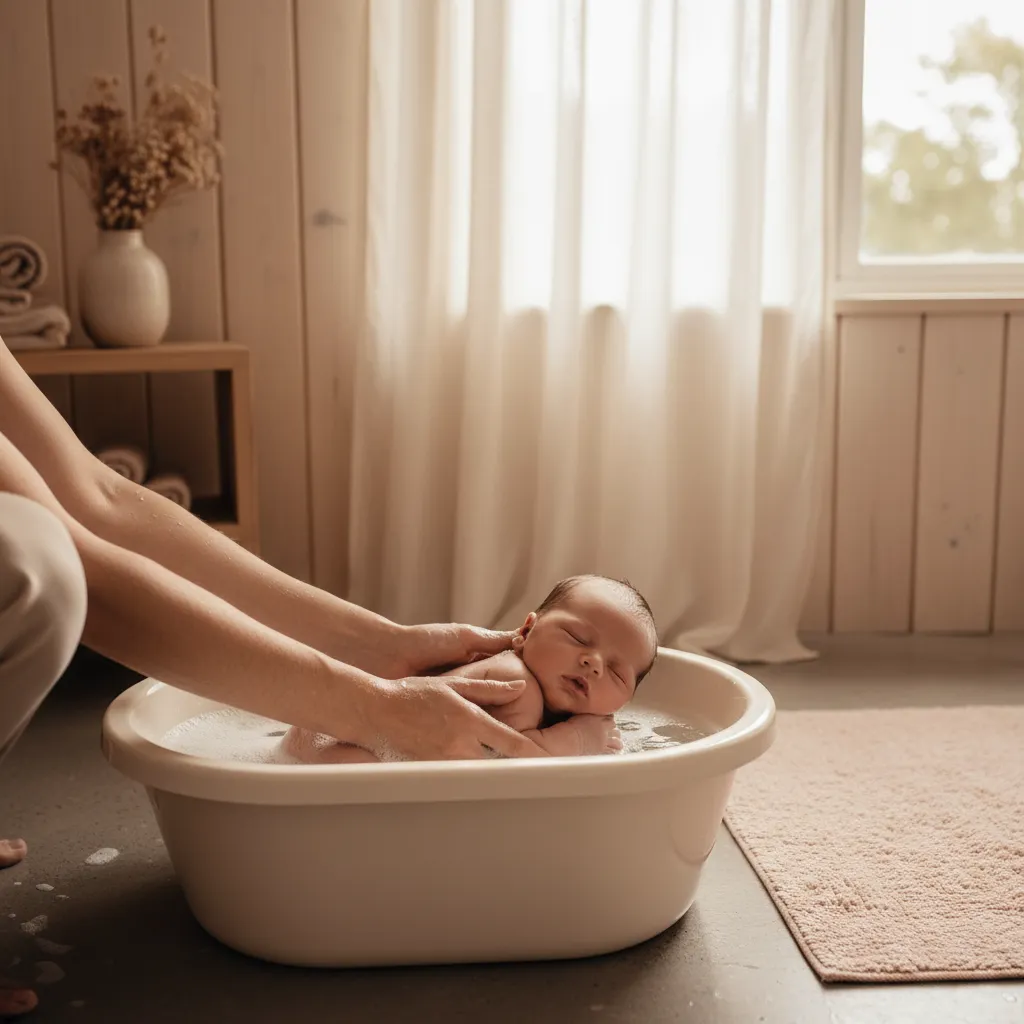
Your hands are shaking a little. The baby is so small, so slippery, and you're afraid of losing your grip. Is the water warm enough? Too warm? And what about the umbilical cord stump?
Baby's first bath is a milestone that many parents dread. It's completely normal to be nervous. But with a little preparation and some simple steps, it becomes a lovely experience for both of you. After a few baths, it will feel like the most natural thing in the world.
Key Takeaways
- Wait for the first full immersion bath until the umbilical cord stump has fallen off and the navel is dry, this typically takes 1–3 weeks after birth.
- The ideal bath water temperature is 98.6°F (37°C); always test with a bath thermometer or your elbow (not your hand) before placing baby in water.
- Before the stump falls off, use "topping and tailing", washing face, body, and diaper area with a soft cloth and lukewarm water, keeping the navel dry.
- Have everything ready before you undress your baby, towels, clean diaper, clothes, and never leave your baby unattended near water, even for a moment.
- Newborns only need a full bath 2–3 times per week; daily washing of the face, neck folds, hands, and diaper area is sufficient the rest of the time.
When Can Baby Bathe for the First Time?
The general recommendation is to wait for the first real bath until the umbilical cord stump has fallen off and the navel is dry. This usually happens 1–3 weeks after birth.
Before the stump has fallen off, you can wash your baby using a method called "topping and tailing", washing with a cloth without submerging baby in water.
Topping and tailing: Use a soft cloth dipped in lukewarm water. Wash the face first (without soap), then the body, and finally the diaper area. Dry thoroughly in all skin folds.
Why Wait?
The umbilical cord stump dries out and falls off faster when kept dry. Submerging it in water can slow the process and increase the risk of infection. Once the navel is clean and dry, your baby is ready for the bath.
What Do You Need?
Have everything ready before you undress baby. You should never leave your baby in or near water to go fetch something.
Bath checklist:
- Baby bathtub, baby bucket, or large washbasin
- Bath thermometer (or use your elbow to test the water)
- 2 large, soft towels (one to dry, one as backup)
- Soft washcloth
- Mild, fragrance-free baby soap or baby bath oil (optional for the first weeks)
- Clean diaper
- Clean clothes
- Optional fragrance-free moisturizer
Baby bathtub vs. baby bucket: Both work well. A baby bucket (like Tummy Tub) can give baby a secure, curled-up feeling reminiscent of the womb. A baby bathtub provides more space and is easier to wash in. Choose what works best for you.
The Right Temperature
Temperature is what parents worry about most, and with good reason. Babies can't tolerate water that's too hot or too cold.
Water temperature:
- 98.6°F (37°C) is ideal, the same as body temperature
- Use a bath thermometer to be sure
- Alternatively: Dip your elbow in the water. It should feel lukewarm and comfortable, not cold, not warm
Room temperature:
- 72–75°F (22–24°C) in the room where you bathe
- Close windows and doors to avoid drafts
- Have the towel ready right next to you so you can wrap baby up quickly
Always test the water before putting baby in. Mix cold and hot water well, there can be hot pockets. Test with your elbow or thermometer, never just with your hands (hands can tolerate warmer water than baby skin).

Step-by-Step: Baby's First Bath
Here is a safe approach for the first bath:
1. Prepare Everything
Set out everything you need within arm's reach of the bath. Fill the tub with about 2–3 inches (5–8 cm) of water (enough to cover baby to the shoulders when lying down). Check the temperature.
2. Undress Baby
Undress baby and wrap them in a towel. Many babies don't like being naked because they lose the secure feeling of clothes against their skin.
3. Wash the Face First
Use a damp cloth (water only, no soap) to gently wash the face. Start with the eyes, wipe from the inner to the outer corner. Use a clean part of the cloth for each eye. Then wash the rest of the face, around the ears, and in the neck folds.
4. Lower Baby into the Water
Here's the hold: Lay baby along your forearm with their head in your hand. Your thumb and middle finger hold around baby's upper arm. This gives you full control.
Lower baby into the water feet first, slowly and calmly. Speak in a soft, soothing voice. Let baby get used to the water gradually.
5. Wash the Body
Use your free hand to gently wash the body with water and optionally a little baby soap:
- Head, wash gently with water. Many babies have flaky scalp (cradle cap) in the first months, and that's completely normal
- Body, wash the neck, under the arms, in the skin folds on arms and legs
- Hands, babies clench their fists tightly. Open gently and wash between the fingers
- Diaper area, wash last. For girls: wash front to back. For boys: wash around, but don't retract the foreskin
The first baths don't need soap. Clean, lukewarm water is enough for the first weeks. Baby skin has a natural protective layer that you shouldn't wash away. When you start using soap, choose a mild, fragrance-free variety and use just a small amount.
6. Rinse Well
If you've used soap, rinse baby well with clean, lukewarm water. Soap residue can irritate the skin.
7. Lift Baby Out
Lift baby out with the same secure hold you used when putting them in. Wet babies are slippery, hold on firmly.
8. Wrap in a Towel Immediately
Have the warm towel ready. Wrap baby up right away to prevent them from getting cold. Babies lose heat quickly, especially from the head.
9. Dry Thoroughly
Pat the skin gently dry. Be extra thorough with the skin folds:
- Under the chin
- Behind the ears
- In the armpits
- In the groin
- Between the toes
- In the neck folds
Moisture in skin folds can lead to irritation and rash.
10. Dress Baby
Apply a fragrance-free moisturizer if baby has dry skin. Put on a clean diaper and clothes.
After the bath: Many babies become calm and sleepy after a warm bath. A bath before the bedtime routine can become a lovely part of the evening ritual over time.
How Often Should Baby Bathe?
Newborns don't need to bathe daily. In fact, bathing too frequently can dry out their delicate skin.
- 2–3 times a week is enough for most babies
- Daily topping and tailing of face, neck, hands, and diaper area
- Bathing can increase to daily once the child starts solid foods and plays in sand and dirt
Babies sweat little and rarely get "dirty" the way older children do. Excessive bathing can disrupt the skin's natural oil balance and cause dry, irritated skin.
Common Concerns and Answers
"My baby screams every time"
It's common for babies to cry the first few times. Gradual introduction helps:
- Hold baby close to you and speak soothingly
- Start with just the feet in the water and work your way up
- Try a slightly warmer room so the temperature difference isn't as big
- Place a warm cloth over baby's tummy while they're in the water, it provides comfort
- Keep baths short (5–10 minutes is enough)
If baby cries a lot, it's fine to end the bath and try again another day. There's no rush.
"I'm afraid of losing my grip"
Many parents share this fear. Some reassuring measures:
- Always maintain a good grip around baby's upper arm
- Use a baby tub with a non-slip bottom or insert
- Place a washcloth in the bottom of the tub to prevent baby from sliding
- Some prefer to bathe with baby, then you have both hands free
"Can baby get water in their ears?"
A little water in the ears is harmless. Baby has been bathing in amniotic fluid for nine months. Dry gently around the ears after the bath.
"What about the fontanelle, can I wash the head?"
Yes. The fontanelle (the soft spot on top of the head) is covered by a strong membrane. You can safely wash over it with gentle movements.
Safety in the Bath
The most important rule: NEVER leave baby alone in or near water, not even for a second. An infant can drown in just a few inches of water, in seconds, without making a sound. Take baby with you if you need to leave the room.
Other safety tips:
- Always keep one hand on baby
- Never use a baby bath seat as a substitute for supervision
- Fill the water before putting baby in, never place baby in the tub while water is running (temperature can change suddenly)
- Check if the faucet has thermostat control if possible
- Keep electrical appliances (hair dryer, charging phone) away from the bath
- Empty the bathtub immediately after use

Frequently Asked Questions
When can newborns bathe for the first time?
Wait for the first bath until the umbilical cord stump has fallen off and the navel is dry, usually 1–3 weeks after birth. Before that, you can wash baby with topping and tailing, a soft cloth dipped in lukewarm water.
How warm should bath water be for baby?
Water temperature should be 98.6°F (37°C), the same as body temperature. Use a bath thermometer or test with your elbow, it should feel lukewarm and comfortable. Always test before putting baby in the water.
How often should baby bathe?
Newborns don't need daily baths. 2–3 times a week is enough. Daily topping and tailing of face, neck, hands, and diaper area is sufficient between baths. Bathing too often can dry out baby's skin.
After the First Few Weeks
As you become more comfortable with the bath routine, bath time can become an enjoyable moment for the whole family:
- Playtime in the water, from about 3–4 months, baby starts to enjoy splashing and playing in the water
- Baby swimming, many pools offer baby swimming from 3 months of age. It builds water confidence and is social
- Routine, a fixed bath time (e.g., before the evening meal) can become a nice part of the daily rhythm
- Gradual independence, as the child sits steadily (from about 6–8 months), they sit more upright in the tub
Sources
🔧 Helpful Tools
- Baby Sleep Tracker. Track and optimize your baby's sleep
- Baby Food Guide. Safe foods and introduction schedule for your baby
- All Baby Tools. Browse all free tools for pregnancy and baby care
📖 Related Articles
- Baby Skincare: Everything You Need to Know. Baby skin is delicate and needs gentle care. Learn about bathing, moisturizing, sun protection, and common skin conditions in babies.