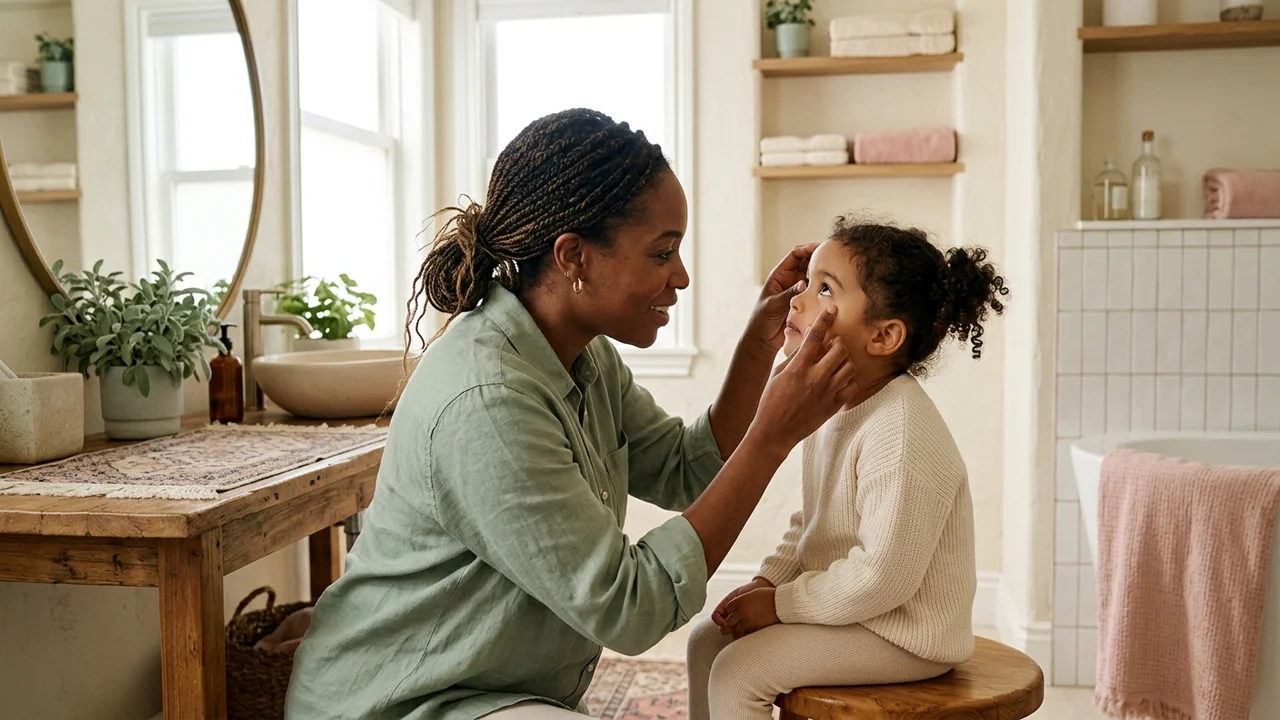
The umbilical stump is the small reminder of nine months in the womb. After birth, the umbilical cord is cut, and what remains, a small stump about 2-3 centimeters (about 1 inch) long, gradually dries out and falls off on its own.
For many new parents, caring for the umbilical stump feels daunting. But it's simpler than you think, and it doesn't hurt your baby at all. Here's everything you need to know.
What Is the Umbilical Stump?
The umbilical cord supplied the baby with oxygen and nutrients throughout pregnancy. It is cut shortly after birth with a plastic clamp.
What remains is the umbilical stump, a small, yellow-white stump that gradually dries out, shrinks, and changes color to dark brown or black. There are no nerves in the umbilical stump, so your baby feels nothing when you care for it.
How Do You Care for the Umbilical Stump?
The WHO and AAP recommend dry cord care. This means you generally don't need to clean the stump with anything special, just keep it clean and dry.
Daily care:
- Gently clean around the stump with a dry cotton swab (Q-tip) once a day
- Let the belly button air-dry, avoid covering it with the diaper
- Fold the diaper edge down below the stump so it gets air
- Gently move the stump slightly so air can reach all sides
If the stump is moist or sticky:
Clean gently with clean water or saline solution (0.9% NaCl) and dry thoroughly with a cotton swab or clean gauze afterwards. Pat dry, do not rub.
If there is an odor:
A mild smell from the stump is normal, it is a natural drying process. For a stronger smell, you can clean once with chlorhexidine solution and let it air-dry for one minute. One or two treatments are usually enough.
Many diaper brands have a small notch or softer area where the stump is. Take advantage of this, and make sure the diaper doesn't press against the stump.
When Does the Umbilical Stump Fall Off?
The stump usually falls off between 5 and 14 days after birth. Some babies lose it after just 3 days, while others keep it for up to 3 weeks. All of this is normal.
Let the stump fall off on its own. Never pull or tug on it, even if it's hanging by a thin thread. It will detach when it's ready.
After the stump has fallen off, the belly button may ooze slightly and look red for a few days. This is normal and resolves on its own. Continue keeping the belly button clean and dry.
Can You Bathe a Baby With an Umbilical Stump?
Yes, you can bathe your baby even if the stump hasn't fallen off yet. Dry the stump thoroughly afterward, moisture prolongs the healing time.
Many parents prefer to give the baby a quick sponge bath or wipe with a cloth in the first days, saving the full bath for when the stump is gone. Both approaches are perfectly fine.
Read more about your baby's first bath for tips on water temperature and technique.
Signs of Infection. When Should You Be Concerned?
The vast majority of umbilical stumps heal without any problems. But in rare cases, infection can develop. Contact your pediatrician or healthcare provider if you notice:
- Redness that spreads around the belly button and outward onto the abdomen
- Swelling of the skin around the belly button
- Pus, yellow-green, foul-smelling discharge
- Your baby has a fever (above 38°C / 100.4°F in newborns)
- Your baby seems lethargic or unusually irritable
Redness that spreads outward from the belly button is a sign to take seriously. You can mark the edge of the redness with a pen and check again after 30-60 minutes. If it has spread, contact your pediatrician the same day.
Mild redness right at the stump can be caused by mechanical irritation from the stump itself and is usually harmless. The difference is whether the redness is limited to exactly where the stump sits, or whether it is spreading outward.
Umbilical Granuloma. Excess Tissue in the Belly Button
Some babies develop an umbilical granuloma after the stump falls off. This is a small, pink, soft area of tissue or a small bump in the belly button that continues to ooze.
A small granuloma may dry up on its own. Your pediatrician can treat it with table salt, a simple procedure where a pinch of salt is placed on the granuloma for 10-30 minutes, morning and evening for 2-7 days. Most granulomas dry up within 2-3 days of treatment.
Contact your pediatrician if the belly button is still oozing after 4-6 weeks.
What You Should NOT Do
- Do not pull on the stump, let it fall off on its own
- Do not use alcohol or rubbing alcohol for daily cleaning, this can delay healing according to WHO guidelines
- Do not cover the stump with bandages, plasters, or coins
- Do not submerge the baby in soapy water directly on the stump
- Do not lift the baby by their legs during diaper changes, this can put strain on the belly button area
Umbilical Hernia. Harmless, but Looks Dramatic
Some babies have a belly button that bulges outward, especially when they cry or strain. This is called an umbilical hernia and is common and harmless. It almost always resolves on its own by the time the child is 1-2 years old.
You don't need to tape the belly button or cover it. It doesn't help and can irritate the skin.
Follow Up With Your Pediatrician
The umbilical stump is a natural part of the well-baby checkups in the first weeks. Your pediatrician can:
- Assess whether the belly button is healing normally
- Treat an umbilical granuloma with salt or silver nitrate
- Give advice on care tailored to your baby's belly button
- Refer on if there is suspicion of infection or an umbilical fistula
Use Babysential's health tracker to note any observations about the belly button that you want to discuss at your next appointment.
Frequently Asked Questions
How long does it take for the umbilical stump to fall off?
Usually 5-14 days, but it can take up to 3 weeks. As long as there are no signs of infection, just wait patiently.
Should I clean the stump with anything special?
No, dry cord care is recommended by the WHO and AAP. Clean gently with a dry cotton swab daily. Only clean with water or saline if the belly button is visibly dirty or sticky.
Is it normal for the stump to have a smell?
A mild smell is completely normal, it is part of the natural drying process. A strong, unpleasant odor combined with redness or pus may indicate infection, in which case you should contact your pediatrician.
Can my baby lie on their tummy with a stump?
Yes, short periods of tummy time are safe even with the stump. Make sure the stump is not pressed hard against the surface. Place a soft blanket under the baby.
Read More
- Your first week home with a newborn
- Baby's first bath
- Newborn screening, what is tested?
- Skin-to-skin with your newborn
- Well-baby checkups, what to expect
- Health tracker for your baby
Sources
- WHO. Postnatal care for mothers and newborns
- American Academy of Pediatrics (AAP)
- Centers for Disease Control and Prevention (CDC)
🔧 Helpful Tools
- Baby Milestones Tracker. Track your baby's developmental milestones
- All Baby Tools. Browse all free tools for pregnancy and baby care
📖 Related Articles
- Colic in Babies: Causes, Symptoms, and What Helps. Does your baby have colic? Learn about causes, symptoms, and evidence-based methods that provide relief. Based on pediatric guidelines.