You just gave birth. Your body completed something like a marathon, and now recovery begins. At the same time you may be breastfeeding, getting minimal sleep, and trying to remember whether you've eaten today. Postpartum nutrition isn't about perfection, it's about giving your body what it needs to recover.
Energy needs after birth
Your body needs extra energy in the postpartum period, especially if you're breastfeeding. According to the WHO and AAP, a fully breastfeeding woman produces roughly 750 ml of breast milk daily, and this requires energy.
If you're breastfeeding
- Exclusive breastfeeding increases energy needs by approximately 500 kcal per day above normal
- That's equivalent to an extra substantial snack
- This is best met with nutrient-dense food, not empty calories
If you're not breastfeeding
- Your body still needs extra nourishment for recovery after birth
- Blood loss during delivery requires iron replenishment
- Sleep deprivation increases the need for stable energy sources
This is not the time to diet. The postpartum period is the wrong time for calorie restriction. Your body needs energy to heal, produce milk, and function on little sleep. Major health organizations advise against dieting while breastfeeding.
The most important nutrients
Iron, rebuilding after blood loss
Most women lose blood during delivery, and many have low iron stores after pregnancy. The recommended iron intake for breastfeeding women is around 9–10 mg per day (AAP), though your doctor may recommend more based on blood work.
Good iron sources:
- Lean meat and liver pâté
- Whole grain bread and oatmeal
- Beans, lentils, and peas
- Seeds and nuts
- Dark leafy greens
Boost iron absorption:
- Eat vitamin C-rich foods (fruit, bell peppers, broccoli) alongside iron-rich foods
- Avoid coffee and tea with meals, they inhibit iron absorption. Have them between meals instead.
Check your iron levels. Talk to your doctor about a blood test after birth. Many people need iron supplements, especially after significant blood loss.
Calcium, for bones and teeth
The recommended calcium intake for breastfeeding women is around 1,000 mg per day (AAP). Although breast milk calcium content is barely affected by diet, breastfeeding can draw from the mother's own stores.
How to get enough calcium:
- Dairy products: milk, yogurt, cheese
- Plant-based milks fortified with calcium (check the label)
- Broccoli, kale, almonds, and sardines also contribute
If you avoid dairy, consider a calcium supplement. Note that most standard multivitamins don't contain enough calcium.
Omega-3 fatty acids, for brain and nervous system
Omega-3 is essential for your baby's brain and nerve development, and the amount in breast milk is directly affected by what you eat.
Good sources:
- Fatty fish (salmon, mackerel, sardines, trout) 2–3 times per week
- Cod liver oil (1 teaspoon daily)
- Walnuts and flaxseeds
Vitamin D, often insufficient
Many people don't get enough vitamin D, especially in winter months. Breastfeeding women are generally advised to supplement.
- 600 IU daily (or per your doctor's recommendation)
- Fatty fish, eggs, and fortified milk contribute
- Most breastfed babies need their own vitamin D supplement, ask your pediatrician
Iodine, for baby's brain development
Iodine is important for infant brain development. The AAP recommends that breastfeeding women take a supplement containing 150–200 mcg of iodine daily.
- A prenatal vitamin with iodine typically covers this
- Dairy, eggs, white fish, and iodized salt are good food sources

Quick meals for exhausted parents
The reality of the postpartum period: you have one free hand, ten minutes, and zero sleep. Here are realistic meal ideas.
Breakfast (5 minutes or less)
- Oatmeal with banana and nuts (microwave in 2 minutes)
- Whole grain toast with nut butter and sliced banana
- Yogurt with granola and berries
- Smoothie: milk/yogurt + banana + oats + frozen berries (blend in 30 seconds)
Lunch
- Toast with egg, avocado, and tomato
- Leftovers from last night's dinner
- Wrap with chicken, salad, and hummus
- Simple bean soup (make a big batch)
Dinner (simple and nutritious)
- Baked salmon with vegetables (15 min active time)
- Chicken and lentil stew with root vegetables (use a slow cooker)
- Pasta with ground meat and vegetable sauce
- Omelet with spinach, cheese, and whole grain bread
Snacks to have ready
- Nuts and dried fruit in a bowl on the counter
- Chopped fruit and vegetables in the fridge
- Hummus with crackers
- Energy balls (oats, peanut butter, honey, chocolate chips, roll and freeze)
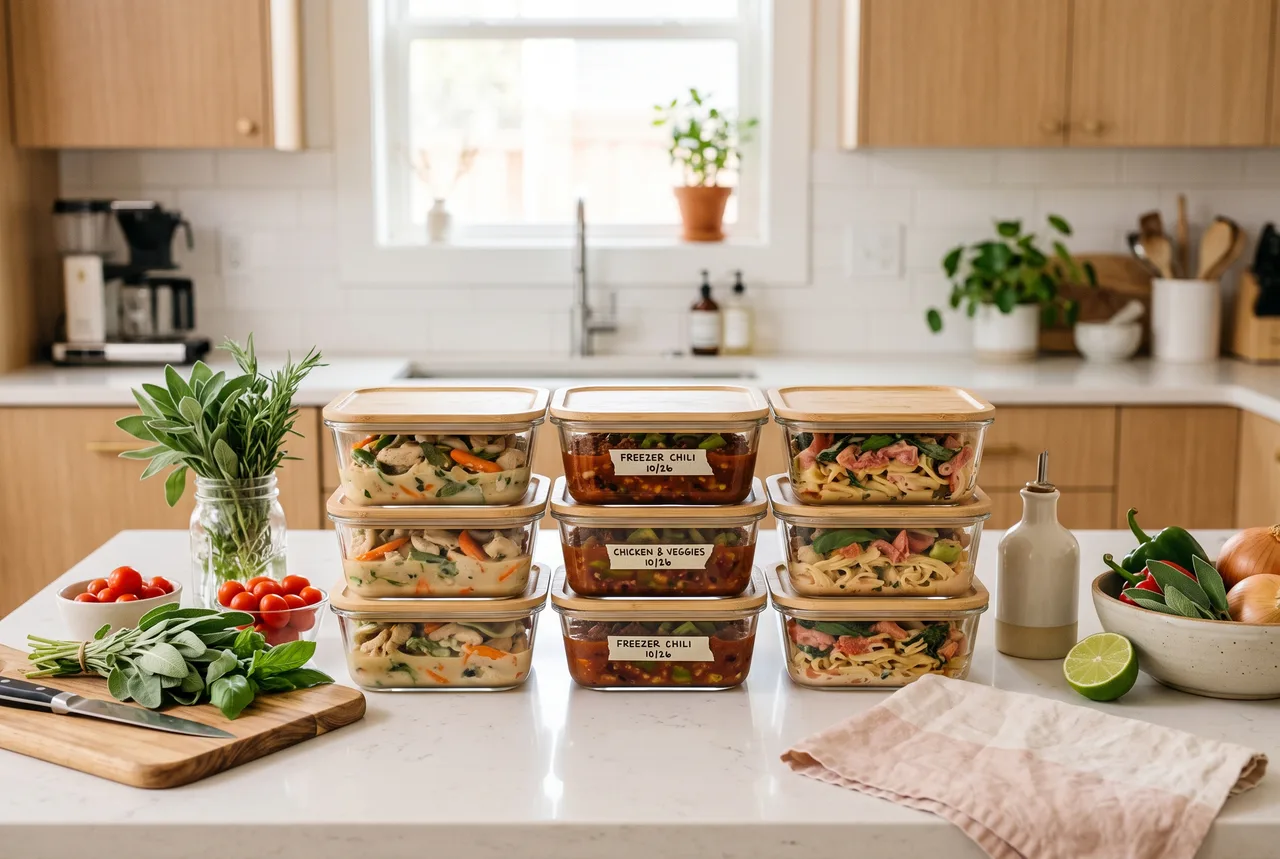
Batch cooking saves the postpartum period. Make double portions of everything and freeze them. One hour of cooking on Sunday can give you lunch all week. Ask visitors to bring food instead of gifts.
Traditional recovery foods
Many cultures have long-held wisdom about foods for postpartum recovery:
- Bone broth: Nutritious and easy to digest. Rich in minerals and protein. Sip throughout the day.
- Oatmeal: Simple, nutritious, and quick. Many breastfeeding parents find oats support milk production.
- Soups and stews: Warming, nourishing, and easy to prepare in large batches.
Fluids
Breastfeeding parents need more fluid than usual. Drink to thirst, always keep a water bottle nearby.
- Goal: Drink enough that your urine is pale yellow
- Tip: Drink a glass of water every time you sit down to nurse
- Variety: Water, milk, herbal teas (chamomile, elderflower), fruit-infused water
- Limit: Caffeine to 2–3 cups per day while breastfeeding (caffeine transfers to breast milk)
Supplements in the postpartum period
Key supplements recommended by the AAP and WHO for breastfeeding women:
| Supplement | Recommended amount | Notes |
|---|---|---|
| Vitamin D | 600 IU/day | Supplement or fortified foods |
| Iodine | 150–200 mcg/day | Prenatal vitamin with iodine |
| Omega-3 (DHA) | 200–300 mg DHA/day | Fatty fish or omega-3 capsules |
| Iron | Based on blood work | Discuss with your doctor |
A good prenatal multivitamin designed for breastfeeding covers most needs. Iron supplements should be confirmed with your doctor based on blood tests.
Foods to be mindful of while breastfeeding
Most breastfeeding parents can eat everything. But a few foods need some attention:
- Fish: Aim for 2–3 portions per week, but limit high-mercury fish: swordfish, shark, king mackerel, and tilefish
- Caffeine: Maximum 200–300 mg per day (about 2–3 cups of coffee). Caffeine transfers to breast milk
- Alcohol: Best avoided. With a single drink, wait at least 2 hours before nursing
- Strong-flavored foods: Can flavor breast milk, but most babies tolerate this fine
Allergy prevention: Current guidelines from the AAP recommend that breastfeeding parents eat a varied diet, including common allergens like eggs, milk, nuts, and fish. There is no reason to cut out foods preventively. If you suspect a cow's milk protein allergy in your baby, speak to your pediatrician before eliminating dairy, it requires nutritional planning.
If you're not breastfeeding
The nutrition advice largely applies to you too. Your body needs:
- Iron to rebuild blood values
- Protein for tissue repair
- Calcium for bones
- Enough energy to function on little sleep
You don't need the extra calorie intake that exclusive breastfeeding requires, but good nutrition matters just as much for recovery.
Frequently asked questions
Do I need to take supplements while breastfeeding?
A prenatal or postnatal vitamin is a good idea for most breastfeeding parents. At minimum, ensure you're getting enough vitamin D and iodine, as these are commonly insufficient from diet alone.
What if my baby seems fussy after I eat certain foods?
Some babies react to strong flavors in breast milk (onion, garlic, cabbage). Try eliminating the food for a few days and see if it helps. If you suspect a cow's milk protein allergy, speak to your pediatrician before cutting dairy, it requires nutritional planning.
How much should I drink?
Drink to thirst. There's no exact liter recommendation, but most breastfeeding parents need 2–3 liters total per day (including fluids from food). A practical rule: always have a water bottle nearby and take a sip every time you nurse.
Can I be vegetarian or vegan and breastfeed?
Yes, but it requires some extra planning. Vitamin B12 supplementation is absolutely essential for vegans (2.6 mcg/day for breastfeeding). Vegetarians should ensure adequate iron, iodine, calcium, and omega-3 (DHA from algae oil). Talk to a healthcare provider about the right supplements.

Summary
The postpartum period is a time for recovery, not perfection. Eat nourishing food, drink enough, take vitamin D and iodine supplements, and say yes to everyone who offers to cook for you. Your body has done an incredible job, give it the fuel it needs to recover.
Read more
Sources
- American Academy of Pediatrics. (2022). Policy Statement on Breastfeeding.
- WHO. (2022). WHO recommendations on maternal and newborn care for a positive postnatal experience.
- Dietary Guidelines for Americans 2020–2025.
🔧 Helpful Tools
- Baby Milestones Tracker. Track your baby's developmental milestones
- Breastfeeding Tracker. Log feeds, track supply, and monitor nursing sessions
- All Baby Tools. Browse all free tools for pregnancy and baby care
📖 Related Articles
- Contraception After Birth: Safe Protection While Breastfeeding. Guide to contraception after giving birth. Which methods are safe while breastfeeding? Evidence-based guidance from WHO and AAP.
- Breast Pads: Disposable or Reusable? Complete Guide. Everything about breast pads. Disposable vs. reusable, materials, cost comparison, and tips for choosing the right type.
- First Week Home with a Newborn: Survival Guide. Everything you need to know about the first week with your newborn at home. Breastfeeding, sleep, diapers, the umbilical cord, and when to call the doctor.