Your child has turned 2 and in principle eats the same as the rest of the family. But do they really? Between picky phases and dinners that end up on the floor, you might wonder whether your child is getting what they need.
The good news: children from age 2 can eat most family foods, according to the WHO and AAP. Your most important job is to offer varied food, the child decides how much they eat.
The Five Key Nutrients
Some nutrients are especially important for children who are growing rapidly. Here are the ones worth paying extra attention to.
Iron. The Most Common Nutritional Deficiency
Iron deficiency is the most common nutritional deficiency in young children worldwide. Iron is essential for brain development, immune function, and energy levels.
Good iron sources for 2–3-year-olds:
- Red meat (best absorption)
- Liver pâté (1–2 slices on bread per day)
- Beans, lentils, and chickpeas
- Eggs
- Iron-fortified cereal
- Broccoli and peas
Vitamin C increases iron absorption from plant sources. Offer fruit or vegetables alongside iron-rich food. A glass of orange juice with dinner or bell pepper as a side makes a real difference.
Calcium. For Strong Bones and Teeth
Calcium is the building block for the skeleton. Children between 1 and 3 years need about 700 mg of calcium daily, according to the AAP.
Good calcium sources:
- Milk and dairy products (low-fat milk from age 2, per AAP)
- Yogurt
- Cheese
- Broccoli and kale
- Almonds and sesame seeds (ground or as a butter)
Vitamin D. Supplement Year-Round
The AAP recommends 600 IU (15 µg) of vitamin D daily for children from age 1. Many children in countries with limited sunshine don't get enough from sunlight alone, especially in autumn and winter.
Vitamin D is needed for the body to absorb calcium. Without sufficient vitamin D, calcium-rich food isn't enough.
Give your child a vitamin D supplement daily, year-round. The AAP recommends 600 IU per day. Fish oil (cod liver oil) covers both vitamin D and omega-3.
Omega-3. For the Brain
Omega-3 fatty acids are important for brain development and concentration. Fatty fish such as salmon, mackerel, and sardines are the best sources.
The AAP recommends fish at dinner 2–3 times per week. If that's not possible, fish oil is a good alternative.
Fiber. For Good Digestion
Many toddlers don't get enough fiber. Whole-grain products, vegetables, fruit, and legumes are good sources. Increase fiber intake gradually and make sure your child drinks enough water.
Portion Guide for 2–3-Year-Olds
Children have small stomachs and need smaller portions than we think. A rough rule of thumb is that one child's portion is about one-quarter to one-third of an adult portion.
| Food | Portion for 2–3 years |
|---|---|
| Meat/fish | 1–2 oz / 30–50 g (about 2 large meatballs) |
| Vegetables | 1.5–2 oz / 40–60 g (a small handful) |
| Rice/pasta (cooked) | 2–3 oz / 60–80 g (about 4 tbsp) |
| Bread | 1/2–1 slice |
| Fruit | 1/2–1 fruit or a small handful of berries |
| Milk/yogurt | 3–5 oz / 100–150 ml per meal |
| Cheese | 1 slice (about 0.5 oz / 10–15 g) |
Children regulate their own appetite well. One day they eat like a bird, the next like a hungry bear. Look at the big picture over a week, not each individual meal.
Dairy Products. How Much Is Enough?
From age 2, the AAP recommends switching from whole milk to low-fat (1%) or fat-free milk for most toddlers, unless they need extra calories.
Maximum 16 oz / 500 ml of cow's milk per day, including yogurt and milk used in cooking. Too much milk can crowd out other foods and reduce iron absorption.
A daily dairy intake might look like this:
- Breakfast: 3 oz / 90 ml milk in cereal + 3 oz / 90 ml to drink
- Lunch: 1 yogurt (5 oz / 150 ml)
- Dinner: 3 oz / 90 ml milk to drink
- Total: about 15 oz / 450 ml
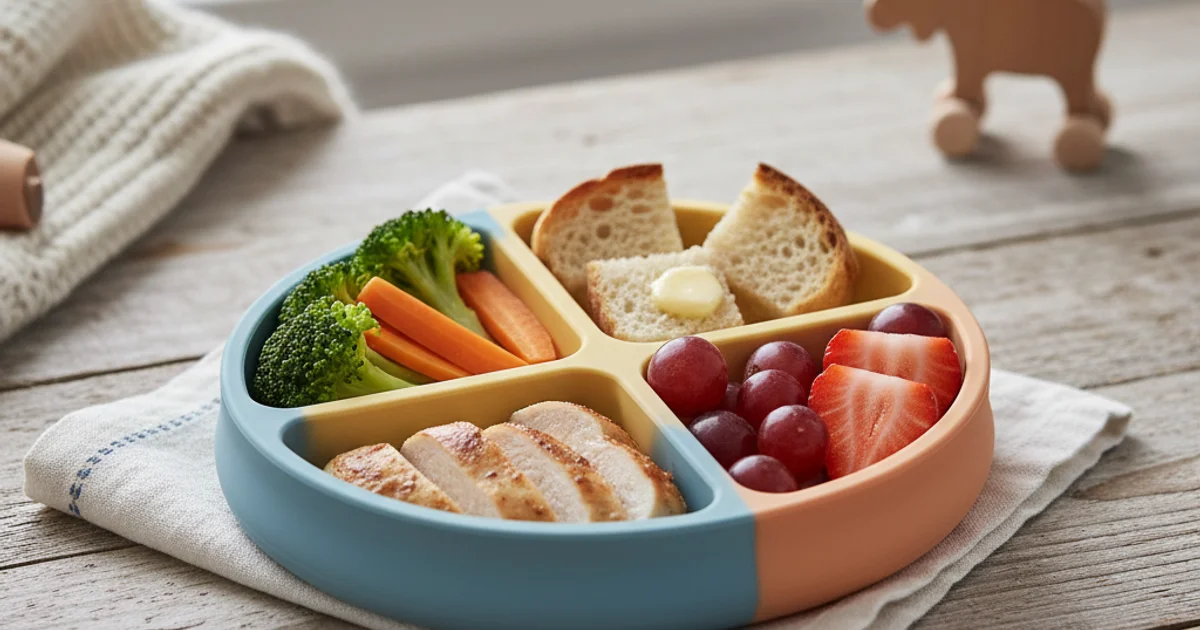
The Picky 2-Year-Old. What Do You Do?
Almost all children go through a picky phase. It is biologically normal. The child develops a natural skepticism toward unfamiliar food, a trait that protected our ancestors from eating dangerous plants.
Strategies that work:
- Offer, don't pressure: Put new food on the plate, but never require the child to eat it. "You don't have to eat it, but it's there if you want to try."
- 10–15 exposures: Research shows that children need to be offered a food up to 15 times before they accept it. Don't give up after three attempts.
- Eat together: Children who see their parents eating a varied diet become less picky themselves. Family meals help.
- Involve the child: Let them help wash vegetables, stir the pot, or set the table. Food they've helped prepare tastes better.
- Avoid food as reward or punishment: "You get dessert if you eat your vegetables" teaches the child that vegetables are something to be forced through.
Use age-appropriate meal planning tools to find recipes and track which foods your child has been introduced to.
Supplements: Vitamin D and Omega-3
For most toddlers, a vitamin D supplement (or fish oil) is the only supplement they need. Fish oil covers the need for vitamin D and provides omega-3.
Key rules:
- Give vitamin D (600 IU / 15 µg) daily, year-round, the AAP recommends this for all children who don't get adequate sun exposure.
- Fish oil (about 1 tsp / 5 ml daily) is a good alternative and covers both vitamin D and omega-3.
- Give at breakfast (better absorption with fat in the meal).
Iron-rich food is usually sufficient, but your pediatrician may recommend an iron supplement if blood tests show low levels.
A Typical Food Day for a 2-Year-Old
Here is an example of a good food day that covers nutritional needs:
Breakfast: Oatmeal with low-fat milk, blueberries, and a teaspoon of almond butter. Vitamin D supplement.
Morning snack: Bread with liver pâté and cucumber. Fruit.
Lunch: Salmon pancakes with broccoli and rice. Water.
Afternoon snack: Yogurt with banana and oats.
Dinner: Meat stew with root vegetables and whole-grain pasta. Low-fat milk.
Frequently Asked Questions
Does my 2-year-old still need iron supplements?
Most children who eat a varied diet with meat, fish, eggs, and legumes don't need iron supplements. But iron deficiency is common, ask your pediatrician to check iron levels if you're concerned. Serve iron-rich foods daily: liver pâté, beans, eggs, and red meat are good sources.
How much milk should a 2-year-old drink?
Maximum 16 oz / 500 ml of cow's milk per day, including yogurt and milk used in cooking. Too much milk reduces appetite for other foods and inhibits iron absorption. Switch to low-fat milk from age 2.
My child only eats bread, is that enough?
Bread with varied toppings (liver pâté, cheese, egg) can actually cover a lot of nutritional needs. But try to supplement with fruit, vegetables, and warm meals. Offer new foods without pressure, and remember that picky phases pass.

Read More
Sources
- American Academy of Pediatrics. Toddler Nutrition
- WHO. Complementary Feeding
- USDA. MyPlate for Toddlers
🔧 Helpful Tools
- Baby Food Guide. Safe foods and introduction schedule for your baby
- Breastfeeding Tracker. Log feeds, track supply, and monitor nursing sessions
- All Baby Tools. Browse all free tools for pregnancy and baby care
📖 Related Articles
- How Much Should Your Baby Eat? Portion Sizes by Age. How much should your baby eat? A guide to portion sizes from 6 months to 3 years. Amounts per meal, signs of hunger and fullness, and when to talk to your pediatrician.
- Breakfast Ideas for Toddlers 1–3 Years, 12 simple and nutritious breakfast ideas for children aged 1 to 3. Quick everyday breakfasts the whole family will enjoy.
- Omega-3 for Children. Why Fish Is So Important. Why omega-3 and DHA are important for your child's brain development. Recommendations for fish for babies and children, with safe fish types and supplement tips.