Many parents wonder whether their child's behavior falls within the typical range, or whether it might be an early sign of autism. It's natural to reflect on this, especially when you read about developmental milestones online.
The most important thing to know is this: most children who show individual signs do not have autism. Children develop at different rates, and there is a wide range of what's typical. At the same time, early identification and support can make a real difference for children who are on the autism spectrum.
Key Takeaways
- Autism spectrum disorder (ASD) affects approximately 1 in 36 children according to CDC data, early identification and support can significantly improve outcomes.
- Key early signs to discuss with your pediatrician include: no babbling by 12 months, no pointing or waving by 12 months, no single words by 16 months, and any loss of previously acquired language or social skills at any age.
- No single sign means a child has autism, many signs are also part of typical development; only qualified professionals can diagnose ASD.
- The AAP recommends routine autism screening at 18 and 24 months as part of regular well-child visits, regardless of whether parents have concerns.
- If you have any concerns about your child's development, speak with your pediatrician promptly, early intervention services can begin even before a formal diagnosis.
This article is intended as information, not as a diagnostic tool. Only qualified professionals can assess and diagnose autism. If you are concerned, speak with your pediatrician.
What Is Autism?
Autism spectrum disorder (ASD) is a neurodevelopmental condition that affects how a person experiences the world, communicates, and interacts with others. It's called a "spectrum" because there is enormous variation, from individuals who need significant daily support to those who live fully independent lives.
The DSM-5 (used in the US) and ICD-11 (used internationally) both use the term "autism spectrum disorder" as an umbrella, replacing older distinctions like "childhood autism" and "Asperger syndrome."
How Common Is It?
According to the CDC, about 1 in 36 children in the United States has been identified with ASD. Boys are diagnosed around four times more often than girls, though there is growing awareness that girls may present differently and have historically been underidentified.
Early Signs. What to Look For
Some signs may be visible from 6–12 months of age, but it's important to emphasize that individual signs rarely indicate autism on their own. It's the pattern and combination of signs that matters.
From 6 to 12 Months
- Little or unusual eye contact, baby rarely seeks your gaze
- No response to their own name by 9–12 months, most babies turn when they hear their name
- Few or no social smiles, rarely smiles back when you smile at them
- Little pointing or gesturing, doesn't point to share interest in things
From 12 to 18 Months
- No joint attention, doesn't follow your gaze when you point at something
- Not waving goodbye or clapping hands
- Little imitation, doesn't copy actions like brushing hair or pretending to talk on the phone
- Reduced babbling, less back-and-forth "conversational" babbling than peers
From 18 to 24 Months
- Few or no words, most children have 10–50 words by 18 months
- Little interest in other children, prefers to play alone
- Repetitive play, spins wheels on cars rather than rolling them, lines up objects rather than pretend play
- Strong reactions to sensory input, unusually sensitive to sounds, lights, or textures
From 2 to 3 Years
- Delayed or unusual language, echolalia (repeating words or phrases out of context)
- Difficulty playing with others, prefers parallel play or withdraws
- Rigid routines, becomes very distressed by changes
- Limited pretend play, rarely engages in imaginative "let's pretend" play
- Repetitive movements, hand-flapping, toe-walking, spinning
Many of the signs above can also be explained by other things entirely, temperament, developmental variation, hearing problems, or other developmental differences. Do not draw conclusions from a single article. Speak with your pediatrician.
What's Typical, and What Should Be Followed Up?
All children have their quirks. Some are shy, some are late talkers, and some have strong preferences for routines. This usually doesn't mean autism.
Signs That Rarely Indicate Autism on Their Own
- Child is slow to walk or talk but has good eye contact and social engagement
- Child likes to sort toys by color or size
- Child has a favorite activity they return to often
- Child cries in large groups or unfamiliar places
When to Contact Your Pediatrician
It's the pattern that matters. If your child has several of these signs together, it's worth raising:
- Poor eye contact combined with delayed language
- No pointing or shared joy and little interest in other children
- Loss of skills they previously had (regression)
- Absence of pretend play combined with repetitive movements
Your pediatrician screens for developmental concerns at well-child visits. The 18-month and 24-month checkups are especially important for catching developmental differences early. Bring up any concerns at these visits, don't wait to be asked.
How Assessment Works
If your pediatrician suspects autism, they will refer your child for further evaluation. Here's how the process typically unfolds:
1. Pediatrician
Your first step is always the pediatrician. They can do an initial assessment using screening tools such as the M-CHAT-R/F (Modified Checklist for Autism in Toddlers, Revised with Follow-Up). If there is concern, they refer onward.
2. Early Intervention or Developmental Services
In the US, children under 3 may qualify for Early Intervention services under the IDEA (Individuals with Disabilities Education Act) without a formal diagnosis. This can include speech therapy, occupational therapy, and developmental support while evaluation is underway.
3. Specialist Evaluation
A formal diagnostic evaluation is typically done by a psychologist, developmental pediatrician, or a multidisciplinary team. It includes:
- Detailed developmental history
- Direct observation of the child
- Standardized assessments (ADOS-2, ADI-R)
- Medical assessment (hearing, vision, bloodwork if indicated)
- Cognitive testing if appropriate
4. After a Diagnosis
If your child receives an autism diagnosis, a support team is assembled. Depending on needs and local resources, your child may be entitled to:
- Tailored preschool or school placement with additional support
- Speech therapy, occupational therapy, applied behavior analysis (ABA)
- Support groups for the family
- Respite services
What You Can Do in the Meantime
You don't need to wait for a formal evaluation to support your child. These strategies are beneficial for all children:
Build Connection
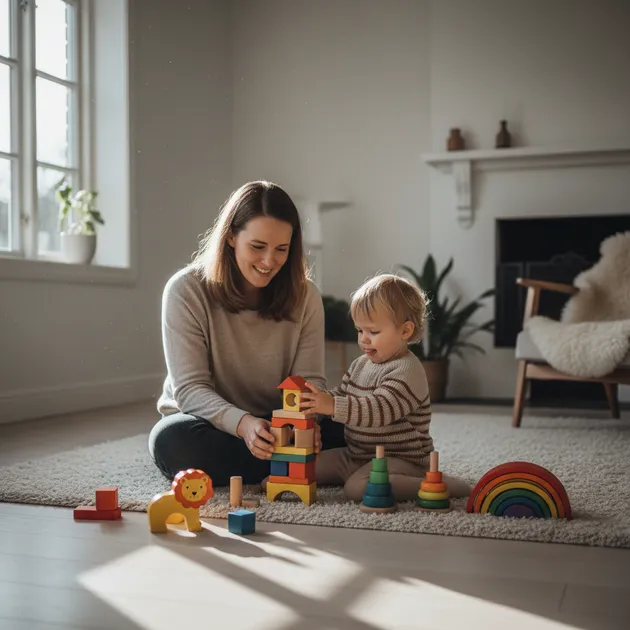
- Follow your child's lead, sit on the floor and do what they're doing. Show them you see them.
- Use simple language, short sentences with clear emphasis.
- Wait and respond, give your child time to communicate in their own way, and respond to all attempts.
Create Predictability
- Visual schedules with pictures can help the child understand what's happening.
- Prepare for transitions, tell your child what's coming before it happens.
- Keep consistent routines for mealtimes, bedtime, and activities.
Play Ideas
- Simple back-and-forth play (bubbles, balls, peekaboo)
- Sensory activities (water, sand, playdough)
- Music and songs with movement
Myths About Autism
"Vaccines cause autism"
No. This claim originates from a fraudulent study by Andrew Wakefield that was retracted in 2010. Numerous large-scale studies involving millions of children have found no link between vaccines and autism. The CDC, WHO, and AAP are clear: vaccines are safe and do not cause autism.
"Children grow out of autism"
Autism is a lifelong condition. With the right support, many children make remarkable progress, but autism itself doesn't disappear. Early intervention produces the best outcomes.
"Autistic children don't have empathy"
Children and adults with autism have empathy but may express it differently. They may have difficulty reading body language or social cues, but that doesn't mean they don't care about others.
Frequently Asked Questions
Can you see signs of autism in a baby under one year?
Some early signs may be visible from 6–12 months, such as limited eye contact, no response to their name, and few social smiles. However, the vast majority of babies with these individual signs do not have autism. Diagnosis is rarely made before age 2–3.
Should I be worried if my child doesn't point?
Pointing is an important milestone that most children reach between 9–14 months. If your child is not pointing by 16–18 months, it's worth mentioning to your pediatrician, but it doesn't necessarily mean autism.
How long does the assessment process take?
Wait times vary significantly. In the US, families sometimes wait 6 months to over a year for a formal autism evaluation. Early Intervention services can often begin while you wait, which is one reason to pursue a referral promptly.
Can girls have autism?
Yes. Girls are diagnosed less often, partly because many girls with autism "mask", they imitate others' social behavior and hide their difficulties. Research shows that girls with autism more often present with subtler signs that have historically been missed.
What is the difference between autism and ADHD?
Autism and ADHD are different diagnoses, but they can co-occur. ADHD primarily involves attention, impulse control, and activity level, while autism involves social communication and repetitive patterns. A child can have both. Read more in our article on ADHD signs in toddlers.
Related Tools
- Milestones, track your child's development
- Baby development month by month
- Speech delays in children, when to seek help
Sources
📖 Related Articles
- ADHD Signs in Toddlers: What Should Parents Look For?. Learn about ADHD signs in toddlers. What is normal active behavior, when should you seek help, and how does assessment work in Norway? Guide for parents.