Decorating the nursery is one of the most enjoyable preparations before your baby arrives. But behind the beautiful colors and cute details, safety must always come first. A good nursery is practical, safe, and adapted to your child's needs - not your Instagram feed.
Here you'll find concrete tips for decoration and safety, based on international guidelines.
Start with the Essentials
Before you start shopping, think about what the room will actually be used for. In the first months, your baby needs surprisingly little.
The Basics:
- Crib with an approved mattress
- Changing table or changing pad
- Storage for clothes and gear
- Blackout curtain or blinds
- Night light with dim, warm glow
Can Wait:
- Wall shelves (when the baby is small, floor space is more important)
- Decorative items and framed pictures
- Open bookshelves (relevant from 8-10 months)
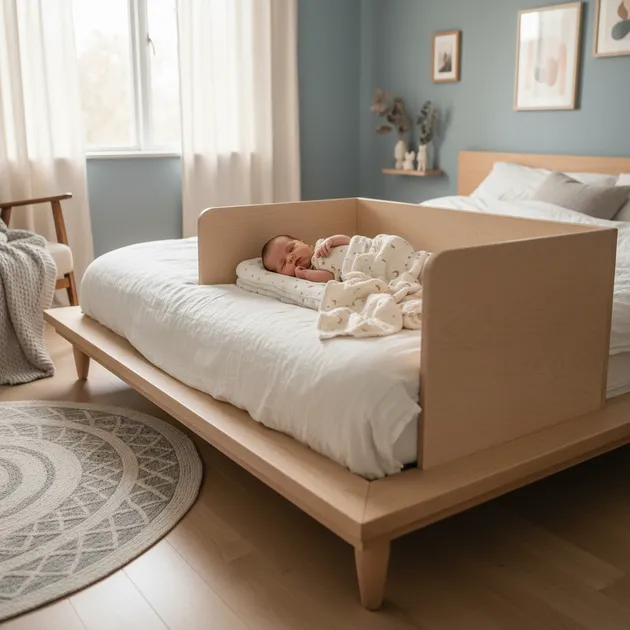
Tip: Many parents have their baby sleep in the parents' room for the first few months. The AAP recommends that babies sleep in the parents' room for the first 6 months. So you don't necessarily need the nursery ready by the due date.
Crib and Sleep Area
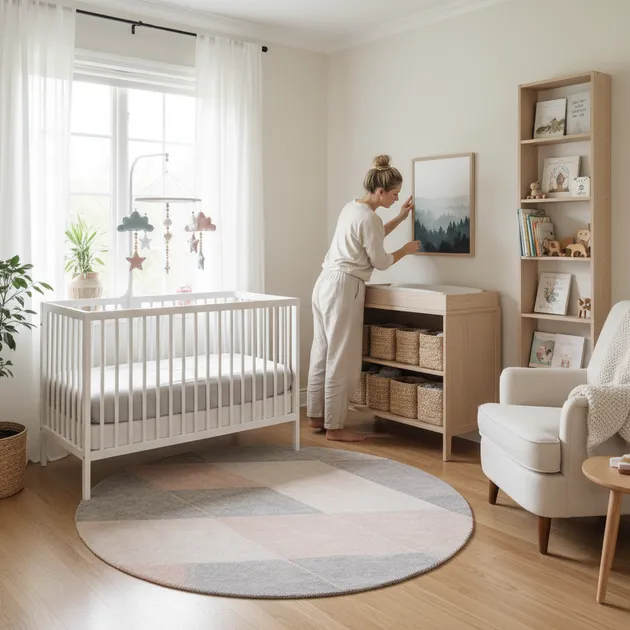
The crib is the most important piece of furniture in the nursery. Choose a crib that meets current safety standards (CPSC standards in the US, or EN 716 in Europe).
Crib Requirements:
- Slat spacing: 2 3/8 inches or less (so the baby can't get stuck)
- The mattress should fit snugly with no gaps (no more than two fingers width)
- Firm mattress, not too soft
- The base should be adjustable as the child grows
Not in the Crib:
- No pillows, blankets, or canopies
- No stuffed animals or toys (for the first 12 months)
- No baby nests or positioning devices
- Use a sleep sack instead of a blanket
Safety: Never place the crib near a window, near curtains with cords, or next to furniture the child could climb on. When your child starts pulling themselves up, lower the mattress to the lowest setting.
Changing Table and Changing Area
A changing table makes daily life easier, but it's also a place where accidents happen. Falls from changing tables are one of the most common accidents for infants.
Safety Tips for the Changing Table:
- Choose a changing table with raised edges on three sides
- Always keep one hand on the baby
- Have everything you need within arm's reach before you start
- Never leave the baby on the changing table, not even for a second
- Store creams, diapers, and clothes on shelves built into the table, not in cabinets you need to walk to
Alternative: A changing pad on the floor eliminates the risk of falls. Less practical for your back, but completely safe.
Storage and Organization
Good storage solutions make daily life with a baby much easier. Think accessibility and safety.
Practical Solutions:
- Dresser with childproofing - Closed storage is safer than open shelves
- Baskets and bins - For toys, clothes, and diapers. Easy to carry between rooms
- Wall-mounted shelves - Out of baby's reach for decorations and books
- Coat hooks - For baby's clothes, carrier, and small items
Important: All furniture over 24 inches (60 cm) tall should be anchored to the wall. Children climb, and tipping dressers and bookshelves are a serious accident risk.
Anchor all tall furniture: It's strongly recommended to secure all tall furniture to the wall. IKEA and other furniture manufacturers include wall anchors with their products - use them. Every year children are injured by furniture that tips over.
Curtains and Lighting
Light and darkness control sleep rhythms. A good nursery has control over both.
Blackout Solutions:
- Blackout roller shades or blinds are essential for daytime naps and bright summer evenings
- Choose cordless solutions - cords pose a strangulation hazard
- Cordless roller shades or curtains with short, secured cords are safest
Night Light:
- A dim, warm night light makes nighttime diaper changes easier without fully waking the baby
- Choose a light with a reddish or orange tone, not blue or white light (which suppresses melatonin)
- A timer or motion sensor is practical
Colors and Atmosphere
Color choices in the nursery are about more than aesthetics. Calm colors promote sleep and relaxation.
Good Color Choices:
- Muted, calm tones: dusty pink, light blue, sage, warm beige
- White walls with colored textiles are flexible and easy to change
- Avoid strong, intense colors on large surfaces (can be stimulating)
Tips for Wall Decor:
- Use frames with plexiglass, not regular glass (shatter safety)
- Secure pictures and shelves firmly - out of the child's reach
- Wall decals are a safe and simple decoration option
Flooring and Play Area
Once your baby starts moving, the floor becomes the most important area in the room.
Good Flooring Options:
- Hardwood or laminate with a soft rug is easy to keep clean
- Foam play mats (EVA mats) provide soft landings and are easy to wash
- Avoid long-pile rugs that the baby can put in their mouth
- Short-pile cotton rugs can be machine washed and are great for the crawling stage
Temperature and Air Quality
The right temperature in the nursery is important for safe sleep.
- Recommended temperature: 68-72°F (20-22°C) for sleep
- Air the room daily, ideally morning and evening
- Avoid scented products like scented candles and room sprays in the nursery
- A room thermometer is inexpensive and useful for monitoring
Did you know? Overheating is a risk factor for SIDS. It's better for the room to be slightly cool rather than too warm. Feel your baby's neck or chest to assess if they're too warm.
Budget and Shopping Tips
You don't need to spend a fortune on the nursery. Many items can be bought secondhand or borrowed.
Save Money:
- Buy a used crib - Check that it meets current safety standards and that all parts are intact
- Inherit a changing table - Changing tables last a long time. Check that it's stable and has raised edges
- Shop secondhand - Nursery furniture sells cheaply because children grow quickly
- Wait on decorations - Your baby doesn't care about interior design in the first months
Prioritize Quality On:
- Mattress - Always buy a new mattress for your baby. A used mattress may be deformed or unhygienic
- Blackout curtain - A good solution will save you many sleepless nights
- Wall anchors - Always use the original wall anchors from the manufacturer
Budget Estimate:
| Item | New | Used |
|---|---|---|
| Crib | $150-400 | $50-150 |
| Mattress | $50-150 | Always new |
| Changing table | $100-300 | $30-100 |
| Dresser | $100-300 | $50-150 |
| Blackout curtain | $30-80 | $10-40 |
| Total | $430-1,230 | $190-590 |
A Nursery That Grows with Your Child
Think long-term when decorating. Your baby grows quickly, and the room needs to adapt.
0-6 months: Crib, changing table, storage. Simple and tidy.
6-12 months: Baby crawls. Secure outlets, remove loose cords, anchor furniture to the wall. Put down an activity mat.
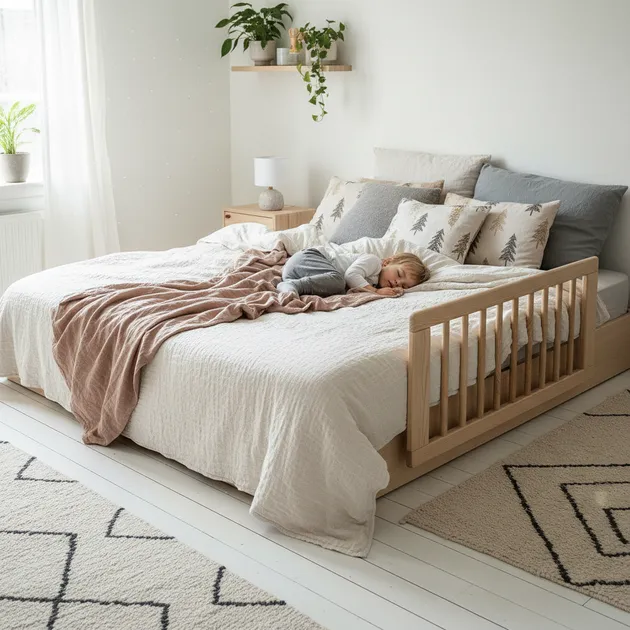
1-2 years: The child climbs and explores. Consider converting the crib to a toddler bed. Install a safety gate in the doorway if needed. Place toys on low shelves the child can reach.
2-3 years: The child wants ownership. Let them choose something - a picture, a color, a stuffed animal. Introduce letters and books at child height.
Safety Checklist for the Nursery
Go through this list when the nursery is complete:
- All furniture over 24 inches anchored to the wall
- No cords on curtains or blinds
- Outlet covers on all outlets within reach
- No loose cords from lamps or chargers
- Crib placed away from windows and curtains
- No heavy objects above the crib
- Mattress fits snugly in the crib
- Smoke detector in the room or right outside
- Window locks installed (from when baby crawls)
- No small objects on the floor (choking hazard)
Frequently Asked Questions
When should the nursery be ready?
You don't need it by the due date, since the baby should sleep in the parents' room for the first 6 months. But many parents like to have it ready during pregnancy. Weeks 34-36 is a good target.
Do I need to paint the nursery?
No, but fresh paint gives a clean start. Use water-based paint with low VOC ratings. Paint at least 4 weeks before the baby will use the room so all fumes have dissipated.
Does my baby need their own room?
Not right away. The AAP recommends that babies sleep in their parents' bedroom for the first 6 months. Many families use the nursery as a changing and play room first.
How much does it cost to set up a nursery?
You can set up a beautiful and safe nursery for $500-1,500. Crib ($150-400), mattress ($50-150), changing table ($100-300), and storage ($100-300). Much can be bought secondhand.
Read More
- Childproofing Your Home - Safety room by room
- Starting Daycare - Preparing for daycare
Sources
🔧 Helpful Tools
- All Baby Tools. Browse all free tools for pregnancy and baby care
📖 Related Articles
- Temperature and Indoor Climate in the Nursery. The right temperature in the nursery is important for safe sleep. Learn about optimal temperature, humidity, and ventilation for your baby's room.