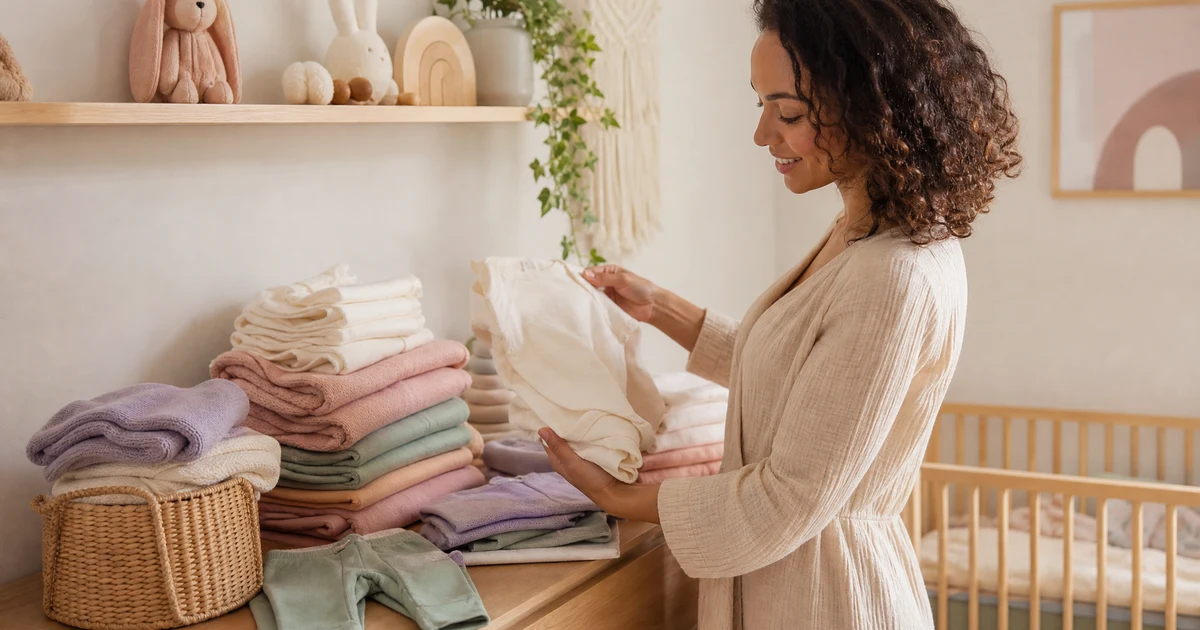
The tiny laundry looks harmless until every drawer is full and half the baby clothes still have tags on them.
This baby clothes guide gives you the practical version: which sizes to buy, how many pieces you actually need, what works for sleep, and which cute extras can wait.
Start with a small, washable wardrobe in 0-3 months, add only a few newborn pieces, and choose soft layers that work for feeding, diaper changes, sleep, and weather.
Key Takeaways
- Buy by weight first, age second: Baby clothing labels are estimates, and babies grow at very different speeds.
- Go light on newborn size: The American Academy of Pediatrics notes that many full-term babies outgrow newborn clothing quickly.
- Prioritize easy changes: Snap-bottom bodysuits, zip sleepers, soft pants, and sleep sacks get used more than tiny outfits.
- Dress sleep safely: Use fitted sleep clothing or a wearable blanket, not loose blankets, and avoid overheating.
- Plan around laundry: Families who wash every 2-3 days need fewer clothes than families who batch laundry weekly.
Baby Clothes Starter Wardrobe
Use this as a calm baseline, then adjust for your climate, laundry rhythm, and whether your baby spits up often.
| Item | Newborn size | 0-3 months | Why it matters |
|---|---|---|---|
| Short- or long-sleeve bodysuits | 3-5 | 7-10 | Daily base layer and easy diaper access |
| Footed sleepers or pajamas | 2-3 | 5-7 | Day, night, and low-effort outfits |
| Soft pants or leggings | 2 | 3-5 | Adds warmth without changing the whole outfit |
| Sleep sacks or wearable blankets | 1 | 2 | Safer warmth than loose blankets |
| Socks or booties | 3 pairs | 4-6 pairs | Useful if pants are footless |
| Hats | 1-2 outdoor hats | 1 sun or winter hat | Outdoor use; skip indoor hats after the first hours home unless a clinician says otherwise |
| Cardigan or light jacket | 1 | 1-2 | Easy layer for going out |
If you want a registry checklist you can trim instead of expand, start with the Babysential checklists. For sleep planning, the sleep tracker helps you spot whether clothing, room temperature, or nap timing may be affecting nights.
Baby Clothes Size Guide by Age, Weight, and Length
Baby clothing sizes are not standardized across brands. A baby can wear 3M in one brand, 0-3M in another, and 60 cm in a European label on the same week.
Use the label as a starting point, then check the brand's weight and length range.
| Label | Typical age | Typical weight clue | EU size clue | Buying note |
|---|---|---|---|---|
| Preemie | before term or very small newborn | often under 6 lb | 44-50 | Buy only if needed after birth |
| Newborn | first days to weeks | often up to 8-9 lb | 50-56 | Keep the stash small |
| 0-3M or 3M | birth to 3 months | often 8-12 lb | 56-62 | Best default for registries |
| 3-6M or 6M | 3 to 6 months | often 12-17 lb | 62-68 | Useful once growth steadies |
| 6-9M or 9M | 6 to 9 months | often 17-21 lb | 68-74 | Check torso length and diaper room |
| 9-12M or 12M | 9 to 12 months | often 21-25 lb | 74-80 | Crawling babies need flexible knees |
| 18M | 12 to 18 months | often 25-28 lb | 80-86 | Baby cut, usually snaps or diaper room |
| 2T | 2 years | varies widely | 86-92 | Toddler cut, usually slimmer |
| 3T | 3 years | varies widely | 92-98 | Toddler fit, not a baby size |
Size up when the fabric pulls at the shoulders, the diaper area looks tight, feet are curled in footies, or sleeves leave marks. Size down only when neck openings gape, straps slide, or the outfit creates loose fabric near the face during sleep.
How Many Baby Clothes Do You Actually Need?
The honest answer depends on laundry.
If you wash every other day, a small wardrobe works. If laundry waits until Sunday night, you need more backups, especially in the spit-up months.
For a first baby, the practical middle is:
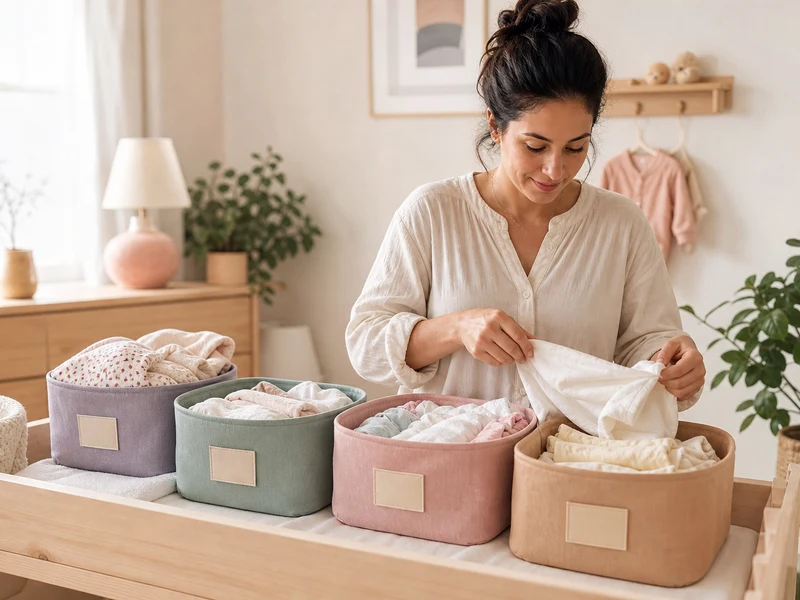
- 7-10 bodysuits: short sleeve in warm climates, long sleeve in cooler homes.
- 5-7 sleepers: zip sleepers are fastest at 2 a.m.; two-way zippers are useful for diaper changes.
- 3-5 pants: soft waistbands, enough stretch for diapers, no stiff denim for newborn days.
- 2 sleep sacks: one in use and one in the wash.
- 4-6 pairs of socks: unless most sleepers have feet.
- 2 weather layers: a cardigan, fleece suit, or light jacket depending on season.
- 1-2 special outfits: photos, visits, or a family event.
You can safely skip baby shoes before walking. The AAP says newborn shoes are unnecessary until after a baby starts walking, and socks should not be tight around the feet or ankles.
Is Size 0-3 Months the Same as 3 Months?
Usually, yes.
Many brands use "3M" to mean "fits up to 3 months," while other brands write "0-3M." Parents often assume 3M starts at three months, then discover the clothes were meant for the newborn period.
That is why weight and length matter more than age. If your baby is long, footed sleepers may become tight before bodysuits do. If your baby has chunky thighs or wears bulky overnight diapers, pants may need to size up first.
For gifts, 3-6M is often safer than newborn. Parents get a mountain of tiny clothes, then hit the next size with fewer clean options.
What Should Baby Wear for Sleep?
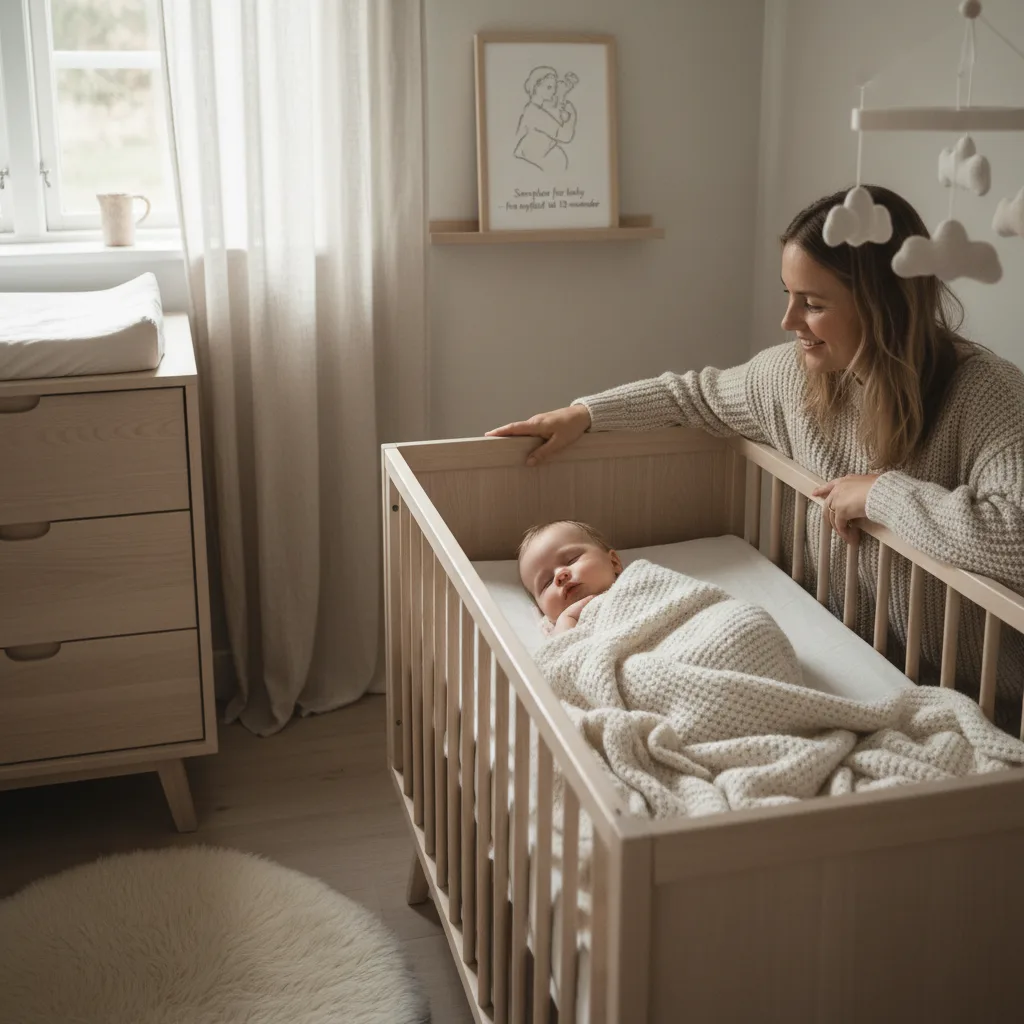
Sleep clothes should keep your baby warm without loose fabric in the crib.
The AAP recommends layers or a wearable blanket instead of loose bedding. A simple rule is to dress your baby in one more layer than an adult would comfortably wear in the same room.
NHS guidance is more specific on room temperature: 16C to 20C is described as comfortable and safe for sleeping babies. US guidance from the AAP and NICHD focuses less on a number and more on the room, the baby's layers, and signs of overheating.
For most families, that means:
- Warm room: short-sleeve bodysuit or light sleeper.
- Mild room: cotton sleeper or bodysuit plus light sleep sack.
- Cool room: long-sleeve sleeper plus an appropriately rated sleep sack.
- No loose blankets: use wearable layers instead.
- No indoor hats for sleep: AAP and Safe to Sleep guidance warn against covering the head once baby is home from the hospital.
Check the chest or back of the neck, not hands and feet. Sweating, flushed skin, or a hot chest can mean your baby is too warm.
Weighted sleep sacks, weighted swaddles, loose blankets, and indoor hats are not safe sleep shortcuts. Choose fitted layers and a clear sleep space.
What Fabrics Are Best for Baby Clothes?
Soft cotton is the safest default because it washes easily, breathes well, and works for most babies.
For eczema-prone skin, the American Academy of Dermatology recommends loose-fitting 100% cotton clothing, removing tags that rub, and washing clothes with fragrance-free, dye-free detergent.
Good everyday fabric choices:
- Cotton jersey: stretchy, breathable, and easy to wash.
- Ribbed cotton: more stretch for fast growth.
- Bamboo viscose: soft and stretchy, but check wash instructions because some pieces wear faster.
- Fleece: useful outdoors or in cold rooms, but can overheat indoors.
- Wool: warm for outdoor layering, but avoid against eczema-prone skin unless your baby tolerates it.
Avoid stiff seams, tight cuffs, decorative cords, scratchy labels, and buttons that make diaper changes harder. A beautiful outfit that takes three minutes to remove becomes very annoying after the fourth diaper of the morning.
How to Dress Baby for Weather
The easiest weather rule is layers you can remove quickly.
In hot weather, NHS guidance says a single lightweight cotton layer may be enough during the day. Babies under 6 months should be kept out of direct sunlight, and prams should not be covered with a muslin or blanket because heat can build up inside.
In cold weather, use thin layers instead of one bulky outfit. For car seats, avoid thick coats under the harness because bulky clothing can stop straps from fitting snugly. Buckle the harness over normal clothing, then add a blanket or coat over the straps if needed.
For stroller walks, think in removable layers:
- Bodysuit or sleeper against the skin.
- Soft pants or a cardigan for warmth.
- Weather-appropriate outer layer.
- Hat outdoors in cold or sun, removed indoors or in a warm car.
What Baby Clothes Are Worth Buying?
The most-used baby clothes are boring in the best way.
Buy pieces that open wide, wash well, and do not require a matching outfit to make sense. Multipacks are fine if the fabric feels soft and the seams are smooth.
Worth buying:
- Two-way zip sleepers: easiest for night diaper changes.
- Envelope-neck bodysuits: can pull down over the body after diaper leaks.
- Soft pants with roomy waists: easier than tiny jeans.
- Sleep sacks: safer than loose blankets and useful across seasons.
- Neutral basics: easier to mix, pass down, and fill gaps.
Usually skippable:
- Tiny shoes: cute, rarely useful before walking.
- Complicated outfits: suspenders, stiff collars, hard buttons, and scratchy tulle.
- Too many newborn pieces: keep some, then wait for your baby's actual size.
- Holiday-only clothes in tiny sizes: babies grow past them before the event arrives.
Baby Clothes Buying Plan
If you are pregnant and building a wardrobe before birth, buy in stages.
First, buy the basics for the first two weeks: a few newborn pieces, more 0-3M pieces, two sleep sacks, and weather layers. Wash only the first batch. Keep tags on backup sizes until you know your baby's shape and season needs.
Second, fill gaps after the first week. You will know whether your baby spits up often, runs warm, has long legs, or needs footless sleepers.
Third, buy ahead only when the season is obvious. A 6-9M winter fleece is not useful if your baby reaches that size in July.
This is also where product recommendations should stay practical. Carter's, H&M Baby, Primary, and Boden Mini all make easy basics. BabyBjorn and Stokke are better known for gear than clothes, but their textile accessories can make sense if you already use the product. Choose fit, fabric, and washability before brand.
FAQ
How many baby clothes do I actually need?
Most families can start with 7 to 10 bodysuits, 5 to 7 sleepers, 3 to 5 pants, 2 sleep sacks, socks, and a few weather layers. Buy less in newborn size and more in 0-3 months.
Is size 0-3 months the same as 3 months?
Usually, yes. A label that says 3M often means it fits up to about 3 months, while 0-3M covers the same early range. Weight and length are more reliable than age.
Should I buy newborn size baby clothes?
Buy a small amount only. Many full-term babies outgrow newborn clothes quickly, so 0-3 months is usually the safer registry size.
What should a baby wear for sleep?
Use fitted sleep clothing or a wearable blanket instead of loose blankets. A common rule is one more layer than an adult would wear in the same room.
Summary
Baby clothes are easiest when you buy for real life: quick diaper changes, washable fabrics, safe sleep, and the next growth spurt.
Start small, keep receipts, wash only what you need first, and use your first week at home as the final sizing test. For a no-stress planning pass, build your own list in the Babysential checklists, then add feeding and sleep notes in the food guide and sleep tracker as your routines settle.
Babysential articles are written by the Babysential Team using current pediatric and public-health guidance, then reviewed for source traceability and practical usefulness before publication. Automation helps organize research and checks, but every published claim must trace back to visible guidance or parent-useful reasoning.
This article is for informational purposes only and does not replace professional medical advice. Always consult your pediatrician for guidance specific to your child.
Sources:
- American Academy of Pediatrics: Registering for Baby Clothes
- American Academy of Pediatrics: How to Keep Your Sleeping Baby Safe
- NHS: How to dress a newborn baby
- NICHD Safe to Sleep: Ways to Reduce Baby's Risk
- American Academy of Dermatology: How can I find eczema triggers on my child's body?