Setting up a nursery for the first time is exciting, and overwhelming. The internet is full of trendy décor ideas, but what do you actually need for a nursery to keep your baby safe, comfortable, and well-rested? This checklist covers the true must-haves for a nursery in 2026: the items with real safety standards, proven sleep science, and practical day-to-day value. Skip the fluff; focus on these essentials.
Key Takeaways
- A CPSC-compliant crib with a firm, flat mattress is the single most important item in any nursery.
- AAP guidelines require a bare sleep surface, no pillows, bumpers, positioners, or soft bedding.
- Blackout curtains and a white-noise machine are evidence-backed tools for longer, more consistent baby sleep.
- A comfortable glider or nursing chair pays dividends during every nighttime feed, prioritize lumbar support.
- Build a diaper station close to the crib with everything reachable one-handed.
- Invest in a video baby monitor with sound and temperature alerts; peace of mind has real value.
1. The Sleep Setup. Crib, Mattress, and Sleep Sack
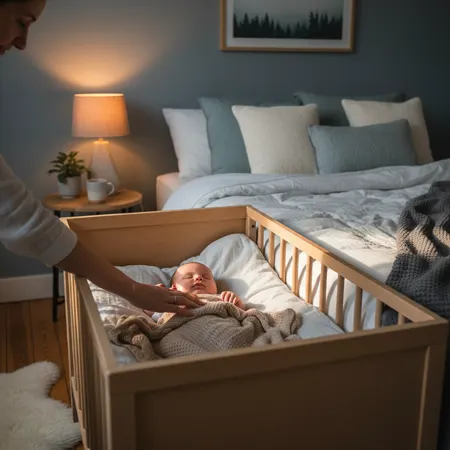
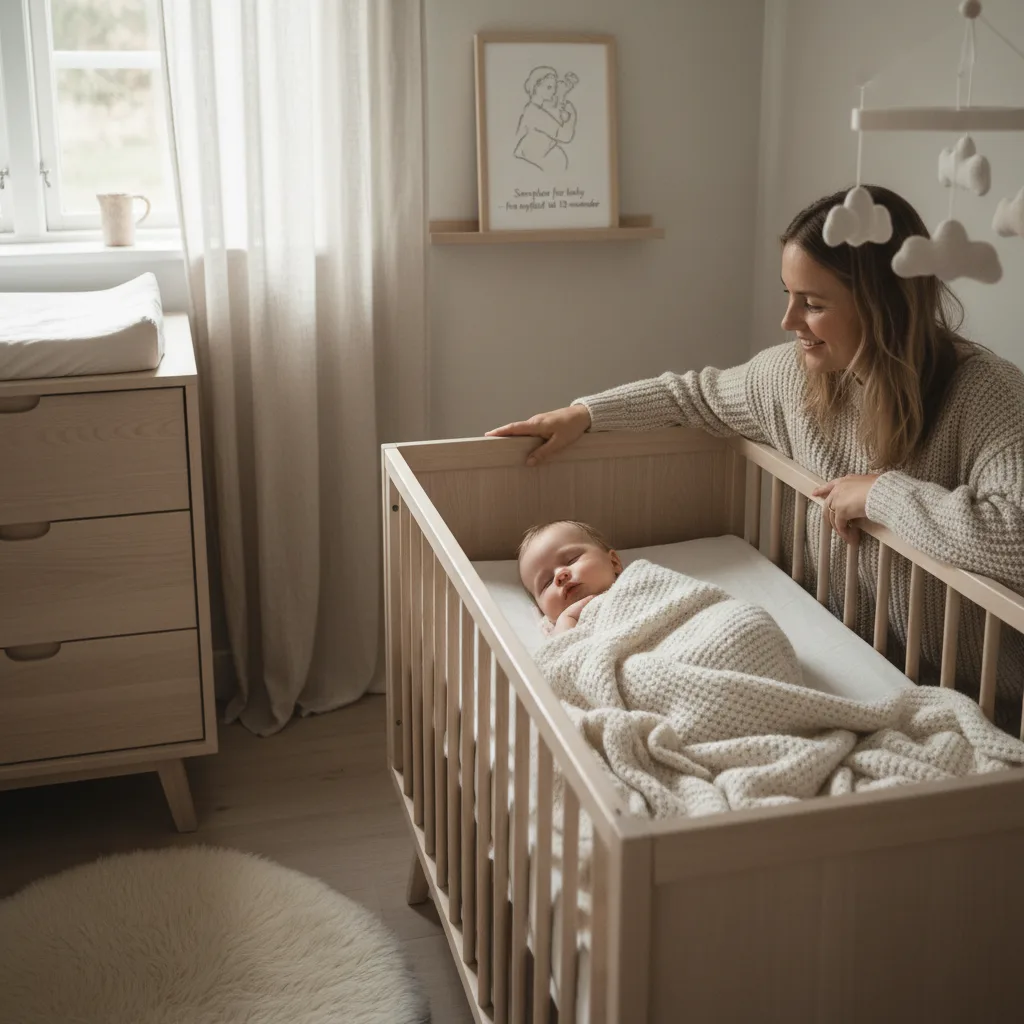
The crib is the centerpiece of any nursery. In the US, all new cribs sold since 2011 must meet CPSC standards (16 CFR Part 1219), which ban drop-side rails and require slat gaps no wider than 2-3/8 inches. Check that any used or hand-me-down crib carries a post-2011 certification sticker.
What to look for in a crib:
- JPMA certification (independent safety testing layer on top of CPSC)
- Adjustable mattress height, start high, lower as baby learns to pull up
- Solid end panels or close-spaced spindles; no decorative cutouts a limb could catch in
- Converts to a toddler bed for extended value
The mattress matters as much as the crib. The AAP's 2022 safe-sleep guidelines are explicit: the sleep surface must be firm, flat, and non-inclined. A mattress that compresses more than one inch under a baby's weight does not meet this standard. Choose a mattress that is dual-sided (firmer infant side, softer toddler side) and wrapped in a waterproof cover, accidents happen from day one.
Sleep sacks over blankets. The NICHD Safe to Sleep campaign, running since 1994, has contributed to a dramatic drop in SIDS rates. Loose blankets remain a suffocation risk for infants under 12 months. Use a fitted sleep sack rated for the room temperature (look for TOG ratings: 0.5 TOG for rooms 24–27°C, 1.0 TOG for 20–24°C, 2.5 TOG for rooms below 20°C).
You'll need at minimum three sleep sacks so you always have a clean one.
2. Climate Control. Blackout Curtains and White-Noise Machine
Melatonin production in infants is highly sensitive to light. Studies from sleep researchers at Johns Hopkins and elsewhere consistently show that blackout conditions help babies fall asleep faster and stay asleep longer, especially during summer months or when nap time falls in the afternoon.
Blackout curtains: Look for 100% blackout fabric, not "room darkening," which still lets in edges of light. Install curtain rods that extend 6–8 inches beyond the window frame on each side and above the top of the frame, so light can't leak around the edges. Neutral colors work with any nursery palette.
White-noise machine: Research supports the use of consistent, low-level background noise (around 50–60 dB, measured at the baby's position, roughly the level of a quiet shower). A dedicated machine is preferable to a smartphone app because you can place it between the crib and the door without occupying your phone. Look for a machine with a continuous loop (no gaps when tracks restart) and a physical volume knob for middle-of-the-night adjustments. Keep it at least 7 feet from the crib, closer placement at higher volumes has been associated with hearing concerns in some studies.
3. Storage. Dresser, Changing Station, and Diaper Supplies
Dresser: Babies go through three to five outfit changes per day in the newborn phase. A six-drawer dresser within arm's reach of the changing area keeps the logistics sane. Anchor every dresser to the wall. CPSC data consistently identifies tip-over accidents as a leading cause of furniture-related child injury, even before babies are mobile.
Changing station: You have two main options:
- A dedicated changing table with safety straps and built-in shelves (convenient, specific-use)
- A dresser with a changing topper attachment (saves space and converts after diaper years)
Either way, stock the station with everything reachable with one hand while the other keeps contact with baby:
- Diapers (newborns go through 8–12 per day, buy a month's supply before birth)
- Unscented baby wipes (fragrance is a common skin irritant for newborns)
- Diaper rash cream (zinc oxide-based)
- Waterproof changing pad cover (3–4 covers for rotation)
- A small lidded bin or diaper pail (with odor-seal lid)
4. Comfort. The Glider or Nursing Chair
You will spend 6–12 hours per day in your nursing chair during the first weeks. This is not a place to cut corners. A proper glider or rocking chair should offer:
- Firm lumbar support (look for chairs with adjustable head/back cushions)
- Smooth gliding motion, not just rocking, as some babies settle better with linear motion
- Wide armrests at a height that doesn't strain your shoulders during feeds
- A matching ottoman for foot support (reduces lower-back strain significantly)
Test it in the store if possible: sit down, pretend to hold a baby in a cradle position, and check whether your wrists and elbows are supported without hunching. Machine-washable cushion covers are a practical bonus.
5. Safety and Monitoring
Baby monitor: A video monitor with two-way audio, night vision, and sound-activated alerts lets you rest between feeds without lying awake listening for every creak. The best models also display the room temperature, useful for TOG rating decisions and for catching heating/cooling failures. Choose a monitor that runs on a closed Wi-Fi loop (no cloud dependency) to avoid security vulnerabilities.
Room thermometer: Keep the nursery between 20–22°C (68–72°F). At the upper end, a 0.5 TOG sleep sack and a single onesie are sufficient; at the lower end, layer accordingly. A standalone thermometer on the wall at crib height (not mounted near a heat vent) gives the most accurate read.
Baby-proofing for later: The nursery is where baby-proofing begins. Outlet covers, furniture anchors, and cord-winding ties should be in place before your baby rolls or pulls up, typically by month 4–6. Build the habit early.
🔧 Helpful Tools
Use these Babysential tools to build out your nursery prep plan:
- Checklists. Generate a personalized nursery readiness checklist week-by-week in your third trimester.
- Due Date Calculator. Know exactly when to have the nursery finished; most parents aim for 4–6 weeks before the due date.
- Smart Start. Personalized first-week guide that includes nursery and sleep setup for your baby's age and season.
- Sleep Tracker. Once baby arrives, track sleep patterns to see how your nursery environment (room temp, blackout curtains, white noise) affects sleep quality.
Sources
- American Academy of Pediatrics. Sleep-Related Infant Deaths: Updated 2022 Recommendations for Reducing Infant Deaths in the Sleep Environment. Pediatrics. 2022. https://publications.aap.org/pediatrics/article/150/1/e2022057990/188304
- U.S. Consumer Product Safety Commission. Cribs Safety Information Center. 2023. https://www.cpsc.gov/Safety-Education/Safety-Education-Centers/cribs
- National Institute of Child Health and Human Development. Safe to Sleep Campaign. 2023. https://www.nichd.nih.gov/sts/about/Pages/default.aspx
This article provides general guidance only and does not constitute medical or safety advice. Always follow current AAP and CPSC guidelines for your baby's sleep environment and consult your pediatrician with specific questions.