A baby swing can be useful when you need a brief, hands-free place for an awake baby who likes rhythmic motion. It can also become risky fast if it turns into a nap spot, a substitute for supervision, or a product you keep using after your baby has outgrown the limits.
The safest way to think about a baby swing is simple: it is a soothing tool for awake, supervised time. It is not a bed, not a bassinet, and not a safe place to let a baby sleep.
This guide explains what to look for, how to use a swing safely, and when a bouncer, carrier, play mat, or crib is the better choice.
Key Takeaways
- A baby swing is for awake, supervised use only.
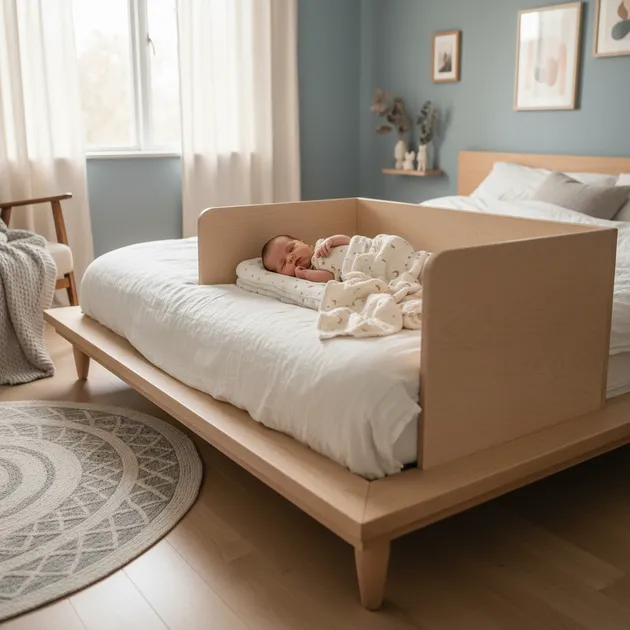
- If your baby falls asleep in a swing, move them to a firm, flat sleep surface such as a crib, bassinet, or play yard.
- Always use the harness, follow the weight and milestone limits, and keep the swing on the floor.
- Stop using an infant swing when your baby reaches the product limit or starts trying to climb out.
- Check CPSC recalls before buying new or used, especially for older swings.
- You do not need a premium smart swing. Stability, restraint fit, clear limits, and easy cleaning matter more than extra motion modes.
Best Baby Swing for Most Families
The best baby swing for most families is a stable, easy-to-clean model with clear age and weight limits, a secure harness, and a motion level your baby tolerates. It should have a wide base, non-slip feet, a seat that supports the baby without slumping, and instructions that are easy to follow.
Look for:
- A five-point or secure three-point harness that fits snugly
- A wide, stable base that does not tip easily
- Clearly printed minimum and maximum weight limits
- A seat cover you can remove and wash
- Multiple speed settings, including a very low setting
- A recline position that keeps baby's airway open while awake
- No loose pillows, blankets, head inserts, or aftermarket accessories
- A current model with no active recall
Features like Bluetooth, cry detection, music, lights, and app controls are optional. Some babies love them, some babies ignore them, and some babies get overstimulated. Start with the safety basics before paying for extras.
If you are building a registry, consider borrowing or buying secondhand only after checking the exact model number against CPSC recalls. Babies are famously opinionated about motion, and a swing that one baby loves may sit unused for another.
Baby Swing Safety: The Rules That Matter
The most important baby swing rule is also the one parents hear least clearly in product marketing: do not use a swing for sleep.
The American Academy of Pediatrics says babies should sleep on their backs on a firm, flat, non-inclined sleep surface. AAP safe sleep guidance specifically warns against routine sleep in sitting devices such as swings, except for car seats while traveling.
CPSC gives the same practical instruction: if a baby falls asleep somewhere else, move them to a crib, bassinet, play yard, or bedside sleeper. CPSC also warns that a seated or semi-reclined position can let a young baby's head tip forward and block the airway.
Use this checklist every time:
- Stay in the room and actively supervise.
- Buckle the harness every time, even for a short session.
- Keep the swing on the floor, never on a counter, bed, couch, or table.
- Do not add blankets, pillows, positioners, head supports, or extra padding.
- Keep toys and mobiles securely attached and out of reach.
- Use the lowest effective speed, especially for newborns.
- Stop the session if baby slumps, looks uncomfortable, fusses hard, or falls asleep.
If your baby falls asleep in a swing, do not leave them there to finish the nap. Move them to a firm, flat sleep space on their back as soon as practical.
Can a Newborn Use a Baby Swing?
Some swings are labeled from birth, but that does not make every swing a good fit for every newborn.
Newborns have heavy heads, immature neck control, and smaller airways. In a semi-reclined seat, a young baby can slump into a chin-to-chest position. That position can make breathing harder, especially for premature babies, low-birth-weight babies, babies under 4 months, or babies with respiratory concerns.
If you use a swing with a newborn:
- Choose a model that explicitly allows newborn use.
- Keep sessions short.
- Keep baby's face visible.
- Check that the chin is not pressed to the chest.
- Use the recline and harness exactly as the manufacturer instructs.
- Stay close enough to respond immediately.
Ask your pediatrician before using a swing if your baby was premature, has low muscle tone, has reflux with breathing concerns, has a cold, or has any medical issue that affects breathing or positioning.
For day-to-day newborn soothing, a swing should be one option, not the whole plan. Holding, feeding, burping, swaddling before sleep, white noise, contact naps while an awake adult supervises, stroller walks, and short floor time all have a place.
Baby Swing vs Bouncer vs Rocker
Baby swings, bouncers, and rockers are often sold together, but they are not the same.
Baby Swing
A baby swing uses powered motion. It may move front to back, side to side, or in a gliding pattern. It is best for brief soothing during awake time.
Best for: Babies who calm with rhythmic motion and caregivers who need a supervised place to set baby down for a short period.
Watch-outs: Requires power or batteries, takes more floor space, and can become a sleep habit if used for naps.
Baby Bouncer
A bouncer usually moves from the baby's kicks or a caregiver's gentle touch. It is often lighter and easier to move around the home.
Best for: Short awake sessions, watching a caregiver fold laundry nearby, or a baby who prefers gentle movement.
Watch-outs: Still not for sleep. Always use the restraint and keep it on the floor.
Baby Rocker
A rocker has a curved base or gliding motion. Some are manual, and some are powered.
Best for: Babies who prefer slower motion and families who want a simpler seat.
Watch-outs: Rockers can look cozy, which makes them tempting for naps. Treat them like swings: awake, supervised use only.
If you are choosing one product, pick the one that fits your space and your baby. A compact bouncer may be more useful in a small apartment. A full-size swing may help if your baby strongly prefers powered motion. A safe floor mat may be enough if your baby is content with tummy time and face-to-face play.
How Long Can a Baby Stay in a Swing?
There is no magic minute limit that works for every baby, but shorter is better. Think of a swing as a short break in the day, not a place where your baby spends long stretches.
A practical limit is 10 to 20 minutes at a time for awake soothing, then switch to holding, feeding, floor play, tummy time, a carrier, or a safe sleep space if baby is tired.
Long swing sessions can crowd out the movement babies need: turning their head, kicking, stretching, practicing tummy time, reaching, rolling, and interacting with you. Babies also change position less in a seat than they do on a firm, open surface.
Use the Baby Milestones Tracker if you want a simple way to follow head control, rolling, and sitting readiness. For sleep patterns and naps, the Baby Sleep Tracker is a better tool than relying on a swing to extend naps.
When to Stop Using a Baby Swing
Stop using the swing when your baby reaches the manufacturer's weight limit, height limit, or developmental limit. The developmental limit matters most: many infant swings are no longer appropriate once a baby attempts to climb out or can sit up in a way that changes the seat balance.
Check your manual for the exact wording. CPSC describes infant swings as seated products intended from birth until the infant attempts to climb out, around 9 months, while cradle-style swings have different limits and may stop earlier.
You should also stop using a swing immediately if:
- The harness no longer fits properly.
- The seat fabric, frame, or buckle is damaged.
- The swing moves unexpectedly fast or unevenly.
- The motor housing overheats or smells unusual.
- The product has been recalled.
- Your baby repeatedly slumps or looks uncomfortable.
For used swings, inspect the model number, manufacturing date, restraint system, frame, screws, battery compartment, and any included inserts. Do not use a product with missing labels or missing instructions.
Recalls and Used Baby Swings
Baby swings have a long recall history, including recalls related to suffocation, entanglement, entrapment, and unsafe sleep marketing. That does not mean every swing is unsafe. It does mean you should check the exact product before using it.
Before buying or accepting a used swing:
- Find the model number on the product label.
- Search the CPSC recall database.
- Search the manufacturer's recall page.
- Confirm that all original restraint parts are present.
- Skip any swing with aftermarket inserts, missing instructions, or unclear model information.
The 2024 Fisher-Price Snuga Swing recall is a useful reminder. CPSC reported five deaths involving infants 1 to 3 months old when the product was used for sleep, often with babies unrestrained and bedding added. CPSC's message was direct: swings should not be used for infant sleep, and bedding should not be added.
Frequently Asked Questions
Are baby swings safe?
Baby swings can be used safely for awake, supervised time when you follow the manual, use the harness, keep the product on the floor, and stop when your baby reaches the product limits. They are not safe for infant sleep.
Can baby sleep in a swing?
No. A baby who falls asleep in a swing should be moved to a firm, flat sleep surface such as a crib, bassinet, play yard, or bedside sleeper.
What age is a baby swing for?
Many infant swings are labeled from birth until the baby reaches a weight limit or attempts to climb out. Always follow the exact manual for your model. Newborns and babies under 4 months need extra airway attention.
Is a baby swing worth it?
It can be worth it if your baby likes motion and you have space for one. It is not essential. Many families do well with a carrier, bouncer, stroller walk, play mat, and safe sleep setup.
Should I buy a smart baby swing?
Only if the core safety basics are strong. Smart features do not make a swing safe for sleep, and they do not replace supervision.
Bottom Line
A baby swing can be a helpful short-term soothing tool, especially during fussy evenings or moments when you need to set an awake baby down nearby. Choose a stable model, use the harness, check recalls, and keep sessions short.
The line to hold firmly is sleep. If your baby is tired, the safest destination is a firm, flat, empty sleep surface on their back, not a swing.