
It's 7:45 in the morning. Your child refuses to put their shoes on, the jacket is somewhere under the sofa, and you're already late for work. In the entryway, your child clings to your leg and cries.
Sound familiar? You're not alone. Drop-off and pick-up at daycare is one of the biggest daily challenges for parents of young children. The good news is that there are concrete steps that make it easier, for both you and your child.
A Morning Routine That Actually Works
Lay Things Out the Night Before
The most important morning routine happens the evening before. Lay out all the clothes your child will wear, including underwear, socks, and shoes. Pack the daycare bag with a change of clothes, lunchbox, and water bottle.
Make it a fixed habit: after bedtime, you get everything ready for the next day. 10 minutes the night before saves 30 minutes of stress in the morning.
Fixed Steps in a Fixed Order
Children thrive with predictability. Build a morning routine with the same sequence every day:
- Wake up and get dressed
- Breakfast
- Brush teeth
- Shoes and jacket on
- Out the door
When the sequence is fixed, the child knows what's coming. That gives security and reduces resistance.
Give the child two choices instead of open-ended questions: "Do you want the red or the blue sweater?" That gives the child a sense of control without derailing the morning routine.
Build in a Buffer
Always budget 15 extra minutes. Young children have their own schedules, and something is guaranteed to happen. A diaper that needs changing, a glass that spills, or a child who suddenly "has to" find that one specific toy.
With a buffer you arrive calm instead of stressed. Stressed parents = stressed children = harder drop-off.
Drop-Off: How to Make the Handover Smooth
Short and Loving Goodbye
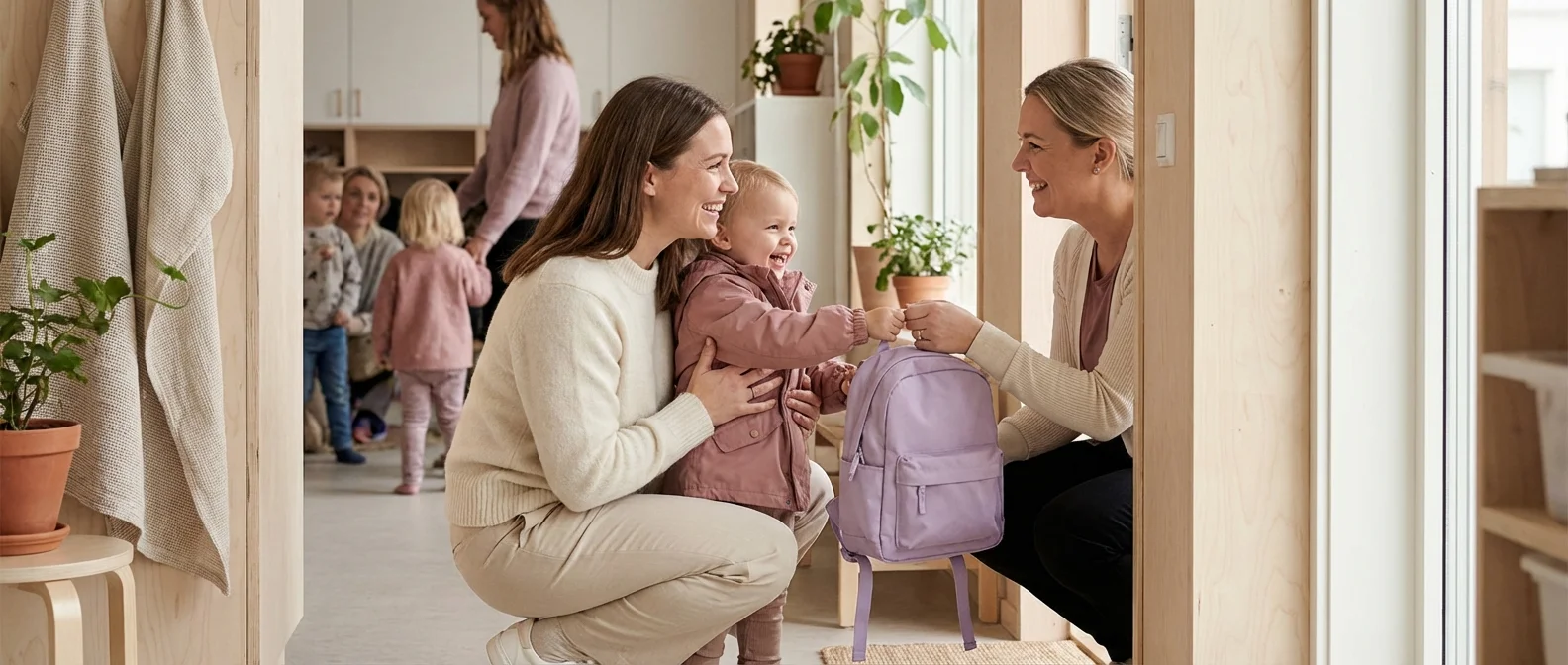
The most important rule for daycare drop-off: Keep the goodbye short. Say bye, give a hug, and go. The longer you linger, the harder it is for the child.
A good goodbye takes at most 2–3 minutes:
- Help the child off with their outer clothes
- Go inside together
- Say goodbye with a hug and a smile
- Leave, without turning back in the doorway
Never Sneak Out
It can be tempting to slip away while the child is playing. Don't do it. The child notices you're gone, and next time they'll cling even more because they don't trust that you'll say goodbye.
Always say goodbye. Even if the child cries, it's better than having them suddenly realize you've vanished.
Never say "just one minute" or "I'll be right back" when you're dropping off. The child takes you at your word and gets extra upset when you don't come back. Instead say: "I'll come get you after lunch" or "after nap time."
Create a Goodbye Ritual
A fixed goodbye ritual makes drop-off feel safe and predictable. It can be anything:
- Three hugs and a kiss
- Waving through the window
- A secret handshake
- "I love you, have a great day, see you soon!" (same phrase every time)
The ritual signals: "Now mum/dad is going, and that's okay."
Children Who Cry at Drop-Off
It's Normal
Let's just say it clearly: it is completely normal for children to cry at drop-off. The vast majority stop crying 2–5 minutes after you leave. The staff are trained to comfort and redirect.
Children cry at goodbye because they have a secure attachment to you. That's actually a good sign.
What You Can Do
Trust the staff. Ask them to send you a message or a photo after a few minutes so you can see that the child is doing fine.
Project calm. The child reads your body language. If you're anxious and sad, the child will be too. Be calm and smiley, even if it's hard.
Talk about daycare positively. Talk about who the child will play with, what they'll do today, and what's fun there.
Don't linger. A long, drawn-out goodbye makes the crying worse. Say goodbye and go. The staff take over.
Research shows that most children who cry at drop-off are happy and engaged within a few minutes. Ask staff for feedback or a photo if you need reassurance.
When Should You Be Concerned?
If the child cries persistently (more than 30–60 minutes after you leave) or shows changes in behavior at home (sleep problems, more crying, withdrawing), it's worth having a conversation with the daycare. Together you can figure out what's behind it.
The Pick-Up Situation: An Underestimated Challenge
Why Children React at Pick-Up
Many parents are surprised when their child cries or is difficult at pick-up. The child has been "holding it together" all day, and when you arrive, they release all their feelings. It's actually a compliment.
Other children are so absorbed in play that they don't want to go home. That's also completely normal.
Tips for Smooth Pick-Up
Give the child time. Say "we're leaving in 5 minutes" instead of pulling the child straight out of play. Children need time to finish what they're doing.
Have a transition activity. A small snack in the stroller, a song on the way home, or looking at notice boards on the way out gives the child a gentle transition.
Ask specifically, not generally. Instead of "what did you do today?" (the child won't remember), ask "did you play with Emma today?" or "what did you have for lunch?"
Tips for Different Ages
1–2 Years
Children this age understand little about time and the future. They live in the present, and goodbye means you're gone, full stop.
What helps:
- A fixed comfort object (lovey, stuffed animal) that the child has at daycare
- The same person drops off each day (predictability)
- Short and consistent goodbye
2–3 Years
Older toddlers understand more, but also have a stronger will. They can protest loudly and have strong opinions about everything.
What helps:
- Let the child choose something (which route you walk, what to have on their sandwich)
- Talk about what happens after daycare: "After daycare we're going to the park"
- Acknowledge feelings: "I can see you're sad. That's okay. We'll see each other after lunch."
Special Situations
After Holidays
Expect the first days back from a break to be harder. The child has been with you around the clock and has to readjust to daycare.
Start with shorter days the first few days back if possible. Talk positively about daycare during the last days of the holiday.
After Illness
A child who's been home sick for several days may struggle with drop-off. The child has gotten used to extra care and closeness.
Be patient. It usually takes 2–3 days to get back into the rhythm.
New Daycare
Changing daycares means a new settling-in period. Most daycares offer orientation visits for new families. Use them.
Have a fixed "after daycare" routine too. Many children need a gentle transition from daycare to home life. Half an hour in the park on the way home can make the whole evening easier for everyone.
Guilt, and Why You Can Let It Go
Most parents feel guilty at drop-off, especially when the child is crying. Some thoughts you might recognize:
- "Am I a bad parent for dropping off a crying child?"
- "My child isn't happy at daycare"
- "Should I just stay home?"
Here's the reality: Quality daycare programs are safe, stimulating, and social environments. Children who attend daycare develop social skills, language, and independence. Crying at drop-off doesn't mean the child is unhappy, it means the child loves you.
Research shows that children in daycare have just as strong an attachment to their parents as children who stay home. Daycare doesn't replace you, it's an addition.
Clothes and Gear That Simplify Daily Life
Easy on and off. Choose clothes without buttons and narrow zippers. Elastic waistbands, stretchy sweaters, and velcro shoes save minutes every morning.
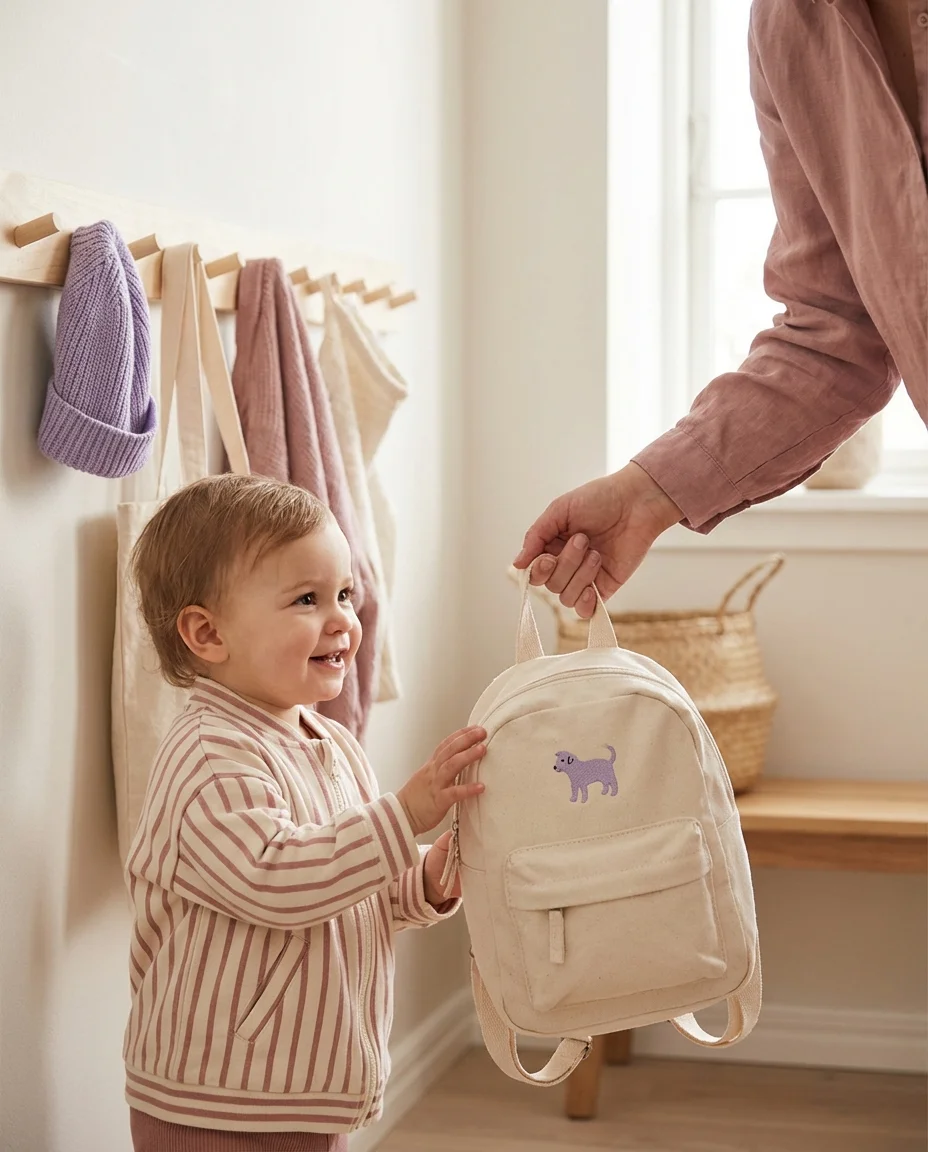
Fixed hooks and cubbies. Have a fixed spot in the entryway for all daycare gear. The child quickly learns to find their own things.
All-weather gear. A good waterproof suit means the child can play outside regardless of weather, without you having to think about it.
Enough spare clothes. Always have at least two complete outfits at daycare. Bring them in a labeled bag and restock regularly.
Communication With the Daycare
A good dialogue with the staff makes drop-off easier over time. Use the drop-off and pick-up moments for brief updates.
At drop-off: "She slept badly last night" or "he's been a bit off today" gives the staff valuable information.
At pick-up: Feel free to ask how the day went, but respect that the staff are often busy. Use the daycare's app for longer messages.
When challenges arise: Raise concerns early. The staff have a lot of experience and can adapt the setup. A short parent-teacher conversation can make a big difference.
Frequently Asked Questions
My child only cries when I drop off, not when my partner does. What does that mean?
It means the child has a strong attachment to you, and reacts more intensely to being separated from you. It's not a sign that something is wrong. Try alternating who does drop-off, the child will adjust.
How long does the crying at drop-off phase last?
For most children, it lasts 2–6 weeks after starting or after a longer absence. Some children have phases throughout their daycare years, often linked to developmental leaps or changes at home. It almost always passes.
Should I hide and watch to see if the child stops crying?
No. Leave the daycare and trust the staff. Hovering around the corner only prolongs the uncertainty, for the child and for you. Ask the staff for an update after 10 minutes instead.
My child doesn't want to go home from daycare. Is that normal?
Yes, that's a good sign, the child is thriving! Give a 5-minute warning before you need to leave, let the child say goodbye to friends, and have something nice to look forward to at home.
What do I do when the child has a "favorite parent" for drop-off?
It's common for children to prefer one parent in certain phases. Try to keep alternating anyway, but adapt the routine a little. Maybe the "preferred" parent can call to say good morning on their way to work on the days the other parent does drop-off.
Sources
- AAP. Early Childhood Development: aap.org
- Zero to Three. Separation Anxiety: zerotothree.org
- CDC. Positive Parenting Tips: cdc.gov
🔧 Helpful Tools
- All Baby Tools. Browse all free tools for pregnancy and baby care