A child with vomiting, diarrhea, or high fever can become dehydrated surprisingly quickly. The younger the child, the more vulnerable they are to fluid loss. Knowing the signs of dehydration can make the difference between safe home treatment and a medical emergency.
Here is a clear overview of how to detect dehydration, what you can do at home, and when to see a doctor.
What Is Dehydration?
Dehydration means the body is losing more fluid than it's taking in. Children are particularly vulnerable because they have a greater fluid requirement relative to body weight than adults. An infant can become seriously dehydrated within just a few hours of severe diarrhea or vomiting.
The body needs fluid to maintain blood pressure, transport nutrients, and regulate temperature. When fluid levels fall, you first notice it as thirst, but young children can't always express that they're thirsty.
According to the WHO and AAP: Infants and young children are especially vulnerable to dehydration during gastrointestinal infections. Fluid replacement is the most important part of treatment.
Common Causes of Dehydration in Children
Most cases of dehydration in children are caused by illness:
- Stomach bug (gastroenteritis), by far the most common cause. The combination of vomiting and diarrhea leads to rapid fluid loss
- Fever, raised body temperature leads to increased sweating and evaporation
- Diarrhea alone, can cause significant fluid loss, especially in infants
- Vomiting, the child is unable to keep fluids down
- Hot weather, children can sweat a lot without drinking enough, especially during active play
- Not drinking enough, some children drink too little on their own, especially when sick
- Large amounts of spitting up, heavy spitting up in infants can contribute to fluid loss
Did you know? A child with diarrhea and vomiting simultaneously is losing fluid from two directions at once. It's especially important to offer frequent, small sips, even if the child vomits again.
Signs of Dehydration by Severity
It's useful to distinguish between mild, moderate, and severe dehydration. Here are the key signs:
Mild Dehydration (1–5% fluid loss)
- Thirstier than usual
- Slightly drier mouth and lips
- Slightly less urine production than normal
- Child is awake and active
Moderate Dehydration (5–10% fluid loss)
- Clearly dry mouth and lips
- Fewer wet diapers (infants: fewer than 4–6 in 24 hours)
- Fewer tears when crying
- Sunken eyes
- Reduced skin elasticity (skin pinched gently returns to normal slowly)
- Child is more lethargic and irritable than usual
- Cooler hands and feet
Severe Dehydration (over 10% fluid loss)
- Very dry mouth, no saliva visible
- No tears when crying
- Sunken eyes and fontanelle (in infants)
- Very little or no urine for several hours
- Cold, mottled, or pale skin
- Rapid pulse and rapid breathing
- Child is very limp, apathetic, or difficult to wake
Call emergency services or go to the ER for severe dehydration. The child needs intravenous fluid treatment. Do not wait, severe dehydration in an infant can be life-threatening.
Infants: Extra Vulnerable
Children under 1 year are most at risk of dehydration. Several factors make them especially vulnerable:
- Higher proportion of body fluid than older children and adults
- Larger surface area relative to weight, leading to more evaporation
- Immature kidneys that struggle to concentrate urine
- Cannot communicate that they're thirsty
- Dependent on someone offering them fluids regularly
Check the fontanelle: In infants under 12–18 months, you can feel the fontanelle (the soft spot on top of the head). A sunken fontanelle is an early sign of dehydration.
Check the diapers: Infants should have at least 6 wet diapers per 24 hours. If the diaper is dry for more than 6 hours, take notice.

How to Treat Mild to Moderate Dehydration at Home
The most important step is replacing lost fluid. The goal is to offer small, frequent amounts.
For Infants Under 6 Months
- Breastfeed or give formula more often. Offer the breast or bottle every 1–2 hours
- Oral rehydration solution (ORS): Can be given on advice from your doctor or pediatrician. Follow the dosage on the package carefully
- Do not give plain water to infants under 6 months, it can disturb the electrolyte balance
For Children Over 6 Months
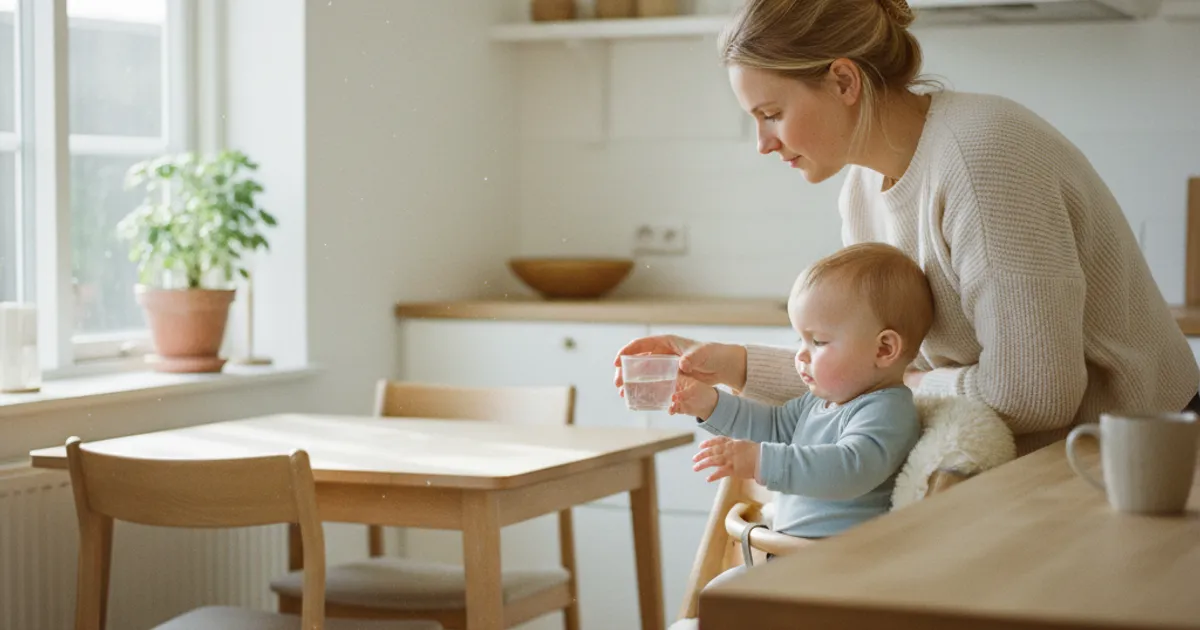
- Offer fluids often, small sips every 5–10 minutes is better than large amounts at once
- Water, thin broths, and oral rehydration solution are good options
- Avoid juice and sugary drinks, sugar can worsen diarrhea
- Popsicles with water or fruit can tempt children who refuse to drink
- Breast milk is still excellent for children who are breastfeeding
After Vomiting
Wait 15–30 minutes after vomiting before offering fluids. Start with a teaspoon (5 ml) every 5 minutes. Gradually increase if the child keeps it down.
Food
- Don't force the child to eat
- Offer light food when the child shows interest: crackers, rice, banana, boiled potato
- Breastfed infants: continue breastfeeding as normal
- Babies over 6 months: reintroduce regular food as soon as the child wants it
Oral rehydration solution (ORS) is the best treatment for diarrhea and vomiting because it replaces fluid, salt, and sugar in the right balance. Available without prescription at pharmacies.
When Should You See a Doctor?
Contact your pediatrician or go to urgent care if the child:
- Is under 6 months and has vomiting or diarrhea
- Has blood in the stool or vomit
- Has vomiting lasting more than 24 hours
- Has diarrhea lasting more than 3–5 days
- Has a fever over 102°F (39°C) in addition to vomiting or diarrhea
- Shows clear signs of moderate dehydration (sunken eyes, dry mouth, reduced urination)
- Refuses to drink or cannot keep fluids down
- Has abdominal pain that doesn't go away
Call 911 or go to the ER if the child:
- Is very limp, hard to wake, or unresponsive
- Has rapid, shallow breathing
- Has not urinated in 8–12 hours
- Has cold, pale, or mottled skin
Children with chronic conditions (such as diabetes or kidney disease) are extra vulnerable to dehydration. Contact your doctor early if your child has an underlying condition and develops vomiting or diarrhea.
Preventing Dehydration
The best treatment is prevention. Here are some practical tips:
- Offer fluids regularly, don't wait until the child asks
- When sick: Start with extra fluids early, at the first signs of diarrhea or vomiting
- Keep oral rehydration solution at home, you'll thank yourself the evening a stomach bug strikes
- Hot days: Offer water more often. Children playing actively in the sun can sweat a lot
- On long car trips: Always have a water bottle available
Myth or Fact?
"Children with a stomach bug should only drink flat cola." Myth. Cola contains too much sugar and too little salt. It can actually worsen diarrhea. Use oral rehydration solution instead.
"The child should fast during a stomach bug." Partially a myth. The child doesn't need to be forced to eat, but food should be offered as soon as the child wants it. Research shows that early reintroduction of food shortens the illness.
"Bottled water is better than tap water." In most developed countries with reliable water treatment, tap water is perfectly safe to drink. What children with diarrhea really need is electrolytes, not necessarily bottled water.

Frequently Asked Questions
How quickly can a child become dehydrated?
An infant with severe diarrhea and vomiting can become seriously dehydrated within 6–12 hours. Older children tolerate more, but with a combination of high fever, vomiting, and diarrhea, dehydration can develop quickly in children over 1 year too.
Can you give too much fluid?
This is very rarely a problem in healthy children. The body regulates fluid balance itself. The most important thing is to offer frequently and let the child decide the amount. The exception is infants under 6 months, who should not receive large amounts of plain water, stick to breast milk, formula, or oral rehydration solution.
What are signs that the child is hydrated again?
Signs that the child is returning to normal fluid balance: moist mouth, tears when crying, normal urine output (wet diapers every 3–4 hours), good mood, and normal activity level.
Should I give oral rehydration solution as a preventive measure?
No, it's not necessary to give ORS to healthy children. But keep a packet at home so you're prepared if your child gets a stomach bug.
What about sports drinks like Gatorade or Powerade?
Sports drinks are not recommended for children. They contain too much sugar and the wrong balance of salts. Use oral rehydration solution designed for children.
Related Articles
- Fever in Children: When Should You See a Doctor?
- Stomach Bug in Children
- Diarrhea in Children: Complete Guide
- First Aid for Infants and Children
Sources
- World Health Organization, who.int
- American Academy of Pediatrics, aap.org
- Centers for Disease Control and Prevention, cdc.gov
🔧 Helpful Tools
- Baby Milestones Tracker. Track your baby's developmental milestones
- All Baby Tools. Browse all free tools for pregnancy and baby care