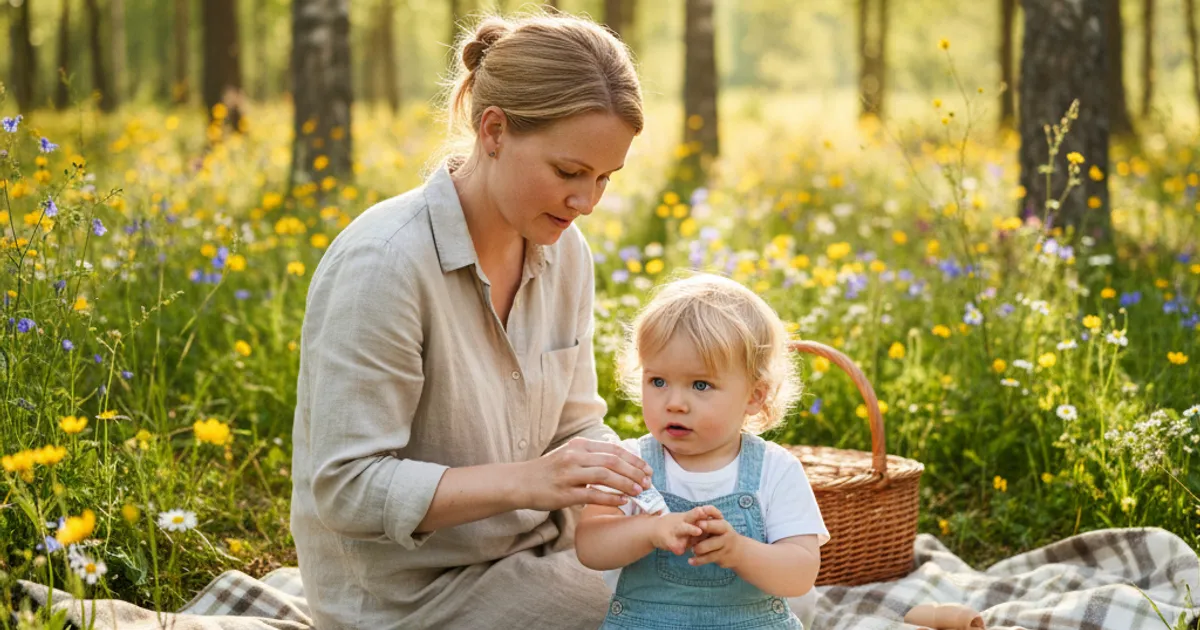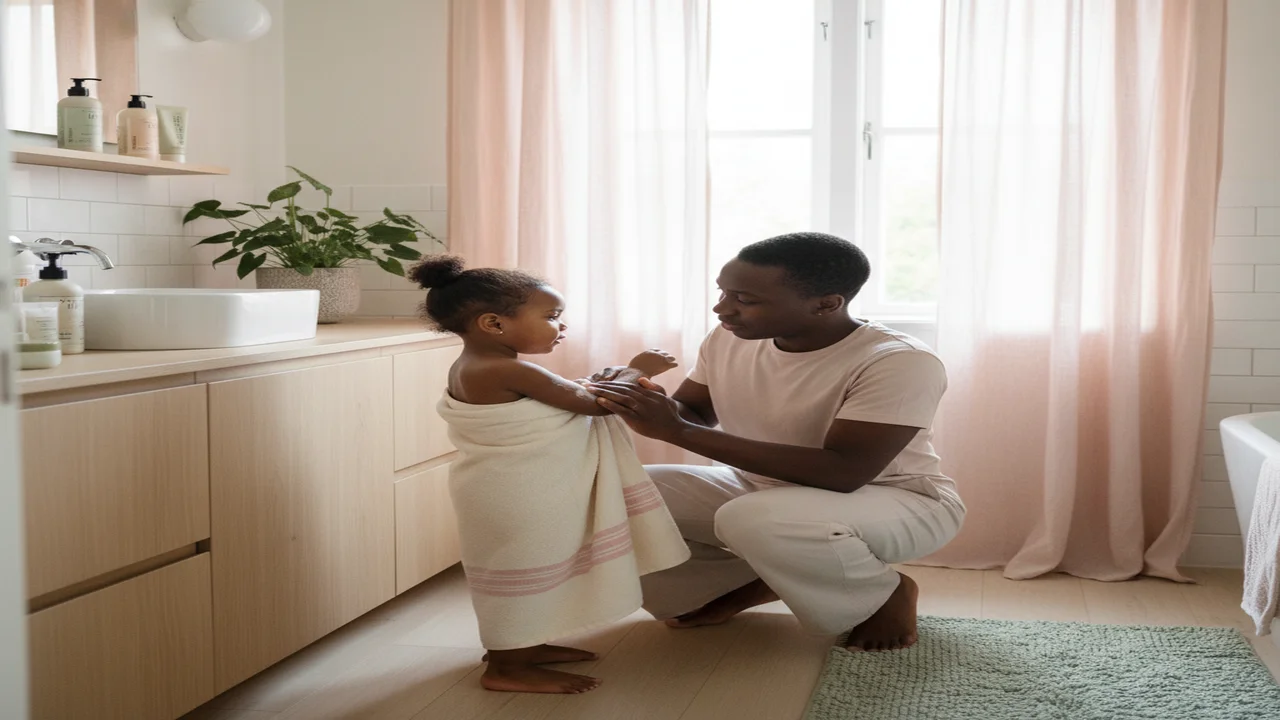
Your baby's skin is red, dry, and flaky. They scratch and are unsettled, especially at night. Maybe you've tried moisturizer without it helping enough.
You're not alone. Atopic eczema is the most common skin condition in children, affecting up to 20% of all children worldwide. It is not dangerous, but it can be uncomfortable for both the child and you as a parent.
Here is a clear guide to symptoms, daily skin care, treatment, and practical tips for everyday life with eczema.
Key Takeaways
- Atopic eczema affects up to 20% of children worldwide and typically begins between 2 and 4 months of age, it has a genetic component and is not caused by anything parents do or don't do.
- Eczema is not contagious; children with eczema can play, swim, and cuddle with others completely normally.
- Daily moisturizing with a fragrance-free emollient (at least twice a day, applying to damp skin after bathing) is the single most effective strategy for managing eczema, according to the AAP and NHS.
- When the skin becomes inflamed and itchy despite moisturizing, low-dose topical corticosteroids prescribed by a doctor are safe and effective for short-term flare management.
- Many children grow out of eczema during childhood, but triggers such as wool, soap, heat, and certain foods can cause flare-ups; identifying and avoiding personal triggers makes a significant difference.
What Is Atopic Eczema?
Atopic eczema is a chronic inflammatory skin condition. The skin lacks sufficient moisture and protective lipids, making it dry, irritated, and more vulnerable to external triggers.
The condition has a genetic component. If one or both parents have eczema, asthma, or hay fever, the chance of the child developing it is higher. But eczema can occur without any known family history.
In most children, eczema begins between 2 and 4 months of age. Many children grow out of it during childhood, but some continue to have flare-ups into adolescence or adulthood.
Atopic eczema is not contagious. Your child can play, cuddle, and be around other children completely as normal.
Symptoms of Eczema in Babies and Children
Eczema can look different depending on the child's age. The hallmarks are dry, itchy skin that becomes red, flaky, or thickened over time.
Babies (0-12 Months)
In the youngest children, eczema most often appears on the face. You may see red, dry, and slightly rough patches on:
- Cheeks and forehead
- Neck and chin area
- Outer arms and legs
- Wrists and ankles
Babies can't scratch intentionally, but you'll notice them rubbing their face against sheets or clothing, being irritable, and sleeping poorly.
Toddlers (1-3 Years)
In older children, eczema tends to move to the skin folds. Typical locations are:
- Inside the elbows and behind the knees
- Wrists and ankles
- Around the mouth
- Neck and throat
The skin may become thickened and rough in areas that itch most. Itching is the most distressing symptom, and it gets worse at night.
Signs of infection: If you see yellow blisters, crusts, or weeping areas on the eczema, the skin may have developed an infection. Contact your doctor, the child may need antibiotic cream or oral antibiotics in addition to regular eczema treatment.
Daily Skin Care: How to Prevent Flare-Ups
Good daily skin care is the most important thing you can do to keep eczema under control. The goal is to add moisture, strengthen the skin barrier, and reduce itching.
Moisturize. Every Day, All Year
Use an unscented moisturizing cream or ointment at least twice a day. After bathing it is especially important to moisturize the whole body while the skin is still slightly damp.
- Cream works well for daily use on the body
- Ointment (thicker than cream) is better for very dry areas and in winter
- Bath oil can be added to bathwater for extra moisture
- Lotion is too thin for serious eczema, but can be used for mild dryness
Use generously. It's better to apply too much than too little.
Create a routine: Moisturize after the morning wash and after the evening bath. When it becomes a set habit, it's easier to maintain. Keep a cream on the changing table and one in the bathroom.
Bathing
Bath your child in lukewarm water (33-36°C / 91-97°F). Hot water dries out the skin. Keep bath time short, around 5-10 minutes is enough.
- Use unscented bath oil instead of soap
- Avoid bubble baths and scented bath products
- Pat the skin gently dry with a towel (don't rub)
- Apply moisturizer immediately after bathing
Clothing and Bedding
Choose soft, breathable materials like cotton and bamboo. Avoid wool directly against the skin, it can irritate. Wash new clothes before wearing them to remove any residue.

Treatment of Eczema in Children
Daily moisturizer is the foundation of treatment. But when eczema flares, the skin often needs more.
Topical Corticosteroids. Safe and Effective
Topical corticosteroids (steroid creams) are the most important treatment for eczema flare-ups. Many parents are concerned about steroids, but used correctly, they are safe, even for babies.
How to use steroid cream:
- Apply a thin layer to the red, inflamed areas
- Use the mildest strength that is effective (low-potency for the face; medium-potency for the body)
- Apply once daily, typically for 1-2 weeks until the flare settles
- Wait 15-30 minutes before applying moisturizer on top
Your doctor may recommend preventive use 2 days a week on areas that keep flaring. This is called proactive treatment and can reduce the number of flare-ups.
Fingertip unit rule: One fingertip unit (from the tip to the first crease) covers an area roughly equivalent to two adult palms. This helps you use the right amount.
Other Treatments
If topical corticosteroids don't provide enough relief, there are other options:
- Pimecrolimus (Elidel) and tacrolimus (Protopic), anti-inflammatory creams without steroids. Can be used on the face and in skin folds. Approved for children over 2 years.
- Antibiotic cream or oral antibiotics, for infected eczema (yellow crusting, weeping)
- Antihistamines, can relieve itching, especially at night. Not suitable for the youngest babies without medical assessment.
Talk to your doctor about what is most appropriate for your child.
Eczema and Allergy: What's the Connection?
A common misunderstanding is that food allergies cause eczema. This is not accurate. Atopic eczema is a skin condition, not an allergic reaction to food.
But the relationship is more nuanced than that. Children with eczema have a higher risk of developing food allergies, and in some children, certain foods may worsen eczema.
Should You Remove Foods From the Diet?
Do not remove foods from the diet on your own initiative. Unnecessary food restrictions can lead to nutritional deficiencies in the child.
If you suspect a specific food is worsening the eczema, speak with your doctor. An allergist can conduct targeted tests to clarify.
Read more: Our guide to safe introduction of allergens gives you an overview of when and how to introduce common allergenic foods to your baby.
The Atopic March
Children with atopic eczema have an increased risk of developing other atopic conditions such as asthma and hay fever later in childhood. This is called the "atopic march." Good early eczema management may help reduce this risk.
When Should You Contact a Doctor?
Most cases of eczema can be managed at home with good skin care and steroid cream. But sometimes the child needs a medical assessment.
Contact your doctor if:
- The eczema spreads rapidly or becomes much worse
- You see signs of infection: yellow blisters, crusting, weeping, redness, and warmth in the skin
- The child is very distressed by itching and sleeping poorly despite treatment
- Daily moisturizer and steroid cream are not providing enough improvement
- You are unsure how to use the steroid cream
A pediatric nurse or health visitor is also a good resource. They can guide you in daily skin care and determine whether the child should be referred for specialist care.
Tips for Everyday Life With Eczema
Eczema is not just about creams and ointments. Small adjustments in daily life can make a big difference.
Clothing and Laundry
- Choose loose, soft clothing in cotton
- Wash with unscented detergent
- Skip fabric softener
- Cut tags out of clothing, they can irritate the skin
Temperature and Environment
- Keep a steady room temperature (68-72°F / 20-22°C)
- Avoid overheating, sweating worsens itching
- Cold winter air can irritate, protect exposed skin with extra ointment
- Humidify the air indoors in winter if it is very dry
Itching and Sleep
- Keep the child's nails short and smooth
- Cotton mittens at night can prevent scratching in babies
- A cool bedroom helps, heat makes itching worse
- A cool, damp cloth on itchy areas can provide quick relief
Play and Activity
- The child can play, swim, and be outdoors as normal
- Apply extra moisturizer before swimming pools (chlorine can irritate)
- Shower and moisturize well after swimming
- Use sunscreen for sensitive skin during outdoor play in summer
Involve the child: When the child is old enough, let them help with applying moisturizer. It gives a sense of control and makes the routine easier for everyone.

Frequently Asked Questions
Will my child grow out of eczema?
Many children improve over the course of childhood. Approximately half are symptom-free by school age. But some have periodic flare-ups into adolescence.
Is steroid cream dangerous for baby skin?
No, used correctly, steroid cream is safe. The mildest strengths can be used on babies. Follow your doctor's recommendations for strength, amount, and duration.
Can I prevent eczema in my baby?
It is difficult to prevent atopic eczema. Some research suggests that daily use of moisturizer from birth may reduce risk in children with a family history. Breastfeeding for at least four months may also have a protective effect.
Should my baby avoid milk and eggs?
Do not remove foods without your doctor's advice. Early introduction of common allergens is safe for most babies and may reduce the risk of food allergy. Read our allergen introduction guide for more information.
Does switching to a specialist cream help?
What matters most is using an unscented moisturizer regularly, not which brand it is. A pediatric nurse, health visitor, or doctor can recommend products suited to your child's skin.
Can eczema spread between children?
No. Atopic eczema is not contagious. Your child can have physical contact and play with other children as normal.
Eczema can feel overwhelming, but with the right daily care and treatment, most children can live well with the condition. You are already doing a lot right by reading up and taking your child's skin condition seriously.
Read also: Dry Skin in Babies | Allergies in Children | Baby Skincare Guide | Rashes in Children
Sources
🔧 Helpful Tools
- Baby Milestones Tracker. Track your baby's developmental milestones
- All Baby Tools. Browse all free tools for pregnancy and baby care
📖 Related Articles
- Allergies in Children: Symptoms, Testing, and What to Do. Everything about allergies in children, symptoms, testing, and treatment. Learn the difference between food allergy and intolerance, and when to see a doctor.
- Baby Skincare: Everything You Need to Know. Baby skin is delicate and needs gentle care. Learn about bathing, moisturizing, sun protection, and common skin conditions in babies.
- Common Cold in Babies: Symptoms and What You Can Do. Baby has a cold? Learn what you can do at home with saline drops and practical tips, and when to call the doctor.