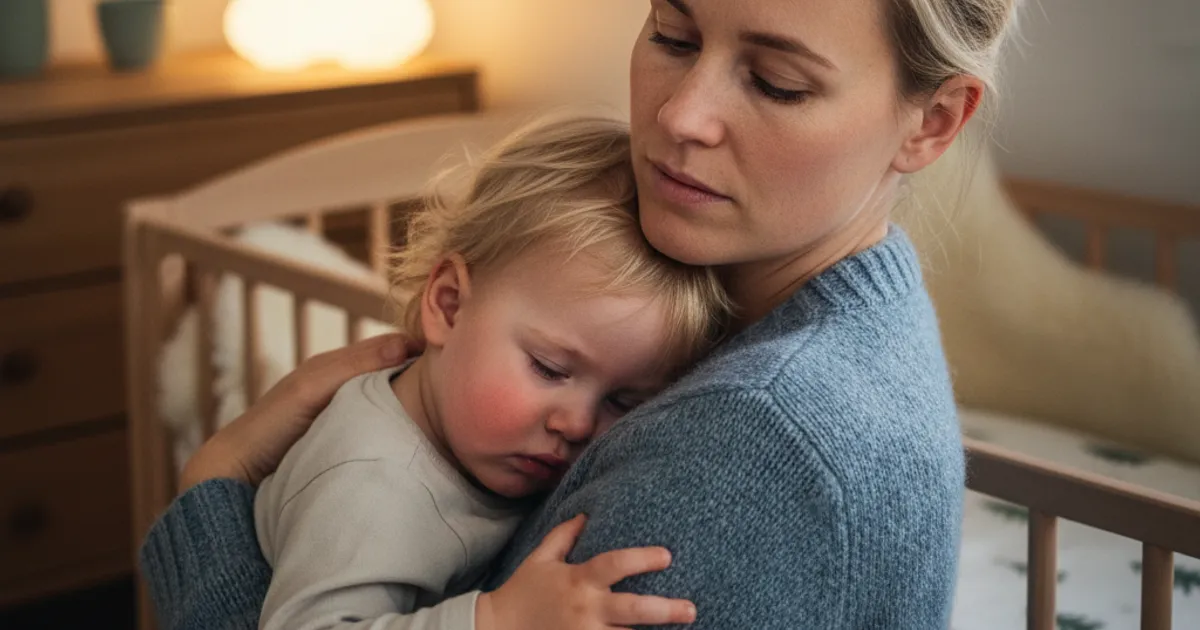
Your child is warm, has rosy cheeks, and is more tired than usual. You put your hand on their forehead and think: Is this a fever? Should I call the doctor?
Fever in children is one of the most common reasons parents contact a pediatrician or emergency room. The good news is that fever itself isn't dangerous. It's the body's natural defense against infections. But there are situations where you need to act quickly.
Here is a safe and clear guide to everything you need to know about fever in children, from temperature thresholds and home treatment to when you should see a doctor.
What Is Fever in Children?
Fever is not a disease, it's a sign that the immune system is working. When the body detects a virus or bacteria, it raises its temperature to fight off the intruders.
Temperature thresholds (rectal measurement):
- Below 100.4°F (38°C), normal temperature
- 100.4–101.3°F (38–38.5°C), low-grade fever
- 101.3–104°F (38.5–40°C), fever
- Above 104°F (40°C), high fever
Rectal measurement is the most accurate method, especially for children under 2 years old. Ear or underarm readings can show 0.5–1°F (0.3–0.5°C) lower than the actual core temperature.
How to Measure Temperature
For infants and toddlers, a digital rectal thermometer is most accurate. Apply a little petroleum jelly to the tip and gently insert it 0.5–1 inch. Wait until it beeps.
An ear thermometer can be used from 1 year of age, but may give inaccurate results if there is earwax buildup or if the child has an ear infection.
The Most Common Causes of Fever
Children get fevers far more often than adults. It's completely normal for a young child to have 6–8 fever episodes in the course of a year.
Common causes:
- Viral infections, colds, flu, stomach bugs, and other viral infections are by far the most common cause
- Ear infections, common in children between 6 months and 3 years
- Urinary tract infections, can cause fever without other obvious symptoms, especially in infants
- Vaccination, mild fever 1–2 days after vaccination is normal and harmless
- Teething, can cause a slight temperature rise, but rarely above 101.3°F (38.5°C)
Older children can have quite a high fever without being seriously ill. It's the child's general condition, how they are behaving and looking, that matters more than the number on the thermometer.
Fever in Infants Under 3 Months
Contact a doctor immediately if your baby is under 3 months old and has a fever (temperature above 100.4°F / 38°C). Young babies have an immature immune system, and fever can be a sign of a serious infection requiring prompt assessment.
Infants under 3 months have a limited ability to regulate body temperature. They can also become seriously ill without showing typical fever symptoms. Special rules apply:
- Fever above 100.4°F (38°C) should always be assessed by a doctor
- Do not give acetaminophen without speaking to a doctor first
- Watch the baby closely for signs of reduced general wellbeing
- Trust your instincts, you know your baby best
For infants under 1 month, fever is always a reason for immediate medical assessment, at any time of day or night.

How to Treat Fever at Home
Most cases of fever in children can be safely managed at home. Here are the most important steps:
Fluids Are Most Important
A child with fever needs extra fluids. Offer drinks frequently, small sips are better than nothing. Breast milk, formula, water, or diluted juice all work well.
Signs of adequate fluids: The child is urinating normally (at least 4–6 wet nappies per day for infants) and has moist mucous membranes in the mouth.
Rest and Clothing
Let the child rest, but don't force them to stay in bed if they feel well enough to play quietly. Dress the child in light clothing and avoid wrapping them up too warmly. The body needs to release heat.
Room Temperature
Keep the room comfortable, around 68–72°F (20–22°C). Good ventilation helps. Avoid letting the child lie in a draught.
Fever-Reducing Medication
You don't need to give fever-reducing medication just because the thermometer shows a fever. Medication should be used to improve the child's general wellbeing, so they can drink, sleep, and be more comfortable.
Acetaminophen and Ibuprofen: Getting the Dose Right
Acetaminophen (Tylenol, Panadol) is the first choice for fever in children. It is safe and effective when you follow the correct dosage.
Acetaminophen
Dosage: 15 mg per kg of body weight per dose. Can be given every 4–6 hours. Maximum daily dose: 75 mg per kg in 24 hours. For children under 1 month: every 8 hours (not every 4–6 hours).
Example: A child weighing 22 lbs (10 kg) can receive 150 mg per dose, maximum 750 mg per day.
Liquid suspension is preferable to suppositories because absorption is more predictable. Suppositories can be used if the child is vomiting.
Ibuprofen
Ibuprofen (Advil, Motrin) can be used for children from 6 months old as an alternative to acetaminophen. The dose is 5–10 mg per kg of body weight, given every 6–8 hours.
Ibuprofen and chickenpox: Never give ibuprofen to a child with chickenpox (varicella). It can increase the risk of serious skin infection. Use only acetaminophen if the child has chickenpox.
Important rules for fever-reducing medication:
- Never give medication to children under 3 months without speaking to a doctor
- Do not combine acetaminophen and ibuprofen without a doctor's recommendation
- Always use the measuring device provided with the packaging to measure the correct dose
- If the child needs acetaminophen for more than 2–3 days, contact a doctor
When Should You See a Doctor for Fever?
What matters most is not the temperature alone, but the child's general condition and age. Here are clear guidelines based on AAP and WHO recommendations.
Age-Based Guidelines
Under 3 months. ALWAYS see a doctor for fever above 100.4°F (38°C): Infants under 3 months have an immature immune system. Fever can be a sign of serious infection such as sepsis or meningitis. Contact a doctor immediately, at any time of day or night. Do not give acetaminophen until the doctor has assessed the child.
3–6 months, see a doctor for fever above 102.2°F (39°C): Children in this age group should be assessed by a doctor at fever above 102.2°F, or at lower fever lasting more than 2 days. Also contact a doctor if the child seems unusually lethargic or refuses to drink.
6–12 months, see a doctor for fever above 104°F (40°C) or lasting more than 3 days: Children over 6 months tolerate fever better, but contact a doctor if the temperature exceeds 104°F, if the fever lasts more than 3 days, or if the child has a clearly reduced general condition.
Over 1 year, assess general condition: In older children, general condition is more important than the number on the thermometer. Contact a doctor for high fever (above 104°F / 40°C), fever lasting more than 3 days, or if the child is unusually lethargic, refuses to drink, or seems notably unwell.
Call emergency services or go to the ER if the child has: - Fever and is under 3 months old (always, regardless of temperature above 100.4°F / 38°C) - Fever above 102.2°F (39°C) and is 3–6 months - Fever above 104°F (40°C) at any age - Fever lasting more than 3 days - Reduced general condition, poor responsiveness, won't play, unable to drink - Dry nappies (urinating little or not at all) - Abnormal skin color (pale, grey, or mottled) - Breathing difficulties or rapid breathing - Febrile seizures (see below) - Need for acetaminophen for more than 2–3 days - You are worried, for any reason
Rule of thumb: Trust your instincts. You know your child best. If you are worried about a sick child, it is always right to contact a doctor, even if the fever alone isn't "high enough" according to the guidelines.
Call 911 (Emergency Services) Immediately If the Child:
- Does not respond to you or is difficult to wake
- Has a rash with bleeding under the skin (red/purple dots that don't disappear when you press a glass against them)
- Has a prolonged febrile seizure (lasting more than 5 minutes)
- Has severe breathing difficulties
The Glass Test: Press a glass against the rash. If the red spots don't disappear under pressure, it may be a sign of serious infection (meningococcal disease). Call emergency services immediately.
At Night
If the child has a fever during the night, wake them to assess their general condition. Check whether the child responds normally, is drinking, and looks as they usually do. Most children can sleep with fever as long as they are otherwise in good shape.
Febrile Seizures: What Do You Do?
Febrile seizures affect approximately 3–5% of all children, usually between 6 months and 5 years. They look frightening, but are usually harmless.
What a Febrile Seizure Looks Like
- The child becomes rigid and jerks in arms and legs
- Eyes may roll back
- The child may lose consciousness
- Sounds or foaming may come from the mouth
- May lose control of bladder or bowel
- Usually lasts 1–3 minutes
What to Do During a Seizure
- Place the child in the recovery position on a soft surface
- Do not put anything in their mouth, the child cannot swallow their tongue
- Do not restrain the child, let the seizure run its course
- Note the time, record when the seizure started
- Stay calm, easier said than done, but the child needs a calm parent
Call emergency services if: The seizure lasts more than 5 minutes, the child does not recover afterwards, or it is the child's first febrile seizure. Always contact a doctor after a febrile seizure, even if the child appears to be in good shape afterwards.
After the Seizure
The child will often be tired and confused afterwards. This is normal. Let them rest and give comfort. Most febrile seizures cause no lasting harm and do not mean the child has epilepsy.

Frequently Asked Questions
Can high fever cause brain damage?
No. Fever caused by common infections does not cause brain damage, even at temperatures above 104°F (40°C). The body has built-in mechanisms that prevent temperature from rising to dangerous levels during infection.
Should I try to bring the fever down immediately?
No. Fever-reducing medication should not be given routinely. Give medication when the child is clearly uncomfortable, is struggling to drink, or is sleeping poorly. Fever helps the body fight infection.
Can the child have a bath when they have fever?
A lukewarm bath can be cooling and soothing. Avoid cold water, it can cause shivering, which makes the body produce more heat. Warm the child well afterwards.
When can the child go back to daycare?
The child should be fever-free for at least 24 hours (without fever-reducing medication) before returning to daycare. Also check your daycare provider's own guidelines.
Can I alternate acetaminophen and ibuprofen?
Some doctors recommend this in specific cases, but it should not be done without guidance from a doctor. The risk of dosing errors increases when you use two different medications.
Can children under 3 months receive acetaminophen?
According to AAP guidelines, treatment with acetaminophen for children under three months should be done in consultation with a doctor. Children under 1 month should not receive more than 3 doses per day, with at least 8 hours between each dose.
Is fever after vaccination normal?
Yes. Mild fever 1–2 days after vaccination is normal and harmless. It shows that the immune system is responding to the vaccine. You can give acetaminophen if the child is clearly uncomfortable, but it should not be given preventatively before vaccination.
How many times a year is it normal for a child to have fever?
Children, especially aged 1–3, can have 6–8 fever episodes in the course of a year. This is completely normal, especially for children in daycare. Most are caused by viral infections that resolve on their own.
Acetaminophen Dosing Table by Weight
Use your child's weight, not age, to calculate the correct dose. Always follow the dosing instructions on the product packaging.
| Child's weight | Approximate age | Dose per serving | Max daily dose |
|---|---|---|---|
| 6–8 lbs (3–4 kg) | Under 1 month | As directed by doctor | Consult doctor |
| 9–11 lbs (4–5 kg) | 1–3 months | Consult doctor | Consult doctor |
| 12–17 lbs (5–8 kg) | 3–12 months | 80 mg | 4x daily |
| 18–23 lbs (8–10 kg) | 12–24 months | 120 mg | 4x daily |
| 24–35 lbs (11–16 kg) | 2–3 years | 160 mg | 4x daily |
| 36–47 lbs (16–21 kg) | 4–5 years | 240 mg | 4x daily |
Important: Children under 3 months with fever should always be assessed by a doctor. Do not give acetaminophen to children under 3 months without a doctor's approval. Contact a doctor after 3 days of use if the fever does not subside.
Temperature Guide. How to Read the Thermometer
| Temperature (rectal) | Assessment | Action |
|---|---|---|
| 97.7–99.5°F (36.5–37.5°C) | Normal | No action needed |
| 99.5–100.4°F (37.5–38°C) | Slightly elevated | Observe, offer fluids |
| 100.4–101.3°F (38–38.5°C) | Low-grade fever | Light clothing, ventilation, extra fluids |
| 101.3–102.2°F (38.5–39°C) | Moderate fever | Acetaminophen if needed, monitor general condition |
| 102.2–104°F (39–40°C) | High fever | Acetaminophen, close monitoring, doctor if unwell |
| Above 104°F (40°C) | Very high fever | Contact doctor. Give acetaminophen and cool gently |
Read also: Home Medicine Cabinet for Families | Stomach Bug in Children | RSV in Children | Pediatric Check-Ups
Want to track your child's health and development? Log health information in My Baby to keep an overview of illness periods, growth, and vaccinations.
Read also: Febrile Seizures in Children | Cold vs. Flu | Dehydration in Children
Sources and References
- AAP. Fever and Your Child
- WHO. Child Health Guidelines
- CDC. Childhood Fever
- Children's Hospital Association. Fever Guidelines
- Pediatrics Journal. Fever Management
🔧 Helpful Tools
- Baby Milestones Tracker. Track your baby's developmental milestones
- All Baby Tools. Browse all free tools for pregnancy and baby care
📖 Related Articles
- Febrile Seizures in Children: Everything You Need to Know. Complete guide to febrile seizures in children. Symptoms, first aid, causes, and what happens afterwards. Based on AAP and WHO health guidelines.
- Your Baby's Immune System: How to Support It Naturally. How does a baby's immune system develop? Learn about vaccines, breastfeeding, diet, and other factors that strengthen immunity in babies and young children.
- Common Cold in Babies: Symptoms and What You Can Do. Baby has a cold? Learn what you can do at home with saline drops and practical tips, and when to call the doctor.