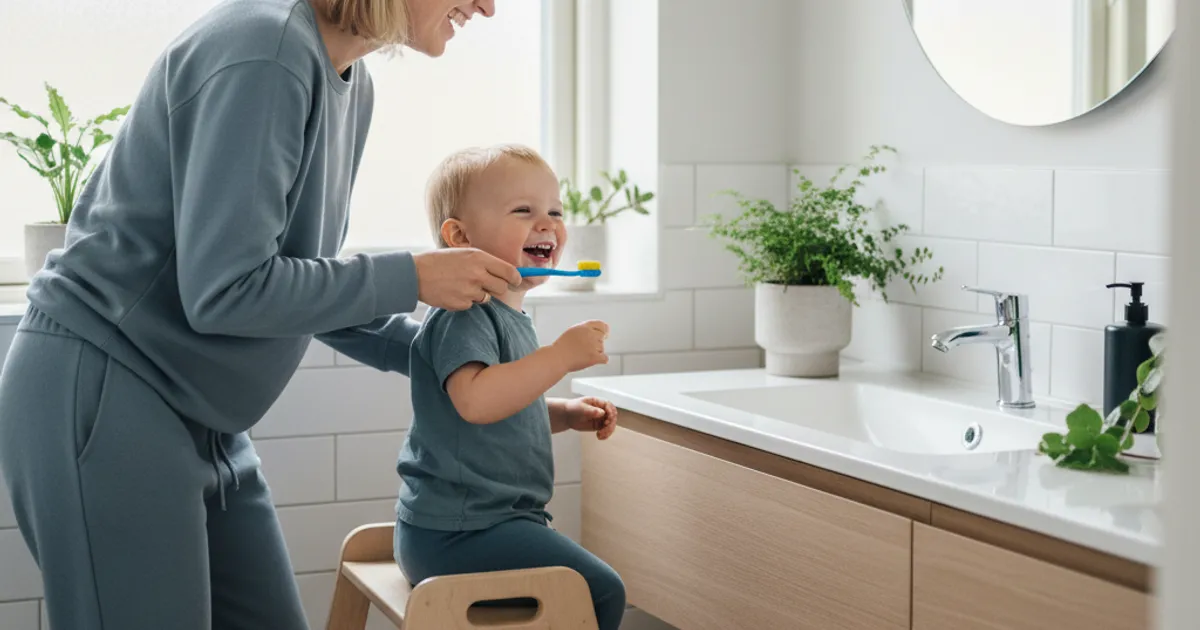
The first tooth is a major milestone, and with it comes the responsibility of daily brushing. But how do you actually brush a baby's teeth when they protest? How much toothpaste should you use? And when can your child brush on their own?
Dental health matters from day one, and good routines established early lay the foundation for healthy teeth for life. Here is a practical guide based on recommendations from the American Academy of Pediatric Dentistry (AAPD) and the American Dental Association (ADA).
When should you start brushing?
Before the first tooth
You can prepare your baby even before the teeth arrive:
- Gently wipe over the gums with a clean, damp cloth after feedings
- This removes food residue and gets the baby used to touch in the mouth
- Start from around 3–4 months of age
From the first tooth
When the first tooth breaks through (usually around 6 months, but can range from 4 to 12 months), it is time for a toothbrush and toothpaste.
According to the American Academy of Pediatric Dentistry (AAPD), tooth brushing with fluoride toothpaste should start as soon as the first tooth is visible. Baby teeth are just as important as permanent teeth, they hold the space for adult teeth and are essential for chewing and speech.
Equipment you need
Toothbrush
- 0–2 years, use a small, soft toothbrush designed for babies. Choose a small brush head and soft bristles.
- 2–6 years, a toddler toothbrush with a slightly larger brush head, still with soft bristles
- Replace the brush every 3 months or when the bristles splay
Toothpaste
Fluoride toothpaste is the single most important tool against tooth decay. Here are the recommendations from the AAPD and ADA:
| Age | Fluoride level | Amount of toothpaste |
|---|---|---|
| 0–3 years | 1,000 ppm fluoride | A smear (grain of rice size) |
| 3–6 years | 1,000 ppm fluoride | Pea-sized amount |
| Over 6 years | 1,450 ppm fluoride | Pea-sized amount |
The AAPD recommends fluoride toothpaste from the very first tooth. Check the label on the toothpaste, most children's toothpastes at pharmacies and grocery stores contain the correct amount of fluoride. Avoid fluoride-free toothpastes for children unless a dentist specifically recommends them.
Brushing technique
Baby (0–1 year)
- Lay the baby in your lap, head resting on your arm or thigh
- Gently lift the lip, with one finger
- Brush in small circles, gently over the teeth and along the gum line
- Use a minimal amount of paste, a thin smear, grain-of-rice size
- Brush morning and evening, the evening brush is the most important
Toddler (1–3 years)
- The child can stand or sit, you brush from behind (as a dentist would)
- Support the head, hold the child's head gently against your body
- Be systematic, start with the outer surfaces, then the inner surfaces, then the chewing surfaces
- Brush for 2 minutes, use a timer or a song as a reference
- Let the child "practice" afterward, let them hold the brush and try, but you do the proper brushing
Child (3–6 years)
- The child brushes first, let them practice the technique
- You finish up, go over all teeth thoroughly after the child
- Focus on the back teeth, that is where problems are most common
- Sing or count, make it fun
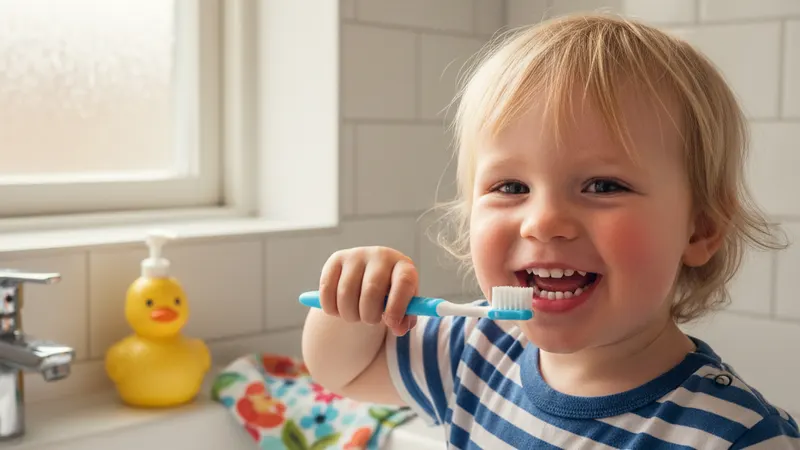
When can the child brush on their own?
A commonly used rule of thumb is that children can brush their teeth independently when they can tie their own shoelaces, usually around 6–7 years of age. Before that, you should always do a follow-up brush.
The reason is simple: children lack the fine motor skills needed to reach all surfaces thoroughly. They tend to focus on the front teeth and miss the back molars, where decay most often starts.
The toothbrushing battle, when your child protests
Let's be honest, tooth brushing is one of the most common battles in families with young children. Here are strategies that can help:
Make it fun
- Sing a brushing song (many are available on YouTube or streaming services)
- Let the child pick their own toothbrush (a favorite character)
- Use a timer with music or lights
- "Look for monsters" in the mouth, pretend you're searching for hidden creatures
- Let the child brush a stuffed animal's or doll's teeth first
Give the child control
- Let them choose the toothpaste (between two approved options)
- Let them try first
- Ask questions: "Should we brush the top or the bottom first?"
Be consistent
- Brushing morning and evening is non-negotiable, it is part of the routine
- Stay calm but firm
- Keep it short, 30 seconds of thorough brushing is better than 2 minutes of tears
- Praise and positive reinforcement: "Look how shiny your teeth are!"
When the protests are strong
- Two-parent technique: one holds, one brushes (for the youngest children when necessary)
- Use distraction: point to something, tell a funny story
- Try different times of day, perhaps after bath works better than right before
- Remember this is a phase, it gets easier with time
Even though it can feel uncomfortable to brush a protesting child's teeth, it is important to follow through. Tooth decay in baby teeth can cause pain, infection, and problems for permanent teeth. A short, effective brush is better than skipping it.
Diet and dental health
Tooth brushing alone is not enough. Diet plays a major role in dental health:
Limit sugar
- Avoid sweet drinks between meals
- Water and milk are the best drinks
- Fruit is good, but fruit juice delivers a lot of sugar directly to the teeth
- Raisins and dried fruit stick easily to teeth
Meal patterns
- Regular meals (3 main meals + 2–3 snacks) are better than constant snacking
- The more "sugar attacks" teeth are exposed to per day, the higher the risk of decay
- Teeth need breaks between meals to repair themselves (remineralization)
Night nursing after teeth have erupted
The American Academy of Pediatric Dentistry advises parents to consider the dental health implications of night nursing once teeth have come in. Breast milk alone poses low risk, but in combination with other foods, nighttime nursing can increase cavity risk. Talk to your pediatric dentist or pediatrician for individual guidance.
Dental check-ups for children
In many countries, children receive free or subsidized dental care from birth through adolescence. Check with your local health authority or pediatric dentist about what is covered in your area.
- First appointment is often recommended by age 1, or when the first tooth appears
- Regular check-ups are scheduled based on individual risk
- Fluoride varnish may be offered for children with higher cavity risk
- Contact your dentist yourself if you are worried about your child's teeth, you do not need to wait for a scheduled appointment
If you notice discolored, brown, or white spots on the teeth, or if your child complains of pain in the mouth, contact your dentist without waiting for the next scheduled visit.
Common questions about teething
Teething and tooth brushing go hand in hand, so here are answers to common questions:
- First tooth, usually appears between 4 and 12 months (average 6 months)
- Order, lower front teeth first, then upper front teeth
- Signs, drooling, fussiness, chewing on objects, swollen gums
- All baby teeth, are usually in place by around 2.5–3 years of age (20 teeth total)
Read more in our article about baby's first teeth.
Frequently asked questions
Is it dangerous if the baby swallows toothpaste?
No, in the small amounts used during brushing (grain-of-rice to pea-sized), swallowing is completely harmless. That is precisely why we use very little toothpaste for young children. Avoid letting the child eat toothpaste directly from the tube.
Can I use an electric toothbrush for children?
Yes, from around 3 years of age you can try an electric toothbrush designed for children. Some children find it fun, others prefer a manual brush. Both work equally well as long as the technique is correct.
Does my child need fluoride supplements?
Fluoride toothpaste is the main source of fluoride for children. Fluoride supplements (tablets or drops) are not routinely recommended for most children in areas with adequate fluoride in the water supply. Children at higher cavity risk may be advised to take additional fluoride measures by their dentist.
What should I do about baby teeth that are damaged?
Baby teeth with decay should be treated. They hold space for permanent teeth and are important for chewing and speech. Untreated decay can cause pain and infection, and can in the worst case affect the permanent teeth developing underneath.
When do children start losing their baby teeth?
Most children start losing baby teeth around 5–7 years of age. The process continues until around 12–13 years. The first to fall out are usually the lower front teeth.
Read more
Sources
- American Academy of Pediatric Dentistry (AAPD). Official guidelines
- American Dental Association (ADA). Professional recommendations
- World Health Organization (WHO). Oral health guidelines
- Centers for Disease Control and Prevention (CDC). Children's oral health
🔧 Helpful Tools
- Baby Milestones Tracker. Track your baby's developmental milestones
- All Baby Tools. Browse all free tools for pregnancy and baby care
📖 Related Articles
- Baby's First Tooth: Everything You Need to Know. When does baby's first tooth come in? Everything about teething, pain relief, and how to start brushing.