Your child has a loose stomach and you're wondering whether to be concerned. Diarrhea is one of the most common complaints in children, and most cases clear up on their own within a few days. But sometimes your child needs a little extra help, and sometimes you should call the doctor.
Here is a safe guide to diarrhea in children, from causes and home treatment to signs of dehydration and when it's time to seek help.
What Counts as Diarrhea in Children?
Diarrhea is defined as three or more loose or watery stools per day. In infants it can be harder to distinguish from normal stools, since breastfed babies naturally have soft bowel movements.
Signs of diarrhea in children:
- Noticeably looser stools than usual
- More frequent toilet trips or diaper changes
- Stools may be watery, greenish, or have a different smell
- May be accompanied by abdominal pain, nausea, or vomiting
Acute vs. Persistent Diarrhea
- Acute diarrhea: Lasts under two weeks. Almost always caused by infection.
- Persistent diarrhea: Lasts over two weeks. Should always be investigated by a doctor.
Common Causes of Diarrhea in Children
Viral Infections (Most Common)
The vast majority of diarrhea in children is caused by viral infections, often called a stomach bug.
Rotavirus: Previously one of the most common causes of severe diarrhea in young children. Since the rotavirus vaccine was introduced to childhood immunization programs, the number of serious cases has dropped dramatically.
Norovirus: A highly contagious virus that causes severe vomiting and diarrhea. Often sweeps through whole families and daycare centers at once. Usually lasts two to three days.
Adenovirus and other viruses: Can cause diarrhea alongside cold-like symptoms.
Other Causes
- Bacteria. Salmonella, campylobacter, or E. coli, often from contaminated food or water
- Parasites. Less common in developed countries, but can occur after international travel
- Food allergy. Can cause diarrhea as part of an allergic reaction
- Food intolerance. For example lactose intolerance
- Antibiotics. Can disrupt gut flora and cause diarrhea as a side effect
The rotavirus vaccine is given orally (as drops) in the first months of life as part of the recommended childhood immunization schedule. It protects against approximately 80 percent of all rotavirus infections and over 90 percent of severe cases. Talk to your pediatrician about your child's vaccination schedule.
Dehydration. What to Watch For
Dehydration (fluid loss) is the most serious complication of diarrhea in children. Young children have limited reserves, and infants are especially vulnerable.
Signs of Mild Dehydration
- Thirstier than usual
- Slightly less urine (fewer wet diapers)
- Slightly drier mouth and lips
- Restless or fussy
Signs of Severe Dehydration
Seek medical attention immediately if your child shows signs of severe dehydration: - Very thirsty, restless, or irritable - Dull or sunken eyes - Sunken fontanelle (soft spot on top of the head) in infants - Little or no urine for 6–8 hours - Dry mouth with no saliva - Reduced alertness , the child is limp or difficult to wake - Crying without tears - Cold, pale, or mottled skin
How to Assess Dehydration in Babies
The number of wet diapers is the easiest way to monitor this. A baby who normally has 6–8 wet diapers a day but suddenly has only 2–3 may be heading toward dehydration.
Treatment of Diarrhea in Children
The vast majority of diarrhea in children needs only simple home treatment. The main goal is to replace lost fluid.
Fluids, Fluids, Fluids
Continue breastfeeding or give formula. Breast milk is the best thing you can give a baby with diarrhea. Do not dilute formula, give it as normal.
Give fluids the child likes. Water, thin broths, and diluted juice (maximum 1:1 ratio) can work for older children. Avoid soda, energy drinks, and undiluted juice, the high sugar content can worsen diarrhea.
Small, frequent sips. If the child is vomiting, give a teaspoon of fluid every five minutes. It's better to give a little often than a lot at once.
Oral Rehydration Solution
For more significant diarrhea, an oral rehydration solution (ORS) from the pharmacy may be needed. These powders contain the right balance of salt, sugar, and minerals to replace what the body loses.
- Available without a prescription at pharmacies
- Follow the dosage on the package
- Mix with exactly the right amount of water
- Can be given in addition to normal food and drink
Always keep a packet of oral rehydration solution at home in your medicine cabinet. When diarrhea strikes, it's good to avoid a pharmacy run.
Food During Diarrhea
- Give regular food when the child is hungry, don't wait
- Avoid fatty food in the first few days
- Good choices: Rice, pasta, bread, bananas, boiled chicken, potatoes
- Don't force the child to eat, let appetite return naturally
- Yogurt can help gut bacteria recover after a viral infection
What NOT to Do
- Don't give anti-diarrheal medication (loperamide/Imodium) to children, it can worsen the infection
- Don't give antibiotics without consulting a doctor, they don't work against viruses and can make diarrhea worse
- Don't stop breastfeeding, breast milk is the best thing the child can have during diarrhea
- Don't make homemade salt-water solutions, incorrect concentrations can be dangerous
When Should You See a Doctor?
Contact your doctor or go to urgent care if: - The child shows signs of dehydration (see list above) - The child is under 6 months with diarrhea - Diarrhea lasts more than one week - There is blood or mucus in the stool - The child has a fever over 101.3°F (38.5°C) alongside diarrhea - The child is unusually limp or not responding normally - The child refuses to drink - Diarrhea started during or just after international travel
Call 911 or Go to the ER If:
- The child is unresponsive or unconscious
- The child has severe abdominal pain that doesn't ease
- You see signs of severe dehydration in an infant
Preventing Diarrhea
Good Hygiene
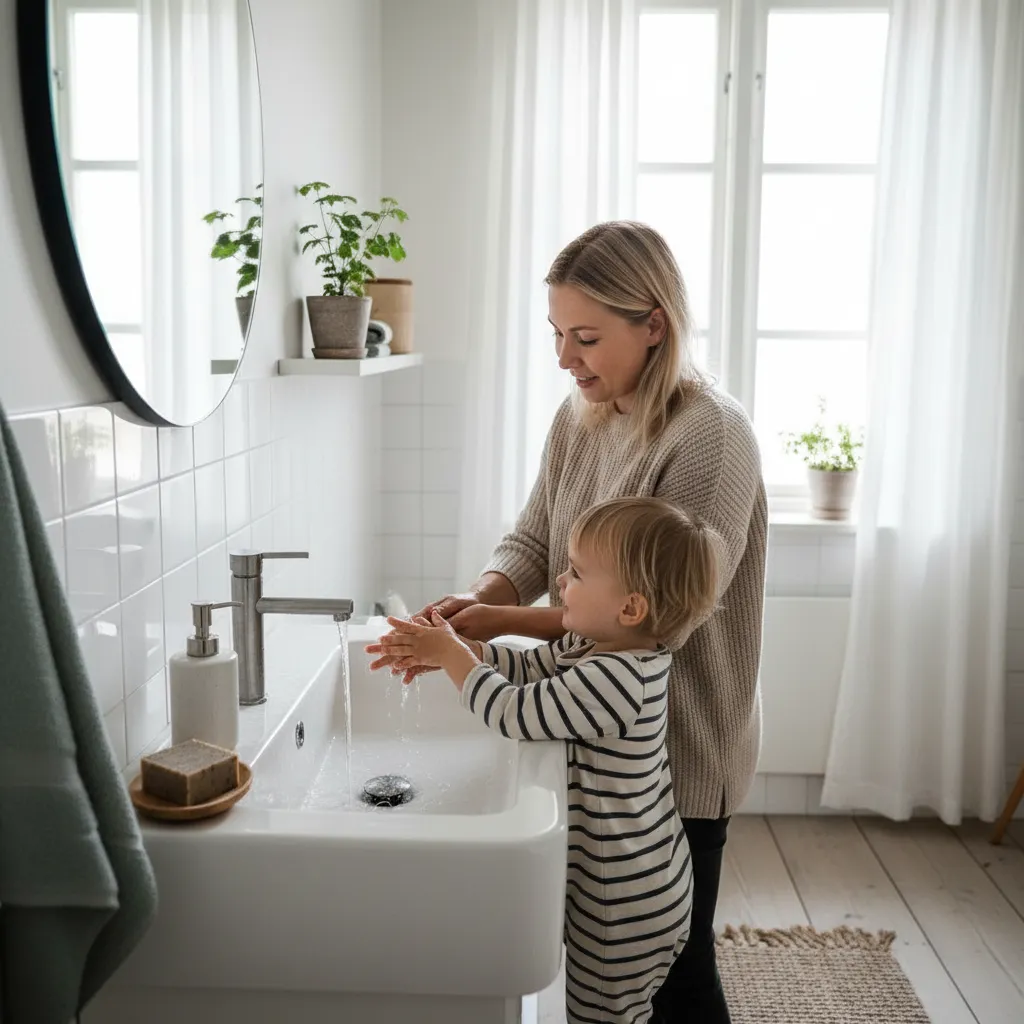
- Wash hands with soap and water after using the toilet, changing diapers, and before preparing food
- Clean surfaces and toys regularly, especially during outbreaks at daycare
- Teach children to wash their hands properly from an early age
- Hand sanitizer is a useful addition, but does not replace handwashing
Food Safety
- Boil water if you're unsure of its quality (especially when traveling)
- Store food cold and prepare it hygienically
- Avoid raw meat and unpasteurized milk for children
Rotavirus Vaccine
The rotavirus vaccine is the most effective prevention against serious diarrhea in infants. Talk to your pediatrician about including it in your child's immunization schedule.
Diarrhea and Daycare
Many daycare centers have their own policies about when a child can return after a stomach bug.
General guidelines:
- The child should be symptom-free (no diarrhea or vomiting) for at least 48 hours before returning
- Check your daycare's specific policy, some have stricter requirements
- Notify the daycare about the stomach bug so they can take extra hygiene precautions
Frequently Asked Questions
Is diarrhea in infants dangerous?
Diarrhea in infants under 6 months should always be assessed by a doctor because small bodies lose fluid quickly. Continue breastfeeding or giving formula, and see a doctor if diarrhea persists or the child shows signs of dehydration.
Can diarrhea in children be caused by something other than infection?
Yes. Long-lasting or recurring diarrhea can be caused by food allergy, lactose intolerance, celiac disease, or other conditions. If diarrhea lasts over two weeks or comes back regularly, bring it up with the doctor.
Does probiotics help with diarrhea in children?
Some studies show that certain probiotic strains (particularly Lactobacillus) can shorten the duration of diarrhea by roughly one day. The effect is moderate. Talk to your doctor if you're considering probiotics for your child.
How long does a stomach bug last?
Most viral infections that cause diarrhea last three to seven days. Norovirus is often over within two to three days. If diarrhea continues after a week, contact your doctor.
Can the child drink milk during diarrhea?
Breast milk and formula should be continued. For older children, cow's milk in moderate amounts is usually fine. If diarrhea worsens with milk, it may be worth reducing intake temporarily and discussing it with the doctor.

Related Articles
- Fever in Children: When to Call a Doctor?
- Dehydration in Children: Signs and Treatment
- First Aid Kit Checklist
Sources
- World Health Organization, who.int
- American Academy of Pediatrics, aap.org
- Centers for Disease Control and Prevention, cdc.gov
🔧 Helpful Tools
- Baby Milestones Tracker. Track your baby's developmental milestones
- All Baby Tools. Browse all free tools for pregnancy and baby care