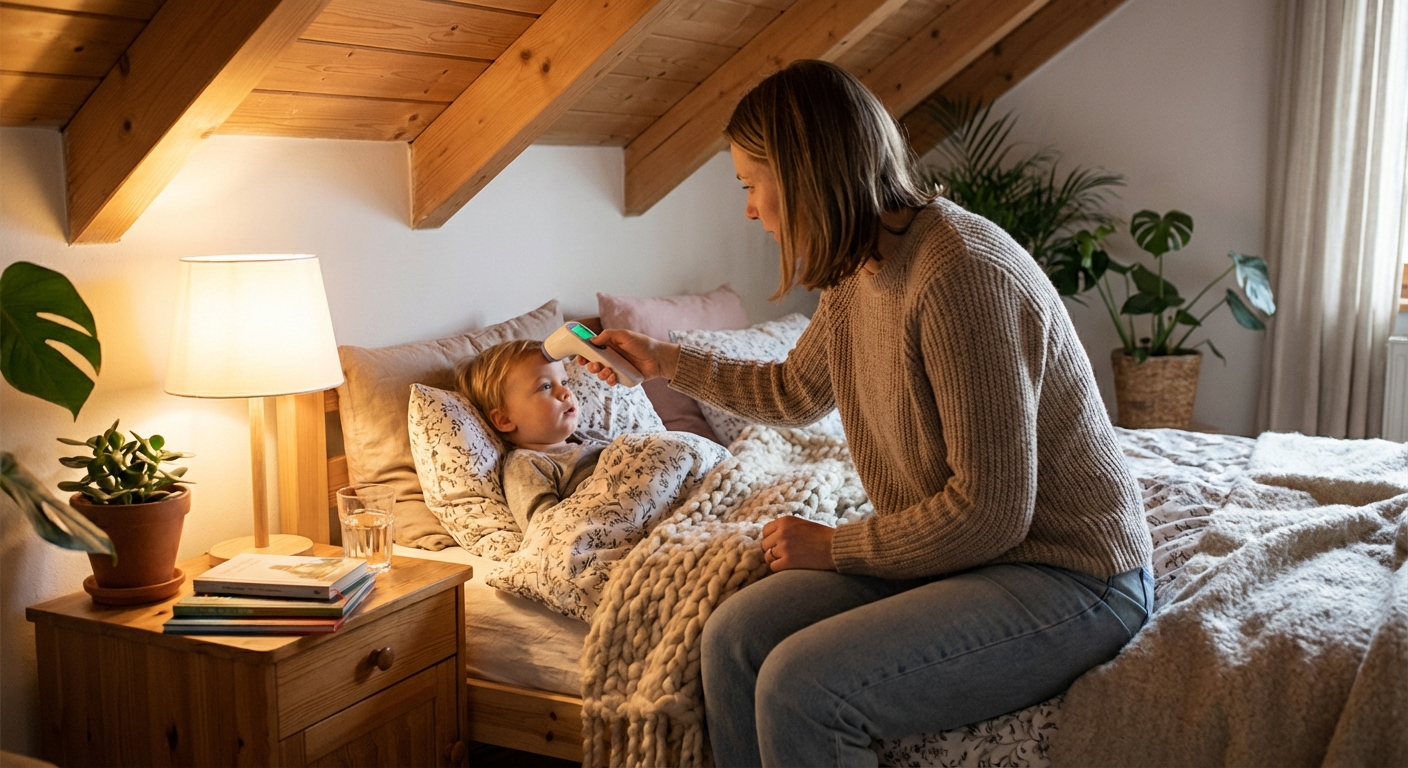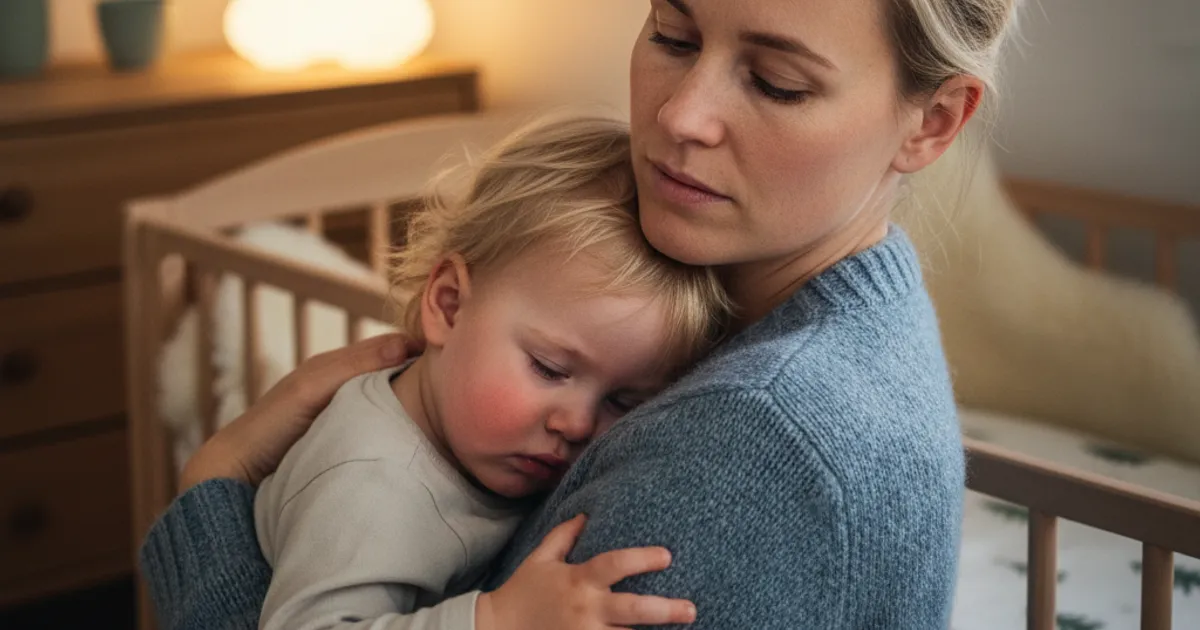
Your child has a fever, and suddenly they start jerking uncontrollably. Their eyes roll back, their body stiffens, and you are terrified. You are most likely witnessing a febrile seizure, and it is one of the most frightening experiences a parent can have.
The most important message first: febrile seizures look far worse than they are. The vast majority are harmless and cause no lasting damage. But you need to know what to do, and what not to do, while it is happening.
What Is a Febrile Seizure?
A febrile seizure (also called a febrile convulsion) is a seizure triggered by a rapid rise in body temperature in children. It is not the fever level itself that triggers the seizure, but the rapid change in temperature.
Febrile seizures affect approximately 3–5% of all children in the age group 6 months to 5 years. They are most common between 12 and 18 months.
According to AAP and WHO: Febrile seizures are common and usually harmless. Most children who have a febrile seizure develop completely normally afterwards. Febrile seizures do not mean the child has epilepsy.
What a Febrile Seizure Looks Like
A febrile seizure starts suddenly, often without warning. Many parents don't even know their child has a fever when the seizure begins.
Typical Signs
- The child stiffens, the whole body becomes rigid for a few seconds
- Jerking, rhythmic jerking of arms and legs, either on both sides or one side
- Eyes roll back or stare blankly
- The child loses consciousness, does not respond to calls
- Skin color changes, may turn bluish around the lips
- Sounds, the child may moan or make gurgling sounds
- Foaming, saliva or foam may appear at the mouth
- May lose control of bladder or bowel
Duration
- Most febrile seizures last 1–3 minutes
- Some last less than a minute
- In rare cases they can last longer than 5 minutes (requires emergency help)
Even though the seizure only lasts a couple of minutes, it can feel like an eternity.
Two Types of Febrile Seizures
Doctors distinguish between simple and complex febrile seizures:
Simple (Uncomplicated) Febrile Seizures
- Last less than 15 minutes (most under 5 minutes)
- Jerking occurs on both sides of the body
- The child recovers quickly afterwards
- No repeated seizures within 24 hours
- Account for approximately 80–85% of all febrile seizures
Complex (Complicated) Febrile Seizures
- Last more than 15 minutes
- Jerking only on one side of the body
- Repeated seizures within 24 hours
- The child takes a long time to recover
- Requires more thorough investigation
Call emergency services immediately if: - It is the child's very first febrile seizure - The seizure lasts more than 5 minutes - The child does not recover after the seizure - The child has breathing difficulties after the seizure - The child has another seizure shortly after the first
First Aid: What to Do During a Seizure
When your child has a febrile seizure, the most important thing is to stay as calm as possible. Here are the steps:
1. Protect the Child
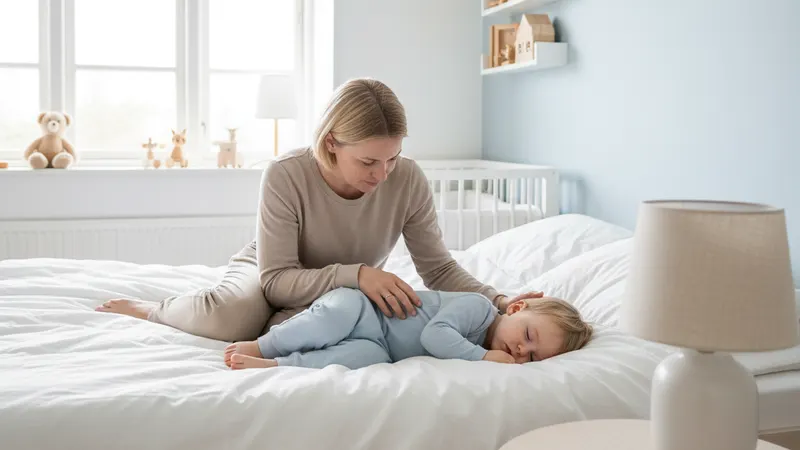
- Gently lay the child down on a soft surface, a blanket, a sofa, or carpet
- Remove nearby objects the child could injure themselves on
- Place the child in the recovery position if possible
2. Do NOT Do These Things
- Do not restrain the child, let the seizure run its course
- Do not put anything in the mouth, the child cannot swallow their tongue. Putting something in the mouth can damage teeth or jaw
- Do not try to stop the jerking, it is impossible and can injure the child
- Do not give food or drink during the seizure
- Do not place the child in cold water, it can make the situation worse
3. Observe and Note
- Look at the clock, note when the seizure started
- Observe which parts of the body are jerking
- Note the position of the eyes
- Film with your phone if you can, it can help the doctor with assessment
4. After the Seizure
- The child will most likely be tired and confused, this is normal
- Keep the child in the recovery position
- Speak calmly and reassuringly
- Contact a doctor for assessment (always after the first seizure)
Practical tip: Even though it is frightening, try to film the seizure with your phone. It gives the doctor valuable information about the type of seizure, duration, and pattern. You can hold the camera in one hand while comforting the child with the other.
Who Is Most at Risk?
Some children have a higher risk of febrile seizures:
- Age 6 months to 5 years, this is the vulnerable period
- Family history, if parents or siblings have had febrile seizures, the risk is higher
- Rapid temperature rise, it is the speed of the fever increase, not necessarily the temperature itself, that triggers the seizure
- First fever episode, some children have a seizure during their very first illness with fever
It is important to know that febrile seizures are not caused by poor parenting. They cannot be prevented by giving acetaminophen early, and they affect children in all families.
What Happens Afterwards?
Immediately After the Seizure
The child will typically:
- Sleep deeply for 15–60 minutes (postictal phase)
- Be confused or fussy when they wake up
- Return completely to their normal state within a few hours
Doctor Visit
After your child's first febrile seizure, they should always be assessed by a doctor. The doctor will:
- Examine the child to find the cause of the fever
- Assess whether the seizure was simple or complex
- Give advice on what to do if future episodes occur
- Possibly refer to a pediatric specialist if the seizure was complex
Repeated Seizures
Approximately 30–40% of children who have had a febrile seizure will have another one. The risk is greatest if:
- The first seizure occurred before 18 months of age
- The fever was low at the first seizure (below 102.2°F / 39°C)
- The seizure came early in the illness (within hours)
- There are multiple cases in the family
Important: Even repeated febrile seizures are usually harmless. Research shows that children who have had febrile seizures have normal cognitive development and school outcomes comparable to other children.
Febrile Seizures and Epilepsy
Many parents fear that febrile seizures mean epilepsy. This is understandable, but it's important to distinguish:
- Febrile seizures are NOT epilepsy. Epilepsy is repeated, unprovoked seizures. Febrile seizures are provoked by fever
- The risk of epilepsy after simple febrile seizures is only 1–2%, nearly the same as for children who have never had febrile seizures
- After complex febrile seizures the risk is somewhat higher (4–6%), and the child should be followed up by a pediatric specialist
Can Febrile Seizures Be Prevented?
The short answer is: not effectively.
- Acetaminophen does not prevent febrile seizures. Even though it reduces fever, it does not prevent the rapid temperature rise that triggers the seizure
- Ibuprofen also does not prevent febrile seizures
- Cooling (lukewarm bath, light clothing) helps the child feel better but does not prevent seizures
- Fever itself is not dangerous, it is the body's natural defense against infection
In rare cases, where a child has very frequent or prolonged febrile seizures, the doctor may consider anti-seizure medication (diazepam) as emergency medicine. This is prescription-only and given as a rectal solution.
What you CAN do: Have a plan. Talk with your partner about what you will do if it happens. Keep the emergency number and your pediatrician's number easily accessible. Know that most of the time, things turn out fine.
When Your Child Has Had a Febrile Seizure: Practical Tips
Inform Caregivers
Tell your daycare, grandparents, and anyone else who looks after the child that they have had a febrile seizure. Give them clear instructions on what to do if it happens again:
- Place the child in the recovery position
- Do not restrain or put anything in the mouth
- Note the time
- Call emergency services if the seizure lasts more than 5 minutes
- Call the parents
Fever Plan
Always have these available at home:
- Digital thermometer (rectal for children under 2)
- Acetaminophen in the correct strength for the child's age
- Emergency services number (911 in the US)
- Anti-seizure emergency medication (if the doctor has prescribed it)
See also our guide to the home medicine cabinet for families.

Frequently Asked Questions
Are febrile seizures dangerous?
No, the vast majority of febrile seizures are harmless. Simple febrile seizures (under 15 minutes, both sides of the body) cause no brain damage and no lasting harm. They look worse than they are. A doctor should still assess the child after the first seizure.
Can a child die from a febrile seizure?
It is extremely rare. The risk is so low it is considered essentially zero for simple febrile seizures. The greatest danger is that the child injures themselves by falling during the seizure, not the seizure itself.
Should I give acetaminophen as soon as the child gets a fever to prevent a seizure?
No. Research shows that early acetaminophen does not prevent febrile seizures. Give acetaminophen if the child is uncomfortable, but not solely to prevent a seizure.
Do children grow out of febrile seizures?
Yes. The vast majority of children grow out of febrile seizures by age 5–6, as the brain's temperature regulation matures. After age 6, febrile seizures are very rare.
Should the child have an MRI or EEG?
After a simple febrile seizure, imaging studies or EEG are usually not necessary. After complex febrile seizures or repeated episodes, the doctor may consider further investigation.
What do I do if the seizure happens at night?
Many febrile seizures happen at night, because fever often rises most then. The same first aid applies: recovery position, do not restrain, note the time. Call emergency services if the seizure lasts more than 5 minutes or it is the first time.
Want to track your child's health and development? Use the health log in My Baby to keep track of illness periods, and check milestones to follow development.
Related Articles
- Fever in Children: When Should You Call the Doctor?
- Dehydration in Children: Signs and Actions
- First Aid for Infants and Children
- RSV in Children
- Stomach Bug in Children
Sources
🔧 Helpful Tools
- Baby Milestones Tracker. Track your baby's developmental milestones
- All Baby Tools. Browse all free tools for pregnancy and baby care