Your baby's diapers are suddenly watery, and you're wondering if this is diarrhea. It's easy to worry, but knowing what's normal, and what requires action, makes a big difference.
Most cases of diarrhea in babies resolve on their own. That said, it's important to recognize signs of dehydration, know what you can do at home, and understand when to call your doctor.
Here's a practical guide based on guidance from the WHO and the AAP.
Key Takeaways
- Breastfed babies normally have very loose, yellow, seedy stools, this is not diarrhea; true diarrhea is a sudden increase in frequency and a significant change to a more watery consistency.
- The most important risk with diarrhea in babies is dehydration, watch for fewer wet diapers, dry mouth, sunken fontanelle, or unusual lethargy as warning signs.
- The WHO recommends continuing breastfeeding or formula during diarrhea, never withhold fluids; for babies over 6 months oral rehydration solutions (ORS) can help replace lost electrolytes.
- Most viral diarrhea in babies resolves within 3–7 days without medication; antibiotics are not appropriate for viral causes and should only be prescribed by a doctor.
- Go to the emergency room immediately if your baby is under 3 months with diarrhea, has blood in stools, shows signs of severe dehydration, or the diarrhea has lasted more than 7 days.
What Is Normal Baby Stool?
Baby stools vary enormously, and what looks unusual may be perfectly normal. The typical pattern depends on how your baby is fed. Our baby poop color chart shows which colors are normal and which warrant a call.
Breastfed babies:
- Yellow, seedy, or mushy stools
- Can range from once a week to 8–10 times per day in the first weeks
- Loose consistency is normal and does not mean diarrhea
- Color varies from mustard yellow to greenish
Formula-fed babies:
- Firmer and more formed than breastfed babies
- Brownish to yellow-brown color
- Usually 1–3 times per day
After starting solids (from around 6 months):
- Stools change as the baby begins eating solid food
- Color and consistency are influenced by what the baby eats
- More formed than before solids began
Did you know? Breastfed babies can have very loose stools without it being diarrhea. Breast milk is easily digestible, and liquid stools are completely normal in the first months.
When Is It Actually Diarrhea?
Diarrhea in babies is defined by a clear change from what is normal for your particular baby.
Look for these signs:
- More frequent stools than usual for your baby
- More watery consistency than usual
- Sudden change in pattern
- Unusual odor different from the norm
- Mucus or blood in the stool (contact your doctor)
The change is the key indicator. One loose diaper is rarely diarrhea. Several watery diapers in a short period may be.
Common Causes of Diarrhea in Babies
Virus (Most Common Cause)
Viral infections, especially rotavirus and norovirus, are the most frequent cause of diarrhea in young children. Rotavirus can cause profuse watery diarrhea, vomiting, and fever lasting 3–7 days.
Rotavirus vaccine is recommended by the WHO and the AAP and is part of the childhood immunization schedule in many countries. It protects against the most severe forms of rotavirus infection.
Rotavirus vaccine is given as oral drops, typically at 2 and 4 months of age (schedule varies by country). Ask your pediatrician if your baby hasn't received it. In many countries it's included in the standard vaccination program.
Food Introduction
New foods can temporarily cause looser stools as the digestive system adapts to new flavors and textures. This is completely normal.
Antibiotics
Antibiotic treatment destroys not only harmful bacteria but also beneficial gut bacteria. Loose stools are a common side effect. Stools typically normalize once the course is complete.
Teething
Many parents report softer stools during teething. The research doesn't firmly confirm a direct link, but it may be related to the baby swallowing more saliva than usual.
Food Allergy or Intolerance
Cow's milk protein allergy is a common allergy in infants and can cause recurring diarrhea episodes, often together with rash, colic-like distress, or blood in stools. See your pediatrician for evaluation.
Dehydration: Signs You Must Know
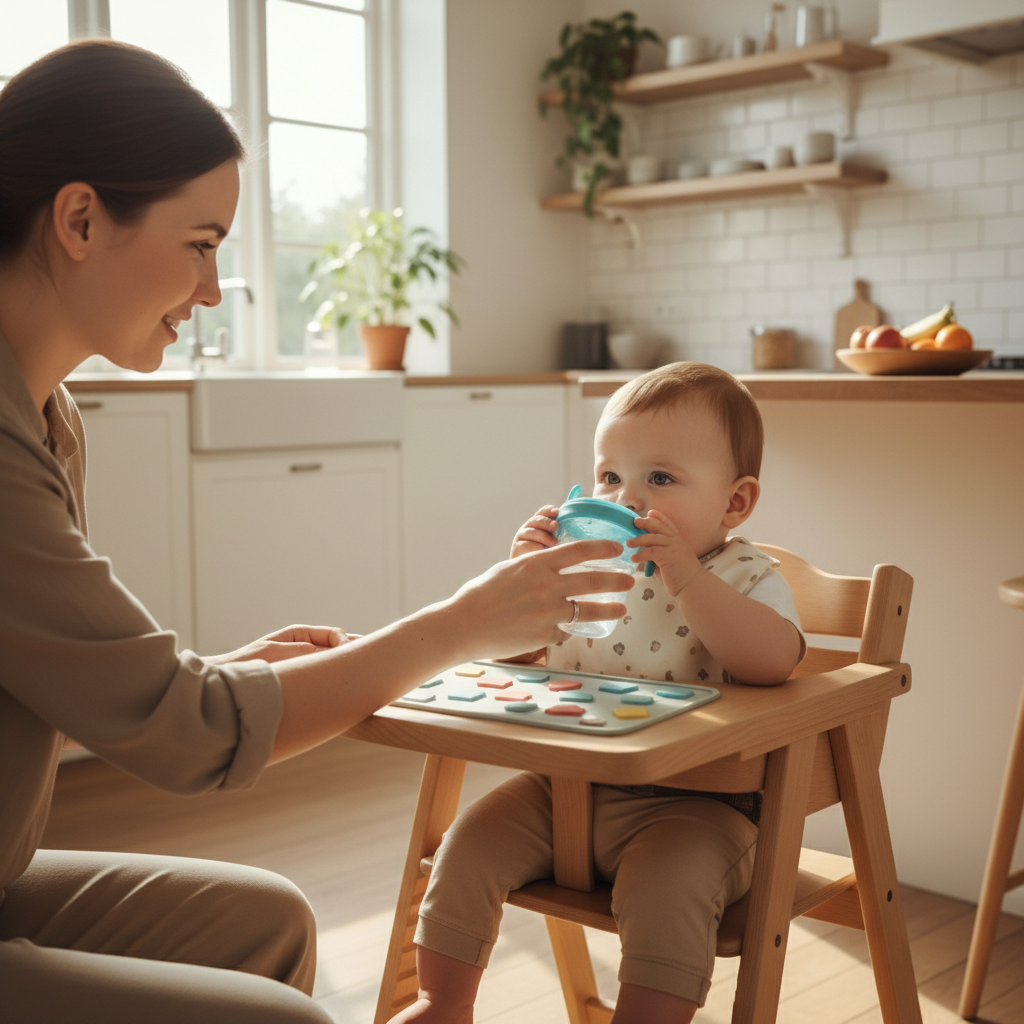
Babies can become dehydrated faster than adults because their bodies contain proportionally more water. Dehydration is the most important complication of diarrhea. Review the wet-diaper dehydration warning signs so you know exactly what to track.
Mild Signs of Dehydration
- Fewer wet diapers than usual (under 6 per 24 hours in infants)
- Darker urine than normal
- Dry lips and mouth
- Less active or more sleepy
Serious Signs. Contact a Doctor Immediately
- Sunken fontanelle (the soft spot on top of the head)
- No wet diapers for 6–8 hours
- Dry eyes with no tears when baby cries
- Very limp or difficult to rouse
- Cold, pale, or mottled skin
- Rapid breathing or rapid heart rate
Call your local emergency number or go to the emergency room if your baby:
- Is under 3 months old with diarrhea
- Has bloody or black stools
- Has forceful vomiting and cannot hold down fluids
- Has a fever (over 100.4°F / 38°C in babies under 3 months)
- Shows signs of serious dehydration
- Is limp and difficult to rouse
Home Treatment
Most cases of diarrhea in babies can be managed at home with adequate fluids and careful monitoring.
1. Continue Breastfeeding or Formula
Breastfeeding is the most important step for diarrhea in infants. Breast milk is easy to digest, provides fluids, and contains antibodies that help the baby fight infection.
Breastfeeding? Offer the breast more frequently than usual. Formula-feeding? Continue as normal but offer extra fluid between feeds.
2. Oral Rehydration Solution When Needed
For mild to moderate dehydration, you can give an oral rehydration solution (ORS) between feeds. Ask your pharmacist for an ORS formulated for infants (such as Pedialyte or equivalent).
Do not give your baby juice, sugary drinks, or plain water without electrolytes. Plain water can disrupt the electrolyte balance in babies under 6 months.
3. Continue Solid Foods
Has your baby started solids? Continue offering food as normal. The old advice to fast during diarrhea is outdated. Both the WHO and AAP recommend that children continue eating normally during and after a diarrhea episode.
Good foods during diarrhea:
- Bread, rice porridge, pasta
- Banana and cooked potato
- Cooked chicken or fish
- Cooked carrots
The BRAT diet is outdated. Parents were previously advised to use the BRAT diet (bananas, rice, applesauce, toast). Current guidance from the AAP and WHO says children should eat normally and with variety. Restricted diets can delay recovery.
4. Good Hygiene
Diarrhea can be highly contagious. Wash hands thoroughly with soap and water after every diaper change. Disinfect the changing area and surfaces the baby contacts. Keep your child home from daycare until they have been symptom-free for 48 hours.
5. Protect the Skin
Frequent diarrhea can irritate the skin. Change diapers frequently, clean gently with plain water (avoid fragranced wipes), and apply generous amounts of zinc oxide or barrier cream.
When Will the Diarrhea Stop?
Most virus-related diarrhea episodes last 3–7 days. Stools may be slightly looser than normal for up to two weeks after the infection, which is completely normal.
Contact your doctor if the diarrhea:
- Lasts longer than 7 days
- Gets worse instead of better
- Returns repeatedly
- Contains blood or mucus
Prevention
You can reduce your baby's risk of diarrhea:
- Rotavirus vaccine, make sure your baby receives the doses as recommended
- Good hand hygiene, wash hands before feeding and after diaper changes
- Safe food preparation, wash fruit and vegetables, cook food thoroughly
- Breastfeeding, breast milk provides protective antibodies
- Proper food storage, keep leftovers refrigerated and within recommended use-by times

Frequently Asked Questions
Is loose stool always diarrhea?
No. Breastfed babies naturally have loose stools, and that's completely normal. Diarrhea is defined as a noticeable change in frequency and consistency compared to your baby's usual pattern. A single loose diaper is rarely cause for concern.
Can I give my baby Imodium or other anti-diarrheal medication?
No. Anti-diarrheal medications should not be given to infants or young children. These medications can cause serious side effects. The most important thing during diarrhea is to maintain fluid balance.
Should I stop breastfeeding when my baby has diarrhea?
Absolutely not. Breastfeeding is the most important measure for diarrhea in infants. Breast milk provides fluids, nutrition, and antibodies that help your baby recover faster. Offer the breast more often than usual.
How many wet diapers should my baby have per day?
Infants should normally have at least 6 wet diapers per 24 hours. Fewer than 4 may indicate dehydration. Note that urine should be pale and clear, not dark and concentrated.
Can diarrhea be caused by teething?
Many parents observe softer stools during teething, but research does not provide firm evidence for a direct connection. High fever and severe diarrhea are most likely caused by something else and should be evaluated by a doctor.
Sources
- World Health Organization. "Diarrhoeal disease." who.int
- American Academy of Pediatrics (AAP). "Diarrhea." healthychildren.org
- CDC. "Rotavirus Vaccination." cdc.gov
🔧 Helpful Tools
- Baby Milestones Tracker. Track your baby's developmental milestones
- All Baby Tools. Browse all free tools for pregnancy and baby care
📖 Related Articles
- Dehydration in Children: Signs to Know and What to Do. Learn to recognize dehydration in children and babies. Signs, causes, home treatment, and when to see a doctor. Based on WHO and AAP guidelines.
- Your Baby's Immune System: How to Support It Naturally. How does a baby's immune system develop? Learn about vaccines, breastfeeding, diet, and other factors that strengthen immunity in babies and young children.
- Chickenpox in Children: Symptoms, Treatment, and Contagion. Everything about chickenpox in children and babies. Symptoms, incubation period, home treatment, when to call a doctor, and vaccine recommendations from the CDC. Updated for 2026.