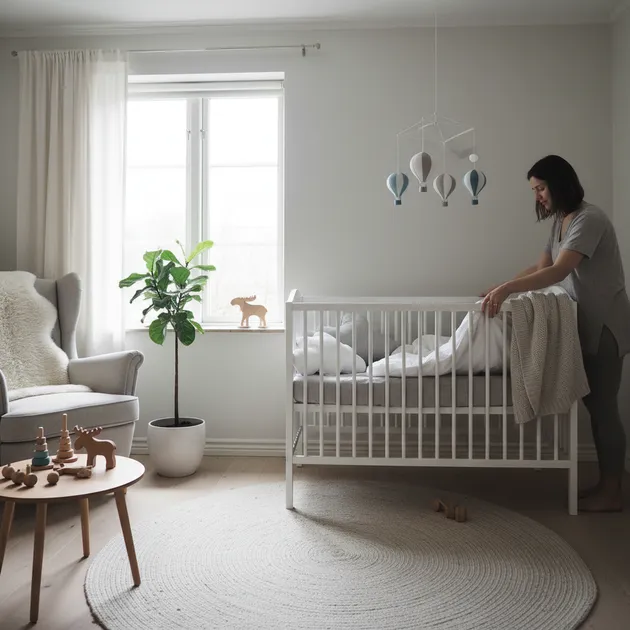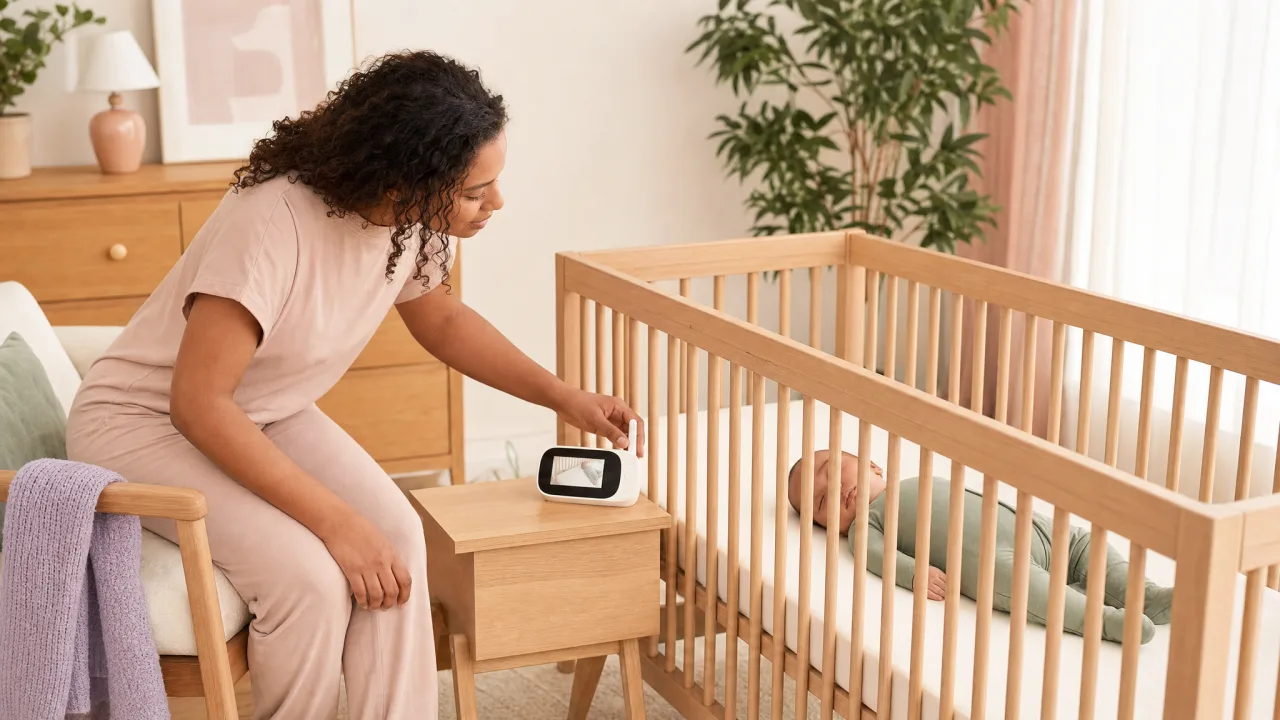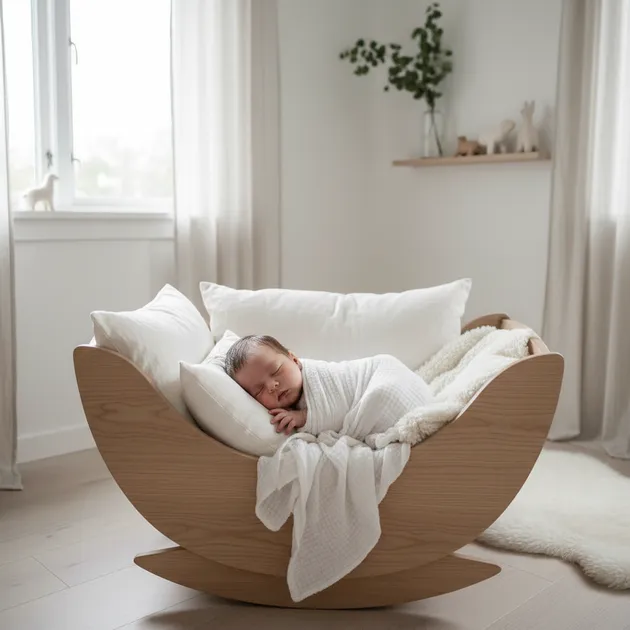
A cradle gives your baby a small, secure sleeping space for the very first months. Its compact size envelops the newborn and recreates some of the snugness of the womb.
Cradles have a long tradition in many cultures. From simple wooden designs to modern hanging cradles and electronic versions, the choice comes down to what fits your family, your space, and your budget.
What is a cradle?
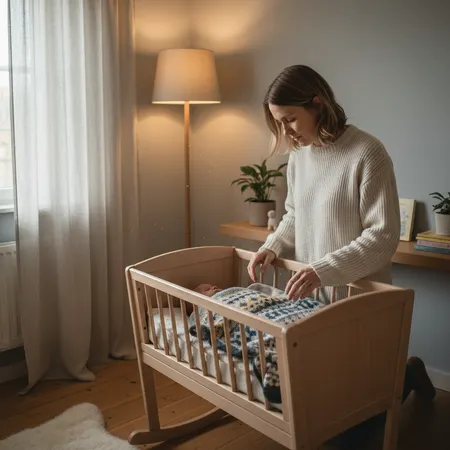
A cradle is a small baby bed that rocks gently from side to side. The soothing motion calms the baby and can help with settling to sleep. Most cradles are designed for children from birth to 3–5 months, depending on the baby's size and development.
A cradle differs from a full-size crib in being much smaller, and from a bedside sleeper in that it stands freely and has a rocking motion.
Types of cradles
Classic floor cradle
The traditional wooden cradle that stands on the floor with curved rockers. The rocking motion is triggered when you give it a gentle push, or when the baby moves. Classic cradles are beautiful pieces of furniture that are often passed down through generations.
Best for: Families who appreciate traditional design and have space next to the bed or in the living room.
Hanging cradle
A hanging cradle is attached to the ceiling or a freestanding frame and swings freely. The movement is smoother and more continuous than a floor cradle. Many parents find that babies settle faster in a hanging cradle because the swinging motion resembles being carried.
Best for: Families who want an effective soothing effect. Requires either a ceiling mount or a dedicated stand.
A hanging cradle on a stand can be moved between rooms, practical for daytime naps in the living room and nighttime sleep in the bedroom.
Electronic cradle
Electronic cradles (such as the SNOO) detect the baby's movement and crying, and automatically adjust the rocking motion and white noise. They can help the baby settle back to sleep without you having to get up.
Best for: Parents who want technological help with nighttime sleep. These come at a high price point, but can often be rented.
Moses basket
A Moses basket is a light, portable basket with handles. It isn't a cradle in the traditional sense but serves the same role as a first sleeping place. The basket is easy to move and can sit next to the bed, on the sofa, or in another room.
Best for: Families who want a portable sleeping solution for the first 2–3 months.
Cradle safety
Safe sleep is the single most important priority, regardless of which cradle you choose. The AAP recommends that babies sleep on their backs, on a firm mattress, without loose items in the sleep space.
Requirements for the cradle
- Firm mattress that fits snugly inside the cradle, no gaps along the edges
- No pillows, quilts, or soft toys in the cradle
- No bumper pads or padding around the sides, these increase the risk of suffocation
- Stable construction, the cradle must not tip over
- Weight limit, check the manufacturer's recommendation (typically 15–20 lbs / 7–9 kg)
- Safety certification, look for JPMA certification or equivalent safety standards
Safe sleep: Your baby should always sleep on their back in the cradle. Use a sleep sack instead of a blanket. Room temperature should be around 68–72°F (18–20°C). Learn more in our guide to safe sleep and SIDS prevention.
Where to place the cradle
The cradle should be in the parents' bedroom for at least the first 6 months. The AAP recommends that babies sleep in the same room as their parents, but in their own separate sleep surface. Position the cradle so you can easily check on your baby and reach them for nursing or comfort.
Avoid placing the cradle in direct sunlight, near heat sources, or in drafts.
Cradle vs. bedside sleeper vs. full crib
| Cradle | Bedside sleeper | Full crib | |
|---|---|---|---|
| Age | 0–4 months | 0–6 months | 0–3 years |
| Size | Compact | Medium | Large |
| Rocking motion | Yes | No | No |
| Baby access | Lift up | Open side | Lift up |
| Approximate cost | $100–$1,500+ | $200–$600 | $200–$1,000+ |
| Useful period | 3–5 months | 5–6 months | 2–3 years |
Many families start with a cradle or bedside sleeper and transition to a full crib after a few months. The advantage of the cradle is the soothing rocking motion. The advantage of the bedside sleeper is easier access for nighttime nursing.
A full crib is the most cost-effective solution if you only want one sleep space, but it takes up a lot of room in the bedroom during the early months.
When is the baby too big for the cradle?
Most babies outgrow a cradle by 3–5 months of age. Move your baby to a larger sleep space when:
- The baby approaches the weight limit, check the manufacturer's specification
- The baby starts rolling, a cradle is not safe for babies who can roll
- The baby seems cramped, arms and legs are hitting the sides
- The baby pushes up, tries to pull themselves up on the sides
The transition from cradle to full crib can be done gradually. Some parents place the cradle inside the crib for a few nights, or put a used sheet from the cradle in the new crib so the familiar scent is there.
What does a cradle cost?
Prices vary enormously depending on type and brand:
- Simple floor cradle: $100–$400
- Hanging cradle with stand: $300–$700
- Moses basket: $80–$300
- Electronic cradle (SNOO): $1,500–$1,800 (can be rented for ~$150–200/month)
Save money: Cradles have a short lifespan and are often in excellent condition secondhand. Check local buy-and-sell groups or resale platforms. Used electronic cradles can save you hundreds of dollars. Make sure any safety certification is intact and no parts are damaged.
Tips for choosing the right cradle
- Measure the space next to your bed before buying, cradles vary in footprint
- Check the weight limit and estimated useful period, some cradles are more roomy than others
- Think about washability, the cover should be removable and machine washable
- Consider portability, do you need to move the cradle between rooms?
- Read reviews from other parents about stability and build quality
- Check whether a mattress is included, some cradles are sold without one
For a complete overview of everything you need for your newborn, check our baby checklists. Also read about sleep routines for newborns and setting up a good sleep environment.
Frequently asked questions about cradles
Is a cradle safe for newborns?
Yes, a cradle with a firm, properly fitted mattress, no loose items, and appropriate safety certification is a safe sleeping place for newborns. Follow AAP safe sleep guidelines: baby on their back, sleep sack instead of blanket, and room temperature around 68–72°F (18–20°C).
How long can a baby sleep in a cradle?
Most cradles are designed for 0–4 months or until the baby weighs 15–20 lbs (7–9 kg). Switch to a larger sleep space when the baby approaches the weight limit, starts rolling, or seems cramped.
Is a hanging cradle better than a floor cradle?
A hanging cradle provides a smoother, more continuous swinging motion. Many parents find their baby settles faster in a hanging cradle. A floor cradle is simpler to set up and doesn't require a ceiling mount. Both are safe options.
Do I need a cradle if I have a bedside sleeper?
No, you don't need both. A bedside sleeper gives easy access for nighttime nursing, while a cradle provides soothing rocking motion. Choose what works best for your situation. Some families use a cradle in the living room during the day and a bedside sleeper at night.
Can a baby sleep in a Moses basket overnight?
Yes, a Moses basket is approved as a sleep space overnight, as long as it's placed on a stable, flat surface and you follow safe sleep guidelines. Don't place the basket on soft surfaces like sofas or beds where it could tip.
Read more
- Bedside sleeper: Complete guide
- Full crib: Choosing the right baby bed
- Safe sleep for baby
- Sleep routines for newborns
- Setting up the nursery
Sources
- AAP. "Safe Sleep Recommendations." healthychildren.org
- Safe to Sleep. "Safe Sleep for Your Baby." safetosleep.nichd.nih.gov
- AAP. "How to Keep Your Sleeping Baby Safe." healthychildren.org
Last updated: March 2026
🔧 Helpful Tools
- Baby Sleep Tracker. Track and optimize your baby's sleep
- All Baby Tools. Browse all free tools for pregnancy and baby care
📖 Related Articles
- Crib Guide: How to Choose a Baby Crib, Safety Tips, and When to Transition. Everything you need to know about baby cribs, how to choose the right one, safety requirements, the right mattress and bedding, and when your child is ready for a regular bed.