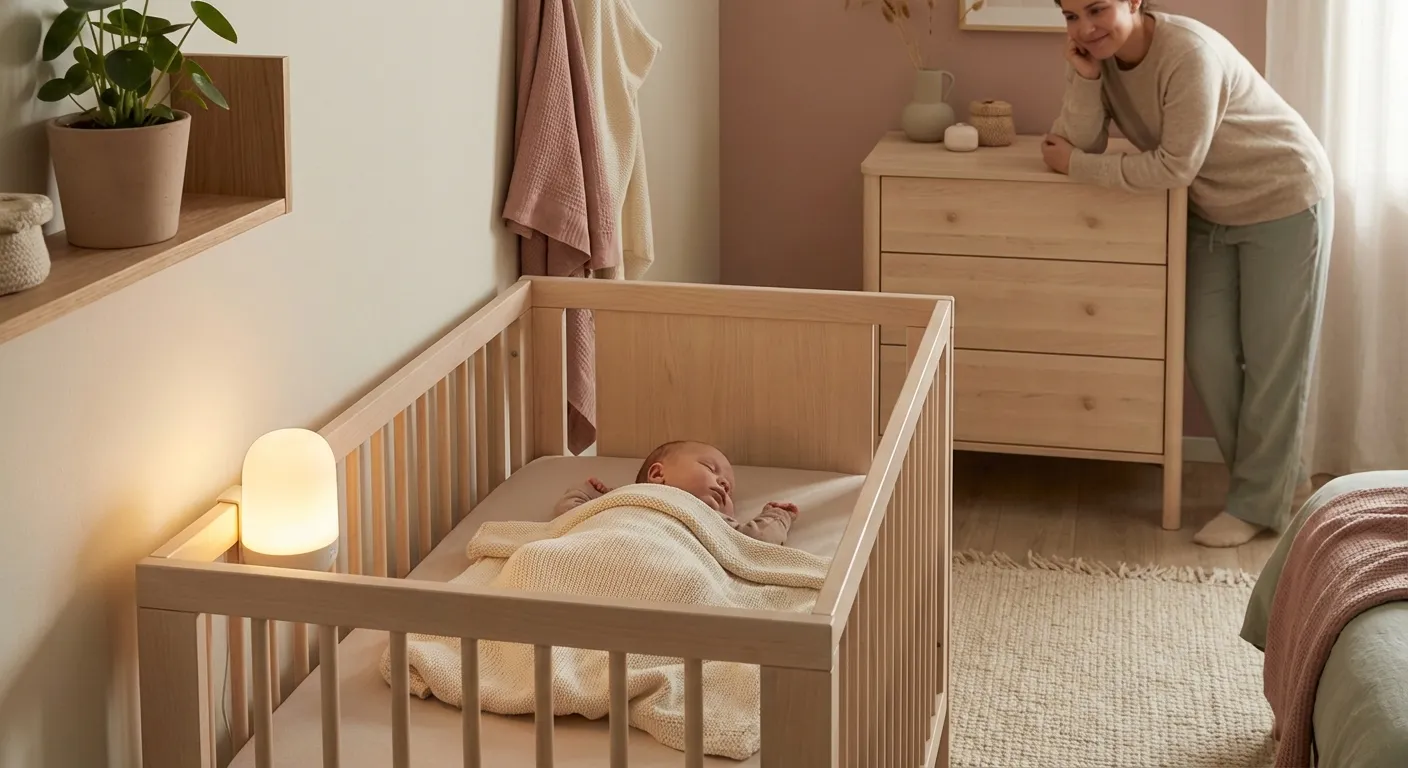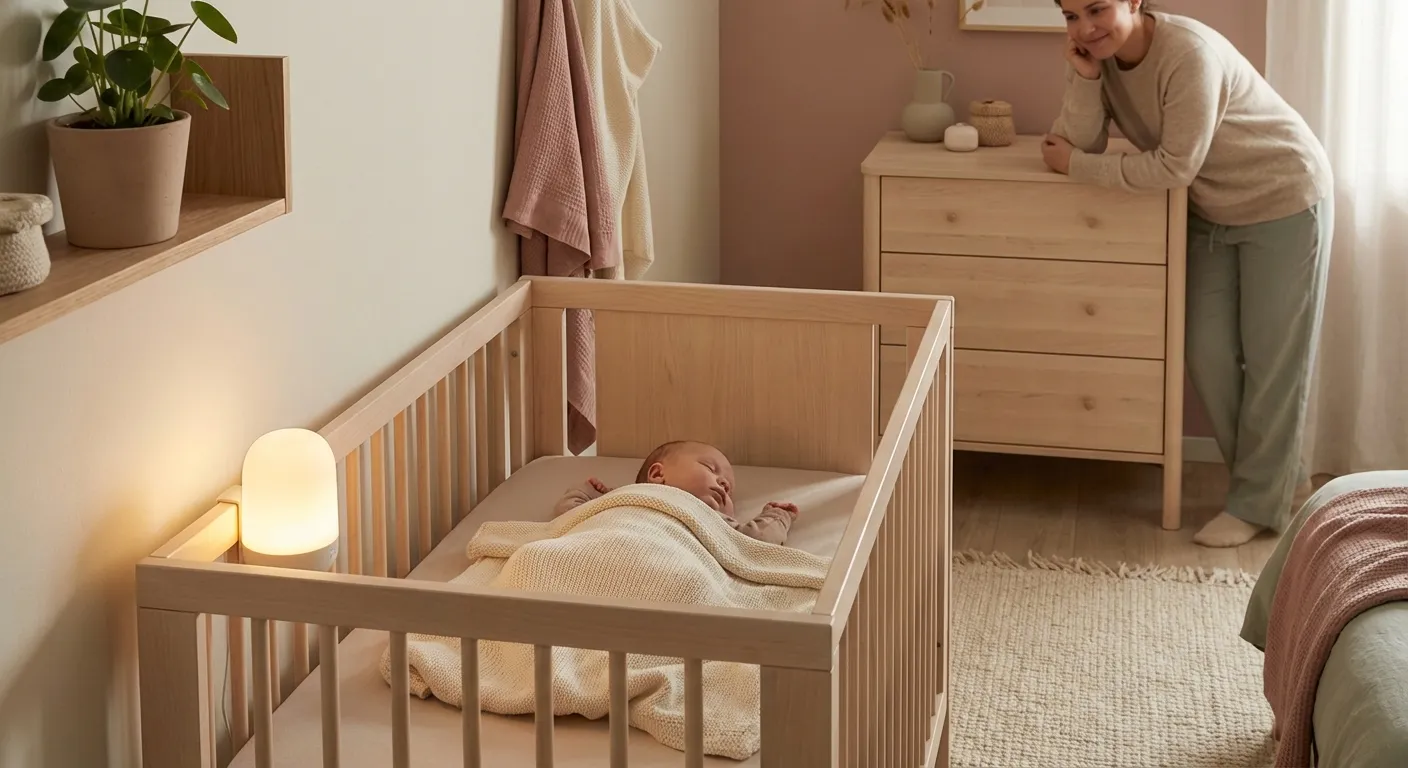
A newborn sleeps 14–17 hours a day, but never more than 2–4 hours at a stretch. That means many wake-ups for the whole family.
The first weeks aren't about strict routines. They're about understanding your baby's sleep pattern and laying the foundation for healthy sleep habits that last.
How Newborns Sleep in the First Weeks
Newborns have a completely different sleep pattern than older babies and adults. Most newborns sleep 14–17 hours per day, spread across many short periods.
| Age | Sleep per day | Longest sleep stretch |
|---|---|---|
| 0–6 weeks | 14–17 hours | 2–4 hours |
| 6–12 weeks | 15–16 hours | 3–5 hours |
| 3–6 months | 12–15 hours | 5–6 hours |
A newborn's sleep cycles last only 45–60 minutes. Half of that sleep is active (REM sleep), which means lots of movement, sounds, and brief wake-ups.
Frequent wake-ups are biologically normal for newborns. Your baby needs to eat often and hasn't yet developed a circadian rhythm. This is nothing you're doing wrong.
The Difference Between Day and Night
Newborns don't distinguish between day and night in the first weeks. The circadian rhythm develops gradually from around 6–8 weeks of age, and is usually in place by 3–4 months.
You can help your baby learn the difference:
Daytime
- Keep the room bright and airy
- Let normal household sounds stay in the background
- Talk, sing, and make eye contact
- Daytime naps don't need to be in a completely dark room
Evening and Night
- Dim the lights 30–60 minutes before bedtime
- Use a nightlight for diaper changes and feeding
- Speak softly and calmly
- Avoid play and stimulation
- Skip diaper changes unless there's a bowel movement
From around 3 months of age, baby begins producing melatonin, which regulates the feeling of tiredness. That's when consistent bedtime routines start to make sense.
When Can You Start a Sleep Routine?
Many parents wonder when they can begin a set routine. The answer: not too early.
0–6 weeks: Focus on getting to know your baby. Notice patterns, but don't try to control them. Baby needs food and closeness on demand.
6–8 weeks: Now you can introduce a simple bedtime routine. Short, predictable steps repeated each evening give your baby a sense of security.
3–6 months: The routine can expand and become more consistent. Baby is ready for clearer structure around bedtime.
Newborns under 6 weeks should not be put on strict routines. They need food and comfort on demand. Trying to "train" a newborn to sleep longer can interfere with food intake and weight gain.
Step-by-Step Bedtime Routine
A bedtime routine doesn't have to be complicated. What matters is predictability, the same steps happening in the same order each evening.
1. Bath or Wash (5–10 minutes)
A lukewarm bath is calming for most babies. Water temperature should be around 37°C (98.6°F). Not all babies need a daily bath, a thorough wash works just as well.
2. Massage and Diaper Change (5 minutes)
Apply moisturizer and put on a clean diaper and sleep sack. Calm, firm strokes on arms and legs are soothing.
3. Nursing or Bottle
Feeding right before bed ensures baby is full and content. Dimmed lights keep baby in sleep mode.
4. Sleep Sack and Dark Room
Put baby in a sleep sack (not a blanket) in their own sleep space. Draw the curtains. Room temperature between 16 and 20°C (61–68°F) is recommended by the AAP.
5. Lullaby or White Noise
A quiet song, humming, or white noise signals that it's time for sleep. Repeat the same song each evening to build recognition.
Your pediatrician offers regular check-ups from birth through the toddler years. Use these visits actively, they can give you personalized guidance on sleep routines tailored to your baby.
Wake Windows for Newborns
The wake window is the amount of time your baby can stay awake between sleep periods. If baby stays awake too long, they become overtired, and then it's harder to fall asleep.
| Age | Wake window |
|---|---|
| 0–4 weeks | 45–60 minutes |
| 4–8 weeks | 60–75 minutes |
| 8–12 weeks | 75–90 minutes |
| 3–4 months | 90–120 minutes |
For newborns, these windows are surprisingly short. A 2-week-old may need to sleep again just 45 minutes after waking.
Read more in our complete wake window guide for all ages.
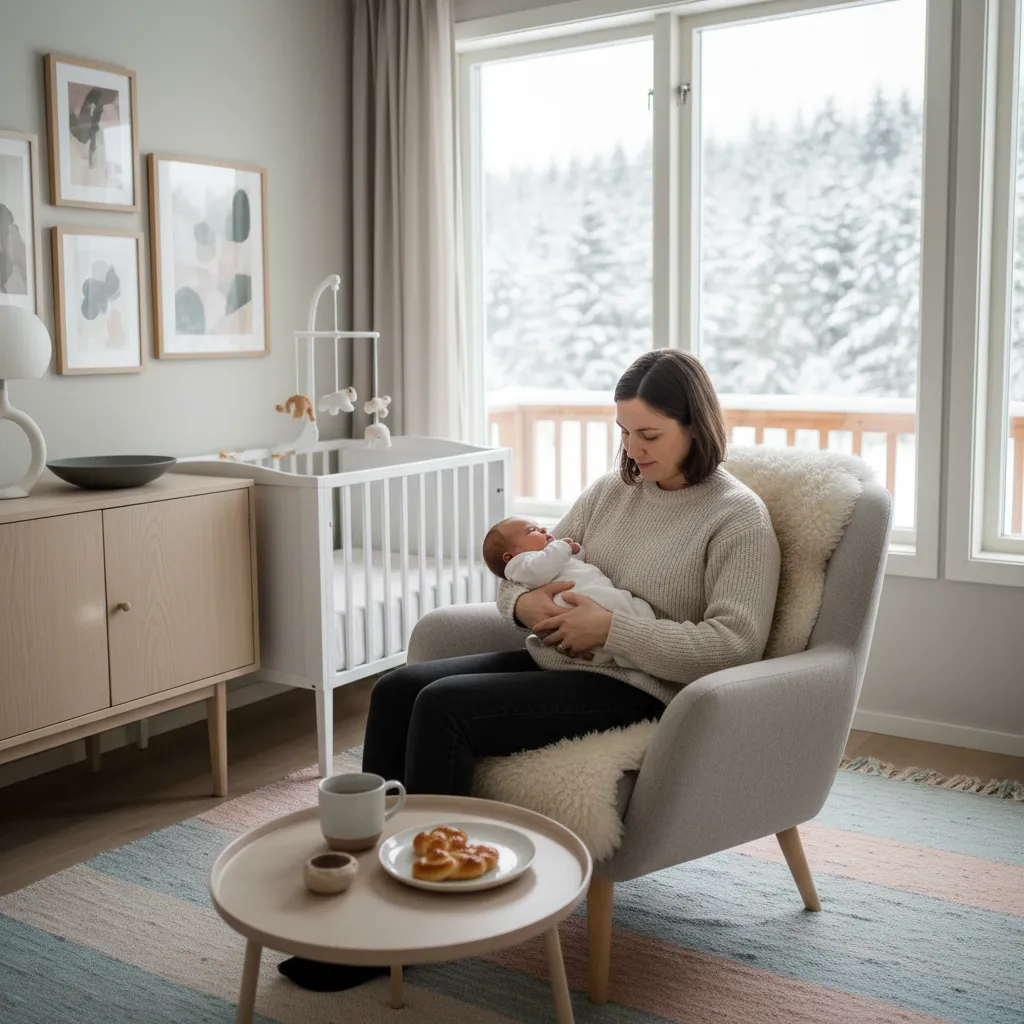
Sleep Cues to Watch For
Baby gives clear signals when she's tired. Catching them early makes bedtime much easier.
Early Signals (Put Down Now!)
- Yawning
- Rubbing eyes
- Looking away from you or toys
- Becoming quieter and calmer
- Pulling at ear
Late Signals (Baby Is Already Overtired)
- Crying and fussiness
- Body stiffening
- Arching back
- Difficult to soothe
The goal is to put baby down when you see the early signals. An overtired baby has a harder time falling asleep and sleeps for shorter stretches.
Learn more about reading your baby's sleep signs in our sleep cues guide.
Common Mistakes Parents Make
Waiting Too Long to Put Baby Down
The most common problem is missing the wake window. A baby who's been awake too long produces stress hormones (cortisol) that make it harder to fall asleep.
Too Much Stimulation Before Bed
Active play, bright lights, and screen use right before bedtime work against drowsiness. Wind down activity 30 minutes before the routine starts.
Comparing to Other Babies
Every baby is different. The neighbor's baby sleeping 6 hours straight from week 4 says nothing about your baby. The range of normal is enormous.
Switching Methods Too Quickly
Give a new routine at least 1–2 weeks before deciding whether it works. Babies need time to adjust to changes.
Ignoring Your Own Needs
Sleep deprivation in parents affects patience and the ability to read baby's signals. Take turns with your partner, sleep when baby sleeps, and ask for help.
Use the Sleep Tracker to log your baby's sleep and see patterns over time. Many parents discover that baby is sleeping more than they think, it just doesn't feel that way in the middle of the night.
Frequently Asked Questions
When will baby sleep through the night?
Most babies can manage 5–6 hours in a row around 3–6 months of age. "Through the night" (8+ hours) often doesn't come until after 6 months. Some babies take longer, and that's completely normal.
Should I let a newborn cry themselves to sleep?
No. Newborns need an immediate response and comfort. The AAP recommends being present and giving baby security. Sleep training is not recommended for children under 6 months.
Baby only wants to sleep on me, what do I do?
This is common and natural in the first weeks. Try a gradual transfer: wait until baby is in deep sleep (relaxed body, calm breathing) before putting her down. Skin-to-skin contact is beneficial, but baby should sleep safely on her back in her own sleep space at night.
Should I wake baby for a feeding at night?
Healthy babies with good weight gain generally don't need to be woken, according to the AAP. Premature babies or those with low weight gain may need waking, talk to your pediatrician.
What do I do about sleep regression?
Around 4, 8, and 12 months, many babies experience sleep regression, a period of poorer sleep. Stick to the routine, offer extra comfort, and wait it out. Read our sleep regression guide for more information.
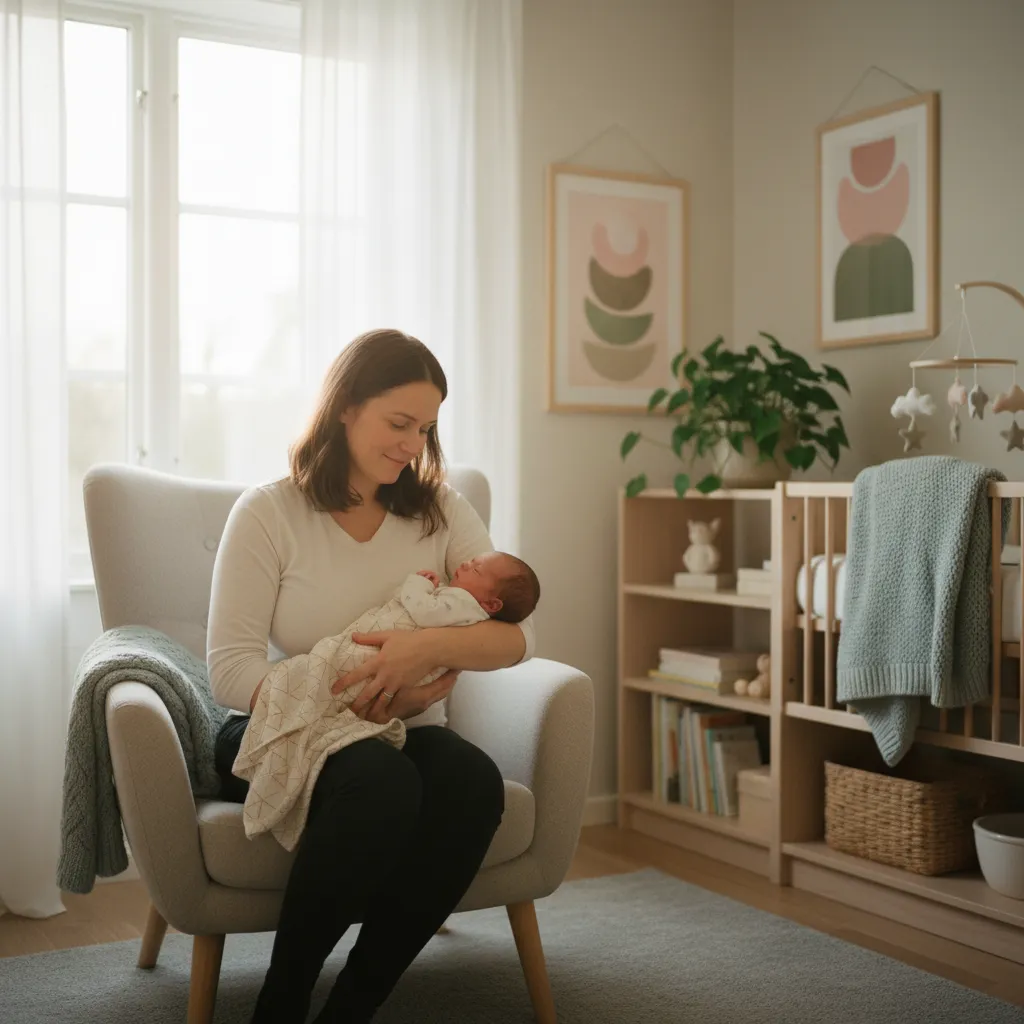
Start Sleep Tracking Today
Understanding your baby's sleep pattern is the first step toward better nights. With Babysential's Sleep Tracker, you can log sleep, see wake windows, and discover patterns you'd otherwise miss.
Many parents find that simply tracking sleep gives a sense of control, even in the toughest nights.
Read More
- Safe Sleep for Baby. SIDS Prevention
- Wake Window Guide by Age
- Sleep Cues in Babies
- Sleep Regression. When Baby Suddenly Sleeps Poorly
- Sleep Tracker. Log Your Baby's Sleep
Sources
- AAP - Safe Sleep
- AAP - SIDS and Other Sleep-Related Infant Deaths
- WHO - Caring for your baby
- CDC - Infant Sleep
🔧 Helpful Tools
- Baby Sleep Tracker. Track and optimize your baby's sleep
- Soothing Sounds. White noise and soothing sounds to help your baby sleep
- All Baby Tools. Browse all free tools for pregnancy and baby care
📖 Related Articles
- Newborn Sleep Routine: Building Good Sleep Habits. Learn how to create good sleep habits for newborns. Sleep patterns, wake windows, bedtime routines, and sleep cues, based on guidance from WHO and AAP.