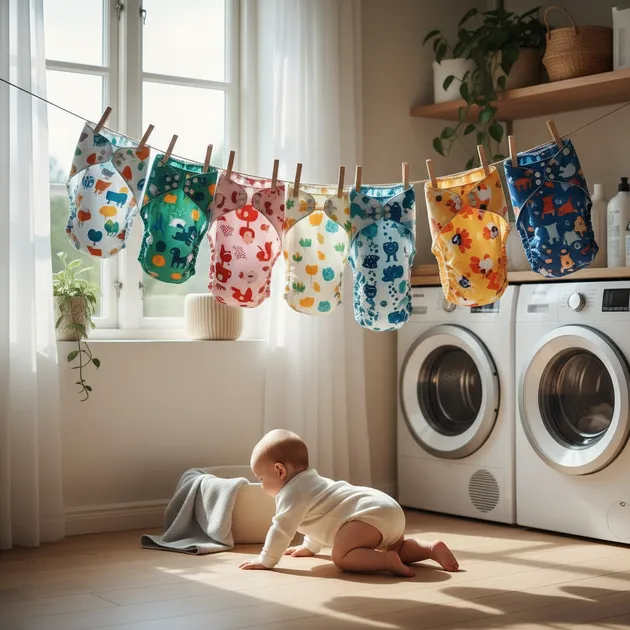
Cloth diapers for beginners sound complicated, but the core idea is simple. You use a fabric diaper, wash it, and reuse it instead of throwing it away. Done well, cloth diapering costs 50–80% less than disposables over two years, generates far less landfill waste, and causes no more diaper rash than disposables when changed regularly. This guide walks you through everything: the four main diaper types, how to build a starter stash, the wash routine that actually works, and the honest answers to every question beginners ask.
Key Takeaways
- Four cloth diaper types, prefolds, fitteds, pockets, and all-in-ones (AIOs), each has trade-offs in cost, convenience, and drying time.
- A starter stash of 24–36 diapers is enough for every-other-day washing with a newborn. For the disposable side, see how many diapers to stock.
- The wash routine is straightforward: cold pre-wash, hot main wash with full detergent, warm rinse, no special "cloth diaper detergent" required.
- Total cloth diapering cost over two years runs $400–$900 vs $2,000–$3,000 for disposables.
- The AAP and Mayo Clinic agree: diaper rash prevention comes down to frequent changes and dry skin, not diaper material.
- You do not need to use cloth from day one, many families start at 4–6 weeks once the newborn phase settles.
1. The Four Types of Cloth Diapers. Explained Simply
Prefolds and Flats
The oldest, cheapest, and most versatile option. A prefold is a flat rectangle of layered cotton or bamboo that you fold into shape and secure with a Snappi fastener or diaper pins, then cover with a waterproof PUL cover. Flats are a single large square you fold yourself.
- Cost: $1–$3 per diaper; covers cost $10–$18 each (one cover per 3–5 prefolds)
- Drying time: Very fast, flat on a drying rack, dry in 1–2 hours
- Learning curve: Moderate, folding takes a few days to master
- Best for: Budget-conscious families, families who plan to use a diaper service
Fitted Diapers
A fitted diaper is shaped exactly like a disposable, elastic legs, snap or hook-and-loop closure, but it has no waterproof layer. It still requires a separate waterproof cover. Fitted diapers are the most absorbent option and are popular for heavy wetters and overnight use.
- Cost: $12–$30 per diaper; covers additional
- Drying time: Slow, thick cotton and bamboo fitteds can take 4–8 hours
- Learning curve: Low, just put it on and snap a cover over it
- Best for: Overnight, heavy wetters, toddlers
Pocket Diapers
A pocket diaper has a waterproof outer shell and a fleece inner lining with a pocket between them. You stuff the pocket with absorbent inserts before use and pull the inserts out before washing. This is the most popular system for families new to cloth.
- Cost: $12–$25 per diaper (insert included)
- Drying time: Moderate, shell dries fast, inserts take 2–4 hours
- Learning curve: Very low, works exactly like a disposable once stuffed
- Best for: Beginners, daycares, partners who want simplicity
All-in-Ones (AIOs)
An AIO diaper is the closest thing to a disposable in the cloth world: waterproof shell, absorbent layers, and closure all built into one. No stuffing, no cover, just put it on and take it off. The downside is slow drying and higher cost per diaper.
- Cost: $18–$35 per diaper
- Drying time: Slow, 4–10 hours, or tumble-dry on low
- Learning curve: Essentially zero
- Best for: Daycares, non-primary caregivers, families who want maximum simplicity
2. How Many Cloth Diapers Do You Need? Building a Starter Stash
This is the question every beginner asks first. The answer depends on how often you want to wash.
| Wash frequency | Stash size (newborn) | Stash size (3+ months) |
|---|---|---|
| Every day | 12–18 diapers | 10–14 diapers |
| Every other day | 24–30 diapers | 18–24 diapers |
| Every third day | 36–42 diapers | 26–32 diapers |
Most beginners find every-other-day washing sustainable, 24–30 diapers for a newborn, 18–24 for a baby 3 months and older.
Newborn-specific note: Many parents skip newborn-size cloth diapers entirely and start at 8–12 weeks when baby fits "one-size" diapers (typically 10+ lbs). Newborn cloth is expensive relative to how briefly it fits. If you do want to cloth-diaper from birth, either buy a small stash of 12 newborn-size diapers or rent a newborn diaper service.
Building the stash gradually: You do not need to buy everything before birth. Start with 6–8 diapers in two or three styles, try them for 2–3 weeks, and then buy more of what works for your baby's shape and your family's routine.
3. The Wash Routine. What Actually Works
The cloth diaper community has a reputation for complicated wash routines, but the core process is straightforward. The key principle: you need enough water, enough detergent, and enough heat to clean organic matter. That's it.
Step-by-step routine
- Store dirty diapers in a dry pail (a lidded trash can with a wet bag liner) until wash day. No soaking.
- Pre-wash (cold/warm, normal cycle): Rinse away most of the waste. Use a half dose of your regular detergent. Do not skip this step.
- Main wash (hot, 60°C/140°F, heavy or cottons cycle): Use a full dose of detergent. This is the actual cleaning step.
- Extra rinse (warm): Optional if your machine rinses thoroughly; recommended if any residue causes skin irritation.
- Dry: Line dry covers and shells (heat degrades PUL over time); inserts, prefolds, and fitteds can be tumble-dried on medium.
Detergent: Use any mainstream detergent. Tide, Persil, or similar. "Cloth diaper safe" detergents are often under-dosed and can leave residue. Avoid fabric softener (coats fibers and reduces absorbency) and bleach on every wash (occasional strip-wash with bleach is fine; routine bleaching degrades elastic).
Stripping: If diapers start smelling immediately when wet or repelling liquid, they need a strip. A hot wash with a small amount of dish soap or a dedicated strip soak resets the fibers. This is a once-every-few-months situation, not routine.
4. Cloth Diapers vs Disposables. Real Cost Comparison
The NHS notes that reusable nappies can reduce environmental impact and long-term cost. Here is what the numbers actually look like in 2026:
| Cloth diapers | Disposables | |
|---|---|---|
| Upfront cost | $400–$700 (full stash) | ~$0 |
| Monthly ongoing cost | $10–$15 (water, electricity, detergent) | $80–$130 |
| 2-year total | ~$640–$1,060 | ~$1,920–$3,120 |
| Savings with cloth | – | $860–$2,060 |
| Second child savings | Additional $0–$200 (replace worn items) | Full cost again |
The environmental math is debated, manufacturing cloth has a footprint, and washing uses water and energy. In general, cloth diapering has lower lifetime CO₂ impact than disposables when washed efficiently (full loads, line-dried where possible).
5. Common Beginner Questions. Answered
Do cloth diapers leak more? Not when sized correctly and changed frequently. Most leaks in the newborn stage come from fit, not the diaper type. Adjust the leg elastic and rise snaps until you get a snug-but-not-red-mark fit.
What about poop? Exclusively breastfed newborn poop is water-soluble and goes straight in the wash, no scraping needed. Once solids start (around 6 months), solid poop gets shaken into the toilet first. A diaper sprayer attached to your toilet makes this easier.
Can cloth diapers go to daycare? Many daycares accept cloth diapers, especially pockets or AIOs. Call ahead to confirm and pack pre-stuffed diapers with a wet bag for dirties.
Does cloth diapering cause more diaper rash? The AAP and Mayo Clinic both confirm that diaper rash prevention comes down to frequent changes and keeping skin dry, not diaper material. Cloth diapers changed every 2–3 hours perform the same as or better than disposables on diaper rash metrics.
🔧 Helpful Tools
- Checklists. Build a personalized diapering prep checklist including cloth diaper quantities, wet bags, and laundry supplies.
- Smart Start. Week-by-week first-month guide covering feeding, diapering, and care routines tailored to your baby's age.
- Tote. Shopping list tool to track your cloth diaper stash as you build it across multiple brands.
- Food Guide. Once solids start at 6 months, food choices affect diaper contents, know what to expect.
Sources
- American Academy of Pediatrics. Diaper Rash. HealthyChildren.org. 2023. https://www.healthychildren.org/English/ages-stages/baby/diapers-clothing/Pages/Diaper-Rash.aspx
- Mayo Clinic. Diaper Rash. Symptoms and Causes. 2023. https://www.mayoclinic.org/diseases-conditions/diaper-rash/symptoms-causes/syc-20371636
- NHS. Nappies and Nappy Rash. 2023. https://www.nhs.uk/baby/caring-for-a-newborn/how-to-change-your-babys-nappy/
This article provides general guidance only and is not a substitute for medical advice. Consult your pediatrician if your baby develops persistent diaper rash or skin irritation.