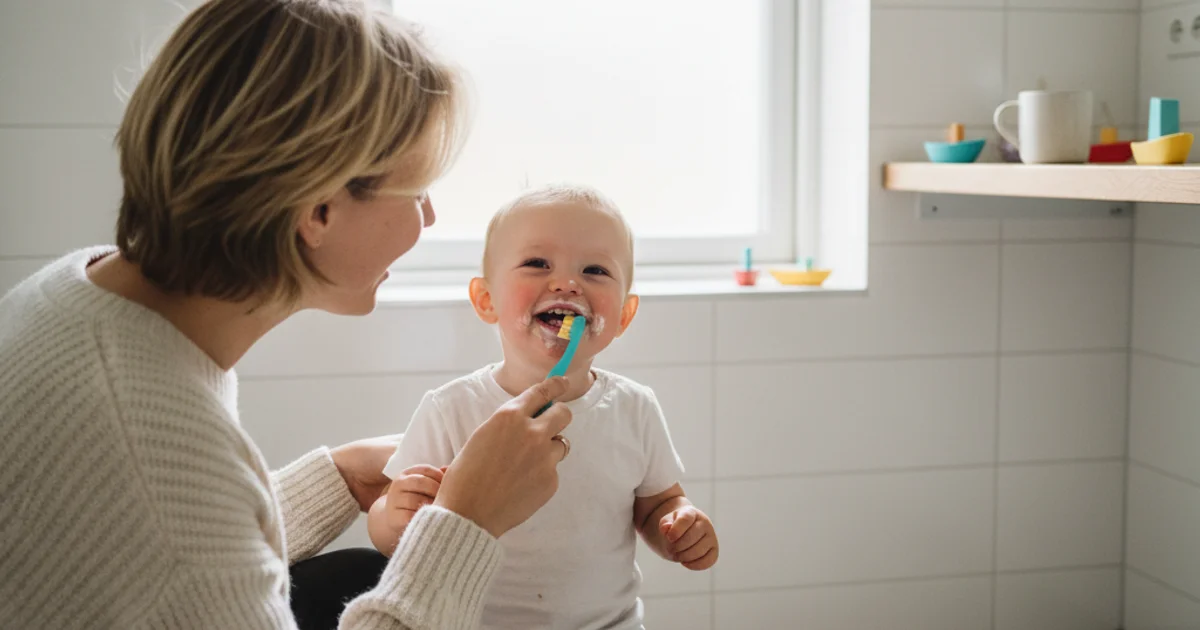
The first tooth is a big milestone. But with new teeth come new questions: How do you brush a baby's teeth? How much fluoride should you use? And is it normal for teeth to come in a different order?
Here is everything you need to know about baby teeth, from when the first tooth breaks through to when they fall out.
When do the first teeth come in?
Most babies get their first tooth between 6 and 8 months. But it is completely normal for the first tooth to appear as early as 4 months or as late as 12 months.
A child has 20 baby teeth in total. All 20 are usually in place by the time the child is 2.5–3 years old.
From the AAP: The timing of tooth eruption varies greatly between children. Some are born with a tooth, while others do not get their first tooth until after they are one year old. All of this is normal.
The order of baby teeth
Teeth usually come in this order:
| Age | Teeth |
|---|---|
| 6–10 months | Lower central incisors |
| 8–12 months | Upper central incisors |
| 9–13 months | Upper lateral incisors |
| 10–16 months | Lower lateral incisors |
| 13–19 months | First molars (upper and lower) |
| 16–23 months | Canines |
| 23–33 months | Second molars (upper and lower) |
The order can vary. What matters is not exactly when the teeth come in, but that you start brushing from the moment the first tooth breaks through.
Signs that your baby is teething
Teething can cause discomfort, but the degree varies greatly.
Common signs:
- Lots of drooling
- Chewing or gnawing on things
- Swollen, red gums
- A little fussy or irritable
- Reduced appetite
- Restless sleep
What you can do:
- Let the child chew on a clean teething ring (cool it in the refrigerator first)
- Gently massage the gums with a clean finger
- Wipe drool regularly to prevent irritation around the mouth
- Talk to your pediatrician if your child is in a lot of discomfort
Fever and teething: Teething does not cause a fever above 100.4°F (38°C). If your child has a high fever, contact your doctor to rule out other causes.
Brushing from the first tooth
Start brushing teeth the day the first tooth breaks through. Good dental health starts early, and it is just as much about establishing good habits.
Brushing 0–2 years
- Use a small, soft toothbrush designed for babies
- Use fluoride toothpaste with 1000 ppm fluoride
- Amount: A rice grain-sized smear of toothpaste
- Brush morning and evening
- An adult must always do the brushing, the child cannot do it themselves
Brushing 2–6 years
- Use a child-sized toothbrush with soft bristles
- Use fluoride toothpaste with 1000 ppm fluoride
- Amount: A pea-sized amount of toothpaste
- Brush morning and evening
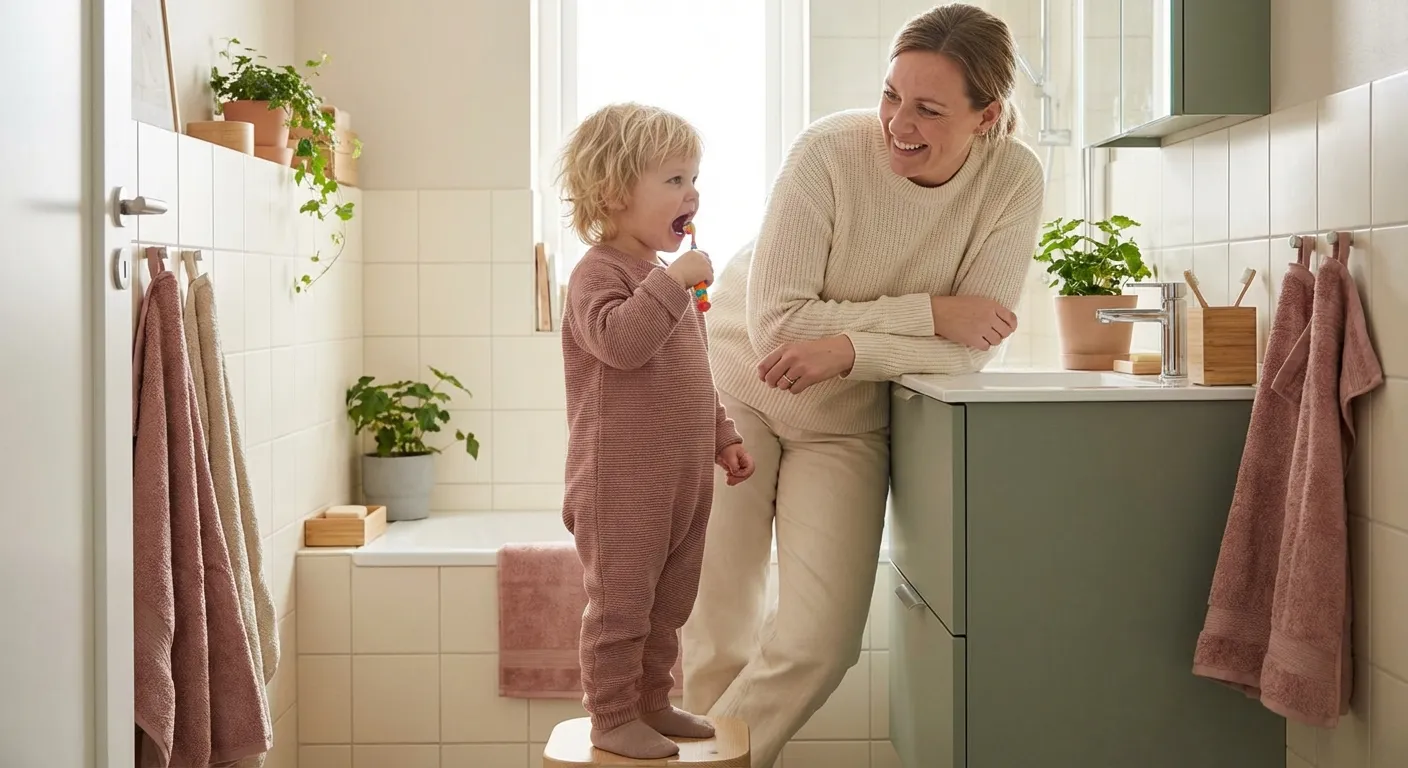
- The child can start trying themselves, but an adult must always help and brush afterward
Tips for making brushing easier
- Let the child choose their own toothbrush with a fun color or character
- Brush teeth together, children learn by watching
- Sing a song or use a timer app
- Be patient, it takes time to get used to brushing
- Make it a fixed part of the morning and evening routine
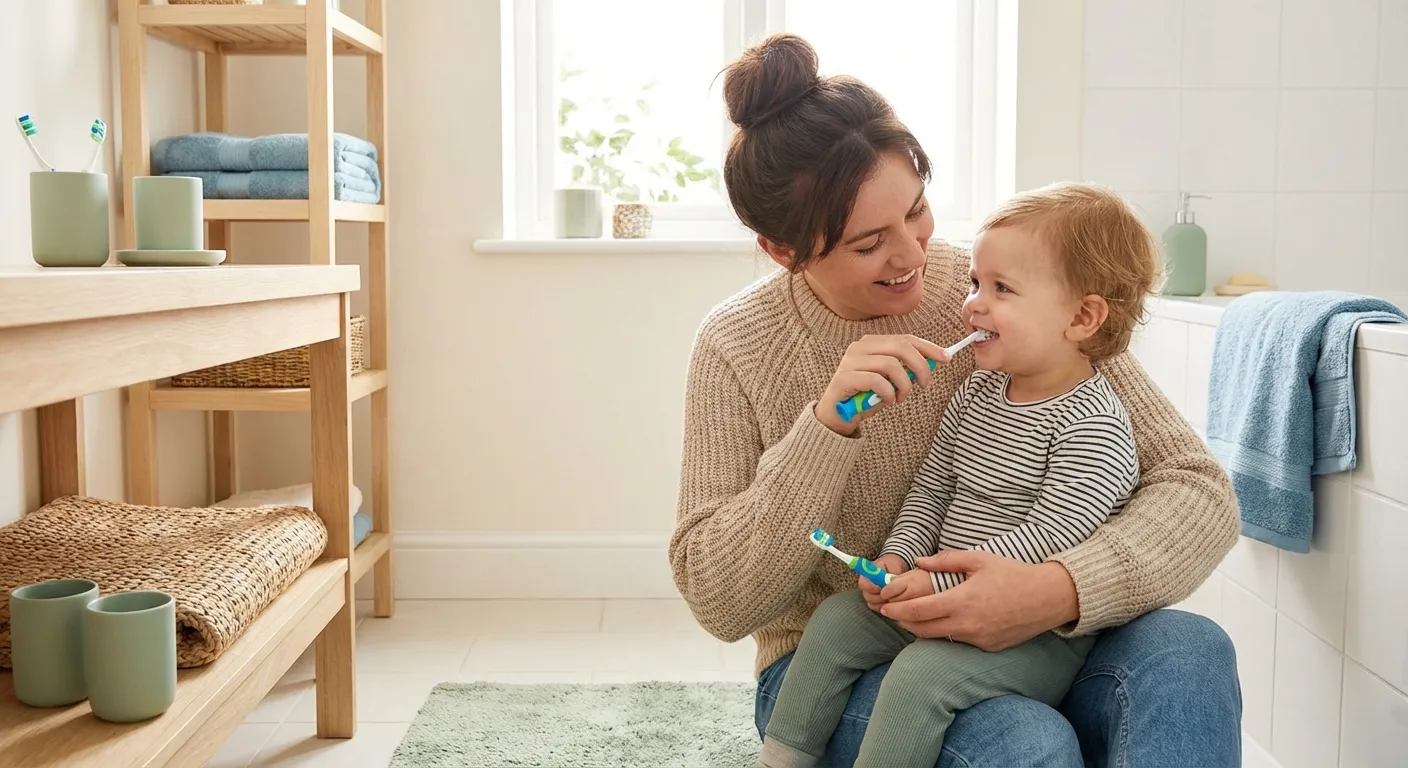
Tip: Lay your child in your lap with their head toward you. This gives you a good view and control while brushing. This position works well for children up to 3–4 years old.
Fluoride, recommendations
Fluoride strengthens tooth enamel and prevents cavities. The AAP and WHO recommend using fluoride toothpaste from the very first tooth.
Fluoride recommendations (AAP / WHO):
| Age | Fluoride content | Amount |
|---|---|---|
| 0–2 years | 1000 ppm | Rice grain-sized smear |
| 2–6 years | 1000 ppm | Pea-sized amount |
| Over 6 years | 1450 ppm | 1–2 cm strip |
Extra fluoride rinse may be recommended from age 6 for children at higher risk for cavities. Talk to your dentist.
Diet and dental health
What you give your child to eat and drink directly affects their dental health.
Avoid:
- Sugary drinks in a bottle or sippy cup (juice, flavored milk)
- Frequent snacking on sweet foods
- Using a bottle with anything other than water after age 1
- Foods or drinks that stick to the teeth (raisins, crackers)
Choose:
- Water as the everyday drink
- Set mealtimes rather than constant snacking (4–5 meals per day)
- Raw vegetables and fruit as snacks
- Cheese can protect against cavities
Baby bottle tooth decay: Letting your child sleep with a bottle containing milk or juice can cause severe tooth decay on the front teeth. Use only water in the bottle at bedtime.
Dental check-ups
In many countries, children are entitled to dental check-ups through public health services. In the US, the AAP recommends:
- First dental visit by age 1 or when the first tooth appears
- Regular check-ups thereafter (usually every 6–12 months)
- Contact your dentist earlier if you have concerns
When do baby teeth fall out?
Baby teeth start falling out around ages 5–7. The permanent teeth gradually replace them.
Typical order:
- 5–7 years: Lower front teeth fall out first
- 7–8 years: Upper front teeth
- 9–12 years: Canines and molars
- 12–13 years: All baby teeth are usually replaced
Tips when teeth are falling out:
- Let the tooth fall out naturally, do not force it out
- The child can gently wiggle a loose tooth
- A little bleeding is normal, have the child bite on a cotton ball
- Brush gently around the area where a new tooth is coming in
Frequently asked questions
Is it normal for a 12-month-old to have no teeth?
Yes, this is within the normal range. Some children don't get their first tooth until after 12 months. Contact your dentist or pediatrician if no teeth have appeared by 18 months.
Can baby teeth get cavities?
Yes, baby teeth can develop cavities (dental caries). Cavities in baby teeth should be treated because they can cause pain and infection, and can affect the permanent teeth developing underneath.
Should I use fluoride toothpaste from the first tooth?
Yes. The AAP recommends fluoride toothpaste with 1000 ppm from the moment the first tooth breaks through. The amount should be very small (a rice grain-sized smear) for the youngest children.
When should children brush their own teeth?
Children do not have the fine motor skills to brush their teeth thoroughly on their own until around age 7–8. An adult should always help with after-brushing until then.
Summary
Start brushing the day the first tooth breaks through. Use fluoride toothpaste, brush morning and evening, and maintain good dietary habits. Good routines established early last a lifetime.
Read more
- Dental health checklist for babies - Complete dental health checklist
- Bedtime routines for baby - Tooth brushing as part of the evening routine
- Healthy eating for babies - Good food for healthy teeth
Sources
🔧 Helpful Tools
- Baby Milestones Tracker. Track your baby's developmental milestones
- All Baby Tools. Browse all free tools for pregnancy and baby care
📖 Related Articles
- Baby Teeth: Teething, Brushing, and Fluoride Guide. Everything parents need to know about baby teeth: when teeth appear, the order of eruption, teething symptoms, brushing technique, fluoride recommendations, and dental checkups.