Key Takeaways
- Start baby-proofing by 6 months, before crawling begins, because mobility develops faster than most parents expect.
- Young children can drown in as little as 5 cm of water, empty the bath immediately after use and never leave a child unattended near any water source.
- Button batteries (in remote controls, toys, and small electronics) can cause internal burns within 2 hours of being swallowed, keep all button batteries out of reach and locked away.
- Furniture tip-overs cause around 11,000 emergency department visits for children each year in the USA (CPSC), anchor all heavy furniture with anti-tip straps regardless of how stable it appears.
- Baby-proofing is not a one-time task, reassess at each new developmental stage: crawling, pulling to stand, walking, and climbing each reveal new hazards.
The Short Answer
Start baby-proofing by 6 months, before your baby can crawl or pull to standing. The most serious hazards are drowning, falls from height, poisoning, strangulation, and choking. Begin with the rooms where your baby spends the most time and expand from there.
When to Start
- 6 months: Before crawling begins; address floor-level hazards
- 8–10 months: Before pulling to stand; secure furniture and stairs
- 12–18 months: Before walking and climbing; reassess everything at toddler height
- Baby-proofing is not a one-time task, repeat as your child gains new abilities
Living Room / Common Areas
Falls and Furniture
- Anchor heavy furniture to the wall: bookshelves, TV stands, dressers, and wardrobes can tip if a child climbs or pulls on them. Use anti-tip straps (available in hardware stores). In the USA, furniture tip-overs cause around 11,000 emergency department visits for children each year (CPSC).
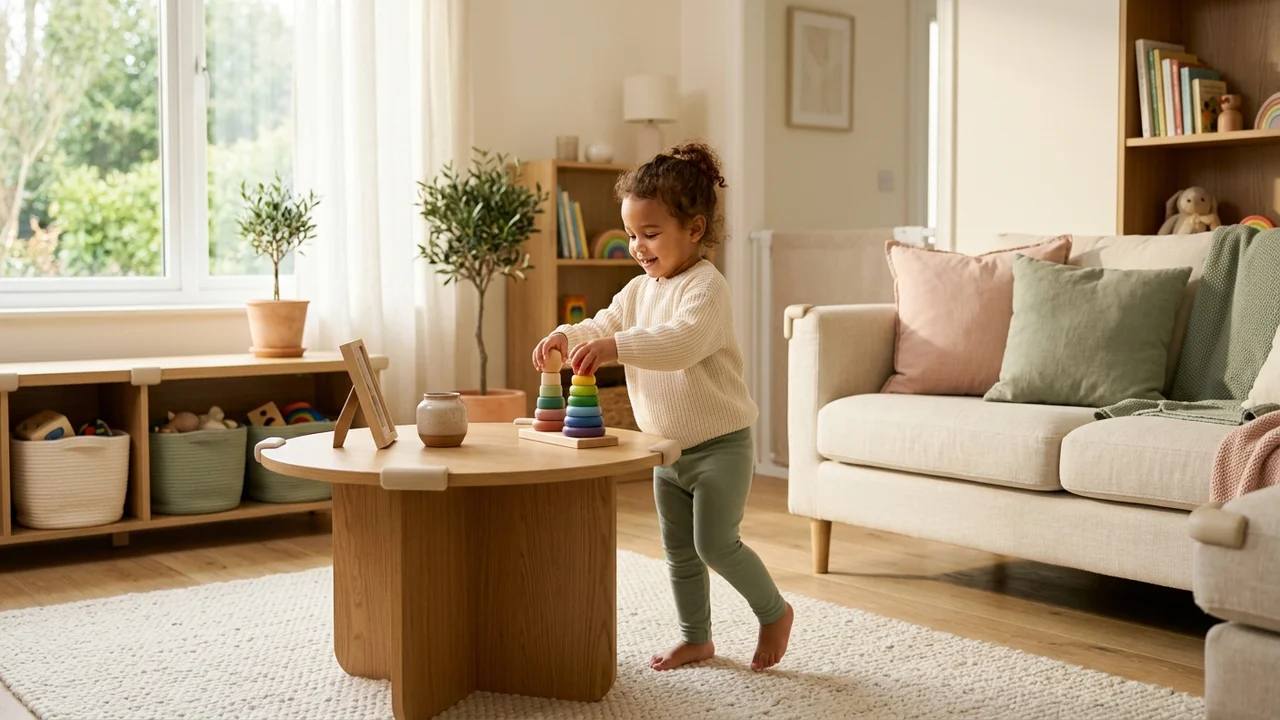
- Add corner and edge protectors to sharp coffee tables and hearths
- Remove or secure unstable furniture (wobbly side tables, unsecured plant stands)
TVs and Electronics
- Mount TVs to the wall or push them as far back on the stand as possible
- Secure trailing cables with cable clips or covers
- Keep remote controls, batteries, and small electronics out of reach (button batteries are a serious swallowing hazard, they can cause internal burns within 2 hours)
Choking Hazards
- Conduct a floor-level inspection on your hands and knees, anything small enough to fit through a toilet paper roll is a choking risk
- Common hazards: coins, small toys, pen caps, earrings, dried beans, hard sweets
Blind Cords
Looped blind and curtain cords are a strangulation risk. The UK banned looped cords on new blinds in 2014. Replace older blinds or use cord wind-ups. Keep all blind cords well out of reach. The Child Accident Prevention Trust (CAPT) lists these as a serious hazard.
Kitchen
- Stove knob covers prevent toddlers from turning on burners
- Install oven door locks (oven door glass gets very hot)
- Keep knives, scissors, and peelers in a locked drawer or high cupboard
- Use magnetic or child-proof cabinet locks on all lower cabinets
- Store cleaning products, dishwasher tablets, and chemicals in a locked cabinet or high shelf, dishwasher pods are particularly dangerous (brightly coloured, gel-filled, and highly caustic)
- Never leave buckets, bowls, or the sink full of water, young children can drown in as little as 5 cm of water
- Use back burners where possible and turn pot handles towards the wall
Bathroom
- Empty the bath immediately after use, never leave a child unattended near water
- Install a toilet lock (toddlers can fall in head-first)
- Store all medications, vitamins, and toiletries in a locked cabinet, this includes mouthwash, which contains alcohol
- Set your water heater to 48°C / 120°F or lower to prevent scalds. A baby's skin burns in seconds at 60°C
- Add non-slip mats inside the bath and on the floor
Nursery and Bedroom
- Check the crib/cot for safety: slat spacing no more than 6 cm, no loose screws, no drop-side (banned in UK and USA), no soft bedding, pillows, or bumpers in the crib (SIDS risk)
- Remove all cords and cables from the floor near the cot
- Keep the nappy changing area stocked but never leave a baby unattended on a changing table, babies roll unexpectedly
Stairs and Doors
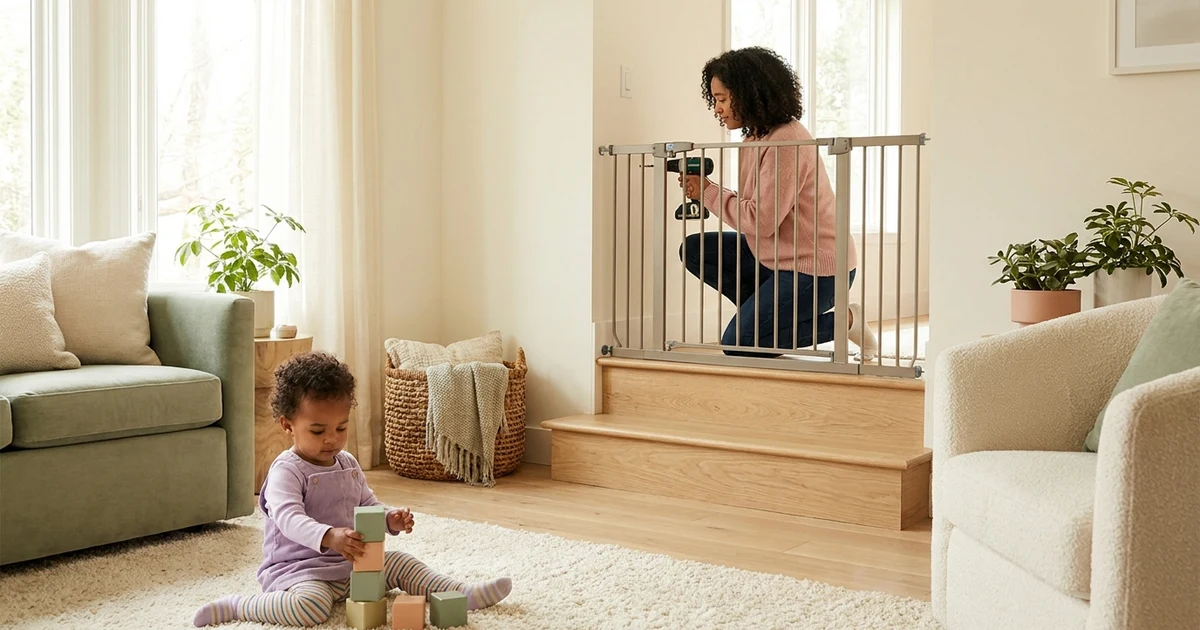
- Install safety gates at the top and bottom of all staircases. Use a screw-mounted gate at the top (pressure-mounted gates can be pushed out by a child's weight on the stairs). Look for gates that meet EN 1930 (Europe) or JPMA (USA) certification.
- Add door pinch guards to prevent fingers being caught in closing doors
- Use door knob covers to keep toddlers out of rooms they should not access
- Check that balcony and deck railings have no gaps wider than 10 cm
Electrical and Miscellaneous
- Cover all unused electrical outlets with socket covers or sliding plug guards
- Keep extension cords out of reach or run through cable conduit
- Check houseplants, many common plants (dieffenbachia, pothos, peace lily) are toxic. See the ASPCA toxic plant list for full details
- Store all alcohol, tobacco, and e-cigarette liquids out of reach and locked
- Programme the Poison Control number into your phone: UK: 111 / USA: 1-800-222-1222 / Norway: 22 59 13 00
Baby-Proofing Products Checklist
| Item | Where |
|---|---|
| Cabinet locks | Kitchen, bathroom, all low cabinets |
| Stair gates | Top and bottom of stairs |
| Anti-tip furniture straps | All heavy furniture |
| Corner / edge guards | Coffee tables, hearths |
| Door pinch guards | All internal doors |
| Outlet covers | All unused sockets |
| Toilet lock | Bathroom |
| Cord wind-ups | All windows with blinds |
| Non-slip bath mat | Bath and bath floor |
Frequently Asked Questions
When should I start baby-proofing my home?
Start by 6 months, before your baby can crawl. Many parents underestimate how quickly crawling begins, and the most dangerous hazards need to be addressed before mobility starts. Baby-proofing is not a one-time task; reassess as your child gains new abilities, especially when pulling to stand, walking, and climbing begin.
What are the most dangerous hazards for babies at home?
The five most serious hazards are drowning (even in 5 cm of water), falls from height, poisoning (cleaning products, medications), strangulation (blind cords, necklaces), and choking (small objects, button batteries). These cause the majority of serious home injuries and deaths in children under 5, according to the CPSC and CAPT.
Do I need safety gates at both the top and bottom of stairs?
Yes, gates at both ends provide the most complete protection. Critically, the gate at the top of the stairs must be screw-mounted (fixed to the wall), not pressure-mounted. A pressure-mounted gate can be pushed out by a child falling against it, creating a fall risk. Screw-mounted gates meeting EN 1930 (Europe) or JPMA (USA) certification are the safe option for the top of stairs.
Are looped blind cords really dangerous?
Yes, looped blind and curtain cords are a strangulation hazard that has caused child deaths. The UK banned looped cords on new blinds in 2014. The Child Accident Prevention Trust lists these as a priority hazard. Replace older blinds or use cord wind-ups, and keep all cords tied up and well out of reach.
What is the most important baby-proofing item for the kitchen?
Cabinet locks on lower cabinets, particularly those containing cleaning products, dishwasher tablets, and chemicals, are the highest priority. Dishwasher pods are especially dangerous: they are brightly coloured, gel-filled, and highly caustic, and children mistake them for toys. A locked cabinet is safer than a high shelf for frequently used items.
How do I make furniture safe from tip-overs?
Use anti-tip furniture straps to anchor bookshelves, TV stands, dressers, and wardrobes to the wall. In the USA, furniture tip-overs cause around 11,000 emergency department visits for children each year (CPSC). Any furniture a toddler might climb or pull on is a risk, anchor it regardless of how stable it appears.
What household plants are toxic to babies and toddlers?
Many common houseplants are toxic if ingested, including dieffenbachia, pothos, peace lily, and philodendron. The ASPCA maintains a comprehensive toxic plant list. Move plants to genuinely unreachable locations or replace them with non-toxic alternatives before your baby becomes mobile.
Key Sources
- NHS. Keeping Your Baby Safe
- CPSC. Home Safety for Babies and Toddlers
- Child Accident Prevention Trust (CAPT). Home Safety
- AAP. Safety in the Home
Sources
- AAP. Child safety and injury prevention
- CDC. Child injury prevention resources
- WHO. Reducing child mortality globally
🔧 Helpful Tools
- All Baby Tools. Browse all free tools for pregnancy and baby care
📖 Related Articles
- Childproofing Your Home: A Room-by-Room Guide. Complete guide to childproofing your home. Checklist for every room, adapted to your child's age. Based on AAP and CPSC safety guidelines.