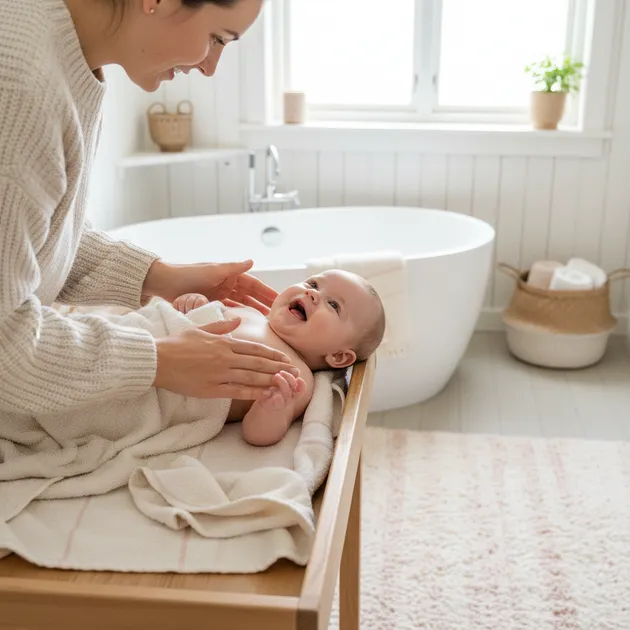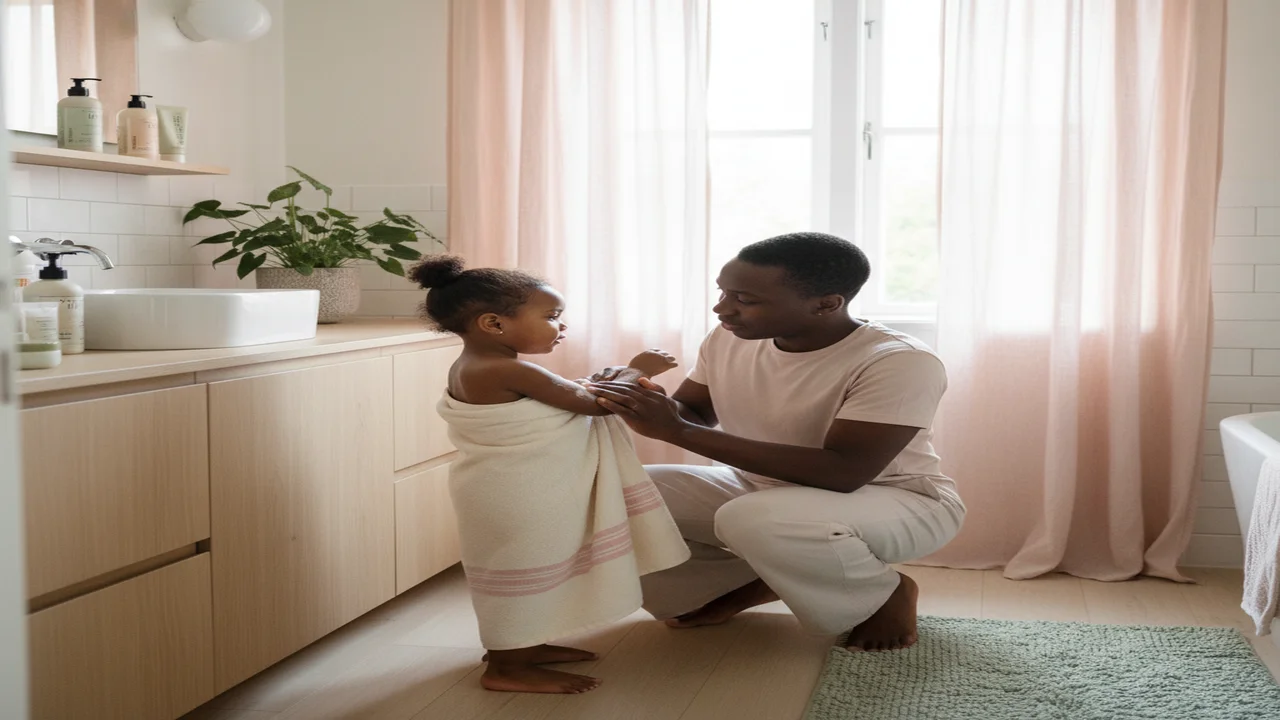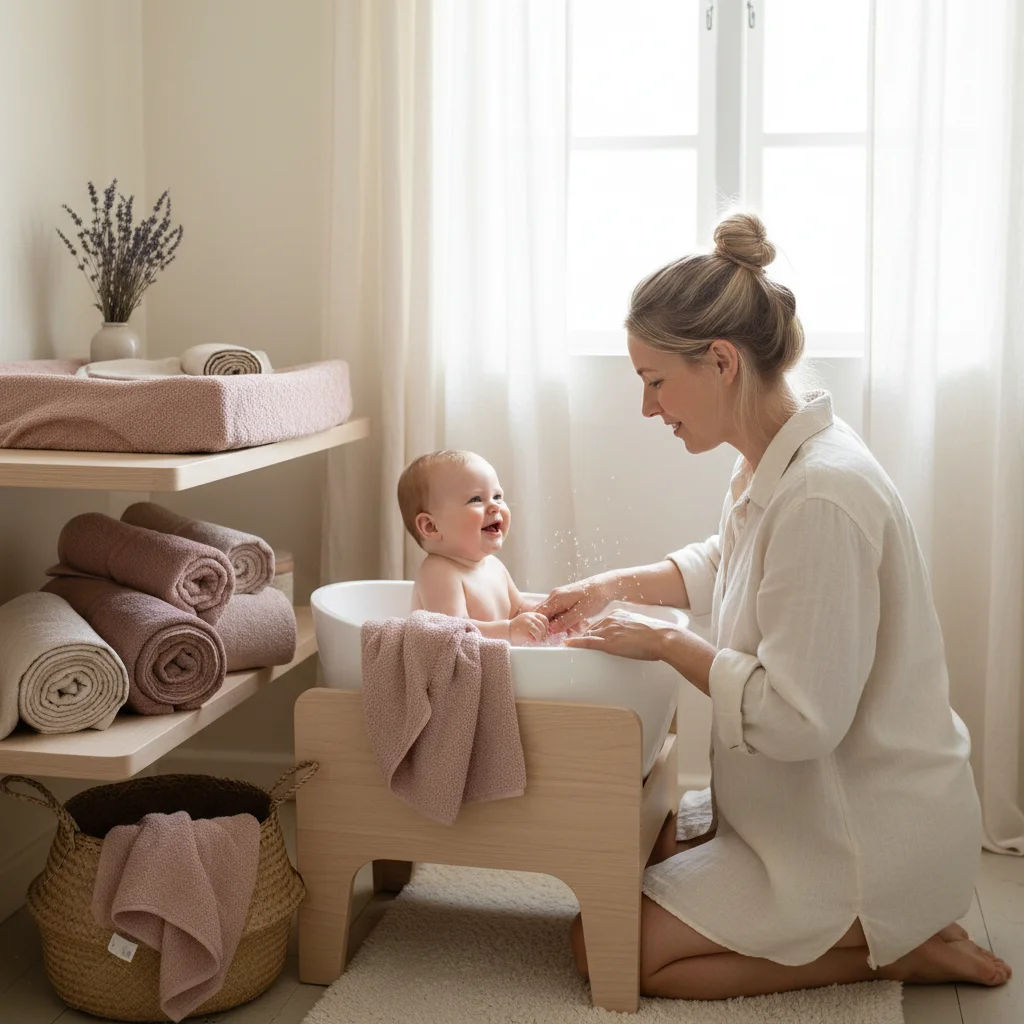
The first time you bathe your newborn, your heart might beat a little faster. The tiny body is slippery, the head needs support, and you're wondering if the water is too hot or too cold. Bath time doesn't need to be stressful, with the right temperature, good holds, and a relaxed attitude, it quickly becomes one of the best moments of the day.
Here's everything you need to know about safe and comfortable bathing from newborn to toddler.
Key Takeaways
- The AAP recommends a bath water temperature of approximately 98.6°F (37°C) for infants, matching body temperature and feeling neither hot nor cold to baby.
- Water above 104°F (40°C) can scald a baby's skin in seconds; always test with a bath thermometer or your elbow before placing baby in the tub.
- Newborns (0–4 weeks) only need a full bath 2–3 times per week, bathing too frequently can dry out their delicate skin.
- Never leave your baby unattended in or near water, even for a second; keep one hand on baby at all times and have everything ready before undressing them.
- Wait for the first full immersion bath until the umbilical cord stump has fallen off and healed, usually 1–3 weeks after birth.
The Right Water Temperature
A baby's skin is thinner and more sensitive than adult skin. Water that feels comfortable to you may be too hot for a small baby.
The golden rule: 98.6°F (37°C). This matches body temperature and feels neither hot nor cold for the baby. The AAP recommends a water temperature of around 98.6°F (37°C) for infants.
How to Check the Temperature
A bath thermometer is the safest way to measure. Digital bath thermometers are inexpensive and give an accurate reading. Some baby bathtubs have built-in temperature indicators.
The elbow test: Dip your elbow in the water. Elbow skin is more sensitive than your hands and gives a better sense of how the baby will experience the temperature. The water should feel lukewarm, neither hot nor cold.
Scalding risk: Water above 104°F (40°C) can damage a baby's skin in seconds. Always test the water temperature BEFORE placing the baby in the tub. Mix cold water in first, then hot, to avoid hot water pooling at the bottom of the tub.
Room Temperature
The bathroom should be around 72-75°F (22-24°C). A baby loses heat quickly, especially from the head. Close windows, turn off fans, and have a warm towel ready before you start.
How Often Should Baby Be Bathed?
Less than you might think. Newborns don't need a daily bath, in fact, bathing too frequently can dry out their delicate skin.
Newborns (0-4 weeks): 2-3 times a week is enough. Spot-clean the face, neck, hands, and diaper area daily with a soft cloth and lukewarm water. Wait for the first full bath until the umbilical stump has fallen off and healed.
Babies (1-6 months): 2-3 times a week. Some families bathe more often because the baby enjoys it, that's perfectly fine as long as you use little or no soap.
Crawling and eating babies (6+ months): A daily bath may become necessary when the child explores the world with their whole body and food ends up everywhere. Focus on rinsing off food and dirt with water, and use mild soap only when needed.
Baby's natural skin barrier: The AAP recommends using minimal soap on infants. The skin has a natural protective oil layer that gets washed away by frequent soap use. Plain water is often enough for the first months. If you use soap, choose a mild, fragrance-free variety designed for babies.
Safe Holds for Bathing Baby
Holding a wet, slippery baby requires confident holds. Practice makes perfect.
Holds for Newborns
The arm hold: Place the baby on your arm with the head in the crook of your elbow. Your hand grips around the baby's upper arm and thigh. Your other hand is free to wash. This hold gives the baby good support and you good control.
Two-hand technique: Hold the baby's head and neck with one hand, bottom and thighs with the other. Lower the baby slowly into the water, feet first. Let the baby get used to the water gradually.
Step-by-Step Process
- Prepare everything before you get the baby, towel, clean diaper, clothes, mild soap if needed
- Fill the tub with about 4 inches (10 cm) of water at 98.6°F (37°C)
- Undress the baby and lower them gently, feet first
- Wash from top to bottom, face first (water only), then body, diaper area last
- Support the head at all times, never let go
- Lift out and wrap immediately in a warm towel
- Pat dry, don't rub, especially in skin folds
Never leave the baby in the water, not even for a second. A baby can drown in just a few inches of water. If the phone rings or someone comes to the door, wrap the baby in a towel and take the child with you. Prepare everything you need within reach BEFORE the bath starts.
Equipment You Need
You need surprisingly little to bathe a baby safely.
Essential:
- Baby bathtub or large basin (for the first months)
- Bath thermometer
- 2-3 soft washcloths
- Large, soft towel (preferably hooded)
- Clean diaper and clothes ready
Optional but practical:
- Bath support or bath mat to free up a hand
- Mild, fragrance-free baby soap (only when needed)
- Changing mat beside the bath
You don't need an expensive baby bathtub. A clean basin on the floor works just as well for the first months. The most important thing is that the baby lies securely and you have good control.
Making Bath Time Fun
Once the baby feels safe in the water, bath time quickly becomes a favorite activity.
0-6 months: Keep it calm and cozy. Talk in a soft voice, gently pour lukewarm water over the body, let the baby kick freely. Many babies love the feeling of weightlessness in the water.
6-12 months: Introduce simple toys, rubber ducks, stacking cups, cups to pour water with. Let the baby splash. The water doesn't need to stay clean, the play is the point.
1 year and older: Bath time becomes playtime. Bubble toys, water wheels, and pouring cups are fun. Use the opportunity to practice concepts like full, empty, warm, cold.
Bath resistance? Some babies cry during bathing for a period. Try bathing together with the baby in the big bathtub, body contact provides reassurance. Or switch to gentle washcloth baths for a while and try again in a few weeks. Most babies outgrow bath fear.
Special Considerations
Eczema and Sensitive Skin
Babies with atopic eczema need extra care. The AAP recommends short baths (5-10 minutes), lukewarm water (not too hot), and applying moisturizer immediately after the bath while the skin is still slightly damp. Avoid fragranced products entirely.
The Umbilical Stump
Wait to submerge the baby fully until the umbilical stump has fallen off and the area has healed, usually 1-3 weeks after birth. In the meantime, keep the baby clean with gentle sponge baths.
After Vaccination
It's safe to bathe the baby after vaccination. Avoid rubbing hard on the injection site, but regular bathing is perfectly fine.
Frequently Asked Questions
What temperature should baby bath water be?
The AAP recommends about 98.6°F (37°C), body temperature. Use a bath thermometer to be sure, or test with your elbow. The water should feel lukewarm, neither hot nor cold.
Can I bathe the baby every day?
Yes, but it's not necessary. 2-3 times a week is enough for newborns and young babies. Daily bathing is fine for older babies who crawl and eat solid food, but use little or no soap to protect the skin's natural barrier.
My baby hates baths. What can I do?
Try bathing together in the big bathtub for extra reassurance. Check that the water temperature is right (98.6°F / 37°C) and the room is warm enough (72-75°F / 22-24°C). Reduce the amount of water, speak soothingly, and keep the bath short. Some babies prefer being washed with a cloth for a while, that's perfectly fine.
When can the baby move to a regular bathtub?
Most babies can move to the big bathtub around 6 months, when they sit stably with some support. Use a non-slip mat on the bottom and always keep one hand on the baby. Some families use a bath seat for extra safety.
Read More
- Baby's First Bath. Step-by-step for beginners
- Skincare for Baby. Sun protection, moisture, and sensitive skin
- Childproofing Your Home. Safety room by room
- Newborn Essentials Checklist
Sources
🔧 Helpful Tools
- Baby Milestones Tracker. Track your baby's developmental milestones
- All Baby Tools. Browse all free tools for pregnancy and baby care
📖 Related Articles
- Baby and Noise: How to Protect Your Baby's Hearing. How much noise can a baby handle? Learn about safe sound levels, baby ear protection, concerts, fireworks, and when to shield your baby's ears.
- Baby Skincare: Everything You Need to Know. Baby skin is delicate and needs gentle care. Learn about bathing, moisturizing, sun protection, and common skin conditions in babies.
- Choking Hazards for Baby: Dangerous Foods and First Aid. Which foods are dangerous for baby? Learn about choking hazards, how to cut food safely, and first aid if your baby chokes.