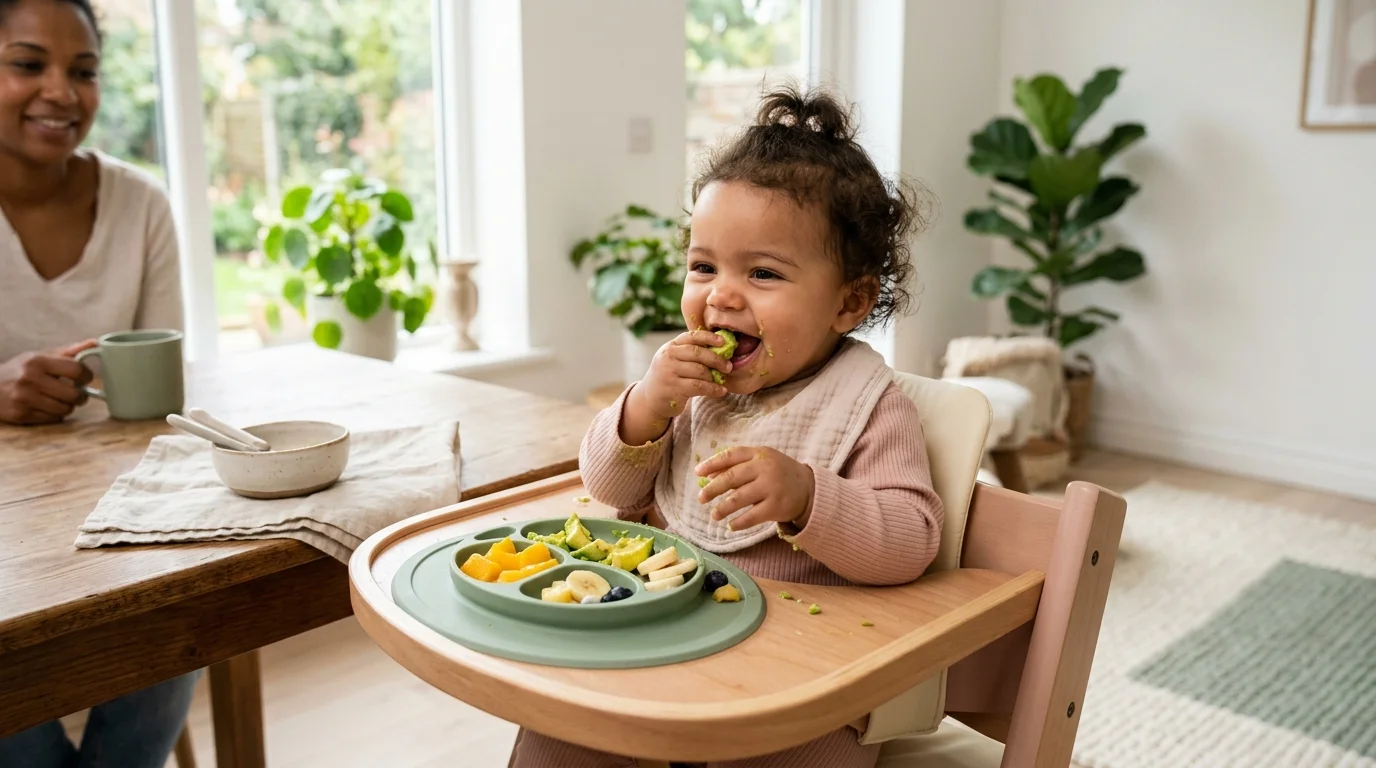
Starting solids is exciting, messy, and easy to overthink. The most useful baby solid food guide is not a rigid meal plan. It is a calm framework: wait for readiness, start around 6 months, keep milk as the main nutrition, offer safe textures, prioritize iron-rich foods, and let your baby practice.
CDC, AAP, WHO, and NHS guidance all point in the same direction: most babies start foods other than breast milk or formula at about 6 months. Starting before 4 months is not recommended. Age matters, but readiness matters too.
When, What, and How to Introduce Solid Foods
Most babies are ready for solids at about 6 months. Your baby should show several readiness signs, not just reach a date on the calendar.
Look for:
- Sitting upright with support
- Good head and neck control
- Opening their mouth when food is offered
- Swallowing food instead of pushing it all back out
- Bringing objects to their mouth
- Trying to grasp food or toys
- Interest in watching others eat
If your baby was born premature, has feeding difficulties, poor growth, reflux complications, allergies, eczema, or a medical condition, ask your pediatrician before starting. You can use the milestones tracker to watch readiness skills alongside your baby's age.
At first, solids are practice. Breast milk or formula remains the main source of nutrition through the first year. A few spoonfuls and a very messy bib still count.
The First Foods to Offer
There is no one perfect first food. AAP guidance encourages variety within the first months of solids, including meats, cereals, vegetables, fruits, eggs, and fish. The key is texture, safety, and nutrients.
Good first foods include:
- Iron-fortified baby oatmeal or cereal mixed with breast milk or formula
- Pureed meat, poultry, or fish
- Mashed beans, lentils, or peas
- Mashed avocado
- Mashed banana
- Sweet potato, squash, carrot, or peas cooked until soft
- Plain full-fat yogurt
- Well-cooked egg
- Smooth peanut butter thinned into yogurt, oatmeal, or puree
Iron matters because babies' iron needs increase around 6 months. This is why iron-rich foods, such as meat, beans, lentils, and iron-fortified cereals, deserve an early place in the rotation.
Use our food guide tool to track what you have introduced, and see the deeper baby food introduction guide if you want a month-by-month plan.
Purees, Mashed Foods, or Baby-Led Weaning?
Purees and baby-led weaning are not opposing teams. You can use one, the other, or a mix.
Purees
Purees can be reassuring at the start because the texture is smooth and easy to control. Begin with a small spoonful or two. Let your baby lean forward, open their mouth, turn away, or stop. Avoid scraping food into their mouth if they are not interested.
Mashed Foods
Mashed foods are a useful bridge. They let your baby experience thicker textures without jumping straight to larger pieces. Think mashed avocado, mashed beans, soft oatmeal, thick yogurt, or soft cooked vegetables mashed with a fork.
Baby-Led Weaning
Baby-led weaning means offering soft finger foods and letting baby self-feed. NHS describes it as giving finger foods from the start rather than spoon-feeding only purees. It can work well when the baby is developmentally ready and the food is modified for safety.
Whatever approach you choose, stay seated with your baby, avoid distractions, and never leave a baby alone with food.
A Simple Feeding Rhythm From 6 to 12 Months
Your baby does not need three meals on day one. NHS notes that babies do not need three meals a day when they first start. WHO guidance suggests complementary foods 2 to 3 times per day from 6 to 8 months, increasing later as the child grows.
Here is a practical rhythm:
| Age | What it can look like | Main goal |
|---|---|---|
| Around 6 months | 1 small meal or tasting session daily | Learn texture and swallowing |
| 6 to 8 months | 1 to 2 meals, moving toward 2 to 3 | Practice, iron-rich foods, allergens |
| 8 to 10 months | 2 to 3 meals | More texture, finger foods, family rhythm |
| 10 to 12 months | 3 meals, optional snacks | More self-feeding, varied family foods |
Offer solids when your baby is alert, supported, and not extremely hungry. Many families start after a milk feed so the baby is calm enough to practice.
If feeding and sleep timing are clashing, the sleep tracker can help you spot whether meals are landing too close to nap time.
Allergens: Introduce, Do Not Delay
Modern allergy guidance has moved away from delaying common allergens. For most babies, common allergens can be introduced from around 6 months once solids have started. If your baby has severe eczema, a known food allergy, or a high-risk medical history, ask your pediatrician first.
Common allergens include:
- Peanut
- Egg
- Milk products
- Wheat
- Soy
- Fish
- Shellfish
- Sesame
- Tree nuts
Offer allergens in safe forms. Do not give whole nuts or thick globs of nut butter. Instead, thin smooth peanut butter into yogurt, oatmeal, puree, or warm water until it is easy to swallow. Egg should be fully cooked. Fish should be cooked and checked carefully for bones.
Introduce allergens at home, earlier in the day, when you can watch your baby. If your baby develops hives, swelling, repeated vomiting, wheezing, trouble breathing, or becomes unusually sleepy or limp, seek urgent medical help.
For more detail, see allergy prevention baby guide and when can baby eat peanut butter.
Choking Safety: Texture Matters
Gagging is common when babies learn to eat. Choking is different: a baby may be silent, unable to breathe, or unable to cough effectively. It is worth taking an infant CPR/choking class before starting solids if you can.
CDC advises modifying foods to reduce choking risk. Avoid or modify:
- Whole grapes or cherry tomatoes: quarter lengthwise
- Hot dogs or sausages: avoid rounds; cut into thin strips or tiny pieces
- Whole nuts and seeds: avoid
- Popcorn: avoid
- Raw hard apple or carrot: cook until soft or grate very finely
- Thick nut butter: thin it
- Large chunks of meat or cheese: shred, mince, or soften
- Hard candy, marshmallows, gum: avoid
Safe early textures are soft enough to mash between your fingers. Your baby should sit upright in a high chair, strapped in, and supervised.
Foods and Drinks to Avoid Before 12 Months
Avoid:
- Honey, because of infant botulism risk
- Cow's milk as the main drink before 12 months
- Unpasteurized milk, juice, or dairy
- Added salt
- Added sugar
- Juice
- High-mercury fish
- Choking hazards that are not safely modified
Small amounts of yogurt or cheese are different from cow's milk as a main drink and are usually introduced as foods. If your baby has milk allergy symptoms or eczema, ask your pediatrician.
What If Baby Refuses Solids?
Refusal is normal. Some babies love the first spoonful. Others gag, spit, make dramatic faces, or close their mouth for weeks.
Try:
- Offering food when baby is rested
- Sitting together at family meals
- Letting baby touch and smell the food
- Keeping portions tiny
- Repeating foods without pressure
- Trying a different texture
- Letting baby self-feed a preloaded spoon
Call your pediatrician if your baby is not showing readiness around 6 months, refuses all solids over time, coughs or chokes frequently with feeds, has poor weight gain, vomits repeatedly, or seems distressed with eating.
Bottom Line
Start solids around 6 months when your baby is developmentally ready. Begin small, prioritize iron-rich foods, introduce allergens in safe forms, and keep textures soft enough for your baby's skills. You do not need perfect meals. You need safe practice, variety, and a calm pace.
FAQ
Can babies start solids at 4 months?
Starting before 4 months is not recommended. Some pediatricians may advise starting between 4 and 6 months for specific babies, but most public health guidance points to about 6 months with readiness signs.
How much should baby eat at first?
Start with 1 to 2 teaspoons or a small taste. Many babies eat very little at first. Increase gradually based on interest, comfort, and skill.
Should milk feeds come before or after solids?
At the beginning, many babies do better with solids after a milk feed so they are not frantic with hunger. Breast milk or formula remains the main nutrition through the first year.
When can baby drink water?
Small sips of water with meals can begin once solids start around 6 months. Breast milk or formula should still be the main drink.
Do babies need teeth to start solids?
No. Babies can manage soft purees, mashed foods, and very soft finger foods with their gums when they are developmentally ready.
Sources
- CDC: When, What, and How to Introduce Solid Foods
- AAP HealthyChildren: Starting Solid Foods
- WHO: Complementary Feeding
- NHS: Your Baby's First Solid Foods
- CDC: Choking Hazards
Related reads: