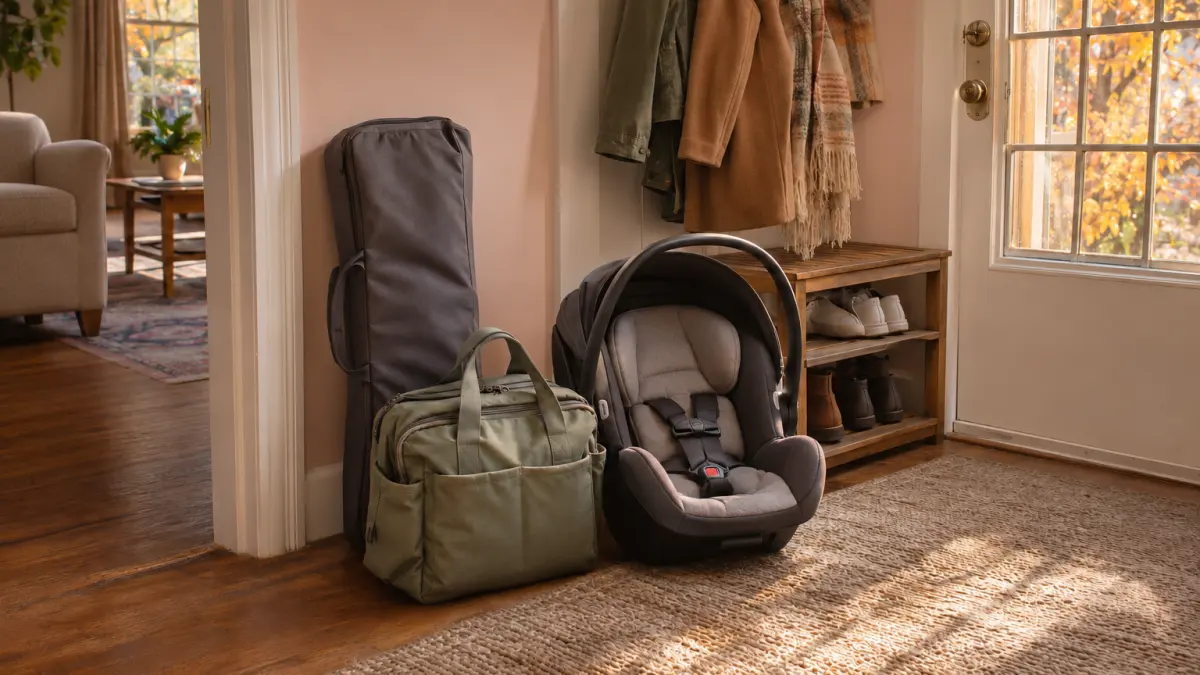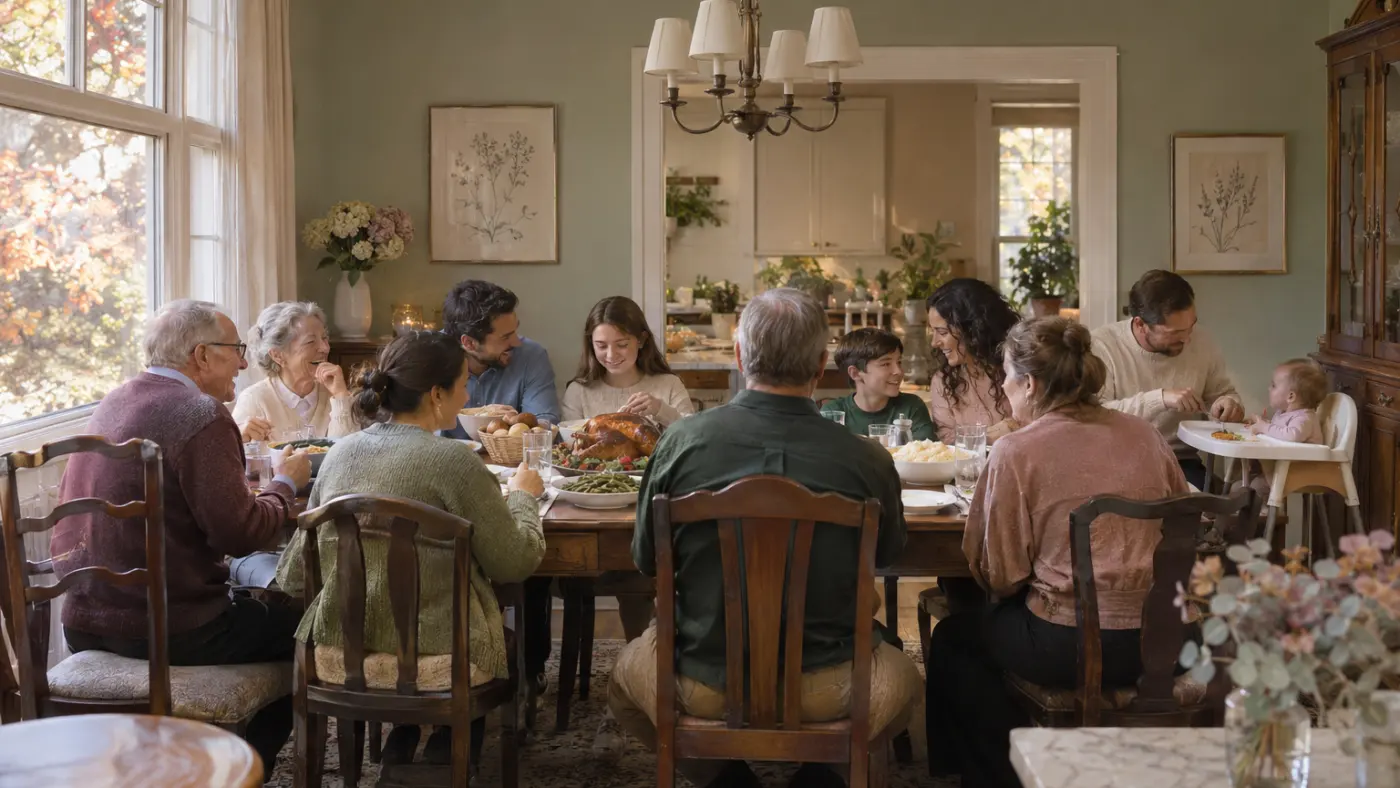
Everyone wants to hold the baby, the oven is on since 6 a.m., and your little one's nap is due right as the turkey comes out. A first Thanksgiving is one of the sweetest days of the year, and one of the easiest to overpack and overplan.
This guide covers baby's first Thanksgiving from the details that matter: getting there, keeping sleep close to normal, deciding what your baby can taste at the table, and protecting a small baby in a full house. Thanksgiving is on Thursday, November 26, 2026.
Pack for sleep first, food second and everything else last. Bring a safe place for baby to nap, offer only soft, plain versions of table foods once your baby is eating solids (about 6 months), skip honey and choking hazards, and build in quiet breaks so the day works for the smallest guest.
In short
- Travel: use the car seat on every trip, stop about every two hours on the road, and book a seat for your baby on a plane, as the American Academy of Pediatrics (AAP) recommends.
- Sleep: bring a portable crib or play yard that meets Consumer Product Safety Commission (CPSC) standards, and keep the wind-down routine the same as at home.
- Food: under 6 months, milk only. From about 6 months, soft plain bites. No honey before 12 months, and watch for choking hazards such as whole nuts, marshmallows and uncut cranberries.
- Germs: babies under 6 months cannot get a flu shot, so ask family to wash hands and stay home when they feel sick.
- Pace: plan one quiet room, one nap window and one exit time.
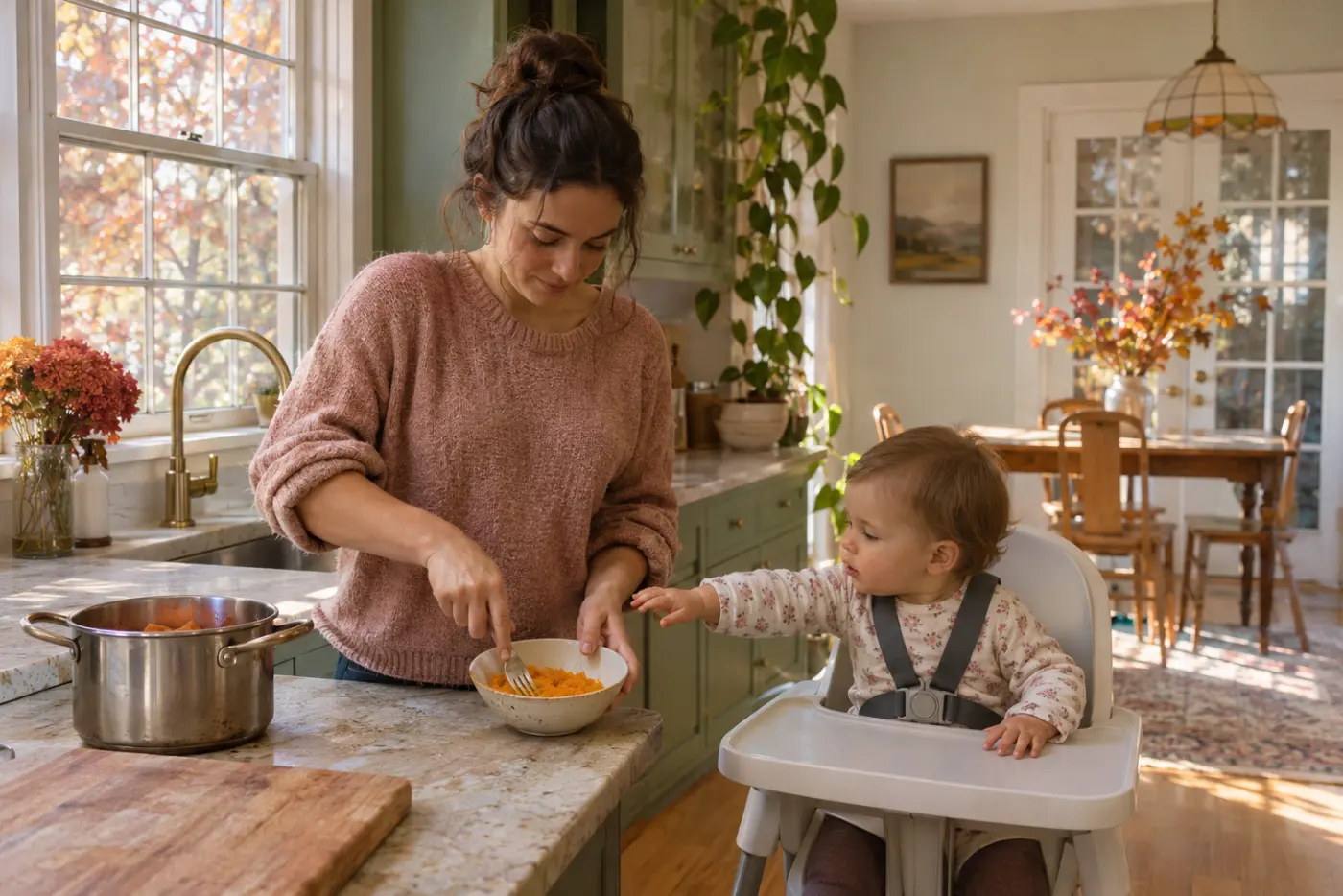
What can baby eat at Thanksgiving, by age?
Most of the table is built for adults. This chart shows what fits at each stage, using the CDC's guidance on solid foods and choking hazards.
| Baby's age | What fits at the table | Skip |
|---|---|---|
| Under 6 months | Breast milk or formula only | All table food. The CDC says solids start at about 6 months and not before 4 months |
| About 6 to 8 months | Smooth mashed potato or sweet potato, plain pumpkin puree, mashed peas, plain turkey cooked soft and finely chopped or pureed | Skin, fat, bones, gravy, salt and sugar toppings |
| About 9 to 12 months | Soft finger foods in small pieces: roasted squash, soft cooked green beans, tender turkey, soft roll with no seeds | Whole nuts, cooked corn kernels, uncut cranberries, large chunks of meat or cheese |
| Under 12 months, always | Only the soft, plain foods above | Honey, juice (including cider) and cow's milk as a drink |
Check with your pediatrician if your baby is younger than 6 months and curious about the table, or if your baby has eczema or a known food allergy.
Turkey, potatoes and sides
The CDC says to remove all fat, skin and bones from poultry before cooking, and to cook foods until soft enough to mash with a fork. For a 6-month-old, that means a spoonful of plain turkey blended with a splash of breast milk, formula or water, or very finely shredded.
Scoop out baby's portion before you add butter, gravy, salt or sugar. The CDC says to limit added sugars and salt for babies, so a plain scoop of mashed sweet potato is a better fit than the marshmallow-topped casserole.
Honey is hidden in more dishes than you think
The CDC says honey can cause infant botulism, a serious illness, and should not be given before 12 months. Check the glazed ham, honey butter, cornbread, rolls and any cranberry relish. If you are a guest, ask the cook. Most hosts are glad you asked, and our honey and babies guide has the details.
Choking hazards on a holiday table
The CDC's choking-hazard list reads like a Thanksgiving menu:
- Whole or chopped nuts, including candied pecans and pecan pie pieces
- Uncut berries, which covers whole-berry cranberry sauce
- Cooked whole corn kernels
- Marshmallows
- Large chunks of meat or cheese
- Crackers or breads with seeds, nut pieces or whole-grain kernels
- Raisins and other dried fruit
If cranberry sauce has whole berries, mash them first or skip it for now. Sit baby upright, stay within arm's reach and offer one small bite at a time.
What about allergens?
The table is full of common allergenic foods: eggs, wheat, milk and nuts. The CDC says to introduce allergenic foods alongside other foods, and to talk to your doctor first if your baby has severe eczema or an egg allergy. If your baby has not tried egg, dairy or wheat yet, it can help to try them at home a few days earlier so you are not meeting a first reaction in a crowded kitchen. Our allergen introduction guide walks through the order, and Nibble tracks what your baby has already tried.
Food safety for the whole table
The CDC says to cook turkey and stuffing to 165°F, refrigerate leftovers within 2 hours, and wash hands with soap for at least 20 seconds before and after handling raw turkey. If you bring baby's own food, keep it in a small cooler until you need it, and do not let baby's plate sit out on the counter.
Getting there: car and plane
By car
The AAP says to use a car seat on every trip, keep your baby rear-facing as long as the seat allows, and never place a rear-facing seat in a front seat with an airbag. It also suggests stopping about every two hours so you and your baby can take a break. Plan the drive around a nap if you can, and move your baby to a flat surface when you stop. The AAP says to move a baby who falls asleep in a car seat to a firm, flat sleep surface as soon as possible.
Never leave your baby alone in the car, even for a minute. Our road trip with baby guide has a packing list and stop-by-stop plan.
By plane
- Give your baby a seat. The Federal Aviation Administration allows children under 2 on a lap, but the AAP recommends a separate seat with an FAA-approved car seat. Look for the label.
- Pack milk and food freely. The Transportation Security Administration (TSA) allows formula, breast milk and baby food over 3.4 oz in a carry-on. Tell the officer at the start of screening and take them out of the bag.
- Feed during descent. The AAP says nursing or a bottle can ease ear pain when the plane comes down.
- Gate-check the stroller. The AAP notes strollers can go through security and be checked at the gate.
- Wash hands often. The AAP suggests hand gel and wipes during travel.
Our flying with baby guide has the full checklist. If your baby is a newborn or has a heart, lung or breathing condition, the AAP says to talk with your pediatrician before you fly.
Crossing time zones? The AAP suggests shifting your baby's sleep schedule 2 to 3 days before you leave and getting daylight and outdoor time after you arrive.
Pack your bag with our baby checklists so nothing important stays on the kitchen counter.
How do you keep sleep on track away from home?
A new bed and a loud house are the two things most likely to wreck a nap. You cannot fix both, so protect the one you can: a safe place to sleep.
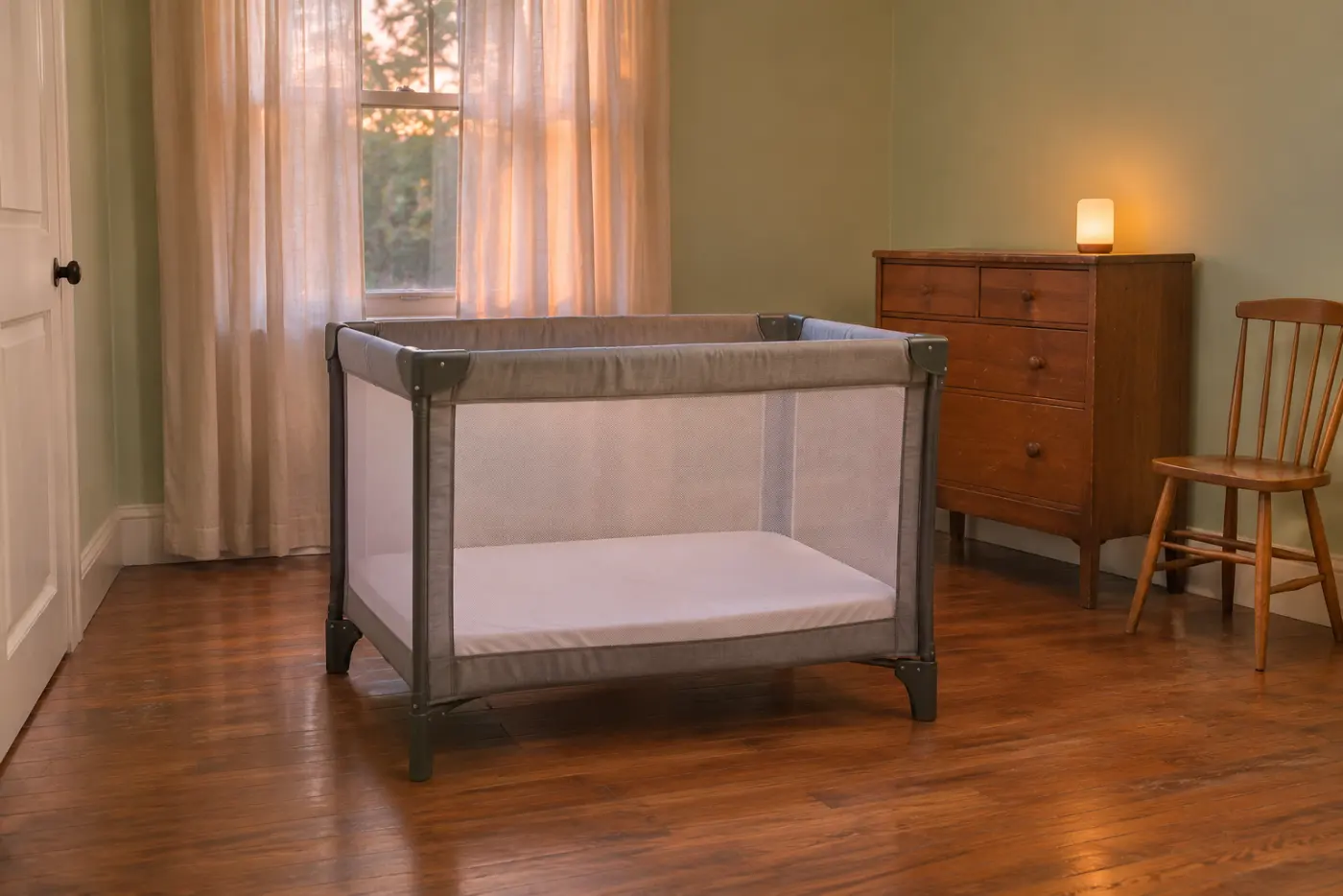
The AAP says a baby sleeps best on a firm, flat surface in a crib, bassinet, portable crib or play yard that meets CPSC standards, with a fitted sheet and nothing else in the sleep space. The AAP also warns that cribs and play yards at hotels may not meet current standards, so ask for a replacement if you have doubts. A host's older crib deserves the same look: the AAP says to check the CPSC recall list, especially if it is not new, and not to use one with missing hardware or no instructions. Our travel bed guide lists portable options, and the safe sleep guidelines cover the full AAP rules.
A few things help without costing anything:
- Keep the wind-down order. Same diaper, same sleep sack, same song, in the same order as at home.
- Pick a quiet room. A back bedroom beats the couch next to the football game. A fan or soothing sounds can cover the noise.
- Protect the first nap. Arrive in time for it, or schedule dinner around it.
- Expect a rough night. One off day is part of travel. Go back to your usual routine when you are home, and track the pattern with Hush, our sleep tracker if you want to see how it settles.
If your baby is in a sleep regression, our 4-month sleep regression guide explains why the day may feel harder than usual.
How do you protect a small baby in a full house?
Thanksgiving means hugging, sharing serving spoons and relatives who traveled through three airports. The CDC says babies younger than 6 months are at higher risk of serious flu illness but are too young to be vaccinated, so people who care for infants should get vaccinated.
It also lists everyday steps that help: wash hands often, avoid close contact with sick people, cover coughs and sneezes, and bring in fresh air or gather outdoors when you can.
In practice:
- Ask everyone to wash hands before holding the baby.
- Ask anyone with a cough, fever or cold to say hello from across the room, or to skip this year.
- Let your baby be held by a few people, not a line of them.
See our RSV guide for what to ask your pediatrician, and the germ-smart hygiene guide for everyday habits.
A Thanksgiving day plan that works for baby
- Morning: feed baby as usual and keep the first nap close to your normal time.
- Before you go: pack the diaper bag, portable crib, a change of clothes for baby and for you, baby's own food and a cooler.
- When you arrive: find the quiet room first, then set up the sleep space and diaper-change spot.
- Before dinner: feed baby a normal meal or milk feed so you are not racing the clock when the food appears.
- At the table: offer one or two plain, soft foods from baby's plate, not the shared platter.
- Afternoon: take a break away from the noise, whether that is a nap, a walk or time in the quiet room.
- Before you leave: put leftovers in the fridge within 2 hours of serving and set an exit time before the day gets away from you.
Save the day
A first Thanksgiving goes by fast. Jot down what baby tried, who held them and what made you laugh, while you still remember it. Our Memory Book is a quiet place to save those words.
Frequently asked questions
When can a baby have turkey and mashed potatoes?
The CDC says babies can start solid foods at about 6 months. Plain, soft turkey with no skin, fat or bones and plain mashed potatoes work at that stage. Mash or puree them, and set aside a portion before the butter, gravy and salt go in.
Can my baby have honey-glazed ham or honey butter?
No. The CDC says not to give honey before 12 months because it can cause infant botulism. That includes honey in glazes, butter, rolls and cornbread.
Is it okay to fly or drive with a newborn for Thanksgiving?
That is a question for your pediatrician. The AAP says to check with them before flying with a newborn or infant who has chronic heart or lung problems or respiratory symptoms. For car trips, the AAP suggests a break about every two hours.
How do I keep baby's sleep on track at a relative's house?
Bring a portable crib or play yard that meets CPSC standards, keep the same wind-down order you use at home, and use a quiet room. The AAP says a baby should sleep on a firm, flat surface with a fitted sheet and nothing else.
How do I ask relatives not to visit if they are sick?
Keep it short and kind: "We're keeping the baby away from anyone with a cough or fever this week. Please wash your hands before holding, and we'll catch up as soon as you feel better." The CDC advises avoiding close contact with sick people and washing hands often.
Bottom line
Baby does not need a perfect Thanksgiving. A safe place to sleep, a few soft plain bites if your baby is eating solids, clean hands and a quiet corner cover most of it. Everything else is a bonus.
This article is for informational purposes only and does not replace professional medical advice. Always consult your pediatrician for guidance specific to your child.
Sources
- American Academy of Pediatrics: Tips for Safe & Stress-Free Family Travel
- American Academy of Pediatrics: How to Keep Your Sleeping Baby Safe
- CDC: Preparing Your Holiday Turkey Safely
- CDC: When, What, and How to Introduce Solid Foods
- CDC: Foods and Drinks to Avoid or Limit
- CDC: Choking Hazards
- CDC: Preventing Seasonal Flu
- TSA: Traveling with Children
Helpful tools
- Checklists - Packing lists for the diaper bag and travel
- Hush sleep tracker - Log naps and nights away from home
- Nibble - Track which foods your baby has tried
- Memory Book - Write down baby's first Thanksgiving