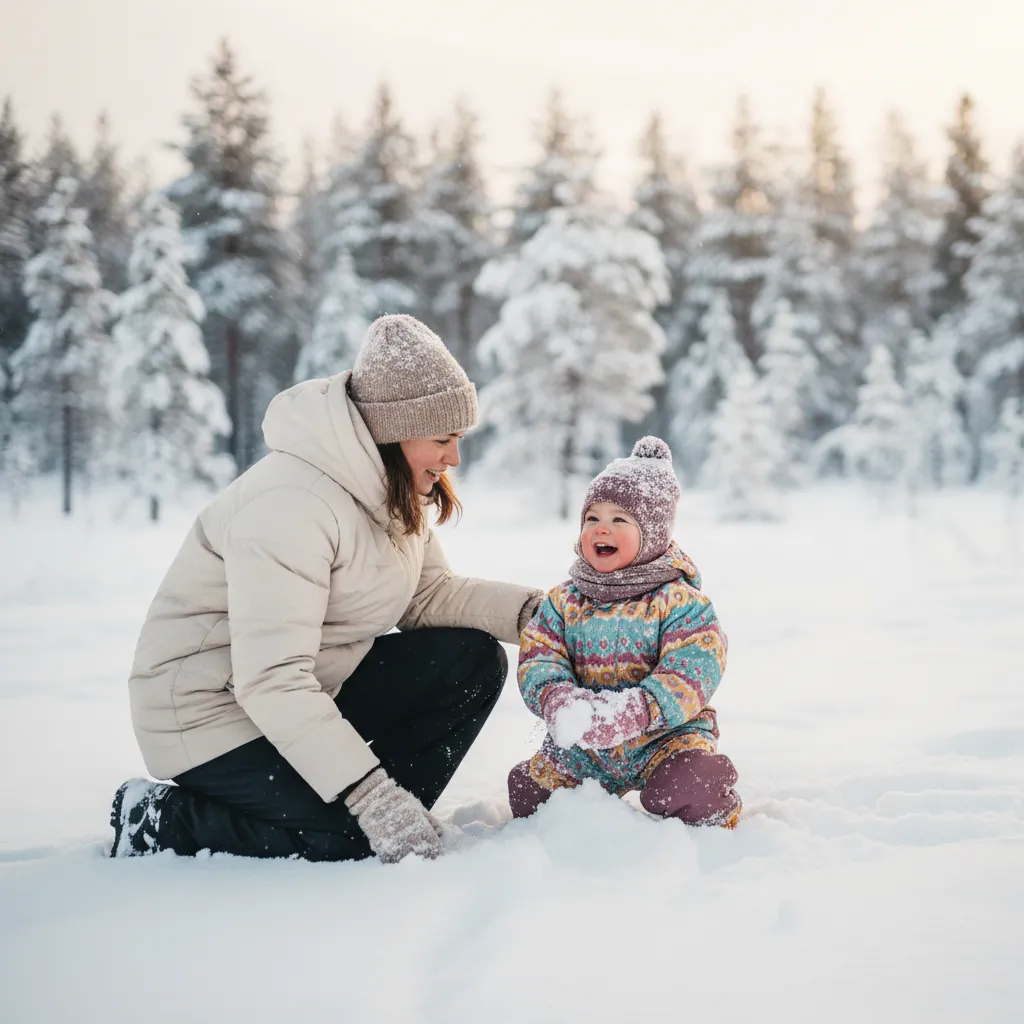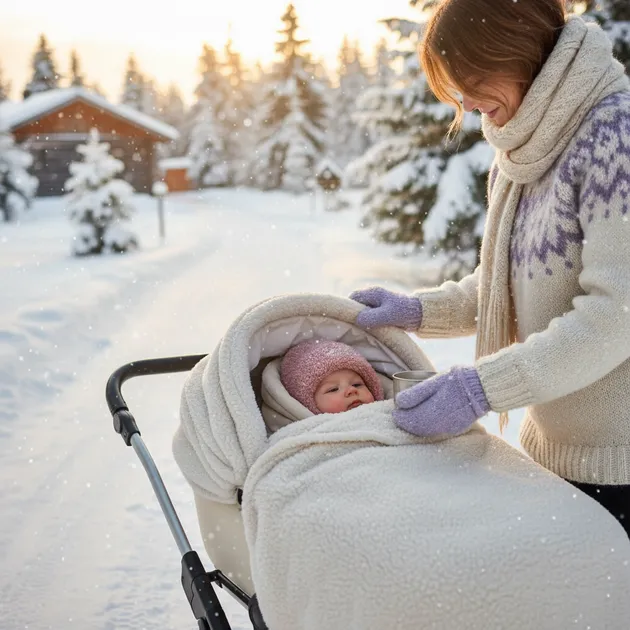
In Scandinavia, we don't put away the stroller when it gets cold. Babies sleep outside, families go for walks in the snow, and wool is as close to a national baby material as it gets.
But cold winter days with a baby require proper layering and good sense. Here is a complete guide to winter with baby.
Wool, nature's best baby layer
Scandinavian parents have dressed babies in wool for generations, and for good reason. Merino wool is the best material for the youngest.
Why wool?
- Temperature-regulating, warms when cold, cools when warm
- Retains warmth even when damp, important when baby sweats
- Naturally antibacterial, needs washing less often
- Soft against the skin, merino wool doesn't itch
Quality wool brands for babies
Several brands make excellent wool clothing for babies:
- Lillelam, specialized in baby wool, very soft
- Janus, traditional Scandinavian brand with wool for the whole family
- Devold, premium merino wool, durable
- Nøstebarn, children's clothing in wool and silk
- Joha. Danish-Scandinavian brand with a wide selection for babies
New baby wool can be expensive. Check secondhand shops, Facebook groups, and children's resale platforms, wool holds up well across multiple children. A complete wool set (bodysuit, pants, sweater, hat, mittens, socks) can often be found secondhand for a fraction of the new price.
How to dress your baby for cold weather
The layering principle
The secret behind Scandinavian winter dressing is layers. Each layer has a function:
Layer 1. Innermost (against skin): Wool bodysuit and wool pants. Alternatively a wool/silk blend for extra-sensitive skin. This layer wicks moisture away from the skin.
Layer 2. Middle layer (insulation): Wool sweater and wool pants, or a full wool suit. This layer retains warmth.
Layer 3. Outer layer (wind and weather): Windproof and waterproof winter suit. For babies in strollers: a sleeping bag or footmuff with wool lining.
Temperature guide
| Temperature | What to wear |
|---|---|
| 32–41°F (0 to +5°C) | Wool bodysuit + wool suit + outer jacket + hat + mittens |
| 23–32°F (−5 to 0°C) | Wool bodysuit + wool pants + wool sweater + winter sleeping bag/suit + thick hat + mittens |
| 14–23°F (−10 to −5°C) | Double wool layer + winter sleeping bag + extra blanket + balaclava + thick mittens |
| Below 14°F (−10°C) | Consider whether the outing is necessary. Short trips with full insulation only |
Babies in strollers vs. carriers
Stroller: Baby moves little and generates less body heat. Use a footmuff with wool lining and extra blankets as needed. Place a wool fleece in the bottom.
Baby carrier: Baby gets warmth from your body. You can use one layer less, but make sure arms, legs, and head are well covered. A carrier jacket (extender) over both of you is very practical.
Check temperature by feeling the baby's neck and chest, not hands and feet. Hands and feet are often cold without the baby being cold overall. If the neck is warm and dry, the clothing is right. If it is sweaty, baby has too many layers.
Outdoor naps in winter
Outdoor napping is a strong Scandinavian tradition. Many babies sleep better outside in cold, fresh air than indoors.
Is it safe?
Yes, outdoor napping is supported by pediatric health authorities and practiced widely in Nordic countries when done correctly. Pediatric nurses throughout Scandinavia recommend outdoor napping as part of daily routines.
Guidelines for outdoor napping
- Down to around 14°F (−10°C) is fine for most babies with proper clothing
- No outdoor napping below 14 to 5°F (−10 to −15°C), depending on wind and humidity
- Position the stroller sheltered from wind but with good ventilation
- Never cover the stroller with airtight fabric, it reduces air circulation
- Use a baby monitor or check on baby regularly
- Ensure a dry surface, wool fleece or footmuff with wool lining
Signs that baby is too cold
- Cold neck and chest (not just hands/feet)
- Restless sleep and crying
- Blue lips or nose tip
- Little movement
Bring baby inside immediately if you suspect they are getting too cold.
Never let baby sleep outside in a car seat. The angle and padding of a car seat gives poor air circulation and can increase the risk of SIDS. Outdoor napping should always be in a stroller with a flat lying position. Read more about safe sleep for baby.
Winter outings with baby
Tips for great winter outings
- Start short, 20–30 minutes is enough for the youngest
- Choose timing wisely, midday is warmest
- Bring extra clothing, a dry hat and extra mittens make a big difference
- Bring a warm drink for yourself, you get cold faster than you think
- A sled or pulk is wonderful from when the child can sit steadily (around 8–10 months)
Sledding and snow play
For babies from 8–10 months who sit stably, you can begin gentle sledding:
- Use a sled or pulk with support
- Choose gentle slopes without obstacles
- Sit together with baby between your legs
- A helmet is recommended for toddlers sledding alone
Toddlers aged 1–3 love snow play: make snow angels, build snowmen, throw soft snowballs, and track animal footprints in the snow.
Winter illness and baby skin
Common winter ailments
Winter brings colds, stomach bugs, and RSV. For preventing winter illness:
- Good hand hygiene, wash hands frequently
- Avoid large gatherings with a newborn
- Air out indoors daily
- Maintain good indoor humidity (40–60%)
Dry winter skin
Cold air outside and dry air indoors is a bad combination for baby skin.
- Apply fragrance-free moisturizer before outdoor trips
- Use mild washing products, or just water
- Don't bathe baby too often in winter
- A humidifier in the bedroom can help
Apply a rich, fragrance-free moisturizer (such as petroleum jelly or a dedicated barrier cream) to baby's cheeks and around the mouth before going out. It protects against wind and cold and prevents chapped skin.
Dark days and vitamin D
Winter means less daylight, especially at higher latitudes. All babies in northern climates should receive vitamin D supplementation.
Health authorities including the AAP and WHO recommend:
- From about 1 week of age: vitamin D drops (400 IU / 10 micrograms daily) for breastfed babies
- Year-round, not only in winter
- Vitamin D drops in the first year of life, then cod liver oil or continued drops from 12 months onward
- Babies receiving adequate formula (around 32 oz / 1 liter daily) typically get enough vitamin D through fortified formula
Read more about vitamin D for baby.
Indoor winter activities
When it is too cold or dark outside:
- Sensory bin with natural materials (pine cones, sticks, stones)
- Block building, great motor training
- Read books, winter stories and animal books
- Dance and music, movement is good on dark days
- Baby massage, calm moments with closeness
Frequently asked questions
How cold is too cold for baby outside?
Most pediatric guidelines suggest babies can nap outdoors down to around 14°F (−10°C), depending on wind and humidity. For active outings (carrier, sled), similar limits apply. Use judgment, if there is strong wind on top of the cold, limit time outside.
Does baby need winter boots?
Babies who are not walking don't need shoes, wool socks and warm booties are enough. When the child starts walking (around 10–14 months), they need light, flexible winter boots with good insulation and a non-slip sole.
Is it true that babies sleep better outside?
Many parents find that baby sleeps longer and more deeply outside than indoors, even in winter. Research from Finland (which has a similar climate) supports this: babies who slept outdoors had longer sleep periods. The cold air and steady background sounds of nature may contribute to better sleep.
This article is based on recommendations from pediatric health authorities, the AAP, WHO, and established Scandinavian tradition for outdoor life with babies.
Sources
- World Health Organization (WHO). Child Health Guidelines
- American Academy of Pediatrics (AAP). Infant Sleep Safety
- Nordic Institute of Public Health. Outdoor Napping Research
🔧 Helpful Tools
- All Baby Tools. Browse all free tools for pregnancy and baby care
📖 Related Articles
- Dressing Your Baby for Winter: The Complete Layering Guide. How to dress your baby for cold weather. A complete guide to the layering system, the right materials, and how to check if your baby is the right temperature.
- Dressing Baby for Winter. The Layering Guide. How to dress your baby for winter. A complete guide to the layering principle, the right materials, and temperature checks.
- Winter Activities with Baby and Toddler. The best winter activities for babies and toddlers. Tips on layering, outdoor naps, sledding, and cold-weather safety.