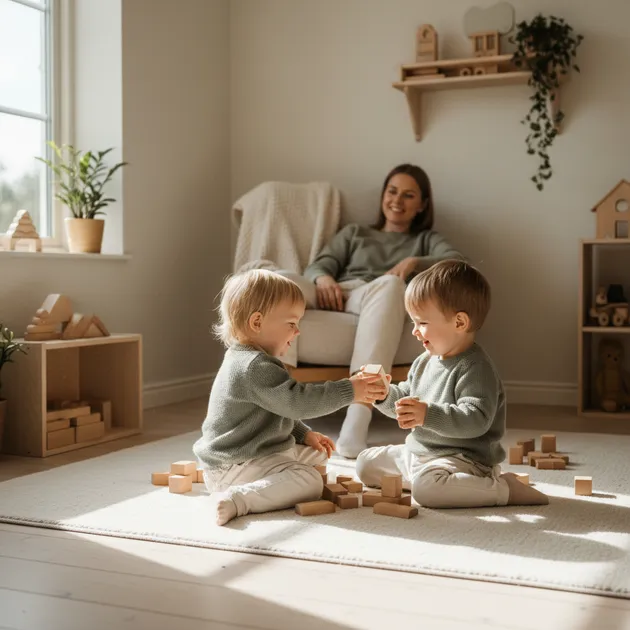
"Mine! Mine! MINE!" The two-year-old clutches the toy against their chest and turns their back on the other child. You feel the look from the other parent and think: Shouldn't my child have learned to share by now?
No. Children under three don't understand sharing the way adults do. And forcing them makes it worse, not better.
Why Toddlers Don't Share
For a child under two, the concept of "sharing" doesn't exist. The child understands "mine" - and that's a sign of healthy development. Being able to own something, hold onto it, and protect it is a milestone in independence.
A young child's brain isn't fully developed enough to understand other people's perspectives. Empathy - the ability to understand what others feel - develops gradually from around age 2-3 and matures throughout childhood.
What to Expect at Different Ages
12-18 months: The child plays alongside other children (parallel play), but not with them. "Mine" is the strongest concept. Taking a toy from a child at this age feels like a violation to them.
18-24 months: The child starts observing other children more. They may give away a toy and take it back. Turn-taking can begin in simple forms - rolling a ball back and forth with an adult.
2-3 years: The child begins to understand "your turn, my turn" with plenty of adult support. True sharing still requires reminders and help. Conflicts over toys are frequent and normal.
3-4 years: The child can begin to share more voluntarily, especially with children they know well. Empathy grows, and the child can understand that others get sad.
According to child development research, children develop social skills through play and interaction with others. Adults who support without taking over give children the best conditions.
Turn-Taking Before Sharing
Sharing is hard. Turn-taking is easier. Start there.
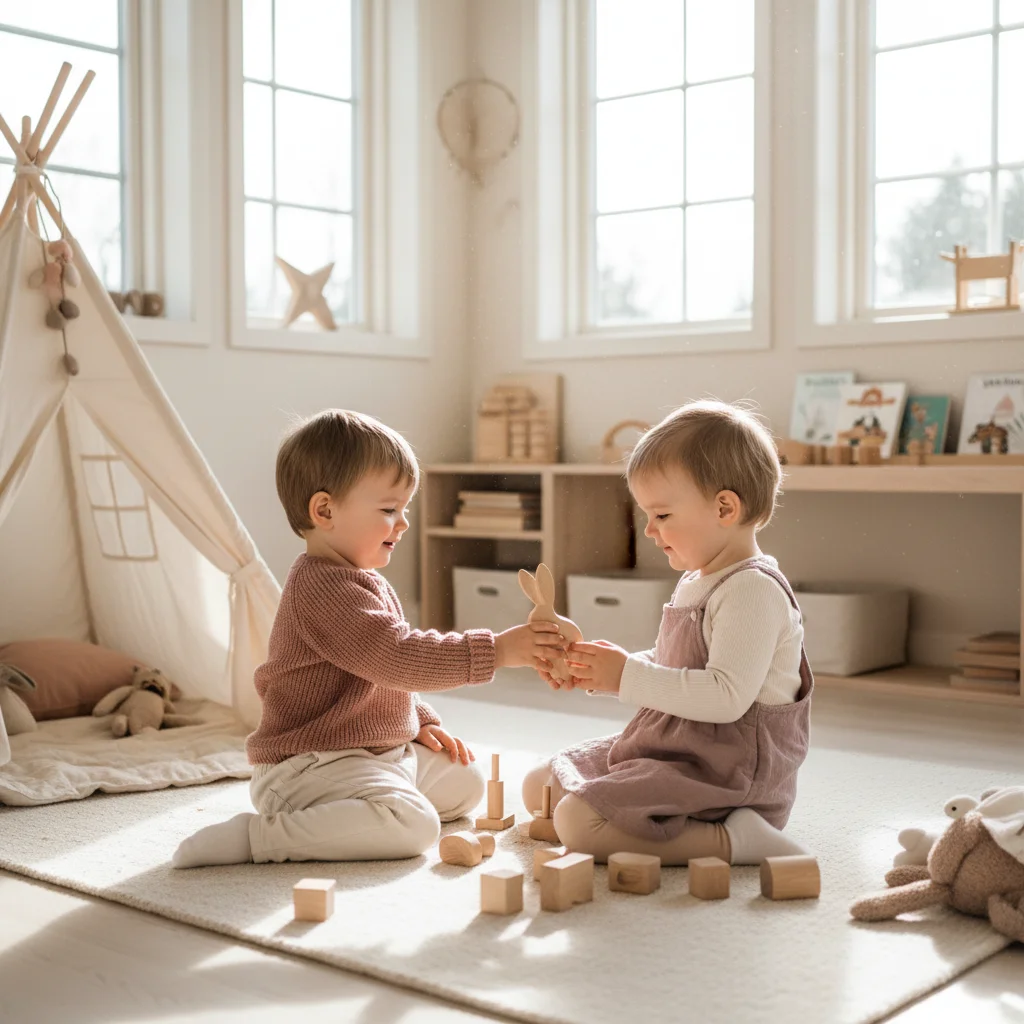
Turn-taking means: "Now it's your turn. Then it's my turn." The child doesn't lose the toy - they lend it temporarily. This difference is enormous for a small child.
How to Practice Turn-Taking
- Rolling a ball. The simplest turn-taking game there is. "My turn to roll. Your turn to roll."
- Building a tower. "You place a block. I place a block." Both contribute to something shared.
- Singing songs with movements. Songs with hand movements create a natural rhythm where everyone has their place.
- Use a timer. For slightly older children (2.5+), a simple sand timer can make waiting time concrete. "When the sand runs out, it's your turn."
Say "now it's Emma's turn" instead of "share with Emma." Turn-taking has an end - sharing feels permanent. This small difference in wording makes a big impact on the child's sense of security.
Strategies That Build Social Skills
Name the Feelings
Children need language for what they experience. "You got angry because Ollie took your car. I understand that. Let's find a solution together."
When you name feelings, the child learns that feelings are okay - even if the action (hitting, screaming, grabbing) is not. Over time, this builds the empathy needed for voluntary sharing.
Don't Force Sharing with Guests
When other children come to visit, let your child put away their most treasured toys before the guests arrive. What's left is available for everyone. This way the child doesn't have to share their most precious things, and conflict levels drop significantly.
Model What You Want to See
"Would you like some of mine? Here, we can share." Show the child sharing in practice - share snacks, share a book, share time. Children who see parents share regularly internalize the practice faster.
Praise the Process, Not the Result
"You let Sara try the swing - that was kind of you" works better than "What a good boy for sharing!" Specific feedback helps the child understand exactly what they did well.
Common Conflicts - And What You Can Do
Two Children Want the Same Toy
Don't: Take the toy from the child who had it and give it to the other. Do: "I see you both want the red car. What can we do? Maybe we can take turns?"
Let the children try to solve it themselves first (with your proximity as a safety net). Children who get to practice conflict resolution with support become better equipped socially.
The Child Hits or Bites When They Have to Wait
Frustration is real. The child still lacks the words and self-regulation to handle it. Stop the behavior calmly: "I'm stopping you. We don't hit. You're upset because you have to wait. I understand that."
Give the child an alternative: "Would you like to hold this while you wait, or would you like to sit on my lap?"
Never use punishment like "then you can't play anymore" for children who don't share. Children under four don't connect the punishment to the action in a meaningful way. It only creates insecurity.
The Child Never Wants to Switch Turns
Some children need more time than others. Maybe the child is in the middle of intense play and the experience of being interrupted is overwhelming. Give advance warning: "In two minutes, it will be Lily's turn." Transitions with advance notice are easier than sudden changes.
Common Questions
Is it normal that my three-year-old still doesn't share?
Completely normal. Many three-year-olds share situationally - they may share with their best friend but not with unfamiliar children. Voluntary, consistent sharing typically matures between ages 4 and 5.
Should I intervene in all conflicts?
No. Give children room to try on their own first, but stay nearby. Intervene if someone gets hurt or very upset. For children under 2.5, you need to be more actively involved in guiding.
Does it help to have "shared toys" and "own toys"?
Yes, this can work well. The child learns that some things are private (their special stuffed animal, a special book) and others are for shared use (sandbox toys, blocks). This distinction respects the child's need for ownership.
Can children learn to share at daycare?
Daycare is a fantastic arena for practicing social skills. Children observe other children, and staff support turn-taking throughout the day. Many parents find that their child shares more easily at daycare than at home - and that's completely normal.
Sharing is a skill, not a character trait. Your child isn't "good" because they share or "bad" because they don't. They're a child who is learning something difficult. Give them time, support, and patience.
Read also:
Sources
- AAP - Social Development in Children
- Zero to Three - Sharing and Turn-Taking
- Child Mind Institute - Social Skills
🔧 Helpful Tools
- Baby Milestones Tracker. Track your baby's developmental milestones
- Development Leaps. Understand your baby's developmental leaps
- All Baby Tools. Browse all free tools for pregnancy and baby care
📖 Related Articles
- Social Skills in Toddlers: Development and Support. How do toddlers develop social skills? Learn about playing with others, sharing, empathy, and how you can support their development.
- ADHD Signs in Toddlers: What Parents Should Look For. Learn about ADHD signs in toddlers. What's normal active behavior, when should you seek help, and how does evaluation work? A guide for parents.
- ADHD Signs in Toddlers: What Should Parents Look For?. Learn about ADHD signs in toddlers. What is normal active behavior, when should you seek help, and how does assessment work in Norway? Guide for parents.