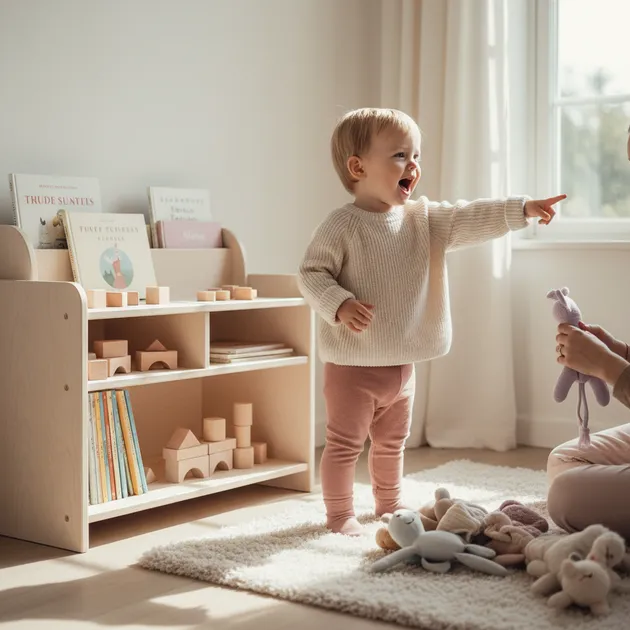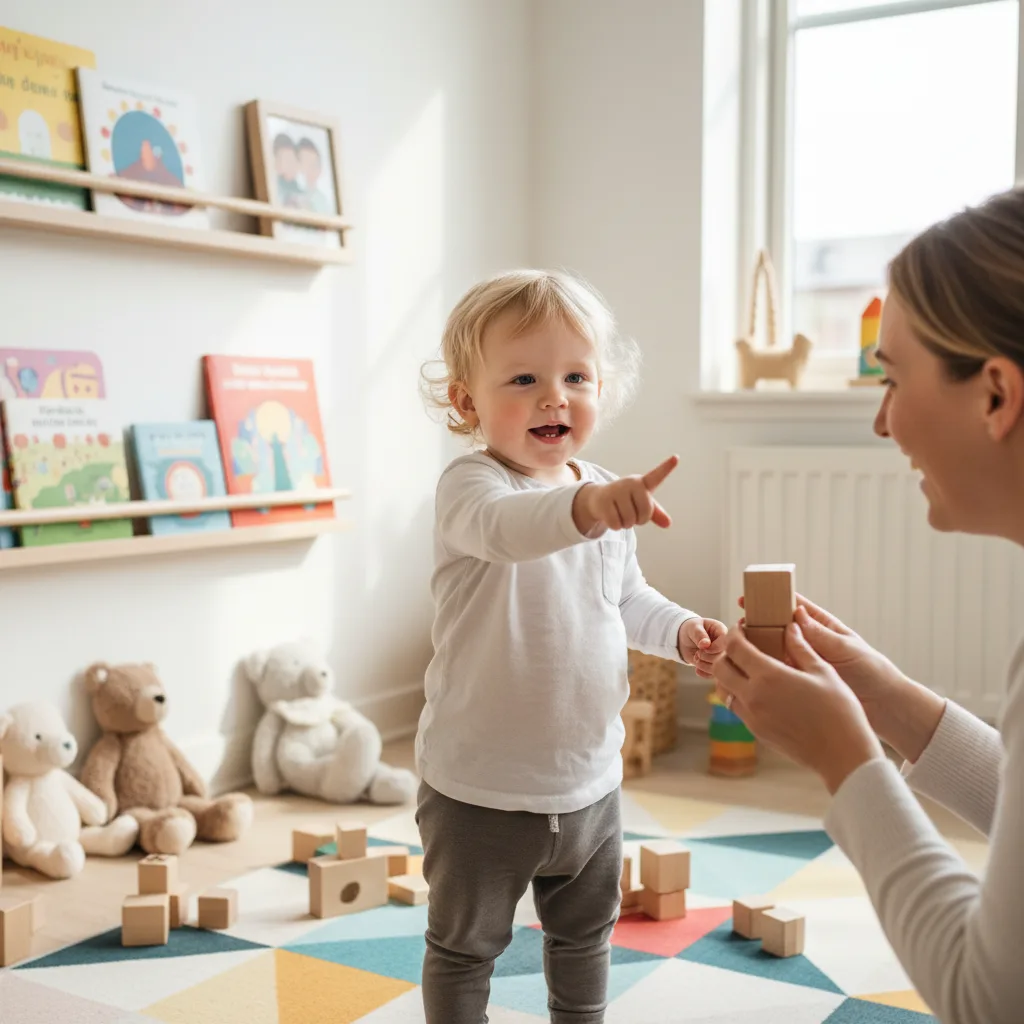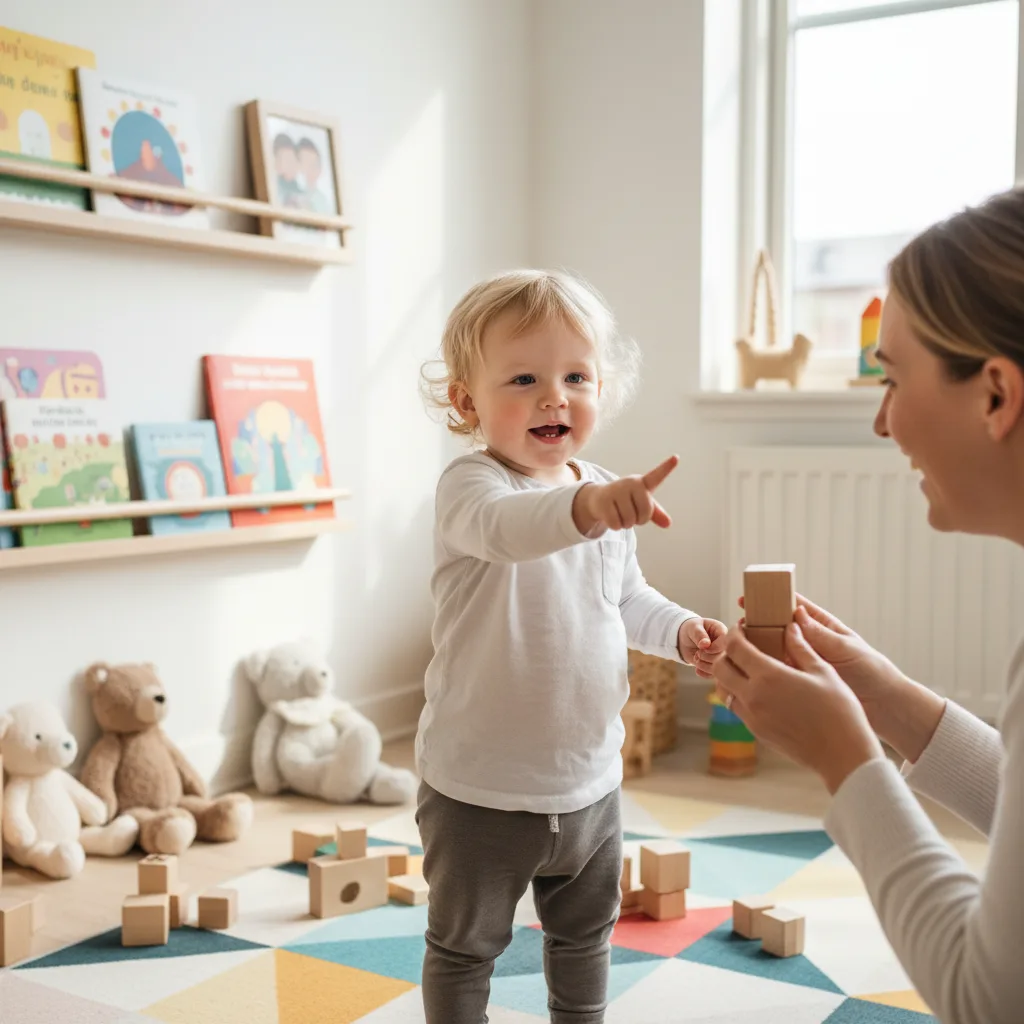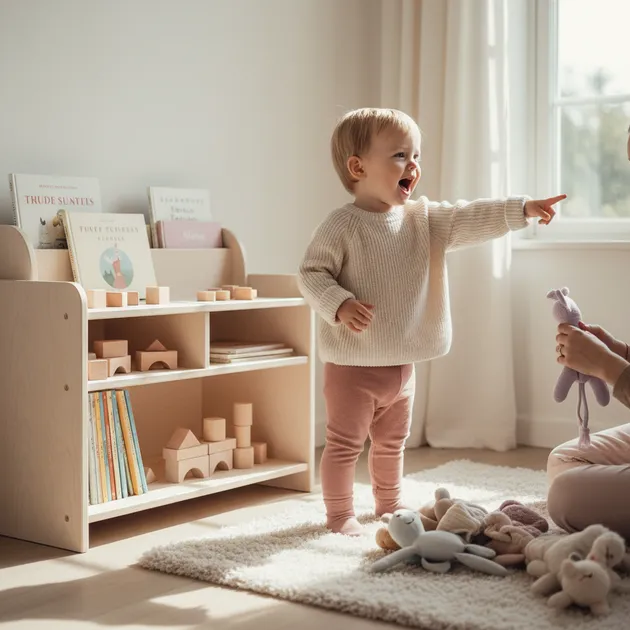
One day your child says "ball" and "mama." The following week, out of nowhere comes "mama, look big ball there!" Speech development in 2-year-olds can feel like an explosion.
Between ages 2 and 3, an enormous amount of development happens in a child's language. From single words to sentences, from pointing to narrating. Here is what you can expect, and what you can do to support your child's language journey.
What Is Typical for a 2-Year-Old?
Speech development varies a lot from child to child. Some 2-year-olds speak in long sentences, while others mostly use single words. Both can be completely normal.
According to pediatric health guidelines, most 2-year-olds have a vocabulary of 50–200 words and begin putting together two-word sentences like "mama car" or "more milk." By age 3, most children have a vocabulary of over 1,000 words.
Speech Milestones: Ages 2–3
Around 2 years:
- Has at least 50 words in their vocabulary
- Beginning two-word sentences: "daddy go," "big dog"
- Understands simple instructions: "Get your shoes"
- Uses "me" and "mine"
- Asks simple questions: "What that?"
- Is understood by close family members about 50% of the time
Around 2.5 years:
- Sentences get longer: three to four words
- Starts using "I" instead of their own name
- Can describe something that happened: "Fell down. Ow."
- Uses negation: "Don't want to"
- Can follow two-step instructions: "Put on your shoes and go to the door"
Around 3 years:
- Speaks in sentences of 4–5 words
- Uses plurals and past tense (with errors, "goed" instead of "went")
- Asks "why" questions
- Can tell short stories
- Is understood by strangers about 75% of the time
- Can say their name and age
The Vocabulary Explosion
Around 18–24 months, many children experience what researchers call the "vocabulary explosion." Suddenly the child starts learning new words at a rapid pace, some children pick up 5–10 new words a day.
This explosion is not the same for everyone. Some children have a gradual, steady development without a clear explosion. That is equally normal.
What drives speech development?
- The amount of language the child hears at home
- Reading and conversation with adults
- Playing with other children
- The child's own temperament and interests
10 Ways to Stimulate Speech
1. Read, Read, Read
Reading is the single activity with the greatest effect on speech development. Read to your child every day, ideally several times. Picture books, illustrated books, and stories with repetition work especially well.
Let the child turn pages, point, and comment. "What do you see here? Yes, a cat! What does the cat say?"
2. Expand on What Your Child Says
When the child says "car," you respond "Yes, a big red car! The car goes fast." You confirm, expand, and give the child new words and contexts.
3. Narrate Daily Life
Put words to what is happening: "Now we're putting on your jacket. Zipper up! Now we're going outside. Do you see the sun?" This running commentary gives the child a rich language environment.
4. Wait and Listen
Give the child time to talk. Many adults are quick to respond or finish sentences. Wait a few seconds and let the child try, even if it takes time and comes out wrong.
5. Sing Songs
Children's songs with movements combine language, rhythm, and motor skills. Repetition in songs helps the child remember words.
Sing the same song over and over again. It may seem boring to you, but the child loves the familiarity, and every repetition strengthens vocabulary and language comprehension.
6. Ask Open-Ended Questions
Instead of "Did you have a good day at daycare?" (yes/no), try "What did you play with today?" Open questions encourage the child to use more words and practice expressing themselves.
For younger toddlers, you can offer a choice: "Did you play with sand or blocks?"
7. Play With Language
Rhymes, nonsense, and wordplay make language fun. "Can you say BANANANANANA?" Silly words and sound play train the child's awareness of speech sounds, which is the foundation for reading later on.
8. Reduce Background Noise
TV or radio playing in the background gives the child a less clear language environment. Research shows that background noise makes it harder for toddlers to pick out and learn new words. Turn it off when you are talking and reading.
9. Retell and Reminisce
Talk about things that happened: "Remember when we were at the park? You climbed all the way to the top of the ladder!" Retelling develops memory, sense of time, and sentence construction.
10. Be Present
The most important thing you can do is be attentive and engaged when your child speaks to you. Put down your phone, make eye contact, and show that you are listening. Children talk more to adults who truly listen.
Research shows that the number of words children hear in direct conversation with adults matters more than the number of words they hear from TV, radio, or background chatter. The quality of the language environment is about interaction, not volume.
Late Talkers: Children Who Take a Little Longer
Some children talk late but understand everything. These are often called "late talkers", children who have delayed expressive language but good language comprehension.
About 10–15% of 2-year-olds have a vocabulary of under 50 words. Many of these catch up on their own by age 3–4. But some need help.
Signs of a Good Prognosis
- The child understands much of what is said
- The child communicates with gestures, pointing, and body language
- The child is socially interested and makes eye contact
- There are other late talkers in the family
Signs You Should Contact Your Pediatrician
- The child uses fewer than 50 words at age 2 AND understands little
- The child has no two-word sentences at age 2.5
- The child has stopped using words they previously had
- The child avoids eye contact and seems little interested in interaction
- The child does not respond to their name
Don't wait and see. If you are concerned about your child's speech development, contact your pediatrician. Early intervention yields the best results. A speech therapist can assess your child's speech and give concrete advice.
Stuttering in 2–3-Year-Olds
Many 2–3-year-olds stutter temporarily. This happens because thoughts move faster than the mouth can form words. The child may repeat words or syllables: "I-I-I want..."
This type of stuttering is common and usually resolves on its own. Don't ask the child to "speak slowly" or "think first", this only increases awareness of the stuttering.
Contact your pediatrician or a speech therapist if stuttering lasts more than 6 months or the child shows signs of stress around their own speaking.
Frequently Asked Questions
My child talks a lot but I understand little. Is that normal?
At age 2, it is normal for unfamiliar adults to understand about half of what the child says. Pronunciation matures gradually, some sounds (like r, s, and certain consonant blends) can take until age 5–6. If close family members understand the child, there is usually no cause for concern.
Is it true that boys talk later than girls?
Research shows a small average difference between genders, with girls typically saying their first words and sentences slightly earlier. But variation within each gender is much greater than the difference between them. A "late" girl and an "early" boy can be at the same level.
Can too much screen time delay speech development?
Research suggests that passive screen time (TV/video without interaction) can delay speech development because the child misses the interactive engagement that drives language learning. Active screen use with an adult present is less problematic. Read more about screen time for children.
Speech development between ages 2 and 3 is one of the most exciting phases in a child's development. Enjoy it, including all the delightful errors and unique expressions your child comes up with.
Track language milestones in Babysential's milestone tracker. Wondering if your child is on track? Log milestones and get an overview of their development.
Read also: Speech development in children | Speech delayed at 2 years? | Reading with your baby | Bilingual upbringing
Sources
🔧 Helpful Tools
- Baby Milestones Tracker. Track your baby's developmental milestones
- Development Leaps. Understand your baby's developmental leaps
- All Baby Tools. Browse all free tools for pregnancy and baby care
📖 Related Articles
- Language Development in 2-Year-Olds: From Words to Sentences. How your 2-year-old's language develops. Milestones, tips for supporting speech, and when to contact your pediatrician.
- Delayed Speech Development: When Should You Act?. Is your two-year-old saying very little? Here's how to evaluate whether speech development is delayed and when to contact your pediatrician.
- Delayed Speech Development: When Should You Be Concerned?. Is your two-year-old saying very little? Learn how to assess whether speech development is delayed and when to contact your pediatrician.