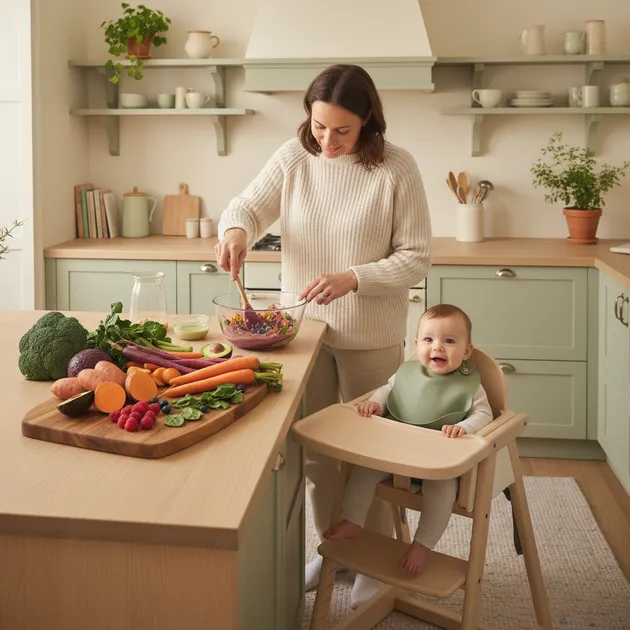
The baby has turned six months old, and you're standing there with an avocado in one hand and a phone full of conflicting Google results in the other. What can she eat? How much? And what about allergens?
Starting solids can feel overwhelming. Babysential's SmartStart makes it clear, with age-appropriate suggestions based on WHO and AAP guidelines.
What is SmartStart?
SmartStart is Babysential's free meal planner for babies from 6 months and up. The tool gives you:
- Age-appropriate food database, shows only foods suitable for your baby's age
- Allergen overview, keep track of which allergens your baby has tried
- Food suggestions, ideas tailored to what the baby already eats
- Progress tracking, see how many foods your baby has tried
According to WHO and AAP guidelines, solid food introduction should begin around 6 months of age. From this point, babies need more energy and nutrients than breast milk or formula alone can provide.
Getting started with SmartStart
Step 1: Create a baby profile
Go to SmartStart and sign in. If you've already registered your baby on Babysential, SmartStart will pull the age automatically. Haven't registered? You can use the tool anonymously, just enter your baby's age manually.
Step 2: Explore the food database
The food database is divided into categories: vegetables, fruits, grains, meat, fish, legumes, dairy, and more. Each food shows:
- Recommended age, based on WHO and AAP guidelines
- Allergens, clearly labeled with icons
- Preparation tips, how best to prepare the food for your baby's age
- Nutritional highlights, what the food is especially rich in
Step 3: Mark foods as tried
Each time your baby tries a new food, mark it as tried. Progress rings show how many foods in each category your baby has tasted. This gives a motivating overview and helps you ensure variety.
Step 4: Plan the week's meals
Use SmartStart's planner to set up a simple weekly meal plan. The tool suggests combinations based on what the baby already likes and what may be missing from the diet.
Step 5: Save favorite recipes
Found a combination the baby loves? Save it as a favorite in recipes. That way you don't have to remember whether it was carrot-and-lentil or carrot-and-pea that was so popular last week.
Introduce allergens early. Recent WHO and AAP research shows that early introduction (from 6 months) can reduce the risk of food allergies. Give a small taste at a time and wait 2–3 days before the next new allergen.
What foods can your baby eat?
SmartStart follows WHO and AAP guidelines. Here's a simplified overview:
From 6 months (starting solids): Vegetables, fruit, meat, fish, eggs, grains including gluten, legumes (beans, lentils, chickpeas), nuts and seeds as butter or puree, and liver pâté as a spread.
From 10 months: Cheese (cheddar, cream cheese), yogurt, and cottage cheese in small amounts; cow's milk in cooking.
From 12 months: Whole cow's milk as a drink (no more than 16–20 oz/day including yogurt), plant-based milks (fortified).
Avoid in the first year: Honey, added salt, added sugar, and unpasteurized products.
SmartStart automatically filters out foods that aren't appropriate for the baby's age. You only see what's relevant right now.
Frequently asked questions
Can I trust the age recommendations?
Yes. All age recommendations in SmartStart are based on current guidelines from the WHO and the American Academy of Pediatrics. We update the database whenever guidelines change.
What if my baby reacts to a food?
SmartStart is a planning tool, not a medical advisor. If your baby shows signs of an allergic reaction (rash, vomiting, swelling), contact your doctor immediately. Read more in our guide to food allergies in babies.
Does SmartStart work for BLW (baby-led weaning)?
Absolutely. SmartStart is about which foods your baby can try, not about the method. Whether you puree, mash, or follow BLW, the tool gives you the same overview. Read our BLW guide for tips on baby-led weaning.
Tips for a good start with solids
- Start with vegetables, many experts recommend introducing vegetables before fruit so the baby gets used to less sweet flavors
- One new food at a time, wait 2–3 days between new foods to detect any reactions
- Don't give up, babies may need 10–15 attempts with a new flavor before accepting it
- Texture by age, start with smooth puree, then coarser mash, then soft pieces and finger foods
- Eat together, babies learn by watching others eat. Put the baby in the high chair at family meals
Making food introduction easier
Many parents find starting solids overwhelming. So many foods, so many rules, so much cleanup. SmartStart removes the uncertainty around "what can my baby eat right now?", so you can focus on the fun part: watching your baby explore new flavors.
Combine SmartStart with the starting solids checklist for a complete overview of the equipment and ingredients you need.
For inspiration for your baby's first meals, check our articles on homemade baby food and vegetables and fruit for babies.
Ready to start? Open SmartStart and explore the food database, tailored to exactly your baby's age.
Sources
- World Health Organization, infant and young child feeding
- American Academy of Pediatrics, starting solid foods
- CDC, infant nutrition and feeding
🔧 Helpful Tools
- All Baby Tools. Browse all free tools for pregnancy and baby care
📖 Related Articles
- Baby Food at 8 Months: What Can Your Baby Eat?. Complete guide to food for an 8-month-old baby. Sample menus, finger foods, portions, textures, and iron-rich foods based on AAP and WHO recommendations.
- Homemade Baby Food: Recipes and Tips from 6 Months. Learn how to make safe homemade baby food from 6 months. Age-appropriate recipes, texture tips, batch cooking, freezing, and storage based on WHO and AAP guidelines.