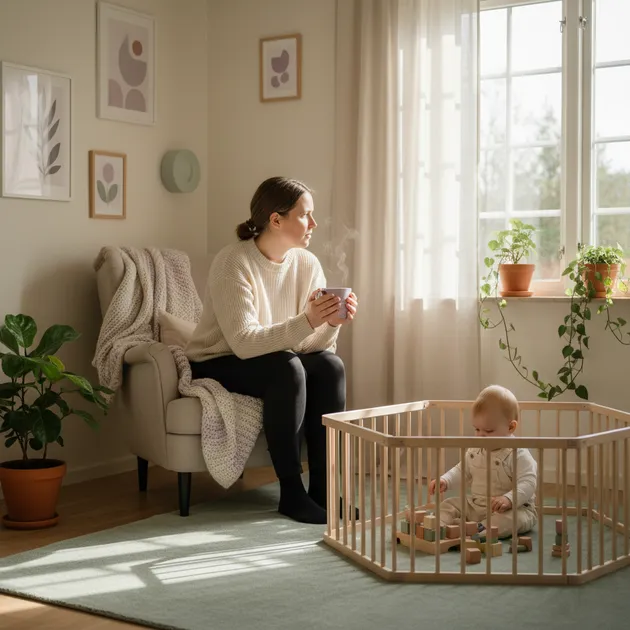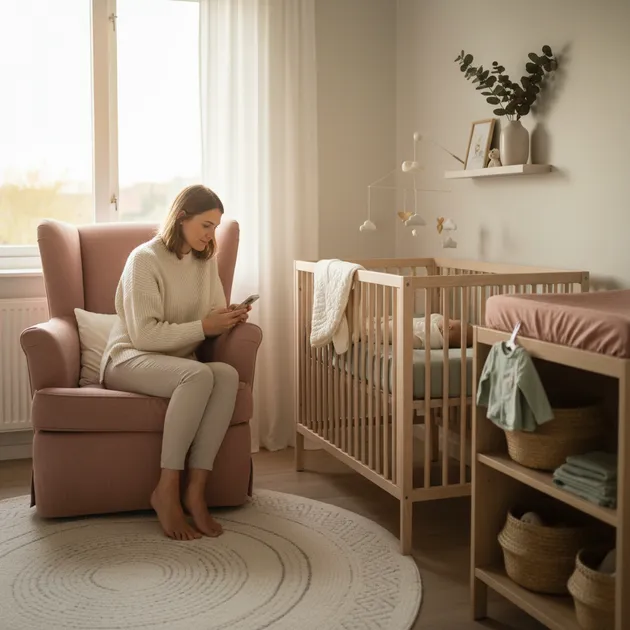
You knew there would be sleepless nights. You knew babies wake up. But nobody told you that sleep deprivation can feel like living in a fog, day after day, week after week.
If you're sitting here with burning eyes and a body screaming for sleep, you're not alone. And there are actually things you can do to make it a little easier.
Why Sleep Deprivation Hits So Hard
Newborns have short sleep cycles. A newborn typically sleeps 2–4 hours at a time and needs food and closeness around the clock. When you as a parent never get uninterrupted sleep, sleep debt builds up quickly.
Research shows that fragmented sleep can affect mood, concentration, and physical health. It's not weakness to feel utterly exhausted. It's biology.
What's Normal
- Newborns sleep 14–17 hours per day, but spread across many short stretches
- Most babies start sleeping longer stretches from 3–6 months
- Some babies sleep through the night early, others need longer
- Nighttime waking is normal well into the first and second year
The AAP recommends that infants sleep in their own sleep space in the parents' bedroom for at least the first 6 months. Bed-sharing is not recommended due to the risk of SIDS.
Practical Strategies That Actually Help
1. Sleep When the Baby Sleeps. But Actually Do It
Yes, you've heard it before. And yes, it's annoying to hear. But it works, if you actually do it. Skip the dishes. Put down your phone. Lie down, even if it's only for 20 minutes.
Short power naps (15–30 minutes) can reduce the worst fatigue without leaving you feeling groggier afterward.
2. Set Up a Night-Shift Schedule
If there are two of you, split the nights. One takes responsibility from 9 PM–2 AM, the other from 2–7 AM. That way both of you get at least five consecutive hours. Five hours isn't luxury, but it's enough to function.
Breastfeeding? The non-nursing parent can handle everything else: carrying, diaper changes, soothing, burping. That way the breastfeeding parent can sleep between feedings.
3. Radically Lower Your Standards
The first months are survival mode. The house doesn't need to be tidy. Dinner can be sandwiches. Laundry can wait.
Write down the three things that actually matter today. Everything else can wait until tomorrow. Or next week.
4. Use Daylight Actively
Daylight helps your body maintain its circadian rhythm. Try to get outside for at least 15–20 minutes each day, preferably in the morning. A stroller walk counts.
Daylight makes you more alert during the day and can help you fall asleep faster when the opportunity arises.
5. Use Caffeine Strategically
Coffee is your friend, but use it wisely. Drink coffee early in the day, ideally before 2 PM. Caffeine has a half-life of 5–6 hours, so late coffee can make it harder to fall asleep when the baby finally does.
Use Babysential's Sleep Tracker to log your baby's sleep. When you can see the patterns, you can plan your own rest breaks around them. Many parents discover that their baby has more predictable sleep stretches than they thought.
Take Care of Each Other
Sleep deprivation can be toxic for a relationship. You're both exhausted, and it's easy to compete over who's more tired. Nobody wins that competition.
Make a Plan Together
Sit down (during a wakeful moment) and talk about expectations. Who handles nights? Who takes the morning shift? When does each of you get some personal time?
A plan doesn't mean everything goes smoothly. But it means you have a starting point. And that nobody feels alone with the burden.
Communicate Without Blaming
"I'm so tired I can't think straight" works better than "You never help out at night." Sleep deprivation makes everyone more irritable. That doesn't mean you have a bad relationship. It means you need sleep.
When Sleep Deprivation Becomes Too Much
There's a difference between being tired and not functioning. Seek help if you experience:
- Constant crying or feelings of hopelessness
- Thoughts of harming yourself or the baby
- So exhausted you're afraid of losing your grip while holding the baby
- Confusion, memory loss, or severe anxiety that won't let up
Talk to your doctor or pediatrician. Postpartum depression and baby blues are more common than many people think, and treatment helps. In a crisis, contact the 988 Suicide and Crisis Lifeline (call or text 988) or the Postpartum Support International Helpline at 1-800-944-4773.
Read also: Postpartum Depression. Signs and Help
Things That Help You Through the Night
- Prepare everything the night before: bottle, diapers, clean clothes, all ready on the nightstand
- Dim lighting: Use a night light instead of overhead lights. Bright light makes it harder to fall back asleep
- Avoid your phone: Screen blue light and doomscrolling keep you awake far longer than necessary
- Have water and a snack available: Especially if you're breastfeeding
- Breathe: Try breathing in for four counts, holding for four, breathing out for four, the 4-7-8 technique can calm the nervous system
Checklist for Tough Nights
Write this list out and put it on the fridge:
- The baby is safe
- The baby is fed
- The diaper is dry
- Everything else can wait
Some nights are just hard. Then it's not about fixing anything, but getting through.
Frequently Asked Questions
When do babies start sleeping through the night?
It varies a lot. Some babies sleep longer stretches from 3–4 months, but many still wake during the night well into the first year. "Sleeping through the night" often means 5–6 consecutive hours, not the 8–10 hours adults are used to.
Is it dangerous to be severely sleep-deprived?
Short-term sleep deprivation is uncomfortable but rarely dangerous. Long-term sleep deprivation can affect mood, immune function, and concentration. If you're so tired that you don't trust your own judgment, ask for help. Place the baby safely in their crib and take a break.
Does pumping milk so a partner can do a feeding help?
Yes, for many families this is a game-changer. When a partner can handle a nighttime feeding with pumped milk or formula, the breastfeeding parent can get a longer sleep stretch. Talk to your pediatrician about what works for your family.
You will sleep again. It may not feel that way right now, but this phase passes. In the meantime: be kind to yourself. You're doing an incredible job, even on far too little sleep.
Start tracking your baby's sleep patterns with Babysential's Sleep Tracker, it's surprisingly reassuring to see progress in black and white.
Read also: Sleep Deprivation as a Parent. More Than Just Tiredness | Self-Care for New Parents | Sleep Routine for Newborns
Sources
🔧 Helpful Tools
- Baby Sleep Tracker. Track and optimize your baby's sleep
- All Baby Tools. Browse all free tools for pregnancy and baby care
📖 Related Articles
- Self-Care for New Parents. Small Steps, Big Impact. Self-care as a new parent isn't about spa days. Here are realistic tips for taking care of yourself in everyday life with a baby.