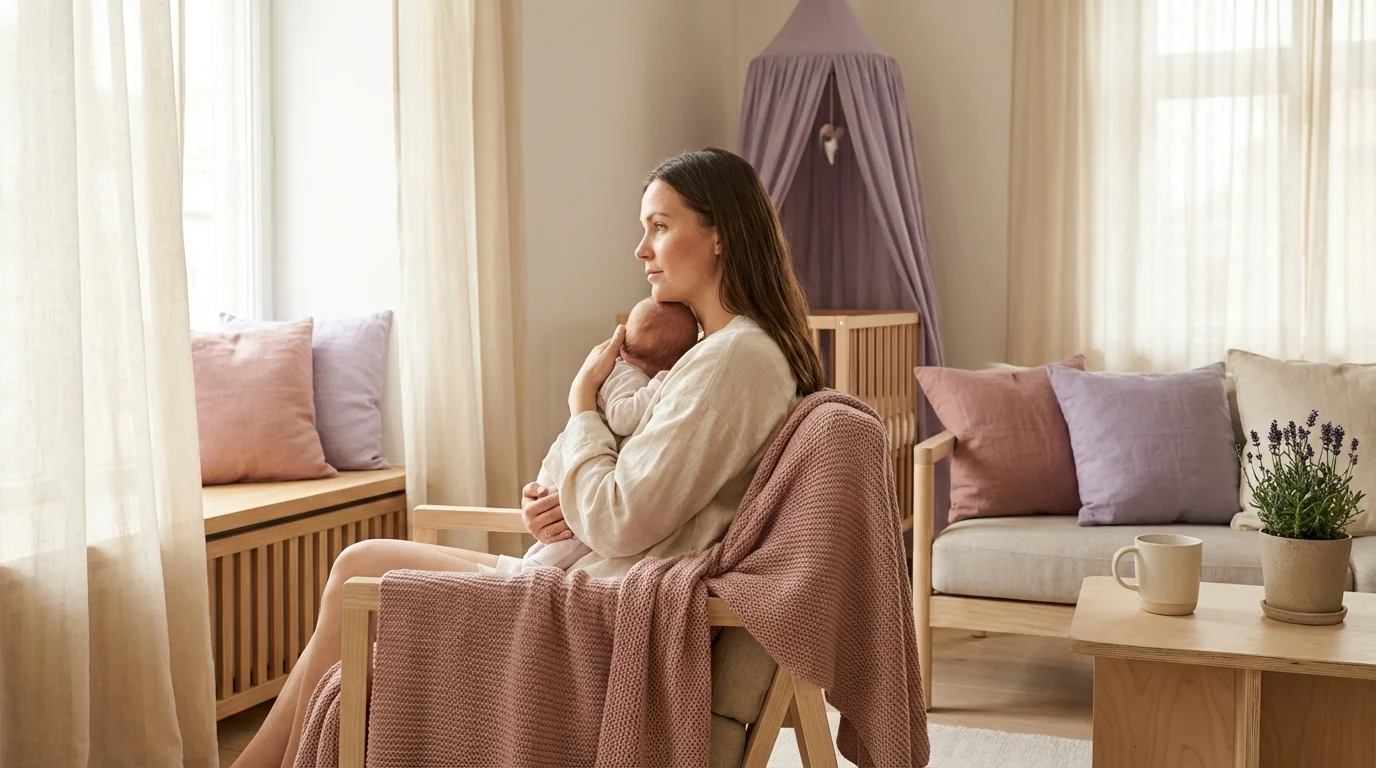
You've slept four hours in a row for the first time in weeks, and it feels like a luxury. You forget words mid-sentence, lose your keys daily, and have cried at a TV commercial.
Sleep deprivation is more than being tired. It affects the brain, the immune system, your mood, and your relationship. And nearly every parent experiences it.
What Sleep Deprivation Does to Your Body
Adults need 7–9 hours of sleep per night according to the WHO. Parents of newborns and young babies often get far less, and what they do get is fragmented.
The Brain Under Sleep Deprivation
After 24 hours without sleep, the brain functions roughly like a blood alcohol level of 0.10%. Most parents don't experience 24 consecutive hours without sleep, but chronic sleep deprivation (several weeks of too little sleep) produces similar effects:
- Reduced concentration. You forget why you walked into a room. Conversations disappear from memory.
- Poorer impulse control. You become more easily irritable. Patience has a lower floor.
- Weakened decision-making. Everything feels harder. Even simple choices can seem overwhelming.
- Slower reaction time. Especially relevant for driving. Tired driving is dangerous driving.
The National Highway Traffic Safety Administration warns that drowsy driving is a major cause of traffic accidents. If you are severely sleep-deprived, let someone else drive.
The Immune System
Sleep is the body's maintenance time. When you don't get enough sleep, your immune system weakens. Studies show that people who sleep fewer than six hours per night are four times more likely to catch a cold.
For new parents this means: you're more susceptible to illness at exactly the time your child starts daycare and brings every virus home.
Hormones and Metabolism
Sleep deprivation affects hormonal balance:
- Ghrelin (hunger hormone) increases, you feel hungrier
- Leptin (satiety hormone) decreases, you don't feel full
- Cortisol (stress hormone) increases, the body is in constant alert mode
The result is that many parents eat more, eat worse, and gain weight they don't want. This isn't a matter of willpower, it's biochemistry.
Mental Health and Sleep Are Closely Linked
The connection between sleep and mental health is well documented. Research shows that sleep problems are one of the strongest risk factors for anxiety and depression.
Postpartum Depression and Sleep
Sleep deprivation is not the same as postpartum depression, but it can trigger and worsen it. Signs that overlap:
- Constant sadness or a feeling of emptiness
- Loss of enjoyment in things you used to love
- Irritability that feels uncontrollable
- Feeling like you're not measuring up
The difference is that pure sleep deprivation improves once you sleep. Postpartum depression requires more than sleep. If you still feel devastated after several nights of better sleep, speak to your pediatrician or family doctor.
The AAP and ACOG recommend that parents experiencing persistent low mood, anxiety, or thoughts of harming themselves contact their healthcare provider. Your OB, midwife, family doctor, or a crisis line can all help.
Impact on Your Relationship
Sleep deprivation is one of the biggest strains on a relationship after a baby is born. You're both exhausted, both frustrated, and both feel the other doesn't understand. Conflicts escalate faster. Patience with each other is worn thin.
Recognizing this, that you're in a temporary crisis caused by sleep deprivation, not because you're bad partners, can in itself reduce the level of conflict.
Practical Strategies That Actually Help
1. Prioritize Sleep Ruthlessly
This is not selfishness. It's healthcare. Sleep when the baby sleeps, even if the dishes are piling up. The first months are about survival, not perfection.
2. Split the Nights
If there are two of you, make a system. One takes the shift from 9 pm to 2 am, the other from 2 am to 7 am. With five hours of uninterrupted sleep, your body can complete at least three sleep cycles, and that makes an enormous difference.
Breastfeeding? Pump or use formula for the night feed your partner takes. Alternatively, your partner handles everything except nursing (diapers, carrying, comforting).
3. Use Daylight
Daylight regulates your circadian rhythm. Go out with the stroller in the morning, 15 to 20 minutes of daylight makes you more alert now and helps you fall asleep faster when the chance arises.
4. Strategic Caffeine
Coffee is a friend, but use it wisely. Drink coffee before 2 pm. Caffeine has a half-life of 5–6 hours and can sabotage the precious sleep you finally get in the evening.
5. Lower All Standards
The house is messy. Dinner is a sandwich. You've worn the same pants for three days. All of this is fine. The first months are about keeping your baby alive and yourself reasonably intact.
Use the Babysential Sleep Tracker to see your baby's sleep pattern over time. When you see that last week's nights were a little better, it gives you hope. And hope helps.
When You Should Seek Help
Seek help if you experience any of the following:
- You're so tired you're afraid you might drop your baby
- You have thoughts of harming yourself or your baby
- The tiredness doesn't improve even with better sleep
- You can't function at work or in daily life
- You're driving and notice you're almost falling asleep
Contact your family doctor, pediatrician, or call the Postpartum Support International helpline (1-800-944-4773), which is available around the clock. In a crisis, contact 988 Suicide & Crisis Lifeline by calling or texting 988.
Common Questions
How little sleep is dangerous?
There is no exact threshold, but fewer than five hours per night over an extended period increases the risk of health problems. Fragmented sleep (many wakings) is nearly as taxing as too-short sleep. Seek help if you can't function in daily life.
Does the body recover?
Yes. The body is surprisingly good at recovering when sleep improves. Most parents experience a gradual improvement as their baby's sleep patterns mature. You don't need to "pay back" hour for hour, a few good nights make an enormous difference.
Can supplements help?
Iron and vitamin D are important for energy levels, especially for women after birth. Talk to your doctor about blood tests. General "energy supplements" rarely have documented effects. Prioritize real food and sleep over pills.
Are power naps really effective?
Yes. A 15–20 minute nap can significantly improve concentration, mood, and reaction time. Don't sleep longer than 30 minutes, you risk entering deep sleep and waking more groggy than before.
Sleep deprivation is real, it's hard, and it's temporary. You are not weak because you're struggling. You're a parent giving everything, on far too little sleep. And that actually makes you pretty tough.
Read also: Sleep deprivation as a new parent, coping strategies | Self-care for new parents | Postpartum depression | Parental burnout prevention
Track your baby's sleep with the Sleep Tracker
Sources
- WHO. Sleep and health
- NIH. Sleep deprivation and mental health
- American Academy of Sleep Medicine. Sleep and safety
- Postpartum Support International
🔧 Helpful Tools
- Baby Milestones Tracker. Track your baby's developmental milestones
- Baby Sleep Tracker. Track and optimize your baby's sleep
- All Baby Tools. Browse all free tools for pregnancy and baby care
📖 Related Articles
- Exercise and Mental Health for New Parents. Exercise can prevent and ease postpartum depression, anxiety, and exhaustion. Here's how to get started, with realistic goals and routines that fit life with a baby.