Some people will tell you that good parents give everything they have. That you have to put yourself aside. That the baby always comes first.
That's wrong. Not because your baby isn't important, but because you can't give care that you don't have in you.
Why This Is About More Than Just You
Parents who are exhausted end up with shorter tempers, less patience, and a reduced ability to read their child's cues. That's not a weakness. It's physiology. Your brain needs sleep, food, and rest in order to function.
When you take care of yourself, you take care of your baby. That's not selfishness. It's maintenance.
The WHO emphasizes that mental health after birth is just as important as physical health. Yet many parents find that their own needs end up at the very bottom of the list, week after week, month after month.
According to the AAP, a significant proportion of new parents report sleep deprivation, stress, and reduced quality of life during the first year. Early prevention, in the form of rest, social support, and realistic expectations, can make a significant difference.
What Self-Care Is (and Isn't)
Let's be clear from the start: self-care for new parents is not about spa weekends, yoga retreats, or hours of "me time."
It's about the small things. The brief pauses. The everyday choices that help you endure, and maybe even thrive.
Realistic self-care looks like this:
- Eating a full meal while it's still warm
- Drinking a glass of water instead of forgetting it on the kitchen counter
- Going for a walk around the block with the stroller, for your sake, not just the baby's
- Taking a shower in peace for five minutes
- Saying no to visitors when you need quiet
It's not glamorous. But it's what keeps you going.
Your Body Needs Care
Movement. Not Exercise, Just Movement
You don't need a workout. You need to move your body. Ten minutes of walking a day does more for your mood than you might expect.
The WHO recommends at least 150 minutes of moderate physical activity per week for adults. But in the postpartum period, it's about getting outside, feeling the air on your skin, and breaking up a day that can otherwise feel stagnant.
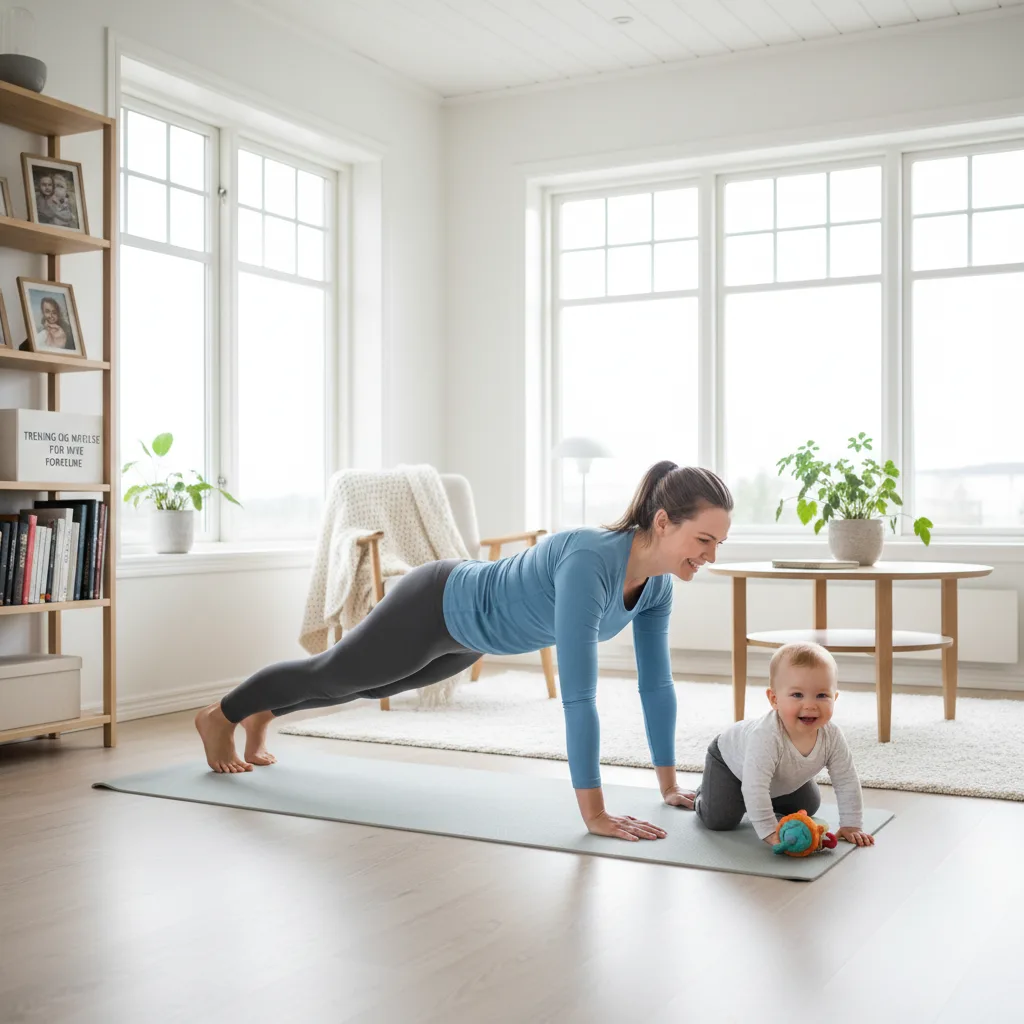
Walk with the stroller. Stretch while the baby lies on the floor. Dance with the baby in your arms. It all counts.
Food That Gives You Energy
New parents often live on leftovers, sandwiches, and cold coffee. That works for a while, but it doesn't give your body what it needs.
Try this:
- Cook in batches when you have energy, and freeze portions. Stews, soups, and muffins freeze well.
- Say yes to food from others. When someone asks what they can do to help, say "bring a meal." No one has ever regretted accepting a home-cooked dinner.
- Keep nuts, fruit, and crackers within reach. Quick snacks you can eat with one hand while holding the baby with the other.
- Drink enough. Especially if you are breastfeeding. Keep a water bottle wherever you spend the most time.
Sleep, or at Least Rest
"Sleep when the baby sleeps" is advice everyone gives and no one manages to follow. But the principle behind it is right: grab the windows you get.
Rest doesn't have to mean deep sleep. Lying down with your eyes closed for twenty minutes gives your body something to work with. And if you can sleep, do it. The dishes can wait.
One concrete step: Arrange with your partner, a friend, or a family member to take the baby for two hours on a fixed day each week. Use those two hours to sleep, go for a walk, or just sit quietly. Predictability makes the break more valuable.
Your Mind Needs Care
Talk to Someone
Isolation is one of the biggest risk factors for mental health difficulties after birth. That applies to both mothers and fathers.
You don't need to sit across from a therapist to talk about how you are doing (although that's also a good option). Call a friend. Send a message. Say "today is a hard day" to your partner.
It's easy to think everyone else is coping with parenthood better than you. They're not. They're just showing you a different angle.
Let Go of Perfection
Your baby doesn't need a perfect parent. Your baby needs a parent who is present, responsive, and good enough. "Good enough" is a concept from psychology, and it means exactly what it says. You don't need to get everything right. You need to get enough right.
Lower your standards for housework. Leave the laundry for a day. Skip the visit you don't have the energy for. That's allowed.
Limit Social Media
Instagram shows you parents who have tidied the living room, baked carrot cake, and worked out, all before nine in the morning. That's not reality. It's a curated moment.
If scrolling makes you feel inadequate, that's a sign to put down the phone. Not forever. Just right now.
Five Minutes of Breathing
You don't need a half-hour meditation session. Five minutes of conscious breathing, in through the nose, out through the mouth, while you check in with how your body feels, can noticeably lower your stress level.
Do it while the baby sleeps. Or while the baby lies safely on the floor exploring. You're not missing anything by taking five minutes for yourself.
Postnatal Groups: A Social Safety Net
Many pediatric practices, hospitals, and community centers offer postnatal groups, groups of parents who have had babies around the same time. It's one of the best resources available to new parents.
In a postnatal group, you meet others who are in the exact same situation. You share sleep deprivation, feeding challenges, uncertainty, and the strange hours you find yourself awake. It's not therapy. It's community. And community is itself a form of self-care.
If you haven't been offered a postnatal group, ask your pediatrician or midwife. Many healthcare providers and community organizations run these programs.
Postnatal groups are often offered free of charge or at low cost through healthcare providers. Groups typically meet weekly during the first few months and include around 6–10 parents with children of similar ages.
Accept Help
Many parents find it difficult to ask for help. It can feel like admitting you're not managing.
But accepting help is a strength, not a weakness. And the people around you genuinely want to contribute, they just don't always know how.
Be specific: "Can you pick up some groceries?" is easier to say yes to than "can you help out?" Make a list of things people can do: do a load of laundry, cook a meal, take the baby for a walk in the stroller, look after the baby for an hour.
And say yes when someone offers. Every single time.
Warning Signs: When You Need More Than Self-Care
Sometimes good habits aren't enough. Postpartum depression affects around 10–15 percent of new mothers and 5–10 percent of fathers. It is a medical condition that requires professional help.
Contact your doctor or a healthcare provider if you:
- Feel persistently sad, empty, or hopeless for more than two weeks
- Have lost enjoyment in things you normally like
- Have anxiety that makes it difficult to function
- Think that the baby or your family would be better off without you
- Have thoughts of harming yourself
Get help quickly: Call your doctor for an appointment, contact a lactation consultant or midwife, or reach out to a crisis line in your area. In a mental health emergency, go to your nearest emergency room or call emergency services. You deserve help, and it's available.
Resources
There are good support networks available for new parents. Here are some key ones:
- Your pediatrician or family doctor, your closest point of contact for everything related to your baby's and your own health
- Couples and family counseling services, many offer free or subsidized sessions with no referral needed
- La Leche League International (llli.org), volunteer advisors for breastfeeding questions
- Postpartum Support International (postpartum.net), helpline and resources for postpartum mental health
- Crisis Text Line, text HOME to 741741 (US) for free, 24/7 crisis support
- Postnatal groups, ask your healthcare provider about local options
Frequently Asked Questions
How do I find time for self-care with a newborn?
Start with small things that take less than five minutes, a warm cup of coffee, a short breathing pause, or washing your face with warm water. Self-care doesn't have to mean long spa visits. It's about topping up your energy in the small gaps. Ask your partner, family, or friends to take over so you can take longer breaks occasionally.
Is it selfish to prioritize yourself as a parent?
No. Taking care of yourself is a prerequisite for taking good care of your child. When you are exhausted, you're drawing from reserves that don't refill on their own. Research shows that parents who prioritize their own health and rest are more patient and present with their children.
When should I seek professional help for exhaustion or low mood?
If you feel persistently sad, have lost interest in things you normally enjoy, or experience anxiety that makes it difficult to function for more than two weeks, contact your doctor or a healthcare provider. Postpartum depression affects up to 15 percent of new mothers and can be treated effectively.
You Are Good Enough
Parenthood is the most demanding job you will ever have. It has no training period, no lunch break, and no vacation. It's okay to find it hard. It's okay to need breaks. It's okay to ask for help.
Take care of yourself, not despite being a parent, but because you are one.
Read More
- Parental Burnout. How to Prevent It
- Postpartum Depression and Baby Blues
- The Postpartum Period: What Happens to Your Body After Birth
- Your Relationship After Having a Baby
Sources
- WHO. Mental Health
- AAP. Postpartum Care
- Postpartum Support International
- CDC. Mental Health Among Parents
🔧 Helpful Tools
- Baby Milestones Tracker. Track your baby's developmental milestones
- All Baby Tools. Browse all free tools for pregnancy and baby care
📖 Related Articles
- Parental Burnout: Symptoms, Prevention, and How to Get Help. Constantly exhausted as a parent? Learn to recognize the signs of parental burnout and get practical strategies for prevention and recovery.
- Exercise and Mental Health for New Parents. Exercise can prevent and ease postpartum depression, anxiety, and exhaustion. Here's how to get started, with realistic goals and routines that fit life with a baby.
- Sleep Deprivation as a New Parent: How to Cope. Sleep-deprived with a baby? Get practical tips for managing exhaustion, taking care of yourself, and finding a rhythm that works for the whole family.