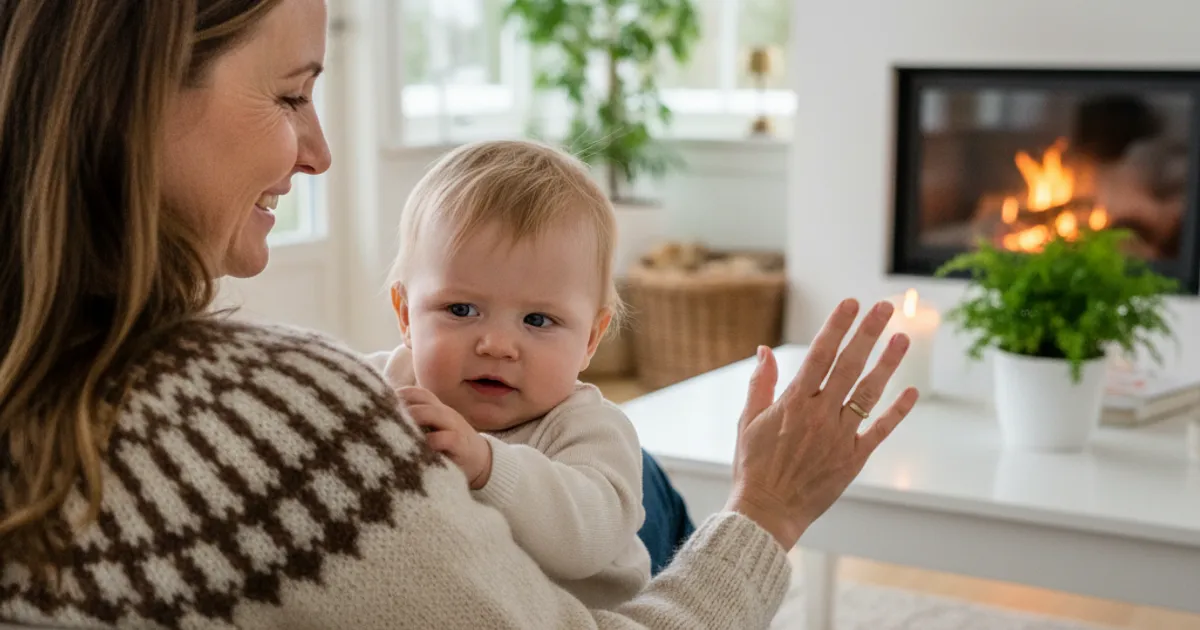
The little baby who has been charming everyone with smiles suddenly bursts into tears the moment grandma reaches out to hold them. The uncle visiting for the first time is greeted with screaming. What happened?
Congratulations, your baby has developed stranger anxiety, a completely normal and actually important part of emotional development. It means your baby has learned to tell the difference between familiar people and unfamiliar ones.
What Is Stranger Anxiety?
Stranger anxiety is a baby's fear or discomfort around unfamiliar people. It is a developmental phenomenon that shows the baby has formed a strong attachment to their primary caregivers and can now distinguish them from strangers.
According to the AAP, stranger anxiety is an important milestone that shows a baby's cognitive and emotional development is on track. Your baby now understands that parents are special, and that people they do not know can be unpredictable.
When Does Stranger Anxiety Start?
Stranger anxiety typically unfolds in this sequence:
- 5–6 months, baby begins showing caution around unfamiliar people
- 7–8 months, stranger anxiety is often at its most intense
- 8–12 months, ongoing, but baby gradually learns to manage it
- 12–18 months, slowly diminishes for most children
- 18–24 months, most children have grown out of it
Some babies experience a second wave of stranger anxiety around 18 months, but this is usually milder.
Not all babies show obvious stranger anxiety. Some are naturally more outgoing, while others are more reserved. Both are completely normal. What matters is that the baby has formed a secure attachment to their caregivers.
Why Is Stranger Anxiety Important?
Stranger anxiety is not a flaw in your baby's development, it is a protective mechanism. Developmental psychologists explain it this way:
- Survival instinct, by fearing strangers, the baby stays close to their caregivers
- Attachment, stranger anxiety shows the baby has formed a secure base
- Cognitive development, the baby can now categorize people as "familiar" and "unfamiliar"
- Memory, the baby remembers who they know and who they do not
How Stranger Anxiety Shows Up
Babies can react in different ways:
Mild reactions
- Looks away from the unfamiliar person
- Presses closer against mom or dad
- Looks serious and studies the stranger carefully
- Turns their face into the parent's body
Moderate reactions
- Starts crying when the stranger comes close
- Clings to the parent
- Reaches arms out toward mom or dad
- Refuses to sit in the stranger's lap
Strong reactions
- Intense crying at the sight of unfamiliar people
- Trembles or looks frightened
- Reacts even to family members they rarely see
- Cries intensely if the parent leaves the room
10 Tips for Handling Stranger Anxiety
1. Respect your baby's feelings
Your baby's fear is real and valid. Do not force your baby to be held by someone they are afraid of. Say to the other adult: "The baby just needs a little time, it's completely normal."
2. Be your baby's safe base
Hold your baby close and let them observe the unfamiliar person from a distance first. Once the baby feels safe, they will gradually open up.
3. Let the baby set the pace
Do not hand the baby over to someone they do not know. Let the unfamiliar person approach gently and give the baby time to get used to them.
4. Prepare visitors in advance
Give family and friends a heads-up. Ask them to:
- Keep a little distance at first
- Speak calmly and quietly
- Offer a toy rather than trying to hold the baby
- Let the baby initiate contact
5. Use transition objects
A favorite toy, comfort cloth, or pacifier can give the baby a sense of security in new situations.
6. Play peek-a-boo
Playing peek-a-boo helps babies understand that things (and people) come back even when they temporarily disappear. This strengthens object permanence.
7. Practice short separations
Leave the room briefly and come back. Gradually your baby learns that you always return, even when you are away for a while.
8. Stay calm yourself
Babies read their parents' reactions. If you seem relaxed and comfortable around other people, it signals to your baby that it is safe.
9. Keep routines consistent
Predictability provides security. Stick to familiar routines for meals, sleep, and play, especially during periods of heightened stranger anxiety.
10. Be patient
Stranger anxiety is a phase that passes. It may feel frustrating now, but it is a good sign of healthy development.
Track when stranger anxiety started and how it develops over time. Noting what helps your baby feel safe can be useful and reassuring to look back on.
Stranger Anxiety and Starting Daycare
Stranger anxiety can make starting daycare more challenging. A few tips:
- Ease in gradually, start with short visits where you are present
- Bring a comfort object, something that smells like home
- Have a consistent goodbye ritual, always say goodbye with a smile and let your baby know you will be back
- Never sneak out, this breaks trust. Always say goodbye, even if your baby cries
Stranger Anxiety vs. Separation Anxiety
These two terms are often used interchangeably, but there is a difference:
- Stranger anxiety, fear of unfamiliar people
- Separation anxiety, fear of parents leaving
They often occur at the same time, but separation anxiety can last longer, sometimes until age 2–3 years.
Contact your pediatrician if stranger anxiety is so intense that it prevents the baby from functioning in daily life, or if it shows no sign of easing after 18–24 months of age. In rare cases, persistent, intense anxiety may be a sign that the baby would benefit from extra support.
What Grandparents and Other Family Members Should Know
It can be hurtful for grandparents and close relatives to be rejected by the baby. Here is what you can share with them:
- It is not personal, the baby is afraid of all unfamiliar people, not just you
- It means the baby is developing normally, this is a milestone
- Give the baby time, after a few minutes of calm distance, most babies warm up
- Build the relationship gradually, regular visits help the baby get to know you
Frequently Asked Questions
Is it normal for my baby to cry with grandma?
Yes. If the baby does not see grandma very often, she can be "unfamiliar enough" to trigger stranger anxiety. It does not mean the baby dislikes her, just that they need time to feel safe. Regular visits help a lot.
Can stranger anxiety come and go?
Yes. Some babies have periods when anxiety is stronger, for example when they are tired, sick, or going through a developmental leap. It is completely normal for the intensity to vary.
Should I expose my baby to lots of people to "toughen them up"?
No. Forcing a baby into situations that frighten them can worsen the anxiety. The best approach is to let the baby approach strangers at their own pace, with you as a secure base.
What do I do if my baby cries with the daycare provider?
Give the settling-in period time. Let your baby get to know the new caregiver gradually, with you present at first. Most babies form attachments to new caregivers within a few weeks.
My 6-month-old has no stranger anxiety. Is something wrong?
No. Not all babies show clear stranger anxiety, and some develop it later. Some babies are simply more easygoing and comfortable with new people. As long as your baby shows attachment to their caregivers, everything is fine.
Sources
- AAP. Social and emotional development in infants
- WHO. Child development milestones
- Zero to Three. Understanding stranger anxiety
🔧 Helpful Tools
- Baby Sleep Tracker. Track and optimize your baby's sleep
- Baby Milestones Tracker. Track your baby's developmental milestones
- All Baby Tools. Browse all free tools for pregnancy and baby care
📖 Related Articles
- Separation Anxiety in Babies: Stages and Helpful Strategies. Learn about separation anxiety in babies and toddlers. When it starts, what the signs are, and 6 reassuring strategies to help your child through the phase.