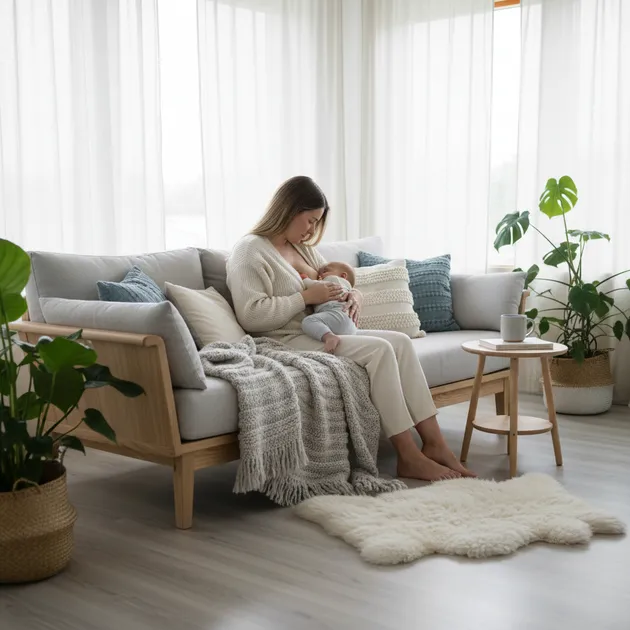
Breast milk leakage is something most breastfeeding mothers experience, especially in the first weeks after birth. Milk can come when you least expect it, mid-conversation, at night, or when you hear your baby cry.
Breast pads absorb leaks and keep your clothes dry. They come in several varieties, from inexpensive disposable pads to reusable pads made from bamboo or cotton. This guide helps you choose the right type for your daily life.
Why You Need Breast Pads
Your body produces milk continuously in the first weeks after birth. The letdown reflex can be triggered by your baby's cry, warmth in the shower, or even just thinking about your baby. That means milk can leak from one breast while your baby nurses on the other.
Without breast pads, the milk ends up in your bra and on your clothes. Wet patches on your shirt are uncomfortable and can cause soreness around the nipples.
Most women need breast pads from day one. Milk production is typically highest in the first 6–8 weeks. Many find that leaking gradually decreases after 3–4 months, but this varies from person to person.
Disposable Breast Pads
Disposable pads are thrown away after use and are the simplest option. They are thin, discreet, and ideal during a busy postpartum period when you do not want extra laundry.
Advantages:
- Convenient, no washing, just discard
- Thin and discreet under clothing
- Good absorbency
- Easy to carry in a bag
- Individually wrapped (hygienic)
Disadvantages:
- More expensive over time (see cost comparison)
- Environmental impact, plastic and single-use materials
- Can feel damp against the skin
- Some people react to fragrance or adhesive
Most disposable pads have a thin adhesive strip that holds them in place in your bra. Choose fragrance-free varieties to avoid irritation.
Reusable Breast Pads
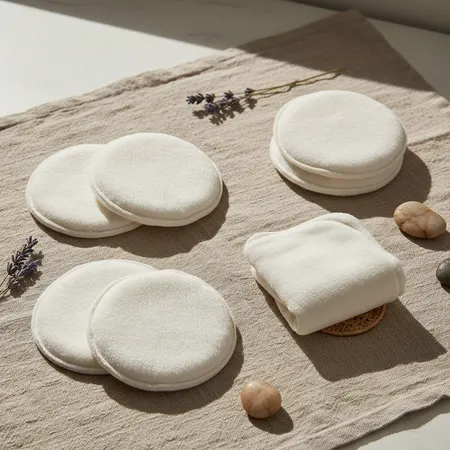
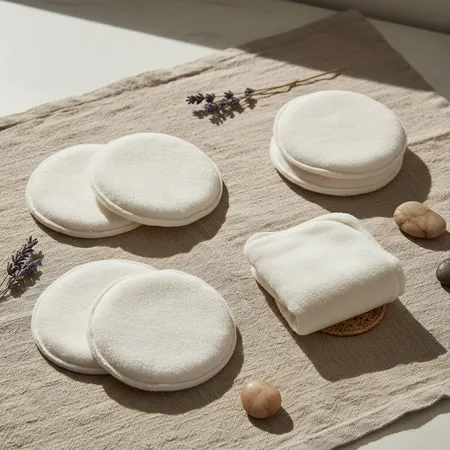
Reusable pads are used again and again and are the most economical and eco-friendly option over time. They require a little more planning, but many mothers prefer the feel of fabric against their skin.
Advantages:
- Cheaper in the long run, buy once
- Softer and more comfortable against the skin
- Eco-friendly, less waste
- Available in many materials and thicknesses
- No chemicals or fragrance
Disadvantages:
- Require washing and drying
- Can be thicker and visible under thin tops
- You need several sets to maintain a rotation
- Slightly higher upfront cost
Tip: Have at least 8–10 pairs of reusable pads in rotation. That gives you enough to get through the time between washes. Read more about breastfeeding essentials during the newborn period.
Materials. What Works Best?
Cotton
Classic, breathable, and can be washed at high temperatures. Cotton absorbs well and feels soft against the skin. Organic cotton is a good choice for sensitive skin.
Bamboo
Bamboo fiber absorbs up to 60% more moisture than cotton and has natural antibacterial properties. Many mothers find bamboo incredibly soft against the skin. The downside is that bamboo dries more slowly than cotton.
Merino Wool
Merino wool regulates temperature and keeps skin dry. It absorbs moisture without feeling wet. Requires gentle washing, but can be worn several times between washes thanks to wool's self-cleaning properties.
Silicone
Silicone pads do not absorb milk, they press gently against the nipple and stop leaks mechanically. They are thin, invisible under clothing, and just need a rinse between uses. Best suited for moderate leaking, not the first weeks with heavy production.
Pulp/Cellulose (Disposable)
Most disposable pads have an absorbent cellulose core with a waterproof outer layer. Some have added gel that binds moisture. Always choose chlorine-free and fragrance-free options.
How Many Breast Pads Do You Need?
Disposable pads: Plan for 6–8 pads per day in the first weeks (change at each feeding). A pack of 60 lasts about a week in the early days.
Reusable pads: 8–10 pairs gives a good rotation. With washing every other day, you always have clean pads available.
The first 6–8 weeks see the heaviest leaking. Many women need pads around the clock, including at night. As milk production stabilizes, leaking decreases and you will need fewer.
At night: Use extra-absorbent pads while you sleep. Nighttime pads typically have higher absorbency. Some mothers choose disposable pads at night for convenience, even if they use reusable ones during the day.
Cost Comparison: Disposable vs. Reusable
Here is a realistic calculation for 6 months of breastfeeding:
Disposable pads (6 months):
- Usage: ~4–6 pairs/day on average = approximately 900–1,080 pads
- Price per pack (60 pads): approximately $8–12
- Total: approximately $120–220
Reusable pads (6 months):
- Upfront cost: 8–10 pairs at approximately $4–7/pair = $32–70
- Electricity and detergent: approximately $10
- Total: approximately $42–80
Over a breastfeeding period of 6–12 months you can typically save $80–140 with reusable pads. If you use them for a second child, the savings increase.
Tips for Using Breast Pads
- Change pads after each feeding, damp pads against the skin can cause a yeast infection
- Let your breasts air dry for a few minutes before putting in a new pad
- Avoid pads with a plastic liner if you are prone to sweating or feel hot
- Make sure the pad sits correctly, it should cover the nipple and the surrounding area
- Wash reusable pads at 140°F (60°C) to kill bacteria, use fragrance-free detergent
- Keep extras in your bag, leaking can happen unexpectedly
If you experience engorgement, thicker pads and having a spare change available can help.
When Does the Leaking Stop?
Most women find that leaking gradually decreases after 3–4 months. Milk production adjusts to the baby's needs and the letdown reflex becomes less sensitive.
Some women leak throughout their entire breastfeeding period, while others stop leaking after just a few weeks. There is a great deal of individual variation and no reason for concern either way.
When you wean or reduce breastfeeding, production decreases and leaking stops.
Where to Buy Breast Pads
Breast pads are available at pharmacies, grocery stores, and online retailers. Brands like Lansinoh, Philips Avent, and Medela offer widely available disposable options. Reusable pads are found at specialty baby stores and online.
Frequently Asked Questions About Breast Pads
Can I use regular panty liners instead of breast pads?
No, panty liners are made for a different purpose and do not absorb breast milk as effectively. Breast pads are shaped to fit in a bra and have a round form that covers the nipple. Panty liners can irritate the sensitive skin around the breast.
Are reusable breast pads hygienic?
Yes, as long as you wash them at at least 140°F (60°C) and change them regularly. Good-quality bamboo and cotton pads can handle many washes without losing their absorbency. Dry them thoroughly before use.
Do I need breast pads at night?
Yes, especially in the first weeks. Many women leak most at night, particularly if the baby starts sleeping longer stretches. Use extra-absorbent nighttime pads or double up with reusable pads.
Can breast pads cause a yeast infection?
Damp pads left on too long can create conditions for yeast to develop. Change pads after each feeding and let your breasts air dry between changes. Choose breathable materials like cotton or bamboo rather than plastic.
When should I start buying breast pads?
Have a pack ready around weeks 36–37 of pregnancy. Some women leak colostrum toward the end of pregnancy, but most need pads only after birth.
Read More
- Nursing Bra Guide
- Nursing Pillow Guide
- Preparing for Breastfeeding During Pregnancy
- Breast Pump Guide
Sources
- La Leche League International. "Breastfeeding in Practice." llli.org
- WHO. "Breastfeeding." who.int
- AAP. "Breastfeeding and the Use of Human Milk." aap.org
Last updated: March 2026
🔧 Helpful Tools
- Breastfeeding Tracker. Log feeds, track supply, and monitor nursing sessions
- All Baby Tools. Browse all free tools for pregnancy and baby care
📖 Related Articles
- Nursing Pillow: How to Choose the Best One for You. Complete guide to nursing pillows. Types, filling materials, size, and tips for finding the perfect nursing pillow.
- Contraception After Birth: Safe Protection While Breastfeeding. Guide to contraception after giving birth. Which methods are safe while breastfeeding? Evidence-based guidance from WHO and AAP.
- First Week Home with a Newborn: Survival Guide. Everything you need to know about the first week with your newborn at home. Breastfeeding, sleep, diapers, the umbilical cord, and when to call the doctor.