
After giving birth, many people consider a belly band for support and comfort. But does it actually help, and what can you realistically expect? Here's an honest guide, without exaggerated promises.
What Is a Postpartum Belly Band?
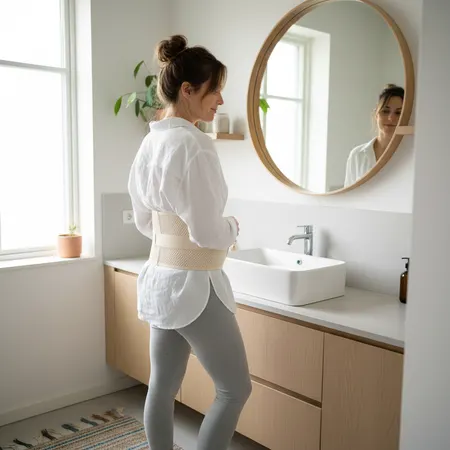
A postpartum belly band (also called an abdominal binder or wrap) is an elastic band that wraps around the abdomen and lower back. It provides compression and support to the abdominal muscles and pelvic region in the weeks after birth.
A postpartum belly band is not the same as a corset or "waist trainer." It's about support and comfort, not reshaping the body.
Honest expectation: A belly band provides support and can relieve discomfort, but it won't flatten your belly. Your body needs time, rest, and gradual training to recover after pregnancy and birth.
Does a Postpartum Belly Band Actually Help?
Short answer: It can help with comfort and support. It doesn't perform miracles.
What a Belly Band Can Do
- Support for abdominal muscles, gives a feeling that the belly is "held in place" in the first weeks
- Relieve back pain, compression around the core can take pressure off the back
- Comfort after cesarean, many find the band protects the incision from touch and movement
- Improved posture, a reminder to stand straight when carrying and lifting the baby
- Security with diastasis recti, support for the abdominal muscles while they come back together
What a Belly Band Cannot Do
- Shrink the belly, the band doesn't affect fat storage or uterine healing
- Replace exercise, abdominal muscles gain strength through exercise, not compression
- Fix diastasis recti, support helps, but targeted exercise is necessary to close the gap
- Speed up healing, the body heals at its own pace regardless of the band
Physical therapists emphasize that pelvic floor training and gradual core strengthening are what deliver lasting results. A belly band is a supplement, not a substitute.
Belly Band After Cesarean Section
After a cesarean section, a belly band is particularly useful for many people. The incision makes it painful to cough, sneeze, and move in the first days. A band provides protection and compression that can reduce the discomfort.
When Can You Start?
Talk to your midwife or doctor before starting with a belly band after a cesarean. Most people can start gently a few days after the operation, but this depends on how the wound is healing.
After cesarean: The band should sit above or below the surgical incision, never directly on it. It should provide support without pressing directly on the cut. Contact a healthcare provider if you're unsure about placement.
Tips for Use After Cesarean
- Start with short use (30–60 minutes) and gradually increase
- Remove the band when resting and sleeping
- Choose a band with adjustable tension, your belly changes quickly in the first weeks
- Stop using the band if it causes pain or discomfort around the wound
Belly Band After Vaginal Birth
After vaginal birth, you can typically start with a belly band within the first few days. Many people find the band gives a pleasant feeling of support, especially when standing and walking.
There is no medical necessity to use a belly band after an uncomplicated vaginal birth. It's a matter of personal comfort. Some find it wonderful, others notice no difference.
Types of Postpartum Belly Band
Elastic Wrap (Bengkung Style)
A long elastic band that wraps around the belly in multiple layers. Provides even compression and can be adjusted precisely.
Advantages: Adjustable tension, conforms to the body, affordable price.
Disadvantages: Takes time to wrap, can slip out of position, can feel warm.
Structured Support Belt
A belt with velcro closure and firm structure. Faster to put on and take off than the wrap.
Advantages: Quick to use, good support, holds its shape throughout the day.
Disadvantages: Less adjustable than wraps, may be visible under tight clothing.
High-Waisted Support Shorts
Underwear with a high waistband and built-in compression. Seamless and discreet under clothing.
Advantages: Invisible under clothing, easy to use, no velcro that irritates.
Disadvantages: Often lighter compression than a belt, can get warm.
Belly Band and Diastasis Recti
Diastasis recti means the rectus abdominis muscles have separated during pregnancy. It affects approximately two-thirds of people after giving birth.
A belly band can provide support and reduce discomfort with diastasis recti, but it doesn't close the gap. To strengthen the abdominal muscles and reduce diastasis, you need targeted exercise.
Combine band with exercise: Use the belly band for support during daily activities, and start with pelvic floor exercises and gentle core work. Gradual strengthening is what produces long-term results.
Signs of Diastasis Recti
- A visible bulge or groove along the midline of the belly, especially when getting up
- A feeling of the belly "falling forward" when standing
- Back pain or instability in the core
- Difficulty activating abdominal muscles
If you have significant diastasis recti, consulting a pelvic floor physical therapist for guidance on appropriate exercises is recommended.
How Long Should You Use a Belly Band?
Most people use a belly band for 6–12 weeks after birth. As the abdominal muscles regain strength, you need less external support.
Gradual reduction:
- Weeks 1–4: Daily use during activity (standing, walking, lifting the baby)
- Weeks 4–8: Use when you need it, especially during physical activity
- Weeks 8–12: Gradual phase-out, focus on exercise instead
Listen to your body. If you feel you need the band longer, that's fine. And if you don't notice any difference, you don't need to use it.
How to Choose the Right Belly Band
Prioritize This
- Adjustable tension, your body changes quickly after birth
- Soft, breathable material, you'll be wearing it for hours at a time
- Right width, should cover from the hips to below the ribs
- Easy to put on and take off, velcro or fastenings you can manage with one hand
Avoid This
- Bands that promise to "get rid of your postpartum belly", unrealistic marketing
- Bands that are too tight, compression should be comfortable, never painful
- Bands without adjustment, one-size-fits-all rarely fits anyone well
Pelvic Floor Training: What Really Makes a Difference
Belly bands provide temporary support. Pelvic floor training provides lasting strength. Current guidance recommends that all people start pelvic floor training shortly after giving birth.
Research shows that people who train their pelvic floor regularly after birth have:
- Better bladder control
- Stronger core muscles
- Faster improvement of diastasis recti
- Fewer back problems
Frequently Asked Questions
Does a belly band help with postpartum belly?
A belly band can give a flatter silhouette while you wear it, but the effect disappears when you take it off. The belly needs time, exercise, and hormonal normalization to recover. There's no shortcut, but pelvic floor training and gradual core work help.
Can I use a belly band right after birth?
After vaginal birth, you can start with a soft wrap within the first few days. After cesarean, you should wait until healthcare providers give the go-ahead, and the band must be positioned so it doesn't press on the surgical incision.
Is a belly band the same as a corset?
No. A belly band provides moderate compression and support. Corsets and "waist trainers" provide tight compression that can restrict breathing and prevent abdominal muscles from working actively. Physical therapists advise against tight corsets after birth.
Do I need a belly band if I don't have diastasis recti?
Not necessarily. A belly band is not medically necessary after a normal birth. It's a comfort product. Try it if you like, but don't feel pressured to buy one.
Can a belly band worsen diastasis recti?
In rare cases, incorrect use (too tight a band, wrong placement) can put pressure on the pelvic floor. The band should provide support, not force the belly in. Contact a physical therapist if you're unsure.
How many hours a day should I use a belly band?
Start with 2–3 hours and build up to a maximum of 8–10 hours during activity. Remove the band when resting, sleeping, and breastfeeding. Abdominal muscles also need time to work actively without support.
Sources
- American Physical Therapy Association. Postpartum Care
- ACOG. Physical Activity and Exercise During Pregnancy and the Postpartum Period
- Pelvic Health and Rehabilitation Center
🔧 Helpful Tools
- Baby Milestones Tracker. Track your baby's developmental milestones
- All Baby Tools. Browse all free tools for pregnancy and baby care