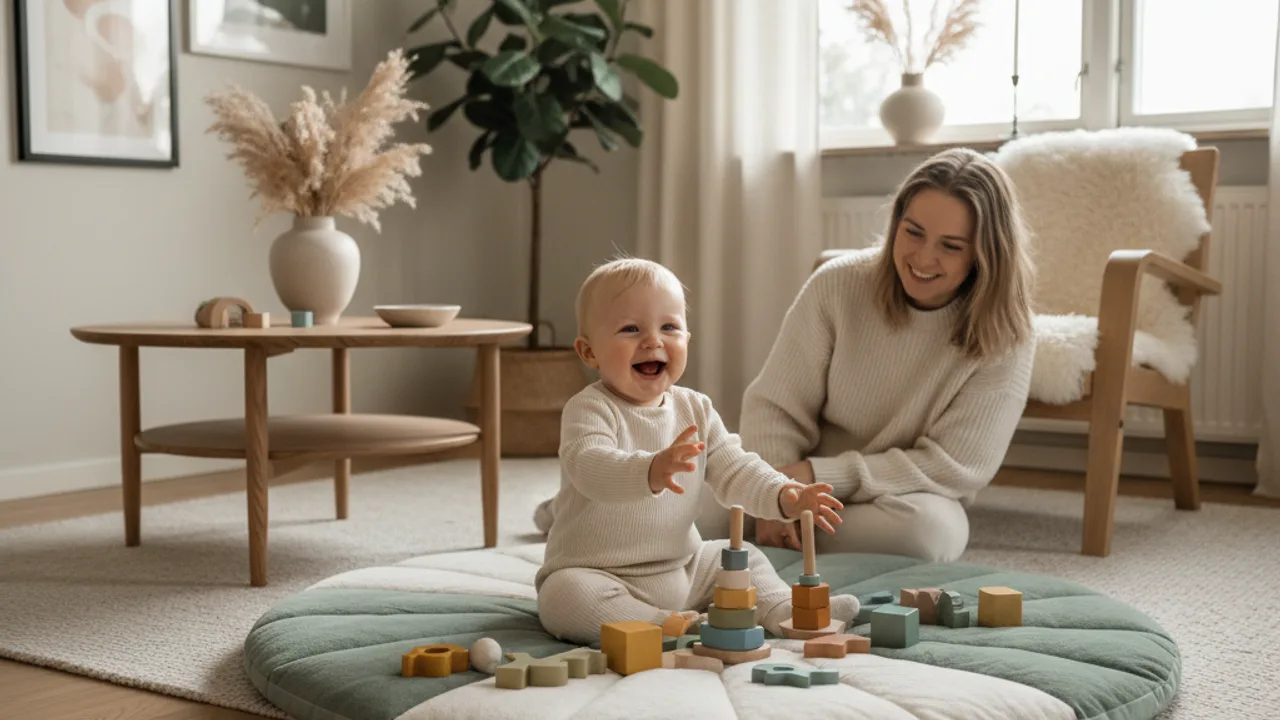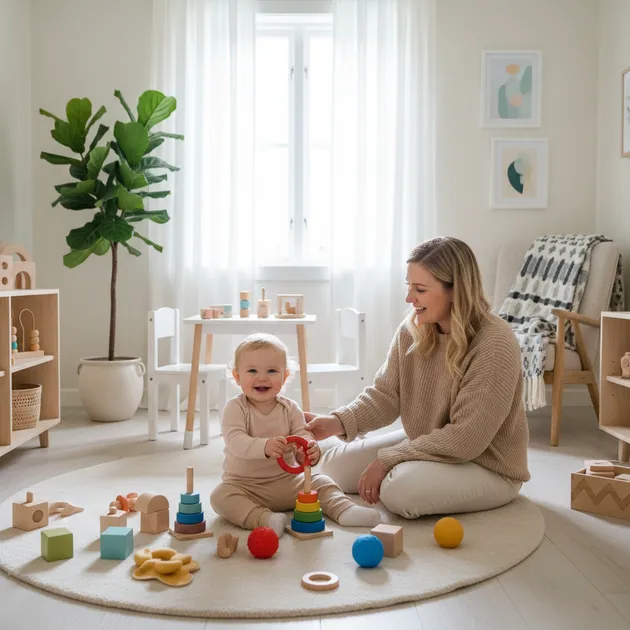
Around the first birthday, a lot happens at once. Your child may be taking their first steps, saying their first words, and starting to figure out how things work. It's an explosion of curiosity, and play is the most important tool for learning.
You don't need expensive toys. The best activities for a one-year-old use things you already have at home. Here are 20 concrete, age-appropriate activities that support different aspects of development.
One-year-olds have short attention spans, 2 to 5 minutes per activity is completely normal. Don't expect them to stick with anything for long. Offer the activity and follow your child's interest.
Gross Motor Skills (5 Activities)
Around 12 months, children are practicing walking, climbing, and balancing. These activities strengthen large muscle groups and coordination.
1. Pillow Course in the Living Room
Arrange cushions, duvets, and small mattresses on the floor to create a course your child can climb over, crawl through, and roll on. Vary heights and textures. This builds balance, strength, and spatial awareness.
You'll need: Sofa cushions, bed duvets, and maybe a large cardboard box as a tunnel.
2. Rolling a Ball Back and Forth
Sit on the floor with your legs spread apart and roll a soft ball back and forth. Start close and gradually increase the distance. This trains eye-hand coordination and turn-taking, an important social skill.
Tip: Say "here comes the ball!" and "your turn!" to link play with language.
3. Dancing and Movement
Put on music and dance together. Hold your child's hands and alternate between jumping, swaying, and gently spinning. Use action songs, "Wheels on the Bus," "Head, Shoulders, Knees and Toes."
4. Walking on Different Surfaces
Walk barefoot on grass, sand, soft soil, and pavement. Different surfaces train balance and provide sensory experiences. Indoors, try bubble wrap, a towel, and a pillow.
5. Pulling and Pushing
Give your child something to push in front of them or pull behind. A push-along toy, a small wheeled box, or even a cardboard box with a string attached. Walking while carrying or pulling something trains balance in a new way.
Fine Motor Skills (5 Activities)
The pincer grip (grasping with thumb and index finger) develops around 9–12 months. These activities strengthen finger dexterity.
6. Put In and Take Out
Collect objects (large enough not to be a choking hazard) and let your child drop them into a bucket, bottle, or box. Clothespins in a container, large pasta pieces in a bottle, balls in a pot. This repetitive play fascinates one-year-olds for a surprisingly long time.
Avoid objects small enough to be swallowed. A good rule of thumb: anything that fits through a toilet paper roll is a choking hazard for children under 3.
7. Tearing Paper
Give your child old newspapers or magazines and let them tear and crumple the pages. It trains grip and hand strength. Have them put the pieces in a box afterward for a double activity.
8. Sorting and Stacking
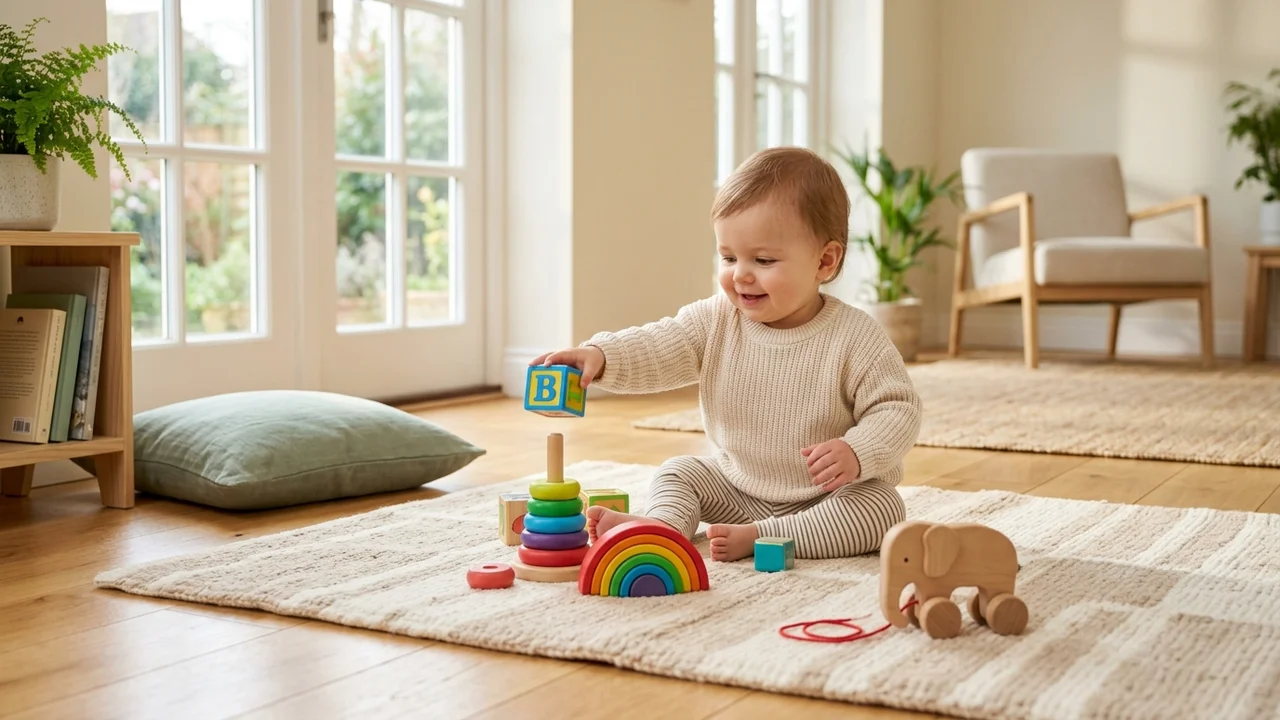
Stacking cups in different sizes and colors are among the most versatile toys for one-year-olds. Your child can stack them, nest them inside each other, sort by size, or just knock the tower down, over and over again.
9. Drawing with Large Crayons
Big chunky crayons or finger paint let your child explore colors and marks. Tape a large sheet of paper to the floor or use a small chalkboard. Don't expect pictures, it's all about the movement and the experience.
10. Clothespin Play
Large wooden clothespins that your child can squeeze open and clip to the edge of a box. This is surprisingly challenging for small hands and gives great grip and strength training.
Sensory Play (5 Activities)
One-year-olds explore the world through their senses. Sensory play offers rich experiences and supports brain development.
11. Water Play
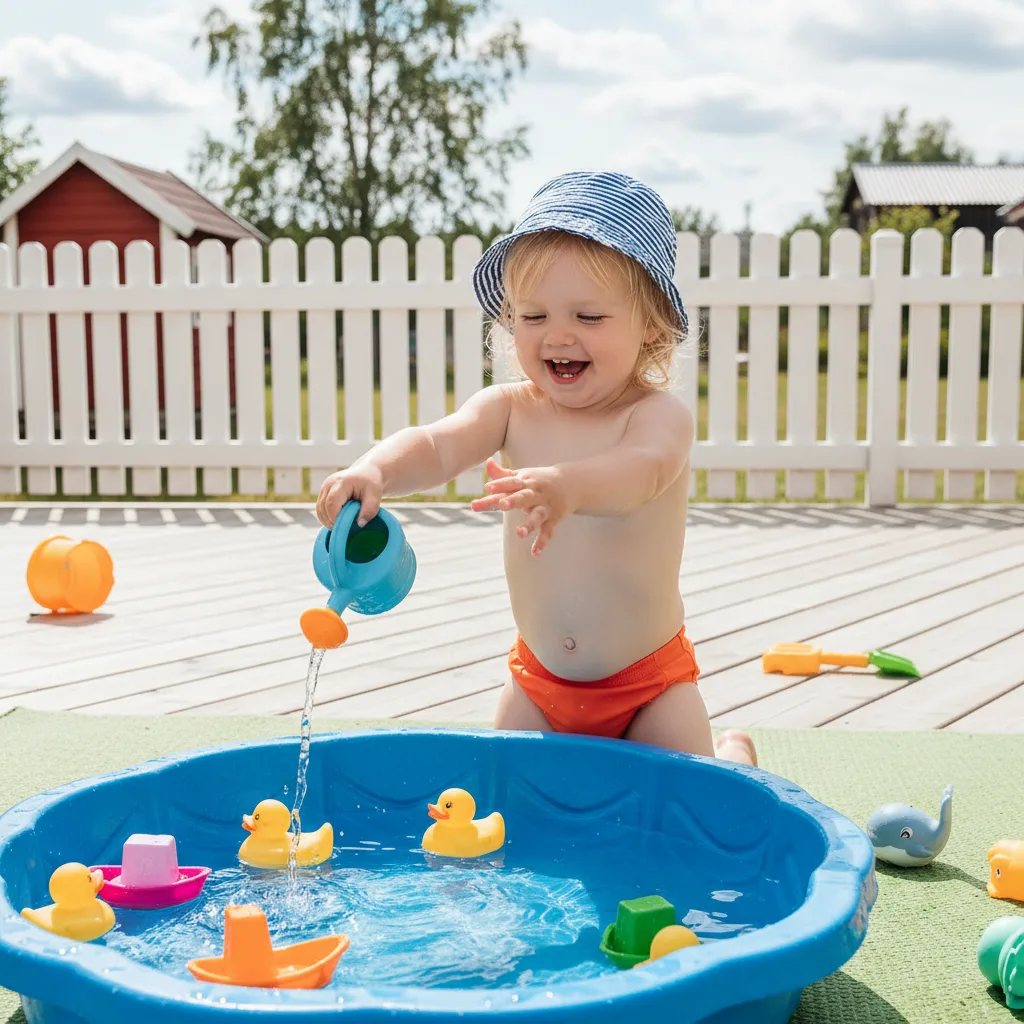
Fill a small tub with lukewarm water and give your child cups, funnels, sponges, and plastic boats. Pouring from one cup to another trains coordination and builds understanding of volume. Have a towel ready, it will get wet.
12. Sensory Bag
Fill a clear zip-lock bag with hair gel and let your child press and squeeze it. Add glitter, buttons, or small toys inside (tape it securely shut). Your child can explore without any mess.
13. Nature Tray
Collect natural materials, pine cones, rocks, leaves, sticks, moss, and arrange them in a tray or on a board. Let your child touch and explore the textures. Name what they pick up: "That's a pine cone! It's rough."
14. Cooked Pasta Play
Cook pasta and let it cool. Let your child feel, squeeze, and pull at it. Add food coloring for extra visual stimulation. Completely safe if your child puts some in their mouth.
15. Frozen Toy Rescue
Freeze small toy animals in ice (use a muffin tin). Let your child feel the cold, see the toys inside, and watch them gradually melt free. Use lukewarm water to "rescue" the animals.
Language and Social Play (5 Activities)
Most one-year-olds have a few words and understand far more than they can say. These activities support language development.
16. Lift-the-Flap Books
Books where your child can lift flaps to find hidden pictures are perfect for this age. Name what's on each page: "There's the cat! The cat says meow!" Repetition builds vocabulary.
17. Peek-a-Boo Variations
The classic peekaboo game can be varied: hide behind a blanket, let your child find a hidden toy under a cup, or play "gone, there!" with stuffed animals. This game trains object permanence and creates pure delight.
18. Songs with Actions
Action songs connect words with movements. Your child will start doing the actions before they can say the words, that's language comprehension in practice.
19. Narrate Everything
Comment on what you're doing throughout the day: "Now we're washing our hands. The water is warm! Now we're putting on your jacket." This sports-commentator approach gives your child a rich language environment without any extra effort.
20. Phone Play
Give your child an old phone or toy phone and "call" each other. Say "hello! What are you doing?" and wait. Children mimic talking on the phone long before they can hold a real conversation, and it's wonderful pretend play.
The most important rule for playing with one-year-olds: follow your child's interest. If they're more fascinated by the cardboard box than the toy inside it, the cardboard box is the best toy right now.
Tips for Everyday Play
Make Everyday Life Playful
You don't need to set aside special "playtime." The best play happens naturally:
- Laundry: Let your child put socks in the machine and take them back out
- Cooking: Give your child a pot and wooden spoon while you cook
- Grocery shopping: Name fruits and vegetables in the store and let them hold an orange
- Bath time: The bathtub is a sensory playground all by itself
How Much Play Does a One-Year-Old Need?
According to the WHO, children under 3 should be physically active for at least 180 minutes per day. That sounds like a lot, but it includes all movement, crawling, walking, climbing, and playing. Free play where your child chooses what to do is just as valuable as organized activities.
Screen Time
The American Academy of Pediatrics (AAP) recommends avoiding screen use for children under 18–24 months (except video chatting). The physical and sensory activities above provide far richer stimulation for brain development than passive screen content.
Fewer Toys Is Better
Research shows that children with fewer toys play longer and more creatively with each one. Rotate toys every other week, swap some out and bring others back. An old toy feels brand new after a break.
Outdoor Play Through the Seasons
Spring and Summer
Water play in the garden, sandbox with buckets and spades, picking flowers, watching insects. Let your child walk barefoot in the grass and feel the sun on their face.
Fall
Leaf collecting in different colors, puddle jumping in good boots, pine cones and chestnuts to sort. Autumn is a sensory experience all on its own.
Winter
Tasting snow, making tracks, rolling snowballs. Sledding on a safe hill with your child between your legs. Bring snow inside in a bowl for indoor sensory play.
Tip: Looking for more play inspiration? Check out our activity guide with 250+ ideas tailored to your child's age!
Frequently Asked Questions
How long can a one-year-old concentrate on one activity?
Typically 2 to 5 minutes per activity. Some activities like water play can hold attention longer. Short sessions with frequent switching is completely normal for this age.
Should I buy lots of toys?
No. Everyday objects like pots, boxes, balls, and clothes are often more interesting to one-year-olds than purchased toys. Good investments are stacking cups, large blocks, and board books, they last long and get used a lot.
When should I be concerned about my child's motor development?
Most one-year-olds crawl, pull themselves up, and begin to walk. But there's wide variation, some walk at 9 months, others at 18 months. Talk to your pediatrician if your child shows no interest in moving forward. Read more about baby development month by month.
What do I do when my child throws everything on the floor?
Throwing is an important motor exercise and an experiment in cause and effect. Give your child things they're allowed to throw (balls, soft toys) and show them where throwing is okay. It's learning, not misbehavior.
Useful Tools on Babysential
- Milestones, track your child's development
- Baby Timeline
- Sleep Tracker, ensure enough sleep
- Play for 2-Year-Olds: 20 Fun Activities
Sources
- WHO. Physical Activity Guidelines for Children Under 5
- AAP. Screen Time and Children
- CDC. Developmental Milestones
- Zero to Three. Play and Learning
🔧 Helpful Tools
- Baby Milestones Tracker. Track your baby's developmental milestones
- Development Leaps. Understand your baby's developmental leaps
- All Baby Tools. Browse all free tools for pregnancy and baby care
📖 Related Articles
- Water Play Activities for Toddlers, 10 fun and safe water activities for toddlers at home and outdoors. Stimulates senses and motor skills through play.
- Creative Play at Home: 20 Activities for Toddlers, 20 simple and fun activities you can do at home with toddlers. Creative play that supports development without expensive equipment.
- Play for 2-Year-Olds: 20 Fun Activities, 20 fun activities for your 2-year-old that spark creativity, language, and motor skills. Easy ideas for home and outdoors, all year round.