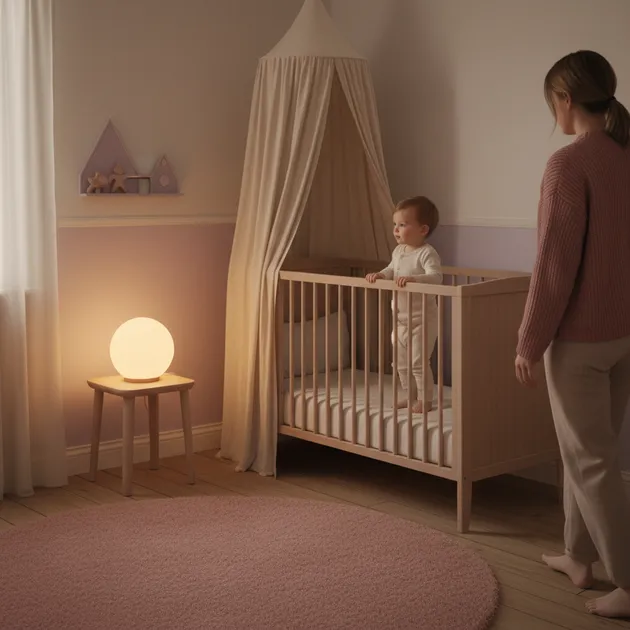
Your baby has been sleeping well for months. Then, right around their first birthday, the nights start falling apart again.
Welcome to the 12-month sleep regression. It often comes as a surprise, but there are good explanations, and concrete things you can do.
What Is a Sleep Regression?
A sleep regression is a period when a baby suddenly sleeps worse than before. It's not a setback, it's a sign that the brain and body are in full development.
At 12 months, an enormous amount is happening. Your baby is learning to walk, understands more and more words, and is developing a stronger attachment to caregivers. All of this affects sleep.
According to the WHO and AAP, it is normal for children to have periods of unsettled sleep throughout the first year of life. Sleep patterns mature gradually, and temporary disruptions are a natural part of development.
Typical Signs of Sleep Regression at 12 Months
You may recognize one or more of these:
- More frequent night wakings, waking up more often than usual
- Hard to settle at bedtime, protests at bedtime, even if evenings used to go smoothly
- Shorter naps, refuses to nap or only takes brief ones
- More clinginess during the day, separation anxiety that also affects nights
- Early morning wake-ups, waking at 5am instead of 7am
These signs are connected to the major developmental leaps your baby is making right now.
Why Does It Happen at 12 Months?
Motor Development
Most babies start standing and walking around their first birthday. The brain is so busy practicing new skills that it literally "trains" during sleep. Many parents find their baby standing up in the crib in the middle of the night.
Separation Anxiety
Around 12 months, babies understand that you exist even when you're not in the room. That also means they know you're gone, and miss you. This understanding tends to peak at bedtime.
Transition from Two Naps to One
Some babies begin the transition from two naps to one around this age. This can lead to a period where the baby is overtired in the evening, which paradoxically makes it harder to fall asleep.
Language Development
The brain is busy understanding and producing words. This cognitive activity can disrupt sleep, just as it's hard to fall asleep when you have a lot on your mind.
How Long Does It Last?
Most sleep regressions last between 2 and 6 weeks. Some babies are through it in just a week, while others take a little longer.
What helps most is sticking to good routines and avoiding introducing new sleep habits you don't want to maintain.
Use Babysential's sleep tracker to keep track of sleep patterns. When you see data over time, it's easier to spot when the regression turns around, and it gives you motivation to hold on.
7 Tips to Help Through the Regression
1. Stick to the Bedtime Routine
A predictable evening routine is the most important tool you have. Bath, book, song, whatever works for your family. The routine signals to your baby that it's time for sleep, even when everything else feels chaotic.
2. Give Extra Closeness During the Day
Fill up the "attachment account" during the day. Lots of contact, play, and physical closeness makes your baby feel more secure at bedtime. It can reduce protests and night wakings.
3. Adjust the Nap Schedule
If your baby refuses the second nap, try pushing the morning nap a little later and moving bedtime earlier. A one-year-old typically needs 2–3 hours of daytime sleep in total.
4. Let Your Baby Practice Motor Skills During the Day
Give plenty of floor time and opportunities to stand, walk, and climb during the day. The more your baby practices while awake, the less need to "train" at night.
5. Be Consistent With Your Night Response
Comfort your baby when they wake, but try to avoid introducing entirely new strategies (like bringing them into your bed if that hasn't been the norm). Temporary solutions can become difficult to wean off.
6. Check the Practical Things
Make sure the room is dark enough, the temperature is comfortable (68–72°F / 20°C is recommended by the AAP), and that your baby isn't hungry. Some one-year-olds genuinely need a small snack or nursing session during the night.
7. Consider an Earlier Bedtime
When naps are shorter than usual, it can help to put your baby to bed 30–60 minutes earlier. An overtired baby has a harder time falling asleep and tends to sleep worse.
If your baby also has a fever, is pulling at their ear, is unusually irritable, or has a changed appetite, it may be illness, such as an ear infection or teething. Contact your pediatrician if you're unsure.
When Should You Seek Help?
Most sleep regressions resolve on their own. But contact your pediatrician if:
- Sleep problems last more than 6 weeks without improvement
- Your baby snores loudly or has pauses in breathing during sleep
- You yourself are experiencing exhaustion that affects your daily life
- Your baby is inconsolable at night and you suspect pain
Your pediatrician can offer sleep guidance, and many practices have resources for families with babies who sleep poorly.
Frequently Asked Questions
Is the 12-Month Sleep Regression the Worst?
Many parents find it surprising, because their baby has often been sleeping well for a while. But most describe the 18-month sleep regression as the toughest, because it combines willpower and protests.
Should I Stop Night Feeding at 12 Months?
According to the WHO and AAP, breastfeeding can continue as long as mother and baby wish. Some one-year-olds still need nutrition at night, while others do it out of habit. Talk to your pediatrician if you're unsure.
Does Cry-It-Out Work?
There are various sleep training approaches, and research shows mixed results. Most pediatricians recommend a gradual approach where you're present but give your baby the chance to settle on their own. Talk to your pediatrician for guidance tailored to your child.
Sources
🔧 Helpful Tools
- Baby Sleep Tracker. Track and optimize your baby's sleep
- Soothing Sounds. White noise and soothing sounds to help your baby sleep
- All Baby Tools. Browse all free tools for pregnancy and baby care
📖 Related Articles
- Sleep Regression in Babies - 4, 8, 12 and 18 Months. Everything about sleep regression in babies and toddlers. Learn when the most common regressions occur, what causes them, and how to get through them.
- Baby Not Sleeping at Night? 8 Causes and What You Can Do. Find out why your baby isn't sleeping at night and what you can do about it. Age-by-age tips from newborn to toddler.
- Sleep Regression at 18 Months: The Toughest One. Sleep regression at 18 months is the toughest for many families. Learn why it happens and get concrete tips for better nights.